Estimated at $3 Trillion: Tesla's Dominant Influence on U.S. Stock Market Dialogue
 12/29 2025
 645
645
When Wedbush analysts raised Tesla's optimistic target price to the $3 trillion market cap threshold by the end of 2025, Wall Street's atmosphere was charged with a nuanced blend of avarice and wariness. The rationale now transcends mere assembly of steel and batteries; it hinges on silicon-based intelligence dismantling traditional manufacturing valuation paradigms.
From the vantage point of a conventional automaker, Tesla's current price-to-earnings ratio is not just high but verges on the ludicrous. Yet, when viewed through the lens of the 'AI and Robotics Super Cycle' narrative, the seemingly unreachable '$3 trillion' mark transforms into a gateway to the future.
This is precisely where Musk excels. He has adeptly morphed a hard-tech company producing millions of vehicles annually into an artificial intelligence behemoth with a tangible presence, through iterations of FSD V13 and expectations of mass-produced Optimus robots.
Why is Wall Street Daring to Envision '$3 Trillion'?
To comprehend this $3 trillion narrative, one must first delve into Wall Street's preferred sum-of-the-parts valuation model. In the aggressive models of Morgan Stanley and Ark Invest, the contribution of traditional automotive sales to the total valuation has been minimized to historic lows, accounting for less than 30%.
This 'cash cow' sustaining Tesla's daily cash flow has been reduced to a mere entry ticket in the capital markets, existing solely to finance the sprawling AI training infrastructure. What prompted this abrupt shift in perspective?
The crux lies in the 'marginal cost' phenomenon. Traditional automaking's bane is that each additional vehicle sold incurs nearly linear costs in materials, logistics, and labor, with diminishing returns beyond certain volumes. Even Tesla, the king of cost control, grapples with automotive gross margins hovering between 15%-18%.
AI operations, however, adhere to a vastly different logic. Whether through FSD (Full Self-Driving) software subscriptions or future Robotaxi dispatch networks, replication costs approach zero. Once FSD surpasses L4 autonomy, Tesla transitions from a car seller to a SaaS platform peddling 'transport capacity' and 'time'.
Currently, FSD's penetration in North America and select markets has not reached a critical mass, but its software nature implies potential gross margins up to 80%. If 30% of Tesla's global fleet converts to FSD subscribers, this could inject tens of billions in pure profit into financial reports without the need for new stamping plants.
Next comes the platform economics of Robotaxi. In Ark Invest's model, the Cybercab represents more than just a vehicle sans steering wheel; it's a market entry weapon. Analysts boldly predict Robotaxi per-mile costs below $0.20, significantly lower than Uber or Lyft's operating expenses.
This cost advantage grants Tesla pricing power akin to the Apple App Store, enabling revenue from both fares and platform commissions.
Moreover, amid the explosive demand for AI computing in 2025, data centers' energy storage needs grow exponentially. Tesla's Megapack business showcased staggering growth in Q3 2025 financials, revealing it as not just an automotive accessory but a core component of future power infrastructure.
However, the peril in this valuation logic lies in its complete reliance on 'flawless execution' assumptions. It presumes end-to-end models won't encounter insurmountable data barriers and regulators will approve steering wheel-less vehicles. This represents future-based overdrafts—a tempting yet perilous poison for growth-hungry U.S. equity markets.
FSD V13's Computing Power: A 'Brutal Aesthetic'
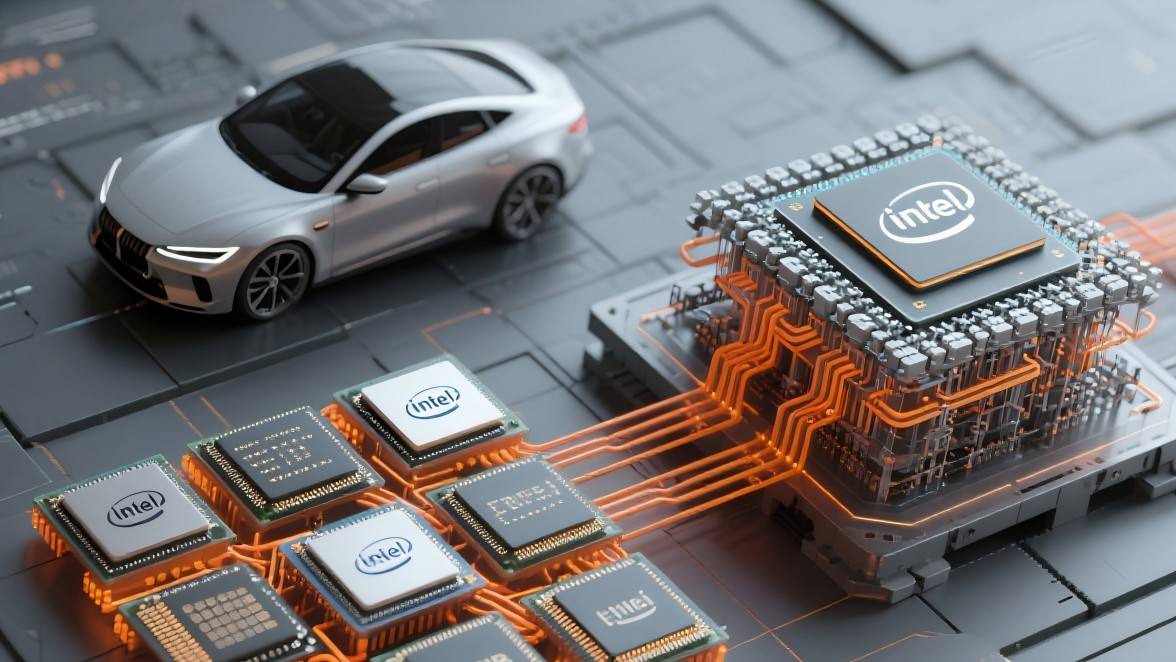
If valuation models represent Wall Street's numerical games, FSD V13 and its underlying computing arms race constitute Tesla's formidable battle in Silicon Valley. When FSD V13.2 began mass rollout to AI4 hardware users in 2025, debates between 'rule-based code' and 'neural networks' effectively concluded.
Tesla's 'end-to-end' neural networks introduced in FSD V12 revolutionized autonomous driving technology stacks. Traditional development treated perception, prediction, planning, and control as separate modules linked by hundreds of thousands of C++ code lines defining human-crafted rules. The flaw in this approach: engineers cannot account for all 'long-tail scenarios' in the physical world.
Tesla's 'end-to-end' strategy feeds millions of video clips into massive Transformer models, enabling AI to directly learn human driving instincts. Input images yield steering and acceleration commands without human-coded 'if-then' rules.
The V13 iteration elevates this 'brutality' to new heights. Technical analyses reveal exponential increases in parameter counts and training computing requirements compared to V12. This marks not just a software triumph but hardware domination.
Tesla's Cortex clusters deployed in Texas and New York supercomputing centers, equipped with tens of thousands of H100/H200 GPUs and proprietary Dojo chips, will rank among Earth's largest AI training infrastructures.
This 'computing hegemony' establishes two formidable moats. While Waymo meticulously plans operational zones for thousands of Robotaxis, Tesla boasts over 6 million FSD-capable vehicles worldwide. These 6 million mobile data nodes continuously transmit massive edge-case videos.
This data scale grants Tesla unparalleled 'textbook' thickness for training end-to-end models. As one AI researcher put it: 'In deep learning, data is the new oil, and Tesla owns the largest oil field.'
With Hardware 4.0's full adoption and HW3.0's computing bottlenecks emerging, Tesla demonstrates tech companies' characteristic ruthlessness. Despite Musk's promises to support legacy owners, V13 performs markedly better on AI4 hardware, sending a clear message.
To pursue ultimate AI performance, Tesla willingly sacrifices portions of its existing market experience. This relentless pursuit of computing Moore's Law leaves traditional automakers in the dust. While Volkswagen and Toyota struggle with infotainment chip allocations, Tesla contemplates more efficient coordination between onboard inference chips and cloud training clusters.
However, this high-stakes gamble carries costs. End-to-end models' 'black box' nature hangs like Damocles' sword over Tesla. Unlike rule-based systems, when end-to-end models err (e.g., hesitating in complex construction zones), engineers cannot pinpoint and fix specific code lines like debugging software.
They must correct model weights through targeted data cleansing and retraining, requiring weeks of computing burn. Maintaining this iteration pace demands continuous billion-dollar investments in GPUs and data center expansions.
This represents an endless arms race. Any funding disruption or slower model convergence could instantly collapse the 'AI autonomous driving' myth. Yet in 2025's context, markets seem willing to believe computing power solves all problems.
The Ultimate Battlefield: Embodied Intelligence
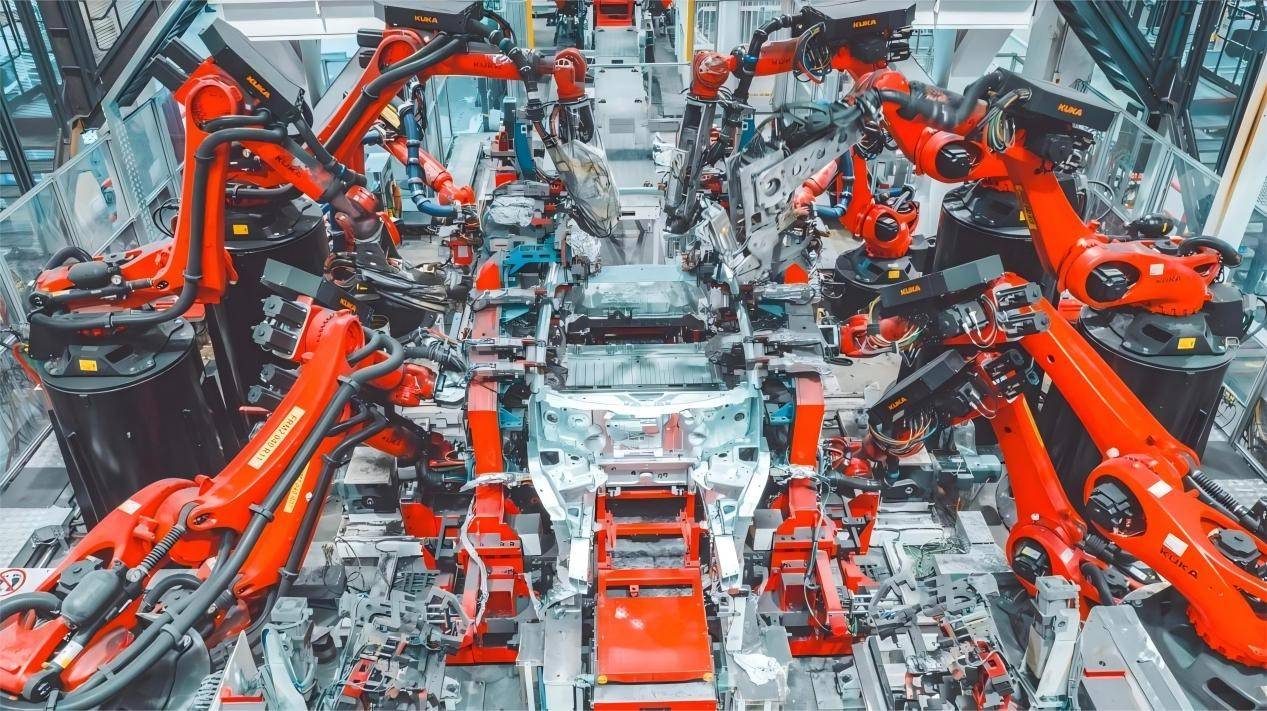
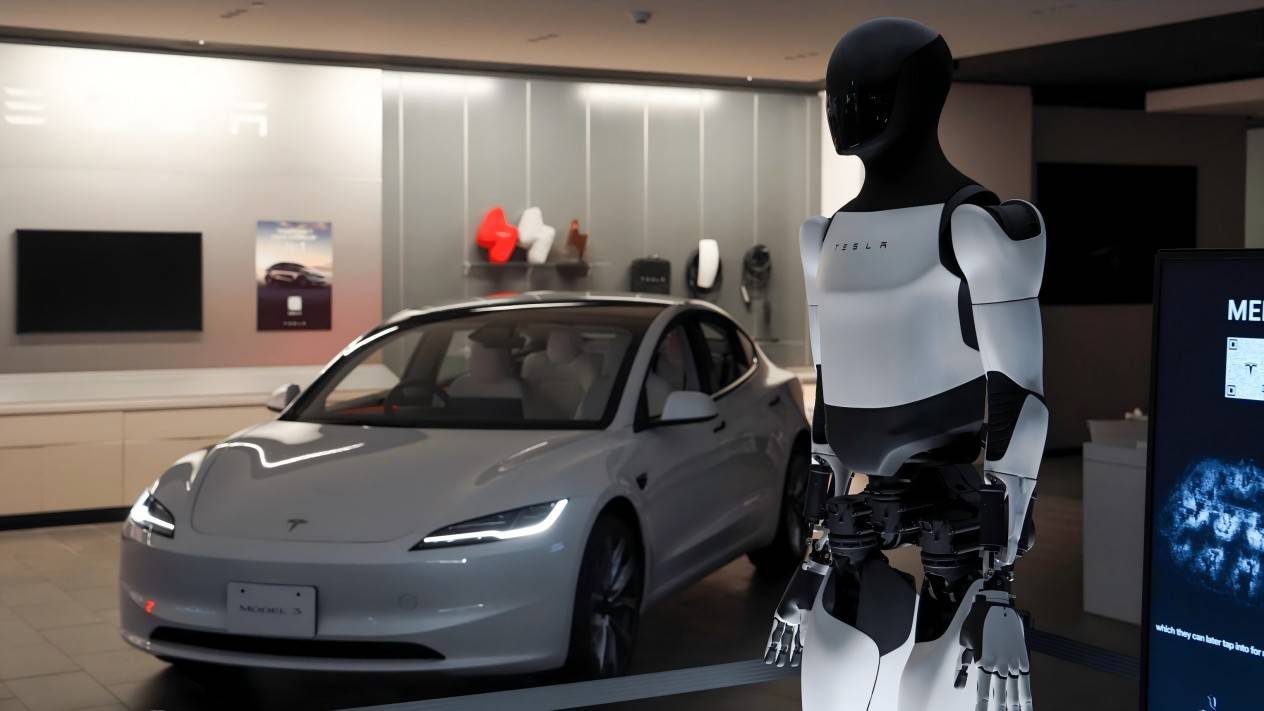
If FSD represents Tesla's software soul, Optimus humanoid robots and Cybercab Robotaxis constitute its physical world interface. The 2024 'We, Robot' event showcased not just products but an ambition to reshape labor structures through AI.
Optimus's evolution speed astounds. From initial wobbling prototypes to Gen 3 versions performing battery sorting and precision assembly in factory floors, Tesla demonstrates FSD algorithms' adaptability to robotics.
This forms Tesla's most formidable logical closed loop. The visual networks trained for automotive autonomy nearly seamlessly transfer to robotic navigation. While cars are wheeled robots and Optimus is legged, their underlying AI logic remains isomorphic.
Wall Street exults at this prospect. The global labor market exceeds tens of trillions in scale. If Optimus can replace $50,000/year blue-collar workers at $20,000/unit costs, its commercial value would dwarf automotive operations. Goldman Sachs and Morgan Stanley analysts reserve substantial growth space for 'Robotics as a Service' in their models.
Yet physical barriers prove far harder than PowerPoint projections. Regulatory 'tightrope walking' surrounds Robotaxis. Though technically prepared, legal frameworks lag. Every FSD-related accident in the U.S. triggers regulatory 'root cause' investigations.
California DMV and Public Utilities Commission cautiousness in approving driverless commercial operations directly constrains Cybercab deployment speeds. Meanwhile, in China—a market Tesla pins high hopes on—despite recurring FSD entry rumors, complex compliance battles persist over data exports, mapping qualifications, and advanced driving assistance liability definitions.
Achieving Musk's 'millions of units' Optimus production target faces manufacturing challenges akin to reinventing automotive assembly lines. Dexterous actuator lifespans, high-density battery ranges, and non-structured environment fall risks each represent engineering mountains.
Though Tesla strives to reduce actuator costs, achieving consumer electronics reliability requires more time. Moreover, China's embodied intelligence sector shows explosive potential. Leveraging robust hardware supply chains and rapid innovation ecosystems, Chinese robotics startups and tech giants rapidly launch premium products.
Whether in quadrupedal or humanoid robotics, laboratories in Shenzhen and Shanghai are advancing at breathtaking speeds, ensuring Tesla no longer monopolizes the field. While Tesla led decisively in the EV era, the robotics age pits it against hungrier, faster-reacting competitors.
Nevertheless, Tesla retains an ace: mass-manufacturing robots as 'ultra-complex appliances' aligns perfectly with its core competencies. No robotics company matches Tesla's gigafactory operational experience.
This 'AI + manufacturing' dual DNA underpins its 2025 '$3 trillion' narrative. Musk isn't building isolated products but an energy-information nexus. This combination effectively blocks latecomers' paths.
Amazon possesses clouds but lacks electricity. NVIDIA wields chips but lacks networks. Only Tesla transforms photons into electrons, electrons into computing power, and computing power into physical actions. Tesla commands pricing power at every chain link, explaining why traditional valuation models fail.
Analysts attempting 'price-to-sales' metrics find no equivalents for this 'energy + computing + manufacturing + AI' hybrid. Tesla stands alone at technology's crossroads. $3 trillion? That might merely be the starting bid. Companies wielding these three keys essentially control the OS of commercial operations.
Dao Zong You Li (Dao Makes Sense), formerly known as Wai Dao Dao, is a new media platform covering the internet and tech spheres. This original article prohibits any form of reproduction without retaining author attribution.
-
![]()
Autohome Faces a Shrinking Window of Opportunity
-
![]()
Even a Titan Like Musk Has Faced Setbacks in Fulfilling Promises
-
![]()
AI Office: The End of the Racing Era, Context Becomes the Key to Success
-
![]()
Domestic Vehicle Chassis Revolution ②: The Steering Wheel Remains, But Mechanical Connections in the Steering System Are Decreasing
-
![]()
Exploring MiniMax Design: Can Video Editing Be as Simple as Speaking?
-
![]()
Why Can SenseTime Achieve Profitability While CloudWalk Still Faces Challenges, Despite Both Adopting Large Models?
-
![]()
Domestic Car Chassis Revolution Part 3: Suspension Systems Transform Vehicle Posture, from Vibration Absorption to Active Force
-
![]()
Hainan is Going on a Crazy Satellite-Building Spree