Alibaba's Ambitious Plan: Merging All Businesses into QianWen
 01/19 2026
 624
624
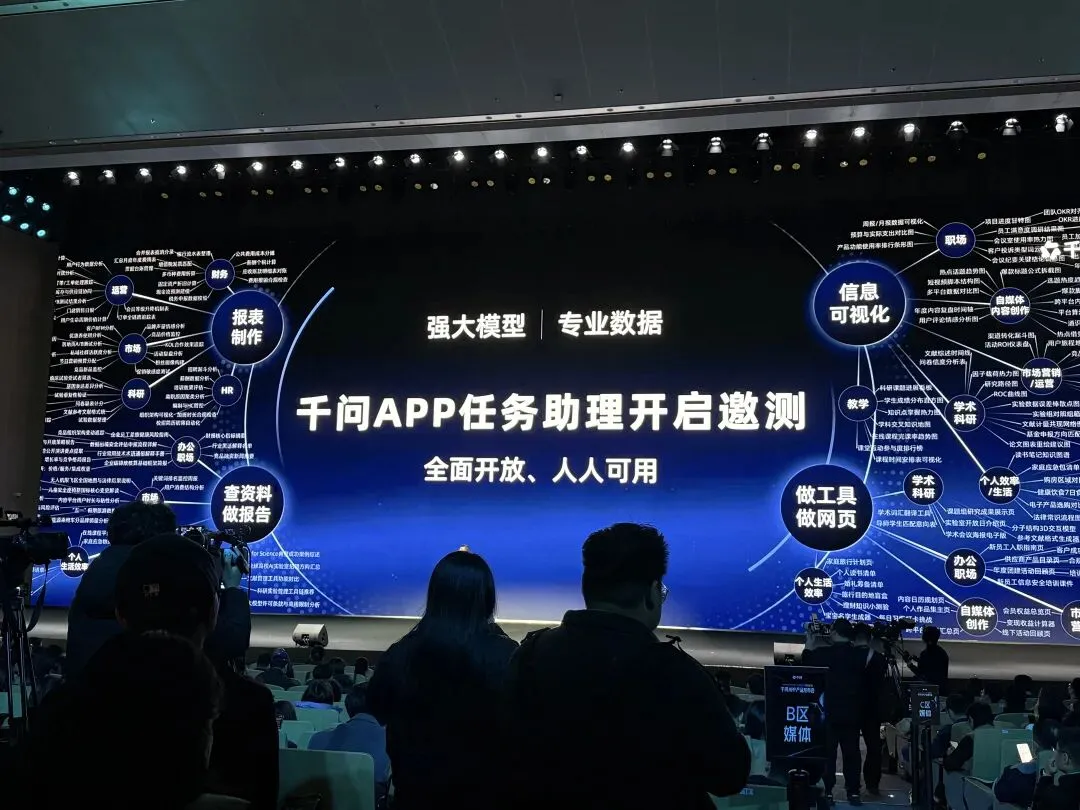
As QianWen consolidates all Alibaba businesses into a single dialogue interface, crafting an all-powerful 'Super Agent,' does it also risk overstepping the boundaries of user privacy? When everything is placed under one umbrella, does this 'All-in-One' minimalism signify the pinnacle of internet evolution or a Pandora's box of systemic vulnerabilities?
Article by Xiao Tian
In early 2026, Alibaba is intensifying its focus on the AI sector.
On January 15th, Alibaba's QianWen App unveiled a significant version upgrade, seamlessly integrating core businesses within the Alibaba ecosystem, including Taobao, Alipay, Taobao Instant Buy, Fliggy, and Amap. Now, users can accomplish a range of complex tasks—such as ordering food, shopping, booking flights, and checking routes—by simply typing a sentence into QianWen, eliminating the need to switch to third-party apps.
This move not only represents an enhancement of Alibaba's product offerings but also a systemic reorganization of its expansive commercial empire as the AI era unfolds.
Within just two months of its launch, QianWen's monthly active user base on the consumer side has soared past 100 million, leading the global AI application rankings in terms of growth rate. In the financial markets, investment banks like JPMorgan Chase and Barclays have upgraded Alibaba's ratings, recognizing it as the 'sole full-stack AI leader in China.'
However, beneath the façade of 'speak-and-do' convenience, a critical question emerges: When QianWen endeavors to unify all of Alibaba's businesses into a single dialogue box, creating an all-encompassing 'Super Agent,' is it also testing the limits of user privacy? When everything is centralized, does this 'All-in-One' approach represent the ultimate internet evolution or a Pandora's box of systemic dangers?
The Evolution of QianWen
QianWen's recent upgrade can be viewed as a 'game-changing move' in the existing app ecosystem.
The most pivotal change in this update is the activation of QianWen's 'task-handling capabilities.'
Historically, while Alibaba boasted national-level applications like Taobao, Alipay, Amap, and Fliggy, they operated in isolation, creating data silos. Planning a trip often required users to toggle between multiple apps: browsing guides on Xiaohongshu, booking flights on Fliggy, checking routes on Amap, and finally making payments on Alipay.
Now, QianWen aims to dismantle this fragmentation.
During a live demonstration at the launch event, users could simply instruct QianWen, 'Help me plan a three-day trip to Hangzhou and book flights and hotels,' and QianWen would promptly access Fliggy's ticketing interface to check availability, integrate Amap's mapping data for route planning, and generate order links directly. After user confirmation, payments could be seamlessly processed through Alipay.
This capability is underpinned by Alibaba's long-term investment in underlying technologies. Breakthroughs in QianWen's large model (Qwen) in reasoning, code generation, and multimodal understanding empower it to accurately interpret users' complex intentions and translate them into specific instructions for various business systems.
QianWen's ascent also mirrors the new Alibaba management's intense focus on AI strategy.
Since Wu Yongming assumed the role of Alibaba's CEO, AI has been designated as the group's top strategic priority. QianWen is no longer merely a technical product under Alibaba Cloud but has been elevated to a core entry point at the group level.
To achieve this upgrade, Alibaba has undertaken unprecedented resource integration internally. The QianWen team has formed joint project groups with various business units, including Taobao, Alipay, and Local Life, to connect underlying data and interfaces. This cross-departmental collaborative efficiency is unprecedented in Alibaba's history, reflecting the senior management's resolve to drive AI transformation.
Wu Jia, President of QianWen's Consumer Business Group, explicitly stated in an interview, 'QianWen's ambition extends beyond being 'Alibaba's Agent' to becoming 'the Agent for all services.'' This suggests that QianWen will also open its interfaces to third-party applications in the future, aiming to construct a new AI-centric internet operating system.
The Double-Edged Sword of the 'Super App'
When all services converge into a single dialogue box, the convenience is accompanied by the downside of blurred privacy boundaries and concentrated security risks.
To achieve QianWen's 'all-powerful' status, users must grant nearly all data permissions.
Want QianWen to order food for you? You must authorize it to access your Taobao Instant Buy account, historical orders, and taste preferences. Want it to book flights for you? Your ID number and itinerary information must be accessible. Want it to handle financial reports for you? Your company's confidential documents must be uploaded to its cloud.
This creates a massive privacy black hole. Although Alibaba assures that all data processing adheres to stringent privacy standards, in the era of big data, once data is interconnected, user profiles become exceptionally detailed. QianWen not only knows your culinary preferences and travel destinations but may even understand your consumption habits and financial status better than you do.
The excessive concentration of data inevitably raises user concerns. A seasoned internet user posed a question on social media: 'If QianWen is compromised, does it mean my entire digital life is at risk?'
A more tangible issue is whether Alibaba will leverage this data for more covert commercial monetization. For instance, Amap has previously faced controversies over 'price discrimination' and precise recommendations. Now that QianWen possesses multi-dimensional user data, will it infuse more commercial interests into product recommendations rather than purely basing them on user needs?
Beyond privacy concerns, the 'All-in-One' product logic itself carries significant systemic risks.
In the traditional app ecosystem, each application functions independently without interfering with others. If Taobao crashes, it doesn't affect your use of Amap for navigation; if Alipay goes down, you can still use WeChat Pay.
However, in the 'Super Agent' model constructed by QianWen, all services rely on a centralized entry point. Once QianWen's system malfunctions, algorithms err, or is halted by regulations, will users face the risk of 'life paralysis'?
This highly integrated model may also lead to ecosystem stagnation. As users become accustomed to obtaining services through QianWen, traffic will be firmly locked within the Alibaba system, potentially marginalizing third-party developers and small-to-medium merchants. This contradicts the open and diverse spirit of the internet.
QianWen attempts to reconnect Alibaba's vast and dispersed commercial empire through a single dialogue box using technological prowess. For users, this indeed brings unprecedented convenience. However, we must also remain vigilant about the side effects of this 'technological authoritarianism.' As AI assumes control over our life decisions, are we gradually relinquishing our right to choose? When all data converges into a single superbrain, is there still a sanctuary for our privacy?
-
![]()
Registered Capital Slashed to 372 Million Yuan! Yutong Optical Finalizes Industrial and Commercial Change Registration
-
![]()
Zhuque-3 Successfully Lands, and 'Time Traveler' Secures Another ¥100 Million in Funding: China's Commercial Space Industry Experiences a 'Dynamic August'
-
![]()
Autohome Faces a Shrinking Window of Opportunity
-
![]()
Even a Titan Like Musk Has Faced Setbacks in Fulfilling Promises
-
![]()
AI Office: The End of the Racing Era, Context Becomes the Key to Success
-
![]()
Domestic Vehicle Chassis Revolution ②: The Steering Wheel Remains, But Mechanical Connections in the Steering System Are Decreasing
-
![]()
Exploring MiniMax Design: Can Video Editing Be as Simple as Speaking?
-
![]()
Why Can SenseTime Achieve Profitability While CloudWalk Still Faces Challenges, Despite Both Adopting Large Models?