What is the Core Capability for Embodied AI to Move from 'Demonstrating Skills' to 'Real-world Application'?
 01/20 2026
 556
556
The industry has hailed 2025 as the inaugural year for the commercialization of embodied AI. 'Embodied AI' made its debut in the government work report, emerging as one of the key future industries to be nurtured. Additionally, the proposal for the '15th Five-Year Plan' advocates for promoting embodied AI as a new engine for economic growth.
Looking back, the roots of embodied AI can be traced to 1950. British computer scientist Alan Turing first introduced the concept of 'embodied intelligence' in his seminal paper 'Computing Machinery and Intelligence.' He emphasized that for a system to exhibit intelligent behavior and adaptability, it must possess a physical body capable of real-time interaction, perception, and learning within its environment.
General-purpose humanoid robots serve as the ultimate embodiment and carrier of this definition. Hence, this article will use humanoid robots as a case study to envision the landscape of the embodied AI industry in 2026.
As 2026 approaches, a clear consensus has emerged within the industry: it will mark the year when humanoid robots transition from laboratory demonstrations to large-scale production and real-world deployment. Driven by technological advancements, cost reductions, market demand, and a mature industrial ecosystem, a dual competition centered on 'mass production' and 'physical intelligence' has begun, signaling the industry's imminent shift from 'demonstrating skills' to 'real-world application.'
01. Humanoid Robot Industry Poised for Mass Production in 2026
Beyond the buzz of technological showcases, humanoid robots are steadily moving from laboratory settings to practical applications in factories and commercial environments. The industry widely anticipates 2026 as a pivotal turning point for large-scale production, driven by a convergence of factors.
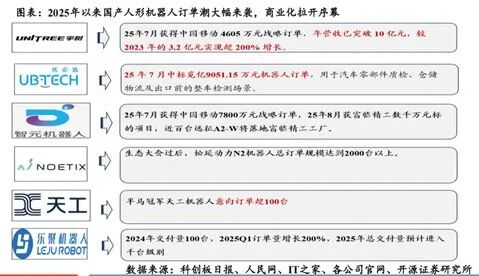
Firstly, rapid technological maturation and significant cost reductions are breaking down barriers to mass manufacturing. After years of development, hardware solutions for humanoid robots have stabilized and converged. Meanwhile, the localization of core components has substantially lowered overall costs. These optimizations are directly reflected in end-user products, with some lightweight, consumer-oriented humanoid robots now priced in the ten-thousand-yuan range, paving the way for broader market adoption.
Secondly, well-defined application scenarios and genuine market demand are emerging, providing a direct impetus for mass production. Early 'proof-of-concept' demonstrations are no longer sufficient; robots must now prove their practical value. Industrial manufacturing is seen as the breakthrough sector, with an increasing number of robots 'entering factories' to perform repetitive tasks such as material handling and loading/unloading in automotive plants and component production lines. These successful pilot projects are translating into tangible orders, driving production capacity expansion.
Thus, the humanoid robot industry in 2026 stands at the threshold of transitioning from 'demonstration applications' to 'large-scale commercialization.' This represents not just a quantitative leap but also the industry's initiation into real-world commercial scrutiny and sustainable, self-sufficient development.
02. Physical AI Capabilities Will Shape the Humanoid Robot Industry's Trajectory in 2026
However, mass production is merely the first step toward industrialization. The true value of robots lies in their ability to autonomously complete tasks in complex, unstructured environments. As hardware becomes increasingly standardized, the industry's competitive focus is shifting from 'physical capabilities' to 'cognitive intelligence,' with physical AI emerging as the critical factor for overcoming application bottlenecks and achieving commercial viability.
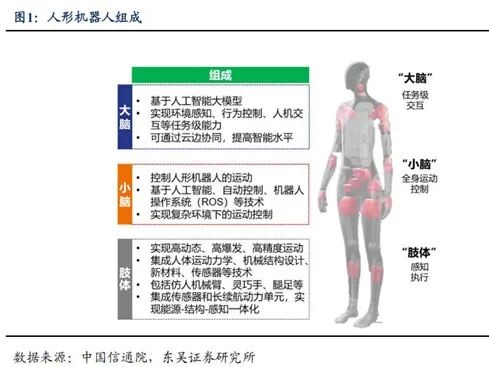
Traditional robots have relied heavily on pre-programmed instructions, often struggling when faced with unforeseen environmental changes. Their fundamental limitation lies in their inability to truly 'comprehend' the laws governing the physical world. The mission of physical AI is to endow robots with this understanding, akin to equipping them with an 'intuition' for simulating physical processes. For instance, a robot pouring water can now anticipate liquid sloshing, while one handling eggs can autonomously adjust grip strength. Leading companies like NVIDIA are developing tools such as the Cosmos world model to teach AI to predict 'the next state of the world,' marking a paradigm shift from language processing to understanding and manipulating the physical realm.
Breakthroughs in this domain are pivotal for humanoid robots to transition from laboratories to real-world commercialization. Only when robots can adapt to unstructured environments like humans can they economically replace human labor and undertake valuable tasks in industrial manufacturing, logistics, warehousing, and even domestic services. Thus, physical AI is no longer an optional technology but the cornerstone for robots to integrate into and serve our physical world.
03. The Competitive Landscape of the Humanoid Robot Industry in 2026 Remains Highly Fluid
From a competitive standpoint, the humanoid robot industry in 2026 is expected to remain a dynamic and uncertain battleground, largely shaped by its unique developmental stage. Currently, the industry is at a critical juncture, transitioning from technological demonstrations and small-scale validations to large-scale production and commercialization. This interim phase is inherently fraught with uncertainty, characterized by coexisting old and new technological paradigms and a lack of consensus on market and application directions.
One of the primary sources of confusion stems from the unresolved key technologies determining robot intelligence. As previously mentioned, while robot 'bodies' are evolving rapidly, the 'brains'—embodied AI large models—remain in their infancy. Overcoming the core challenge of enabling robots to truly understand and adapt to complex physical environments remains paramount. Meanwhile, at the hardware level, critical components like dexterous hands lack standardized technical solutions, with companies pursuing divergent paths and yielding vastly different products and solutions.
Simultaneously, the industry's commercialization strategies are rapidly evolving through trial and error, further intensifying competitive uncertainty. Companies are experimenting with deploying robots in vastly different scenarios, ranging from automotive manufacturing and smart logistics to domestic services. However, these scenarios impose vastly different requirements on cost, reliability, and intelligence levels, making it unlikely for a single universal product to dominate all markets. The fragmentation of application scenarios inevitably fosters diverse competitive strategies and product morphologies.
Finally, an unprecedentedly large pool of participants and an immature industrial ecosystem underpin this chaotic landscape. In China alone, over 150 companies are engaged in humanoid robot development, according to Omdia's 'General-Purpose Embodied Robot Market Radar.' Given the absence of standards, technological immaturity, and untested markets, the 2026 competition is unlikely to clarify or concentrate swiftly, with intense rivalry expected to persist for some time.
04. Conclusion
In summary, 2026 represents a pivotal year for the embodied AI and humanoid robot industry, marked by dual significance as the 'year of mass production' and the 'year of intelligent breakthroughs.' The industry is crossing the threshold from technological demonstrations to commercial practicality, with declining hardware costs and clarified scenario demands driving large-scale adoption. However, the core determinant of future success has shifted from 'agile limbs' to 'intelligent brains'—breakthroughs in physical AI will be the decisive factor in unlocking complex scenarios and realizing true value. While the path ahead is fraught with uncertainties in technological trajectories and competitive dynamics, a dual competition centered on production and intelligence has officially commenced, signaling the industry's transition from conceptual exploration to commercial and technological deep waters.
- End -
-
![]()
Registered Capital Slashed to 372 Million Yuan! Yutong Optical Finalizes Industrial and Commercial Change Registration
-
![]()
Zhuque-3 Successfully Lands, and 'Time Traveler' Secures Another ¥100 Million in Funding: China's Commercial Space Industry Experiences a 'Dynamic August'
-
![]()
Autohome Faces a Shrinking Window of Opportunity
-
![]()
Even a Titan Like Musk Has Faced Setbacks in Fulfilling Promises
-
![]()
AI Office: The End of the Racing Era, Context Becomes the Key to Success
-
![]()
Domestic Vehicle Chassis Revolution ②: The Steering Wheel Remains, But Mechanical Connections in the Steering System Are Decreasing
-
![]()
Exploring MiniMax Design: Can Video Editing Be as Simple as Speaking?
-
![]()
Why Can SenseTime Achieve Profitability While CloudWalk Still Faces Challenges, Despite Both Adopting Large Models?