2026 Shenzhen Intelligent Connected Vehicle “New Spring Gala” Yields Fruitful Outcomes: Leveraging “Trust” as the Brush and “Ecosystem” as the Canvas to Redefine the Rules of China’s Autonomous Drivin
 01/20 2026
 764
764
Introduction
The Shenzhen Intelligent Connected Vehicle New Spring Gala, held on January 16, 2026, may have seemed like a mere annual recap, but it was, in essence, a pivotal event of “commitment” and “rule-setting” aimed at navigating the industry’s deep waters.
At a critical juncture where the number of unmanned delivery vehicles has surpassed 1,100 and monthly orders are nearing 1.8 million, Shenzhen has made a bold declaration:
China’s autonomous driving race is transitioning from the nascent stage (junior phase) of “technological breakthroughs” and “policy-driven road access” to an advanced track centered on “systematically building trust” and “nurturing open ecosystems.”
This event marks the “cornerstone-laying” for the new track.
Unmanned Vehicle Insights (WeChat Official Account: Unmanned Vehicle Insights) delves into this with everyone!
(For reference, please click: “Trust 2026”: The 2026 Shenzhen Intelligent Connected Vehicle New Spring Gala, held on the afternoon of January 16, co-organized by Meituan Unmanned Vehicles, Neolix Unmanned Vehicles, JD.com, and China Automotive Technology (Shenzhen))
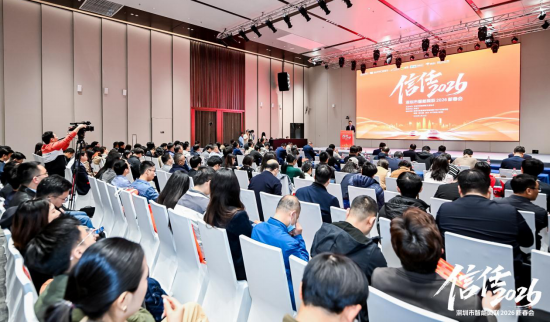
I. Strategic Ascent: From “Road Access” 1.0 to “Trustworthiness” 2.0
Shenzhen’s intelligent connected vehicle industry policies are undergoing a pivotal cognitive and strategic evolution.
The initial focus (1.0 phase) was on “green-lighting” innovative technologies through legislation and open test roads, facilitating the transition from “non-existent” to “laboratory to reality.”
Now, with over 20,000 unmanned delivery vehicles operating nationwide and Shenzhen’s fleet exceeding 1,100 vehicles, forming a tangible operational network, the industry’s bottleneck has shifted from “can it operate” to “can it be trusted” and “can it be effectively managed.”
Hence, the theme of “Trust 2026” is far from abstract; it directly addresses the industry’s lifeblood.
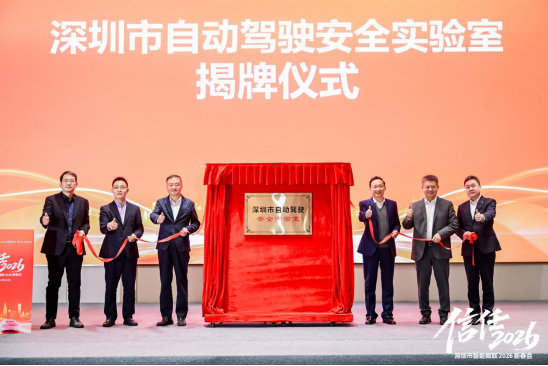
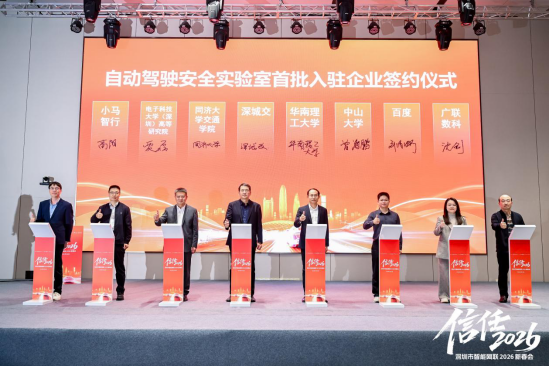
The unveiling of the Shenzhen Autonomous Driving Safety Lab epitomizes this strategic shift.
It is not a proprietary institution for a single enterprise but an “innovation consortium” guided by government departments, initiated by the Shenzhen Intelligent Connected Transportation Association, led by the Shenzhen Urban Transport Planning Center, and united with top universities like Tongji and the University of Electronic Science and Technology of China, as well as industry giants across the entire supply chain, including BYD, Huawei, Pony.ai, Meituan, Jiushi, and White Rhino.
(For reference, please click: Establishment of the Shenzhen Autonomous Driving Safety Lab: Uniting Forces Across the Entire Industry Chain, Including Tongji University, University of Electronic Science and Technology of China Shenzhen Institute, BYD, Meituan, Pony.ai, Huawei, Baidu, Jiushi, and White Rhino)
Its mission, “Safe Intelligent Driving, Leading the Future,” explicitly targets “full-cycle safety challenges.”
This signifies Shenzhen’s ambition to construct, at the city level, an independent, authoritative, and comprehensive safety technology standards and verification system spanning from R&D to operations.
This is akin to establishing a “national-level quality supervision and inspection center” for autonomous driving, aiming to issue “safety certifications” that reassure the public, provide regulatory evidence, and enable insurable pricing, with implications that extend far beyond individual technological breakthroughs.
II. Ecosystem Cultivation: From “Enterprise Isolation” to “City-Level Synergy”
If the safety lab is the technological bedrock for addressing “trust,” then the ecosystem collaboration showcased at this event forms the operational network that ensures “trust” translates into commercial viability.
Shenzhen aspires to become a provider of a “city-level operating system” for the intelligent connected vehicle industry.
This ecosystem cultivation is reflected at three levels:
1. Aggregation at the Core Innovation Layer:
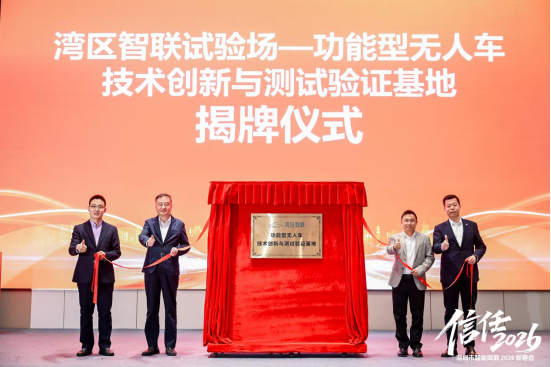
The “Bay Area Intelligent Connected Test Site” unveiled in Pingshan serves as the sole government-invested land-air integrated test base in the Guangdong-Hong Kong-Macao Greater Bay Area, forming a closed loop of “R&D-testing-validation” with the safety lab and providing top-tier infrastructure for the ecosystem.
2. Connectivity at the Industrial Collaboration Layer:
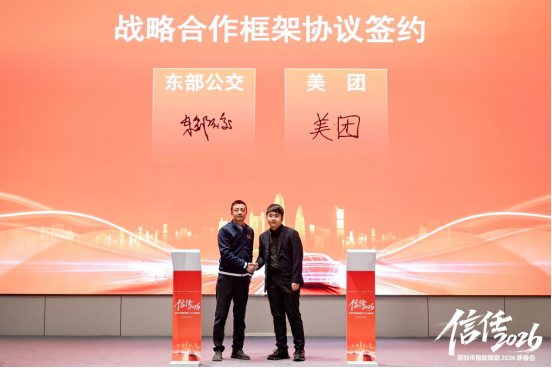
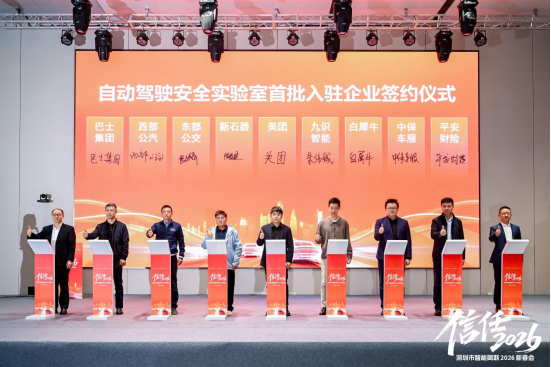
The most emblematic example is the strategic cooperation between Meituan Unmanned Vehicles and Eastern Bus.
This is not merely a partnership between two enterprises but a profound integration of an “internet technology platform” with “urban public service infrastructure,” facilitating the high-quality development of Shenzhen’s unmanned logistics 3.0.
The “bus depot + unmanned vehicle” model aims to revitalize urban existing depot resources, providing low-cost, networked transit, charging, and maintenance hubs for unmanned vehicles, significantly reducing operational enterprises’ fixed costs.
This cross-industry scenario reuse and resource integration can only be efficiently driven from a city-level top-down perspective, with far higher efficiency than enterprises acting independently and “scouring for land” everywhere.
3. Completion at the Cross-Industry Support Layer:
The involvement of institutions like Zhongbao Auto Services and Ping An Property Insurance is pivotal.
The “last mile” of large-scale commercialization of autonomous driving inevitably requires innovative insurance and financial service support.
Their participation signifies the ecosystem’s extension from technology, manufacturing, and operations to deeper layers like risk sharing and financial support.
III. Signals Unveiled: Paving the Path for the “All-Domain Empowerment” Era
This event has released several clear signals regarding the future trajectory of China’s intelligent connected vehicle industry over the next few years:
1. “Safety” Will Become the Most Pivotal Entry Barrier and Competitive Edge
In the future, whether a vehicle can secure a spot on the “safety whitelist” endorsed by similar Shenzhen safety labs may become a prerequisite for accessing key operational areas, gaining user trust, and reducing insurance costs.
Safety has evolved from a “baseline” to a “high bar.”
2. “Ecosystem Niche” Competition Surpasses “Whole Vehicle” Competition
Enterprises need to reevaluate their positions in the future industry landscape.
Will they be an “Android” (open platform, akin to some tech companies), a “Samsung” (integration and operations, like Meituan and JD.com), a “Qualcomm” (core components, like Huawei), or an “APP developer” focused on a specific niche scenario?
The ecosystem matrix showcased by Shenzhen provides integration interfaces for various types of enterprises.
(For reference, please click: Neolix Accelerates the Landing of Trillion-Level Special Unmanned Vehicles: Open Platform + Standard Co-construction, a Key Leap from “Selling Products” to “Building Ecosystems”)
3. Profound Transformation of Local Government Roles
From “regulators” and “resource providers” to “architects and operators of innovative ecosystems.”
Shenzhen systematically reduces transaction costs and innovation risks across the entire industry through a series of “asset-light, coordination-heavy” measures, including associations, labs, test sites, and strategic cooperation facilitation.
This is about cultivating “fertile soil” rather than merely introducing a few “big trees.”
IV. Shenzhen’s 2026 New Spring Gala: An Annual Report Scripted with “Trust” as the Brush and “Ecosystem” as the Canvas
Currently, China’s unmanned delivery vehicle industry is entering a fast track of commercial development.
The “2025 Unmanned Delivery Vehicle Industry Report” released at the event reveals that, as the world’s largest and most active unmanned delivery market, China has deployed over 20,000 unmanned delivery vehicles, leading globally.
Among them, Shenzhen’s fleet has surpassed 1,100 vehicles, with monthly orders nearing 1.8 million, initially constructing a city-wide unmanned delivery network.
(For reference, please click: 2025 Shenzhen Functional Unmanned Vehicle Ten Major Events: 1,122 Unmanned Vehicles + 6,000 Kilometers of Open Roads, Turning Autonomous Driving into Urban New Infrastructure)
It indicates that China’s intelligent connected vehicle competition has entered a systematized capability showdown at the city or even regional level.
Here, the competition is not just about a company’s LiDAR resolution or algorithm iteration speed but who can first build a complete ecosystem that enables safe technological implementation, enterprise collaboration, and societal acceptance.
In conclusion, Unmanned Vehicle Insights (WeChat Official Account: Unmanned Vehicle Insights) believes:
Delivering results is akin to stamping the seal of approval on “trust.” As an industry insider remarked, “Shenzhen is not afraid of enterprises making mistakes; it fears the absence of data, standards, and reviews.” The second half of unmanned vehicles is not about who runs the fastest but who stumbles the least. Shenzhen has provided the answer: trust first, then accelerate. What are your thoughts, dear reader?
#UnmannedVehicleInsights #AutonomousDriving #SelfDriving #UnmannedVehicles
-
![]()
Dispelling Myths: Official Clarifications and Tesla's View on the Longevity of New Energy Vehicles
-
![]()
2026 New Domain and New Quality Innovation Competition Kicks Off in Beijing: Leveraging the '922' Framework to Bridge the Gap from 'Competition to Market'
-
![]()
Laying Off Hundreds of Thousands: Can European Automakers Triumph?
-
![]()
Seres: Navigating Beyond the 'Realm'
-
![]()
iFLYTEK Anticipates RMB 200 Million Loss, Embracing 'Subtraction' and 'Addition': Abandoning Low-Margin Businesses and Betting on AI's Future
-
![]()
ByteDance’s ‘Most Loyal’ U.S. Investor Exits, Notching 15,000-Fold Returns
-
![]()
DeepSeek’s Liang Wenfeng Becomes World’s Wealthiest in AI, Net Worth Skyrockets to $36 Billion
-
![]()
How Can Embodied AI Overcome the Data Challenge of 'Being Able to Work'? Solutions from Five Leading Players