After the Screen Fades: OpenAI's Bold Leap into Smart Hardware
 01/21 2026
 674
674
In the prevailing narrative of technological advancement, we've grown accustomed to a linear progression: bigger screens, higher resolutions, and more dazzling interactions. From smartphones to tablets, and then to foldable gadgets, each iteration seems to endlessly pile on visual stimuli, firmly tethering users to their screens.
However, in early 2026, a seemingly understated announcement quietly disrupted this trajectory:
OpenAI is set to unveil its first hardware offering—a screenless AI pen. Its minimalist design, reminiscent of a classic metal fountain pen, eschews both display and touch controls, as if intentionally sidestepping the graphical interfaces we've come to rely on.

This seemingly modest product choice actually hints at a broader trend: AI may be seeking liberation from screens, returning to the physical world and integrating into humanity's most innate behaviors—writing, speaking, and jotting down notes.
So, the question arises: Why would OpenAI, a company renowned for its large models and software services, bet its first hardware venture on a pen? What technical considerations underpin this decision?

The true intrigue surrounding OpenAI's inaugural hardware product lies not in its impending release, but in its divergence from any familiar category of smart devices.
In May of that year, OpenAI completed an all-stock transaction valued at approximately $6.5 billion, fully acquiring io, an AI hardware startup co-founded by former Apple Chief Design Officer Jony Ive. This marked OpenAI's largest acquisition to date, bringing on board io's entire team of 55 top-tier hardware, manufacturing, and industrial design experts, and officially propelling OpenAI into the realm of hardware development and design.
According to leaked information, this hardware, codenamed Gumdrop, boasts an ultra-minimalist design resembling a metal fountain pen, weighing just 10–15 grams. It lacks a screen, camera, or even a traditional operating system interface. Writing is not its primary function; handwriting recognition merely serves as one of its input channels. It does not aim to replace smartphones or computers but deliberately avoids the dimension of 'display.'

Its interaction logic is distilled to the essentials: you speak, it comprehends; you don't need to look, yet it remains ever-ready. In other words, it is always poised to assist and fades into the background when not in use.
This raises a more fundamental question: When large models become sufficiently powerful, is a screen still necessary as the default interface for human-machine interaction?
Reflecting on the past two decades of consumer electronics evolution, from feature phones to smartphones, laptops to smartwatches, AR glasses, and even AI glasses, nearly all hardware labeled 'smart' has converged on a single focal point: the screen. The screen serves not only as an outlet for information but also as the core medium through which users confirm system status, establish control, and complete feedback loops. Indeed, 'screen equals smart' has nearly become an industry axiom.
Yet, OpenAI's first hardware product deliberately severed this path, attempting to answer how to achieve the most natural and seamless human-machine collaboration with minimal physical presence.
This brings us to the rise of screenless AI hardware. Screenless AI hardware shifts away from visual-centric interactions, instead relying on voice, environmental perception, contextual understanding, and even behavioral habits. These devices are typically compact, unobtrusive to wear or carry, and emphasize 'always available, gone when done,' aiming to integrate AI into the flow of life rather than interrupt it.
Moreover, OpenAI is not alone in exploring screenless AI. In recent years, under the development of AI, numerous players have ventured into this sector.
So, how is screenless AI hardware evolving? What are its defining characteristics?

If OpenAI's pen is seen as a radical experiment, it did not emerge in a vacuum. Before it, screenless AI hardware had already been quietly infiltrating the real world in various inconspicuous yet persistent ways.
The most typical, and often overlooked, category is the rise of AI toys and companionship devices in China in recent years. From early smart story machines and voice-interactive dolls to later child companionship robots and desktop pets powered by large models, these products deliberately avoid screens or retain only minimal indicator lights and status feedback, compressing interactions almost entirely into speaking and listening.
Take the domestically popular BubblePal as an example. Essentially a small voice module attachable to plush toys, it lacks a screen and has almost no operable interface. Yet, through continuous dialogue, storytelling, and emotional responses, it quickly establishes a sense of companionship.

From a technical standpoint, these products are not cutting-edge, but companionship is a highly fault-tolerant scenario. Inaccurate answers or occasional logical confusion do not lead to severe consequences and may even be perceived as 'quirky.' In such interactions, screenless interaction becomes viable and validates a new logic of smart interaction: when the system is adept at carrying on a conversation, humans do not insist on seeing an interface.
Of course, the screenless trend has not stopped at toys. Another crucial path is the 'screen downgrade' in practical smart devices. Increasingly, screens remain present but are no longer the core entry point for interaction. Smart earphones, smart glasses, automotive systems, and smart home devices are all converging toward the same direction: reducing explicit operations and enhancing intent understanding.
Take smart glasses, an area being heavily invested in by giants like Alibaba, Baidu, and ByteDance. Instead of telling the system what you want to do, the system infers your needs through voice commands and environmental information. This shift essentially transforms interaction logic from command-driven to intent-driven. Here, the screen's role recedes from center stage to a backup option.

Taking this a step further, there is a class of solutions almost never recognized as hardware yet may be the strongest contenders for screenless AI. These do not require user interaction or emphasize presence but run continuously in the background, automatically recording, organizing, reminding, and completing tasks. Users often perceive their value only when results appear. For instance, in the automotive sector, intelligent driving systems can proactively plan the fastest routes and avoid obstacles without manual intervention.
When these phenomena are viewed collectively, it becomes evident that screenless is not a stylistic choice but an inevitable trend. However, currently, screenless AI hardware has not yet become a core product and still faces numerous challenges and difficulties in its development.

Reviewing the development of screenless AI, products like Humane AI Pin—which raised hundreds of millions in funding and was hailed as the 'next-generation productivity tool'—have far less market appeal than talking dolls costing a few dozen dollars. Child voice story machines, intelligent companionship robots, and even electronic pets capable of reciting poetry have achieved higher usage frequencies and user stickiness in real life.
The core issue is that current screenless AI hardware cannot yet be all things to all people. It aspires to handle high-level tasks but lacks sufficiently reliable underlying capabilities; it pursues minimalist design yet must confront complex realities. This contradiction of high expectations and low fault tolerance causes frequent setbacks in implementation.
Specifically, screenless AI currently faces two major bottlenecks:
On one hand, AI hallucinations persist, and the technical challenges are greater than those of large models. Even as large models mature in text generation, real-time voice interactions remain prone to errors in contextual understanding, intent recognition, and fact-checking. A vague request like 'Help me book a meeting tomorrow' might be misinterpreted as booking a conference room, flight tickets, or even a restaurant. Without a screen for immediate confirmation, trust quickly erodes. In contrast, toy products with singular functions (e.g., storytelling) offer highly controlled outputs, fostering greater peace of mind.
On the other hand, productivity-oriented AI hardware tools struggle with social acceptance, while their toy-like attributes prove more attractive. Due to the technology's developmental stage, people are more inclined to label it as a toy or entertainment device.
For manufacturers aiming to position screenless AI hardware as productivity tools, rather than attempting to solve all problems with a single device, it may be wiser to step back and focus on a high-value, high-tolerance, and high-demand niche scenario, delivering a polished experience.
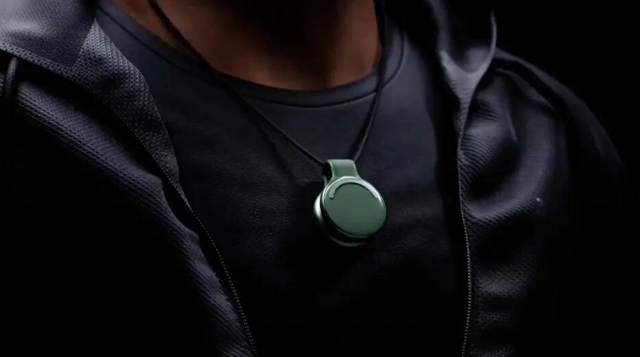
Among current screenless solutions, besides toys, products like Limitless's AI pendant and Meta's Ray-Ban glasses follow a similar logic: they do not aim to be all-purpose assistants but enhance specific functions. Limitless focuses on 'all-day memory,' recording, transcribing, and summarizing silently like a black box without attempting to answer questions. The Ray-Ban glasses prioritize being excellent sunglasses before functioning as AI devices capable of photography and music playback.
OpenAI's screenless pen is also noteworthy for avoiding the trap of the all-purpose assistant, instead targeting lightweight support for knowledge workers: meeting notes, idea capture, real-time translation, and literature summarization. In these scenarios, users tolerate occasional errors to a certain degree.
In these niche yet elegant sectors, screenless AI does not need to be perfect; it merely needs to be more natural, less intrusive, and better aligned with workflows than existing solutions. Once it establishes a reliable reputation in a specific scenario, users will naturally expand its usage boundaries. This, perhaps, is the true path from toys to productivity.
Ultimately, the future of screenless AI lies not in showcasing technical prowess but in restraint: restraining the obsession with universality, restraining excessive hardware design, and restraining grand narratives about replacing smartphones. This restraint may also explain why OpenAI's hardware pen has sparked contemplation about the next generation of screenless AI hardware.

-
![]()
Registered Capital Slashed to 372 Million Yuan! Yutong Optical Finalizes Industrial and Commercial Change Registration
-
![]()
Zhuque-3 Successfully Lands, and 'Time Traveler' Secures Another ¥100 Million in Funding: China's Commercial Space Industry Experiences a 'Dynamic August'
-
![]()
Autohome Faces a Shrinking Window of Opportunity
-
![]()
Even a Titan Like Musk Has Faced Setbacks in Fulfilling Promises
-
![]()
AI Office: The End of the Racing Era, Context Becomes the Key to Success
-
![]()
Domestic Vehicle Chassis Revolution ②: The Steering Wheel Remains, But Mechanical Connections in the Steering System Are Decreasing
-
![]()
Exploring MiniMax Design: Can Video Editing Be as Simple as Speaking?
-
![]()
Why Can SenseTime Achieve Profitability While CloudWalk Still Faces Challenges, Despite Both Adopting Large Models?