The New Era of Internet Red Envelope Wars: Intense Rivalry for AI Traffic Gateways | Industry Insights for All
 01/27 2026
 582
582
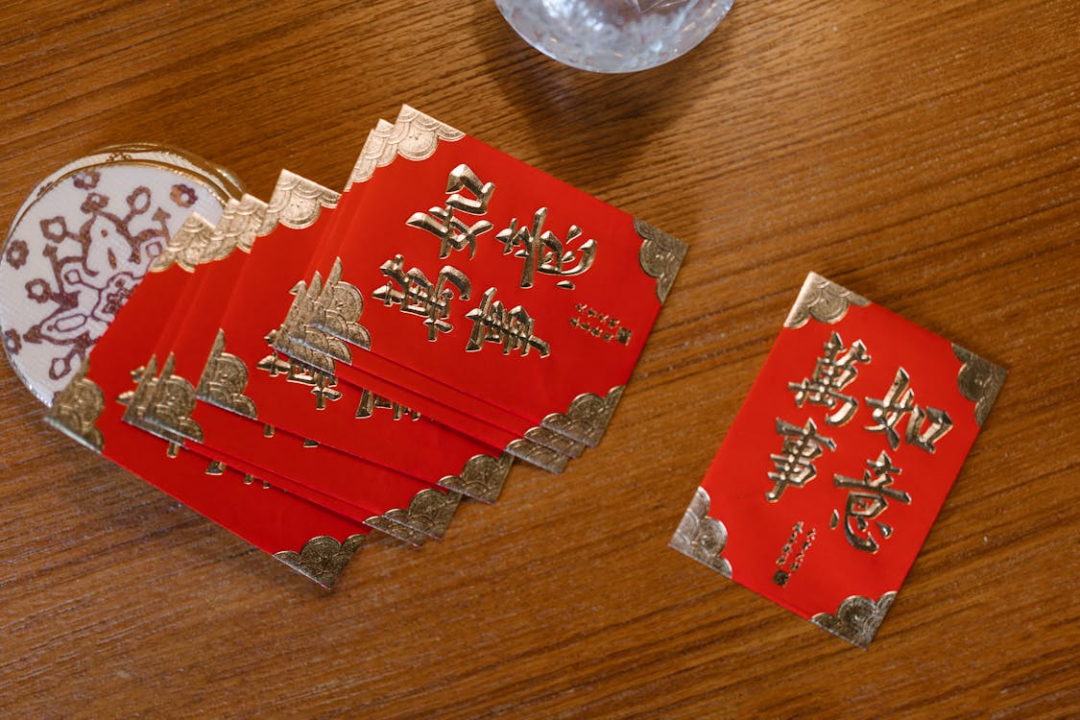
As the Spring Festival of the Horse Year draws near, internet behemoths have once again plunged into a fresh round of the "red envelope frenzy"...
However, this year's strategy has adapted to the times, showcasing a significant shift: beyond payment and short video platforms, the primary battleground now encompasses each company's artificial intelligence (AI) applications.
Behind this transformation lies a fierce struggle among various entities for the future "AI traffic gateways"...

Quick Overview of the Battle: How Are the Tech Titans Positioned?
According to media reports, the key players and their strategies in this year's AI red envelope contest can be summarized as follows:
1. Baidu Wenxin:
From January 26 to March 12, users engaging with the "Wenxin Assistant" within the Baidu APP can vie for a share of a 500 million yuan cash red envelope pool, with the chance to win up to 10,000 yuan. The Baidu APP also serves as the chief AI partner for the "2026 Beijing Radio and Television Station Spring Festival Gala."
2. Tencent Yuanbao:
Commencing February 1, users on the Yuanbao APP can participate in sharing a 1 billion yuan cash red envelope pool. The red envelopes come in various forms, including "10,000-yuan Little Horse Cards," cash red envelopes, and sharing red envelopes, among others.
3. ByteDance:
Volcano Engine has secured the position of "Exclusive AI Cloud Partner for the 2026 CCTV Spring Festival Gala," and ByteDance's AI application, "Doubao," will also unveil various interactive gameplay options on the Spring Festival Gala stage.
In essence, companies are striving to entice more users to utilize these AI assistants by offering incentives akin to "a little extra cash in your pocket." The underlying logic is not particularly groundbreaking.
Why Has the Spring Festival Become a Must-Win Battleground? A Historical Perspective
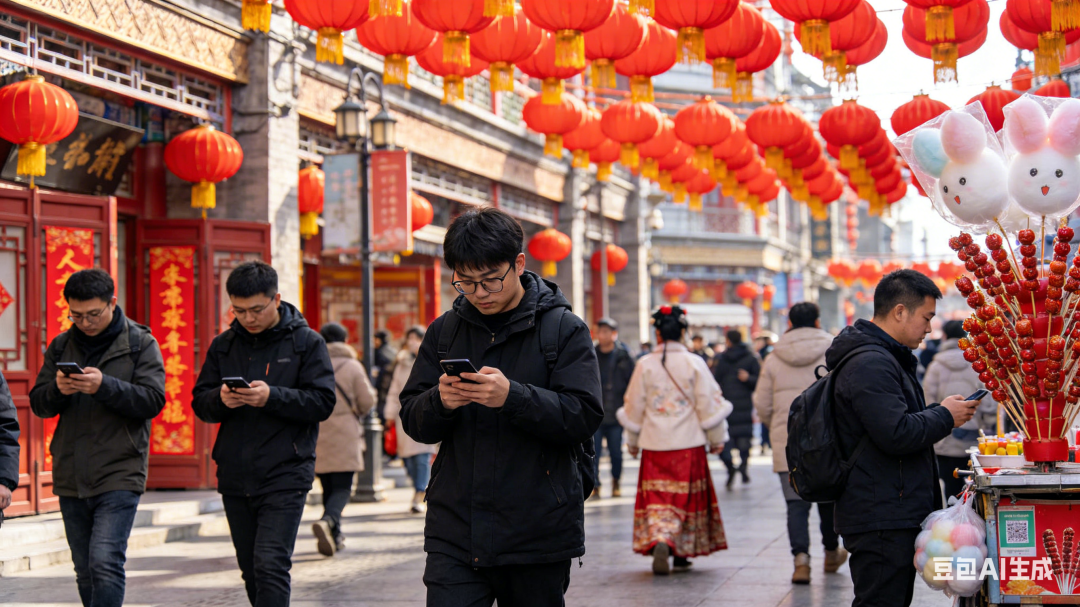
It's widely acknowledged that the Spring Festival holiday period in China represents the most socially and commercially aggregative time, making it a golden window for manufacturers to promote their products.
In recent years, several brands have successfully catapulted to national prominence through effective Spring Festival marketing.
For instance, in 2015, WeChat collaborated with the Spring Festival Gala and distributed 500 million yuan in red envelopes through its "shake" feature, rapidly popularizing WeChat Pay and catching Alipay off guard.
Similarly, during the Spring Festivals of 2020 and 2021, Kuaishou and Douyin respectively became partners of the Spring Festival Gala and distributed 1 billion and 1.2 billion yuan in red envelopes, respectively, aiding in the rapid expansion of their user bases and demonstrating impressive ROI.
Therefore, the strong social fission effect of the Spring Festival has the potential to enable an application to reach hundreds of millions of users in the shortest possible time, transitioning from "niche" to "mainstream."
Underlying Factors Behind the Competition: The AI Race Enters a Critical Phase
Why do brands seem eager to promote AI through red envelopes this year?
The answer is straightforward: the global AI craze persists, and market competition has intensified, necessitating a breakthrough in user ceilings.
The challenges faced by all are similar: achieving leapfrog growth in user base and active engagement. Thus, the traditional traffic acceleration window of the Spring Festival has become a battleground they cannot afford to miss.
From the PC internet era to the mobile internet era, the key to victory in each technological transformation often lies in mastering the "super traffic gateway" of that era, such as QQ, WeChat, and Douyin...

This competition for gateways may initially involve greater investment than returns in the short term, but in the long run, various profitable models (such as advertising and e-commerce) will emerge, bringing commercial returns.
In other words, the "red envelope battle" may seem crude in the short term as it involves distributing red envelopes, but in the long term, it's about securing gateways and traffic.
Additionally, a noteworthy phenomenon is that over the past year, with the slowdown in investment by startups, internet giants have become the most active players in the C-end AI application battlefield.
According to a report by DataEye Research Institute, among the top five in terms of advertising material volume in the native AI market (including apps and mini-programs) in December 2025, were Alibaba Qianwen, Yuanbao, Ant Aifu, Doubao, and AI Douyin, accounting for 96% of the monthly advertising material volume of native AI products in the mainland market.
Among them, Qianwen and Yuanbao led the pack with 39% and 32% of the material volume, respectively, significantly ahead of other competing products.
For Alibaba, the focus had previously been on the B-end market. Based on the performance and influence of the Qianwen large model, management believed the time was ripe to launch the Qianwen C-end battle. Last year, Alibaba renamed its AI dialogue assistant "Tongyi" to "Qianwen" and established the Qianwen C-end business group.
The Fundamental Value of AI Traffic Gateways
Almost every new cycle in the internet and technology sectors is accompanied by a shift in core traffic gateways.
Today, AI assistants have the opportunity to become the new hub in the Web 3.0 and AI era. However, AI traffic gateways differ from past internet gateways in that they have shifted from "passive distribution" to "active interaction."
Traditional gateways (such as WeChat and Douyin) operate on the logic of "users seeking services," whereas AI gateways operate on the logic of "services seeking users." Users can simply issue natural language commands to have AI complete the entire process of "searching for information, ordering services, and creating content."
It's not a single tool but a unified interface connecting almost all life and work services. 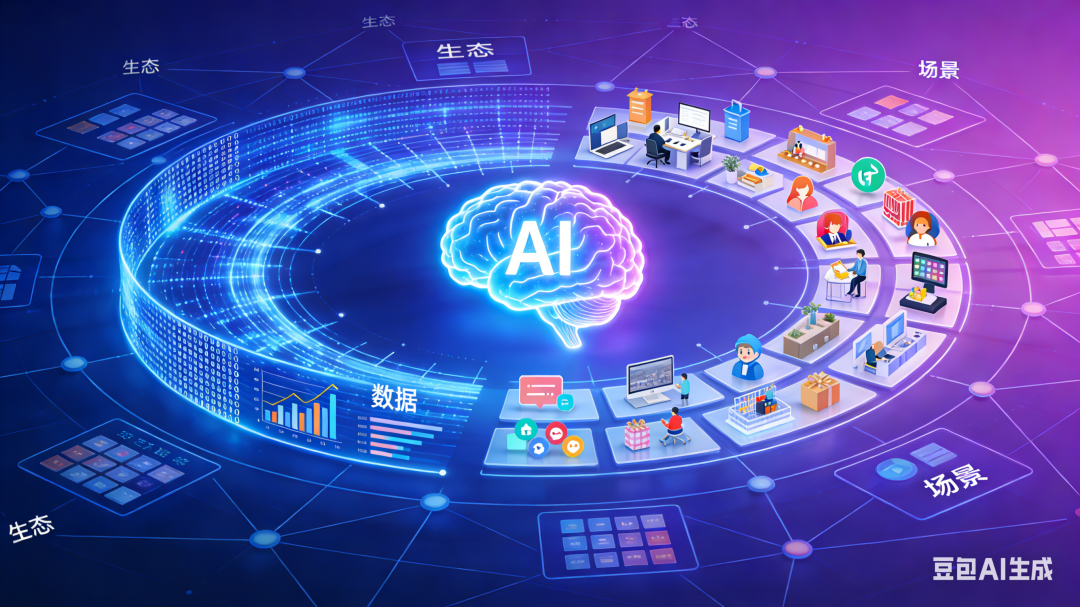
Delving deeper, the underlying logic of giants vying for AI gateways is actually a closed-loop trinity of "data-scenario-ecosystem."
Firstly, every user interaction feeds data to the AI model; the more data, the smarter the model, creating a positive cycle.
Secondly, high-frequency scenarios (such as office work, education, and local life) are key to retaining users. Only by deeply embedding into users' daily lives can the usage frequency of these AI applications significantly increase.
Finally, the ecosystem is the ultimate moat. AI assistants must integrate their own product matrices and access third-party services to become the sole gateway for users to access the internet.
Currently, AI assistants on mobile devices represent only the first stage of the competition. In the future, AI gateways are likely to move towards "full-scenario integration," extending from mobile phones to smart speakers, in-car systems, smart homes, and more, achieving a scenario where "devices seamlessly connect and services are ubiquitous."
The ultimate form may be that every ordinary person has their own "AI digital avatar," truly achieving "human-machine symbiosis."
What Does This Mean for Us Ordinary People?
1. More Red Envelope Benefits:
To put it bluntly, using AI tools like Baidu Wenxin, Tencent Yuanbao, and Doubao during this period can earn you some extra cash. Of course, this is essentially companies using small favors to gain your attention and usage habits.
2. Greater AI Tool Penetration:
After this wave of large-scale promotion during the Spring Festival, AI assistants are likely to penetrate deeper into human life (although the actual situation remains to be seen), with more people relying on AI for work and life. This is not a bad thing for us.
3. Accelerated Industry Reshuffling:
Red envelopes can attract new users but do not guarantee retention. User preference in daily use still depends on the product's usability. After the Spring Festival, the popularity of some AI applications with poor user experiences may decline more rapidly.

Where Are the Future Industrial Chain Opportunities?
As the AI user base grows and commercialization accelerates, it will drive the development of an entire industrial chain. Several directions are worth paying attention to:
1. AI+Advertising & Marketing: Smarter ad placement and content generation.
2. AI+E-commerce: Intelligent recommendations, virtual customer service, and marketing copy generation.
3. AI+Entertainment/Social: AI-created music, game empowerment, and virtual socializing.
4. AI+Film & Television: AI-assisted screenplay writing, post-production, and content promotion.
5. AI+Education: Personalized learning guidance and intelligent question banks.
6. AI+Office/Enterprise Services: Intelligent review of contract terms and intelligent retrieval of enterprise knowledge bases. 
7. AI+Medical & Healthcare: Intelligent diagnosis of medical images and intelligent monitoring of chronic disease management.
8. AI+Local Life/Travel: Intelligent route planning and prediction and guidance of tourist flow in scenic areas.
9. AI+Intelligent Manufacturing: Intelligent early warning of industrial equipment failures and collaborative management of supply chains.
10. AI+Fintech: Credit risk assessment, fraud detection, and intelligent investment advice.
11. AI+Cultural Tourism & Museums: Digital restoration of cultural relics and digital inheritance of intangible cultural heritage skills.
In Summary:
This new red envelope battle likely marks a further acceleration of the core battleground for giant competition towards AI.
The Spring Festival of the Horse Year is merely a prelude; the real competition lies ahead.
Who can truly occupy the core gateway for the next generation of human-machine interaction with excellent product experiences and rich application scenarios remains unknown.
For us users, we might as well participate in the activities happily while experiencing the products calmly, as the ultimate winner will undoubtedly be the tool that saves you the most time and enhances efficiency the most.
This article is compiled and expanded from sources such as the Science and Technology Innovation Board Daily (Zheng Yuanfang)'s "The Internet Red Envelope Battle Reignites: The 'Super AI Traffic Gateway' Becomes a Must-Win Battleground" and Blue Whale News (Zhu Junxi)'s "The Spring Festival Red Envelope Battle Reignites: Tencent Yuanbao Distributing 1 Billion Yuan, Baidu Distributing 500 Million Yuan, Giants Vying for AI Traffic High Ground."
END
-
![]()
Registered Capital Slashed to 372 Million Yuan! Yutong Optical Finalizes Industrial and Commercial Change Registration
-
![]()
Zhuque-3 Successfully Lands, and 'Time Traveler' Secures Another ¥100 Million in Funding: China's Commercial Space Industry Experiences a 'Dynamic August'
-
![]()
Autohome Faces a Shrinking Window of Opportunity
-
![]()
Even a Titan Like Musk Has Faced Setbacks in Fulfilling Promises
-
![]()
AI Office: The End of the Racing Era, Context Becomes the Key to Success
-
![]()
Domestic Vehicle Chassis Revolution ②: The Steering Wheel Remains, But Mechanical Connections in the Steering System Are Decreasing
-
![]()
Exploring MiniMax Design: Can Video Editing Be as Simple as Speaking?
-
![]()
Why Can SenseTime Achieve Profitability While CloudWalk Still Faces Challenges, Despite Both Adopting Large Models?