AI Glasses in Decline: A 'Strategic Withdrawal' in the Tech Emulation Spectacle
 01/30 2026
 526
526
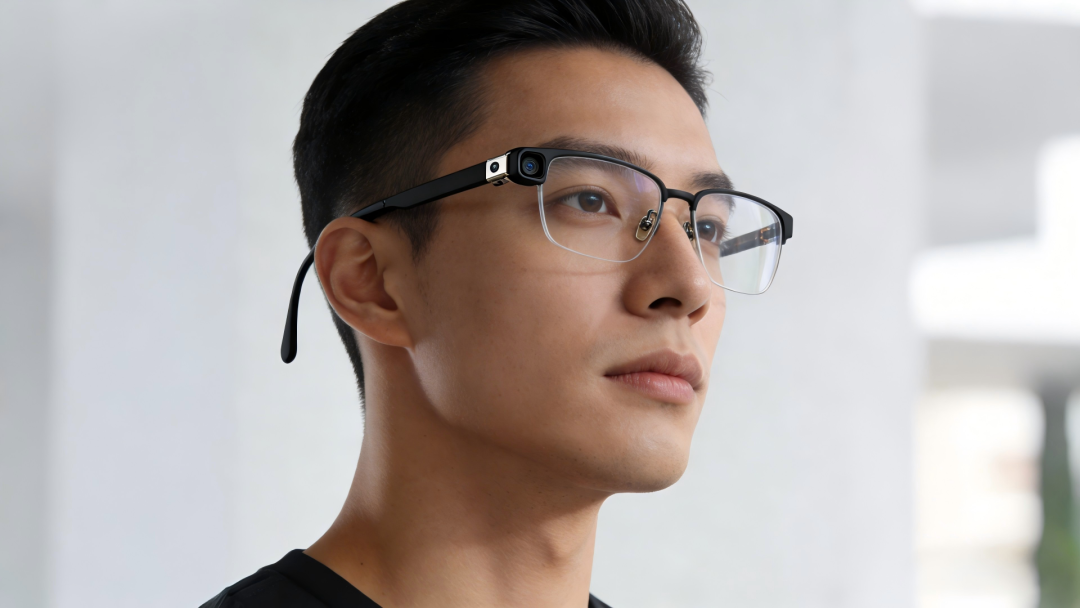
From industry-wide excitement to a 'strategic withdrawal,' what trajectory have AI glasses taken?
In 2023, Meta and Ray-Ban introduced a pair of AI glasses.
These glasses boasted the ability to take photos, play music, and make calls, all while maintaining a sleek and unobtrusive design. Wearing them in public, few would recognize them as 'cutting-edge technology.' From this standpoint, they appeared to be the perfect embodiment of the next generation of tech glasses within the digital community.
However, it was clear that these glasses were not solely designed for technological innovation. As the AI trend gained momentum, their launch sparked widespread speculation: What if such glasses were enhanced with AI capabilities? For instance, could they translate street signs in real-time, instantly identify product ingredients, or automatically generate meeting summaries? Would they then become the 'gateway to the next era of human-computer interaction?'
This innovative and seemingly logical concept was swiftly put into practice by numerous internet companies.
Over the next two years, countless companies, both large and small, embarked on AI glasses projects. Beyond Meta, international giants like Google and Apple, along with Chinese firms such as ByteDance, Alibaba, Xiaomi, and Baidu, followed suit. Even Li Auto, an automotive company, couldn't resist launching its own product.
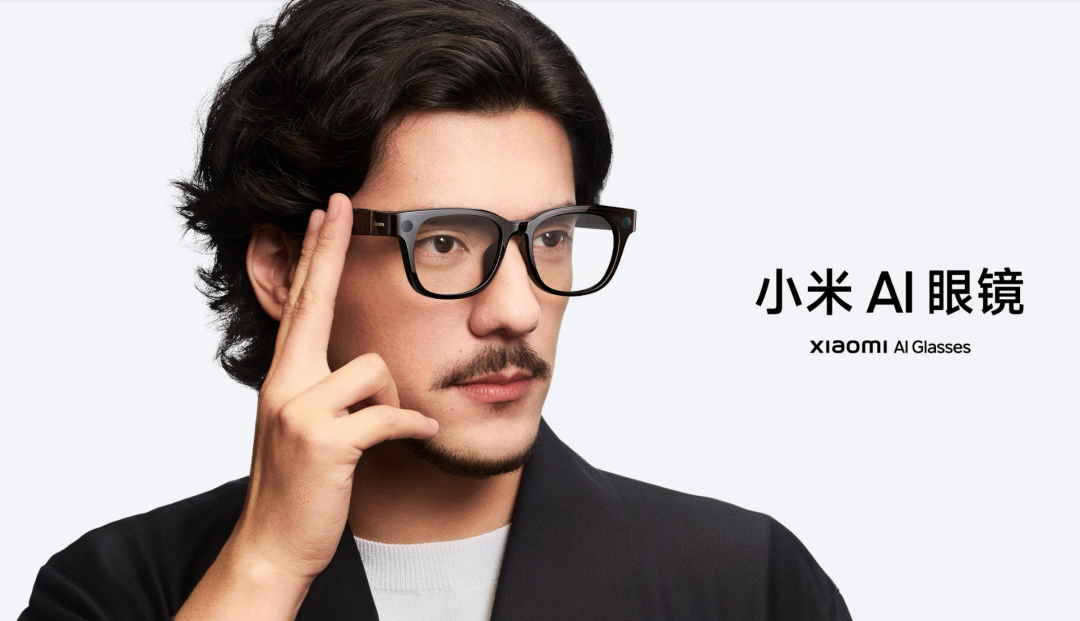
Xiaomi AI Glasses. Image sourced from Xiaomi's official website.
Numerous small and medium-sized startups specializing in AI glasses also sprang up like mushrooms after a rain. During this period, the AI glasses market was a hotbed of activity and frenzy, a prime target for investment.
However, unexpectedly, this frenzy began to quietly subside in early 2026.
After a brief surge, AI glasses hit a pause button.
Recently, a low-key yet significant message quietly spread through the South China tech circle: Vivo has officially halted its AI glasses project.
According to reports, the internal project, codenamed 'Vision Eye,' had been highly anticipated. The team, spanning Shenzhen and Hangzhou, collaborated with supply chain giants like Goertek and Sunny Optical, completing three rounds of prototyping within six months. They even explored various technical paths, including single-green waveguide displays, bone conduction audio, and dual-camera fusion.
However, a directive from top management ultimately stated, 'We can't differentiate ourselves now. Let's pause.'
Sources revealed that the halt was not due to technical bottlenecks but rather Vivo's assessment of market demand. An engineer involved in the project admitted, 'We could indeed create a product comparable to Rokid's—weighing around 50 grams, barely lasting a day on battery, and offering real-time translation, photo-based Q&A, and voice assistant integration. But why would users choose Vivo's over others? Just because of the logo?'

Vivo's pause in AI glasses development is not an isolated incident.
According to media reports, Xiaomi, another consumer electronics giant, significantly reduced its shipment expectations for the second-generation AI glasses at the end of last year—from the initially planned 300,000 units to just 120,000.
This adjustment forced Xiaomi's supply chain to revise its OEM plans, such as reallocating the production capacity originally reserved for AI glasses to TWS earbuds.
Beyond Xiaomi, an AI glasses startup that made waves at CES 2024 with its 'AI + fashion' concept and secured tens of millions of dollars in Series A funding, quietly merged its core team into its parent company's AR division by the end of 2025. Its product line was placed on indefinite hold, and its official website updates ceased six months ago.
Major players adjusting their strategies and smaller firms halting updates mark a stark contrast to the previous industry frenzy.
Looking back at 2025, Rokid ignited the market with glasses weighing just 49 grams, supporting real-time translation and photo-based Q&A. Subsequently, Alibaba's Quark introduced 'AI search glasses' targeting students, while Baidu's Xiaodu focused on the elderly with fall detection technology. Li Auto's vision was even more futuristic—attempting to integrate glasses with smart cockpits (automatically syncing navigation when entering the car and continuing guidance after exiting), which even surprised my friend, Ding Daoshi.
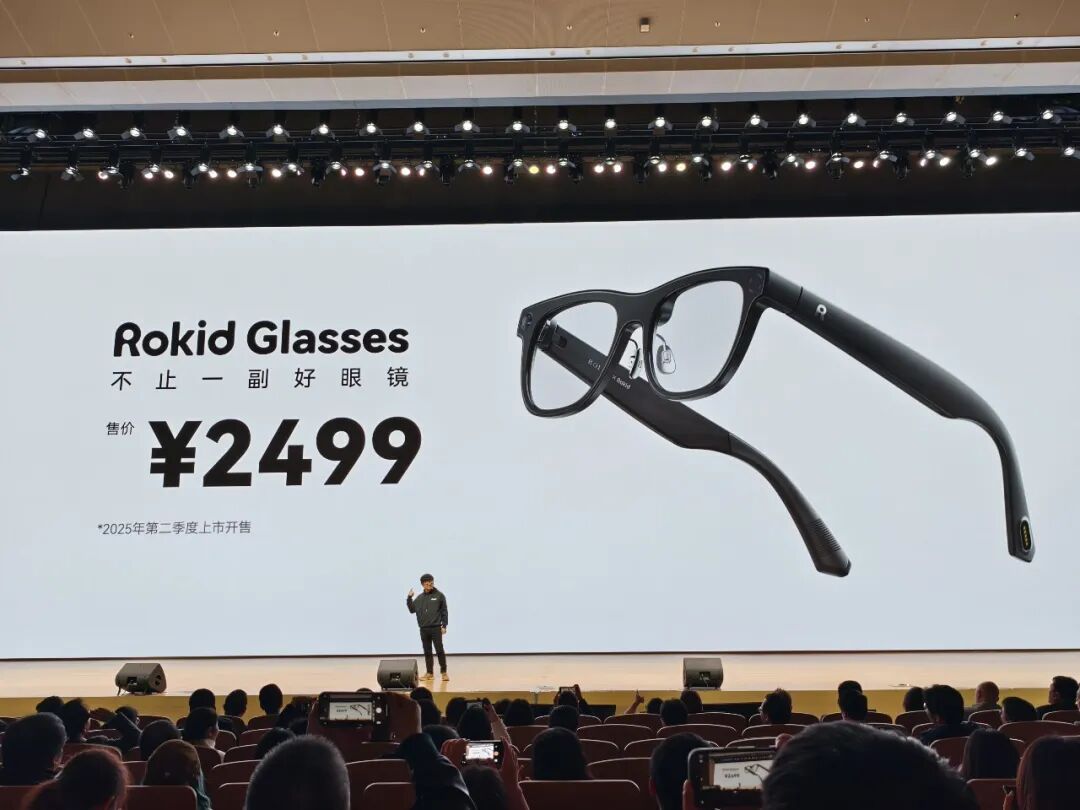
Rokid's glasses product.
During this period, although Huawei and ByteDance had not officially announced specific products, it was widely known that many companies had quietly initiated internal projects.
In terms of capital markets, public data shows that in the first half of 2025, there were over 15 financing rounds related to AI glasses in China, with a total amount exceeding 2 billion yuan.
However, less than a year later, the frenzy surrounding AI glasses came to an abrupt halt.
Why are AI glasses no longer favored behind this 'strategic withdrawal'?
AI glasses can connect to the internet, provide real-time translation, take photos, and play music—seemingly without issues. But why has the entire industry abandoned them almost overnight?
A blogger who attended a consumer electronics show shared his insights after trying on the latest smart glasses: 'They're cool, but I don't know why I'd wear them.'
In his view, while AI glasses offer numerous functions and innovations, these capabilities can also be achieved with smartphones. So, what's the rationale for purchasing and using AI glasses?
Just because they look cool?
More critically, many seemingly cutting-edge AI glasses functions fall short in practical use.
A programmer friend of mine once envisioned that AI glasses could enhance his work efficiency, such as automatically recording meeting highlights, voice-searching information while walking, or providing navigation while driving. However, after spending thousands of yuan on a flagship AI glasses model from a certain brand, he found that the product's functions completely failed to meet his needs.
For instance, voice recognition had a 40% error rate in noisy environments; photos taken were vastly inferior to those captured by smartphones; and navigation displays were unusable due to lag and poor pixel clarity, which not only failed to improve efficiency but also left him exhausted.
Moreover, he was once mistaken for secretly photographing others on the subway because of the camera on his AI glasses.
Given these awkward experiences, his expensive electronic gadget ended up collecting dust in a storage box.
He expressed great regret over this product he had once highly anticipated.
He believes that current AI glasses are not a new category but merely an accessory to smartphones. From his perspective, the functions of AI glasses do not differ significantly from those of smartphones. So, why would consumers spend thousands of yuan on an electronic device that offers the same functions as their smartphones, especially when the user experience cannot match that of smartphones?
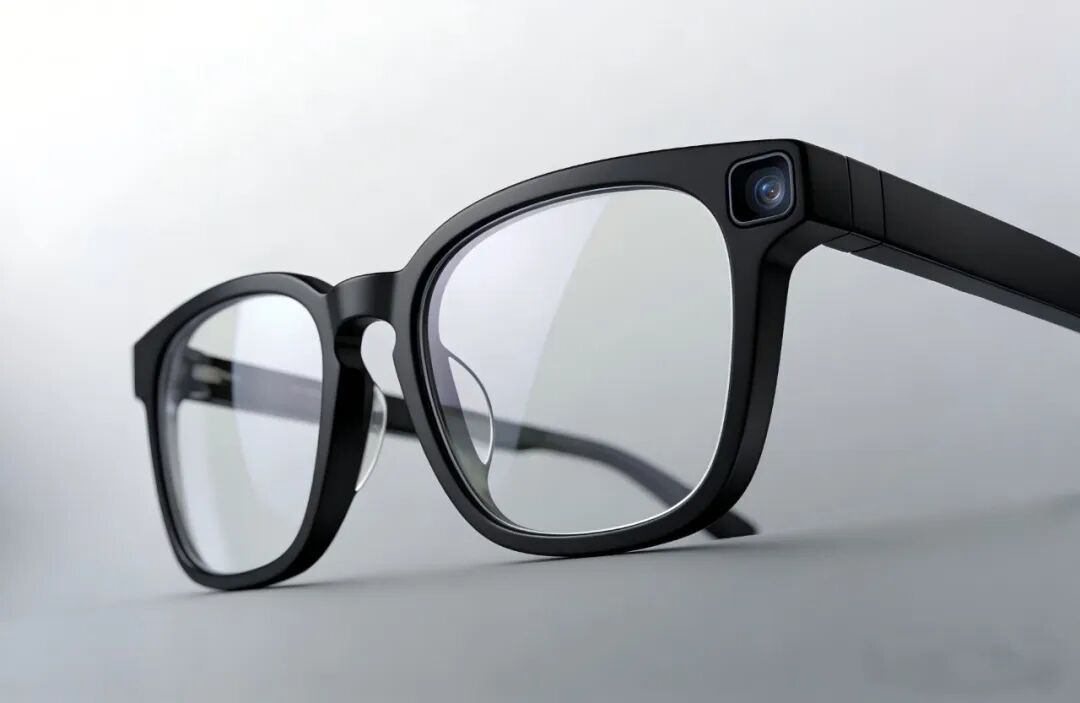
Current AI glasses lack practical usage scenarios. Image sourced from Doubao.
Additionally, during his practical use, he also felt the disparity between the promised capabilities and the actual experience.
Manufacturers market AI glasses as capable of real-time translation, object recognition, voice assistants, and more. However, in reality, due to limitations in product size, network transmission, and battery life, AI glasses currently fall far short of the advertised capabilities.
Furthermore, an insurmountable gap—ecosystem development—remains a major factor hindering the progress of AI glasses.
Ecosystems are the foundation and the most crucial hub of an industry, yet they are also the most challenging to establish.
Although Apple has been gradually advancing the ecosystem for its Apple Vision Pro in recent years, it is still far from complete. For a financially robust company like Apple, building a new ecosystem is an arduous task. The challenges faced by other companies are even more daunting.
'Users may find the device novel for a few days but soon realize it's neither practical nor indispensable,' said someone involved in an AI glasses project, acknowledging the lack of innovation in AI glasses functions.
Given this, Xiaomi's decision to reduce production capacity and Vivo's 'strategic withdrawal' by halting its AI glasses project seem like inevitable outcomes.
Where will AI glasses go at the next crossroads?
However, the 'strategic withdrawal' of multiple enterprises does not signify the end for AI glasses.
Vivo's decision to pause rather than officially terminate the project suggests that it does not intend to completely abandon it in the long run but rather to correct its previous strategy.
Over the past two years, too many companies rushed into this sector not because they had identified genuine demand but because 'everyone else was doing it, so we had to as well.' This was essentially a trend-driven emulation spectacle. Now, the market's indifference and consumers' lack of enthusiasm are gradually making these once-enthusiastic companies face reality.
Stopping further progress in the wrong direction at this point is itself a form of damage control and progress.
For Vivo and Xiaomi, pausing the replication and imitation of foreign AI glasses projects and instead concentrating resources on core technology research and development, waiting for the right moment to relaunch, may prove more beneficial for refining their products. This 'strategic withdrawal' could enhance their market competitiveness when they re-enter the market.
This implies that for AI glasses to regain market acceptance and consumer love, they must first break free from being perceived as mere 'smartphone accessories' and upgrade their product form and core functions.
For instance, in terms of hardware, further lightweighting the product while addressing battery life issues and using more advanced optical solutions to enhance display and photography effects may help more consumers recognize the product's value.
Additionally, can the photography function of AI glasses break free from the 'translation, photography' mold and offer unique capabilities in specific domains? This will, to some extent, determine whether AI glasses can avoid becoming 'electronic waste.'
As for the ecosystem challenge, which remains unsolved for now, can the numerous domestic AI glasses companies collaborate more, such as by unifying technical standards and ecosystem conventions, drawing inspiration from Apple's years-long and costly efforts to build the Apple Vision Pro ecosystem?
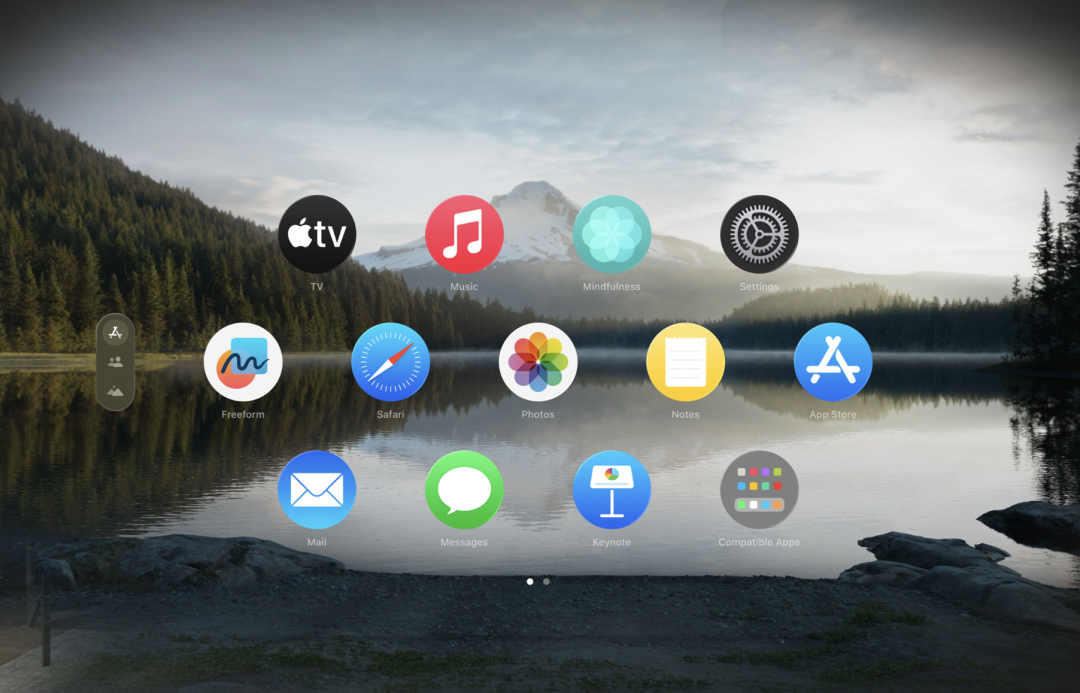
Apple Vision Pro's app ecosystem.
Undeniably, the current AI glasses industry is in a winter phase. However, winter often serves as the best period for industry consolidation and refinement. Blindly following trends will lead to the elimination of such companies, leaving behind those genuinely committed to technological innovation and meeting consumer needs. Over a decade ago, smartphones also went through a chaotic transition from feature phones to smartphones. Yet, after market selection and technological iteration, today's smartphones have achieved near-perfection in terms of both user experience and ecosystems.
Perhaps in the next 3-5 years, when hardware technology is sufficiently mature, core functions precisely meet consumer needs, and ecosystems are preliminarily established, AI glasses will return to the public eye in a brand-new form. Now, this collective 'strategic withdrawal' may seem like a rout, but from another perspective, it serves as valuable new experience for future attempts.
— / END / —
-
![]()
DJI Osmo 360 II In-Depth Review: How Does It Achieve Significant Image Quality Enhancements Without Sensor Changes or Excessive Spec Stacking?
-
![]()
Samsung’s Latest Foldable Phone Skips S Pen Again! Is AI Ushering in the End of Styluses?
-
![]()
Registered Capital Slashed to 372 Million Yuan! Yutong Optical Finalizes Industrial and Commercial Change Registration
-
![]()
Zhuque-3 Successfully Lands, and 'Time Traveler' Secures Another ¥100 Million in Funding: China's Commercial Space Industry Experiences a 'Dynamic August'
-
![]()
Autohome Faces a Shrinking Window of Opportunity
-
![]()
Even a Titan Like Musk Has Faced Setbacks in Fulfilling Promises
-
![]()
AI Office: The End of the Racing Era, Context Becomes the Key to Success
-
![]()
Domestic Vehicle Chassis Revolution ②: The Steering Wheel Remains, But Mechanical Connections in the Steering System Are Decreasing