The Combined Market Value of Two Leading LLM Firms Hits 620 Billion: Are MiniMax and Zhipu AI Legends or Just Capital Bubbles?
 02/24 2026
 620
620
By Yang Jianyong
There's no denying that large language models (LLMs) are one of today's hottest sectors, drawing substantial capital investment. Among these, MiniMax and Zhipu, as China's most prominent LLM startups, have both made their debut on the Hong Kong Stock Exchange. Propelled by capital inflows, their combined market value has soared beyond HK$620 billion.
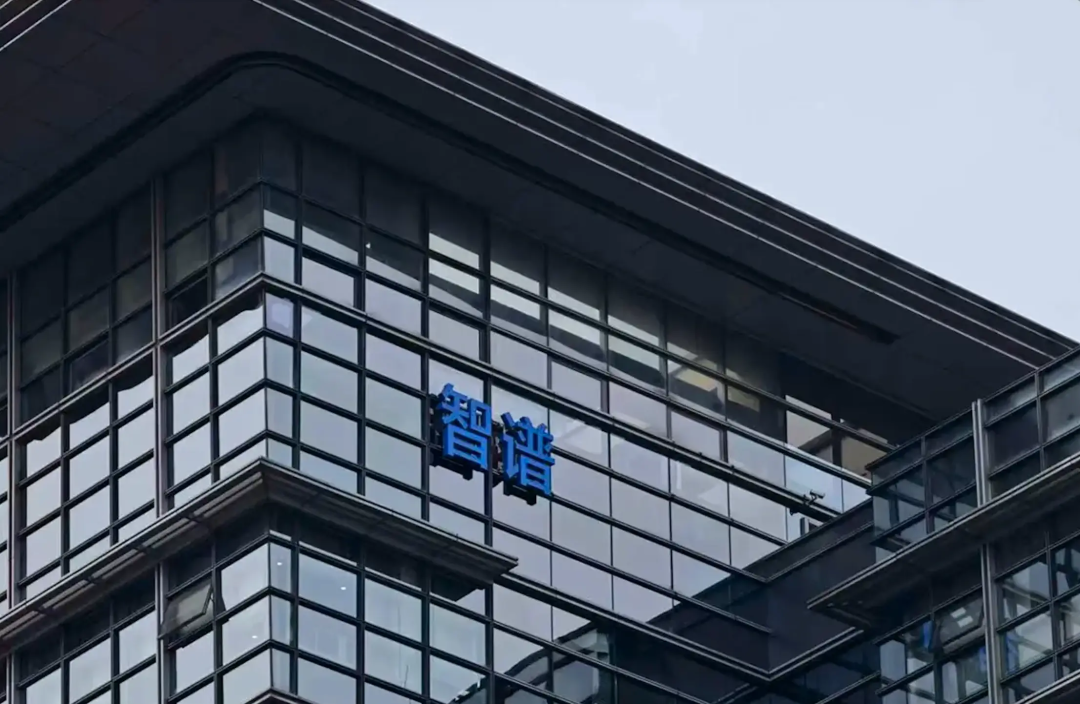
Notably, on the first trading day after the Spring Festival, MiniMax saw a 15% surge, with its market value briefly surpassing the HK$300 billion mark. Compared to its issue price of HK$165, the cumulative increase reached an astonishing 494%.
Zhipu, as the world's first AI LLM company to go public, continued its remarkable surge, rising by 42% and reaching a peak market value of HK$323.2 billion. Since its listing, the cumulative increase has exceeded an incredible 500%.
The market's enthusiasm for AI LLM companies stems from the fact that AI has entered the era of large language models, boasting vast potential. Meanwhile, global LLM benchmark companies like OpenAI and Anthropic have valuations nearing US$1 trillion. This positions MiniMax and Zhipu as highly sought-after targets in the LLM landscape.
First, from the perspective of LLM development
The development of artificial intelligence has spanned over 70 years, with particularly rapid progress in the past decade. It has evolved from neural networks to deep learning and now to large language models, propelling AI to unprecedented heights.
In the era of generative AI, various sectors are capitalizing on the opportunity, with a flood of LLM services emerging. Last year's DeepSeek, in particular, actively utilized the transformative capabilities of AI LLMs to enhance intelligent upgrades across industries.
Notably, LLMs are continuously being refined, with many mainstream models introducing lightweight versions that can be efficiently deployed on intelligent devices such as AI toys, AI glasses, and various end-side terminals like smart cars. Consequently, AI LLMs have expanded from the cloud to the edge, making AI ubiquitous.
Second, valuations of companies targeted by LLM firms approach US$1 trillion
OpenAI stands out as the world's most prominent AI unicorn, boasting an astonishing valuation of US$850 billion.
Anthropic's valuation is equally impressive, with its latest funding round pushing its valuation to US$380 billion, second only to OpenAI.
In the market, such benchmarking creates a significant impact, attracting capital pursuit. For instance, in the AI chip sector, local chip companies like Cambricon, Moore Threads, MetaX, and Biren Technology have been dubbed the "Chinese versions of NVIDIA" by the media, garnering immense attention.
These companies not only actively benchmark against NVIDIA in product development but also receive high recognition at the capital level, reflecting strong market expectations for domestic AI chip technology paths.
AI chips and AI LLMs jointly outline the AI ecosystem, serving as the core driving forces behind AI technological development. The training and inference of AI LLMs require massive computing power support, with AI chips providing efficient computing services as the underlying hardware infrastructure. As global leaders in chips and LLMs, NVIDIA and OpenAI naturally become benchmarking targets, driving up the valuations of related chip and LLM companies.
However, despite MiniMax and Zhipu being dazzling LLM unicorns, the awe-inspiring power of capital also raises concerns about bubbles.
After all, their current market values far exceed the support range of their revenue scales and profitability. It is crucial to rationally view the long-term development potential of AI LLMs.
In terms of revenue, Zhipu's 2025 revenue was RMB 191 million, while MiniMax's revenue for the first three quarters of 2025 was US$53.44 million (approximately RMB 370 million).
Meanwhile, LLMs belong to technology- and capital-intensive industries, heavily reliant on AI infrastructure. They invest substantial computing resources in model training, making it difficult to achieve short-term profitability and instead leading to continuously expanding losses.
From 2022 to the first half of 2025, Zhipu's cumulative losses totaled RMB 6.238 billion. From 2022 to September 30, 2025, MiniMax's cumulative losses reached approximately US$1.32 billion (approximately RMB 9.1 billion).
Overall, from R&D to AI computing power, LLM unicorns are also significant capital consumers. For Zhipu, 70% of its R&D investment goes toward purchasing computing power services. Data shows that its cumulative computing power investment from 2022 to 2024 exceeded RMB 1.8 billion. Similarly, MiniMax invests substantial computing resources in model training, with over 70% of its annual R&D investment allocated to purchasing computing power services.
It should be noted that the competition behind LLMs actually revolves around the computing power capabilities of AI infrastructure, including tech giants expanding their spending to enhance LLM competitiveness. The four major U.S. tech giants alone are expected to invest US$660 billion in AI in 2026.
For LLM startups, lacking the financial strength of tech giants and struggling to achieve revenue balance in LLMs, they still need to invest substantial funds to support their development. Therefore, they must continuously raise funds to enhance their AI LLM capabilities. Zhipu and MiniMax have collectively raised over HK$9 billion through the capital market.
It is important to recognize that developing AI LLMs requires robust AI infrastructure. Most LLM companies purchase the necessary computing power services from cloud service providers. According to MiniMax's disclosed related-party transactions, the annual service amount caps with Alibaba Cloud Computing for 2026, 2027, and 2028 are US$115 million, US$125 million, and US$135 million, respectively.
Given the high computing power investment, earning money from LLMs is exceptionally challenging, including for OpenAI, which also struggles to cover its costs. The real profit makers are vendors selling computing power services and AI chips, led by NVIDIA, which has reaped substantial rewards.
Among domestic AI chip companies, Cambricon stands out, achieving substantial breakthroughs in operating performance. While its revenue has surged, it has also overcome long-term loss situations. Its 2025 net profit is expected to range from RMB 1.85 billion to RMB 2.15 billion, successfully turning a profit.
Finally, with the continuous advancement of AI LLM technology and its widespread application, the AI market is entering a new growth cycle.
As a crucial global AI market, China's AI market size is expected to further increase to RMB 993 billion by 2030, according to data.
The sweeping wave of LLMs has made AI LLMs ubiquitous, bringing about a new wave of industrial intelligence. The LLM market holds immense potential, with the commercialization process of LLMs showing growth. For LLM companies, promoting robust LLM development and commercialization outcomes will positively impact their performance.
Yang Jianyong, a Forbes China contributor, expresses views representing only himself. He is dedicated to in-depth interpretations of cutting-edge technologies such as AI large language models, artificial intelligence, the Internet of Things, cloud computing, and smart hardware.
-
![]()
Who’s Sounding the Alarm on ‘Rushed Vehicles’?
-
![]()
Over 5.3 Billion Yuan in Losses Over Three and a Half Years! Can Yonyou Reverse Its Fortunes Through Streamlining and AI Transformation?
-
![]()
Baidu AI Adopts Free Model: A Strategic Maneuver in Traffic and Monetization
-
![]()
Silicon-Based OLED Pioneer Unveils Financial Results: H1 Shipments Outpace Entire 2025 Volume
-
![]()
AI's First "Lost Summer"
-
![]()
Zeiss Makes Another €2.2 Million Bet: Will Eye Tracking Be the Next Big Thing in the Smart Glasses Industry?
-
![]()
RUNTO Ranking | Global Top TV ODM Factories' Shipment Figures for July 2026
-
![]()
Dealer Service Operational Prowess | How After-Sales Managers Can Harness Efficiency and Expertise to Secure Trust in the New Energy Era