Profit Slump Prompts Mercedes-Benz to Revise Strategy
 02/25 2026
 497
497
Faced with a decline in profits, the Mercedes-Benz board has opted to revise its strategic approach. This decision was announced at the recent Mercedes-Benz Group 2025 Annual Results Press Conference. Notably, the company dedicated a separate segment to elaborate on its strategic shifts in the Chinese market.
First and foremost, Mercedes-Benz has outlined its future market objectives. The company aims to sustain sales of around 2 million high-end vehicles, with growth in this segment surpassing 15% and the share of new energy vehicles doubling. To accomplish these three objectives, Mercedes-Benz has identified five pivotal areas: technology and products, market engagement, focus on China, team and employees, and maintaining robust financial health. The Chinese market is specifically highlighted as the third priority.
In terms of technology, Mercedes-Benz will pursue five key directions. Initially, the company will adopt a standardized platform strategy, equipping all subsequent mass-produced models with nickel-manganese-cobalt (NMC) and lithium iron phosphate (LFP) batteries, along with standardized electric drive system configurations. Technologically, it will strive to reaffirm its status as a technological leader, exemplified by the axial flux motor and direct-cooled battery. The AMG GT XX concept car, featuring these two technologies, is also slated for mass production in 2026.
Regarding powertrain options, Mercedes-Benz has retracted its previous goal of full electrification by 2030 and now embraces a strategy of offering diverse power options. The company will provide a comprehensive range of powertrain choices, including high-tech hybrid internal combustion engines compliant with Euro VII emission standards, four-cylinder gasoline/diesel engines, six-cylinder gasoline/diesel engines, eight-cylinder gasoline engines, and more.
In the software domain, Mercedes-Benz's operating system (MB.OS) has already been deployed, ensuring that every new Mercedes-Benz model is a software-defined vehicle, encompassing infotainment, body comfort, autonomous driving, driving dynamics, and charging scenarios. Regarding assisted driving systems, Mercedes-Benz has implemented its current L2++ level point-to-point assisted driving. Looking ahead, it plans to introduce L3 level next-generation assisted driving and L4 level autonomous taxi ecosystems. Interestingly, Mercedes-Benz achieved conditional L3 technology early on but has recently decided to abandon L3 in favor of next-generation technology. In the realm of assisted driving systems, NVIDIA and Momenta are considered equally important partners.
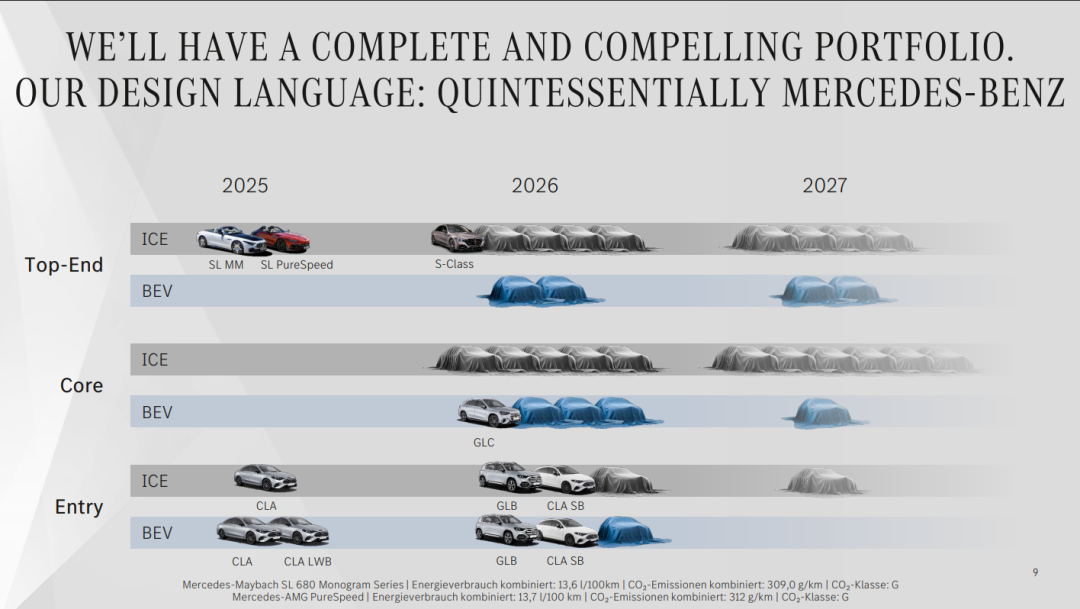
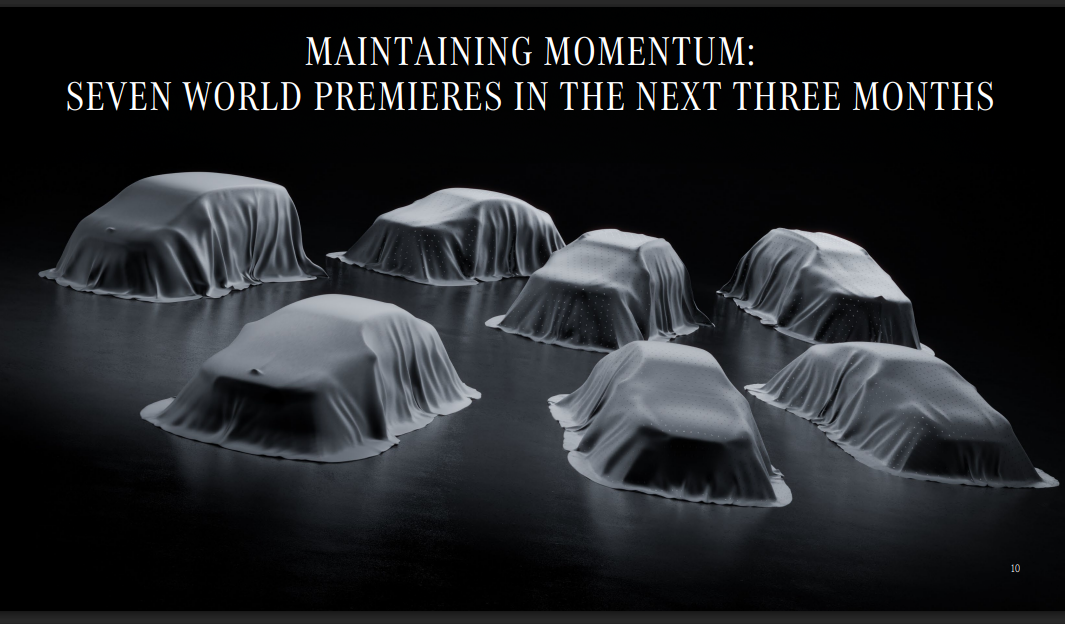
In terms of product offerings, Mercedes-Benz aims to construct a diverse and appealing product portfolio. The company unveiled its product roadmap for the next three years, planning to launch multiple products from 2025 to 2027, including both fuel-powered and pure electric models. In the high-end luxury segment, the SL series, AMG PureSpeed, and S-Class sedans will be featured. The GLC series will cater to the core luxury market, while models like the GLB, CLA Shooting Brake, CLA, and long-wheelbase CLA will target the entry-level market. Mercedes-Benz announced that it will introduce seven global premieres within the next three months, although specific products were not disclosed.
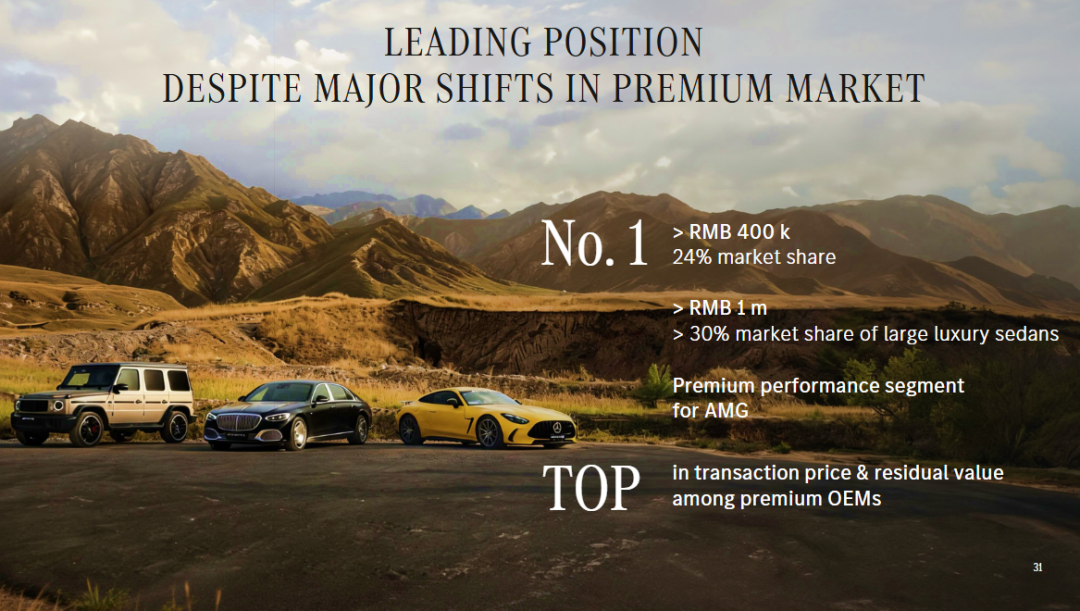
In the Chinese market, Mercedes-Benz provided a detailed interpretation of its updated China strategy. The company acknowledged that the landscape of China's luxury car market has undergone significant changes, yet from the perspective of the high-end luxury segment, Mercedes-Benz continues to hold a leading position. For instance, in the high-end market with prices exceeding RMB 400,000 in China, Mercedes-Benz commands a 24% market share, ranking first. In the ultra-luxury market with prices exceeding RMB 1 million, Mercedes-Benz's large luxury sedans boast a market share exceeding 30%. The AMG brand leads among luxury car companies in terms of transaction price and residual value in the luxury performance car market.
Furthermore, Mercedes-Benz ranks first in the industry in terms of customer satisfaction (as per the 2025 China Automotive After-sales Service Customer Satisfaction Index CAACS). In terms of customer retention, Mercedes-Benz possesses a substantial number of high-value customer groups. Currently, the company has a cumulative total of 7 million users, including 6 million Mercedes-Benz APP users and 2.4 million monthly active users, indicating a direct connection with these customers.
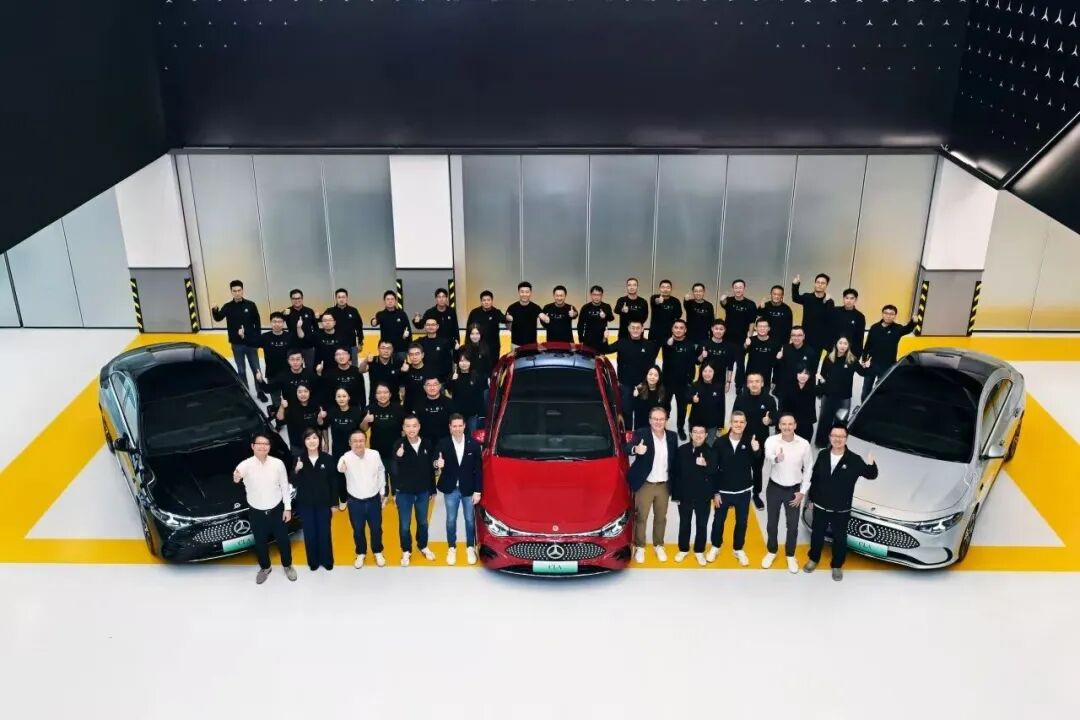
Building on these strengths, Mercedes-Benz acknowledges specific challenges. For example, the pure electric CLA requires 'three-shift' production in the European market to meet order demand, yet it has not witnessed corresponding robust sales in the Chinese market.
In response, Olaf Schick, Member of the Board of Management of Mercedes-Benz Group AG and responsible for Greater China business, stated that the CLA occupies a relatively niche segment in China. Simultaneously, market subsidy policies experienced significant fluctuations in the fourth quarter, leading to 'extreme' price competition for pure electric vehicles. Mercedes-Benz prefers not to engage in this, as overly aggressive pricing strategies could introduce more risks. As the market stabilizes and transaction prices rebound, the CLA's appeal is expected to increase.
However, as Olaf Schick pointed out, the CLA is essentially a European model, not tailored for the Chinese market. Therefore, Mercedes-Benz's intelligent electric transformation necessitates new strategies in China—not only concerning technology and products but also encompassing a series of adjustments. In 2025, Mercedes-Benz has already initiated adjustments at multiple levels. For instance, in terms of costs, local material costs have decreased by 6% compared to 2024. The company has also streamlined its network, simplifying the entire sales network by 15%, marking the most significant adjustment to Mercedes-Benz's sales network in recent years. Regarding products, L2 level urban/highway assisted driving and remote online upgrades (OTA) have been implemented for over 30 models, covering 2.4 million vehicles.
Subsequently, Mercedes-Benz announced adjustments at four levels in its latest China strategy: technology and product offensive, in-depth localization upgrades, customer-centricity, and operational excellence. The company noted that 65% of users still perceive Mercedes-Benz as a symbol of success and aspire to own one, with transaction prices and residual values continuing to rank first among luxury brands. 'We are confident that we can regain customers where we have lost them,' Olaf Schick stated.
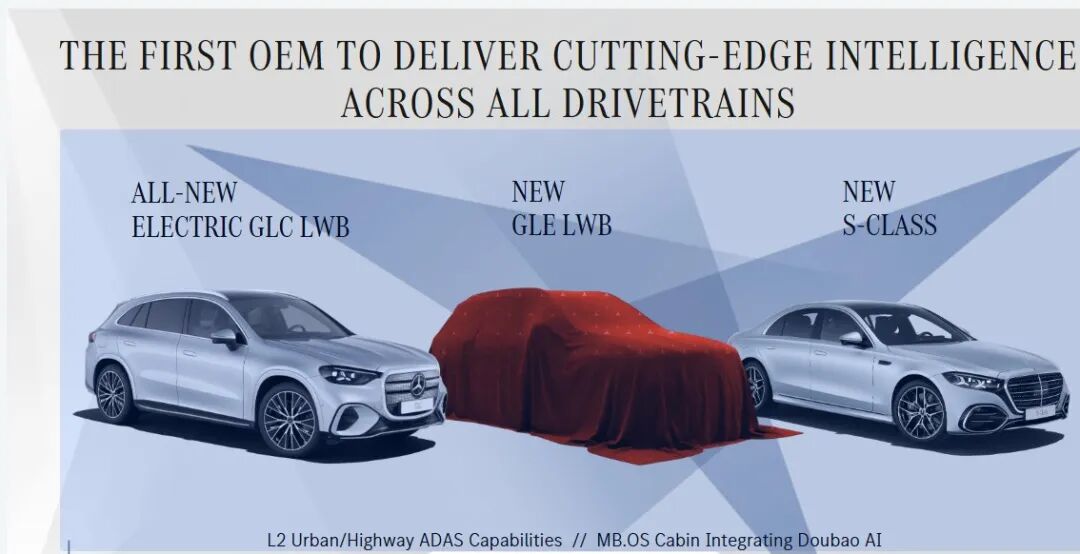
Mercedes-Benz previously announced plans to launch seven China-exclusive models from 2025 to 2027, including the pure electric CLA, GLE L, and a pure electric MPV. This time, specific details about the other four models remain undisclosed. However, the remaining products are likely to differ significantly from the three already announced (the new S-Class sedan, the new pure electric long-wheelbase GLC, and the new long-wheelbase GLE), as Olaf Schick emphasized that the pure electric CLA is a European car, not a Chinese car. He believes that Mercedes-Benz's electric vehicles need to be fully adapted to the Chinese market.
Olaf Schick cited the upcoming locally produced pure electric GLC at Beijing Mercedes-Benz as an example, stating, 'You will witness a product that is noticeably larger and more aligned with the mainstream market.'
'Larger' is relatively straightforward, as the GLC will undoubtedly continue to be lengthened. Achieving 100% China-focus involves other crucial factors, such as core configuration setup, product value, sales models, service models, and user engagement. Mercedes-Benz will implement several significant changes subsequently: firstly, continue to reduce costs and lower local material costs; secondly, adjust volume and price; thirdly, optimize the retail system and achieve 100% coverage of new retail formats; fourthly, enhance owner experience and brand value; fifthly, strengthen direct customer engagement capabilities.
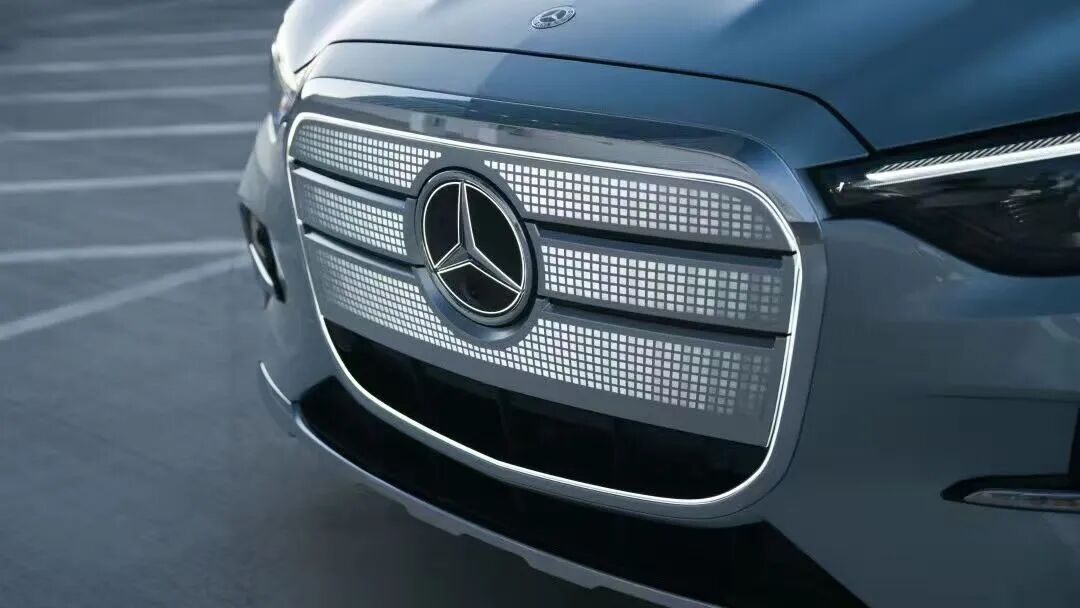
Firstly, Mercedes-Benz aims to further drive cost reductions in China. The company has set a cost reduction plan for 2027 (compared to 2024), under which local material costs are to decrease by over 10%, variable production costs by over 20%, and fixed costs by 20%. Subsequently, production layouts will continue to be optimized. Price is currently a pivotal factor in electric vehicle competition. From the success of two joint venture electric vehicles in 2025, aligning prices with domestic and new force brands and directly competing is the opportunity to achieve bestseller status. The upcoming new pure electric GLC will witness costs reduced by 30%.
Secondly, adjustments to price and value strategies will be implemented. On February 2, four Mercedes-Benz models underwent official price reductions, namely certain models of the Mercedes-Benz C-Class, GLB, GLC, and GLC Coupe, with reductions of about 10%, up to RMB 69,020. This price adjustment by Mercedes-Benz partly responds positively to dealer demands to maintain channel health; on the other hand, it can also be viewed as a minor adjustment to product pricing logic in the Chinese market.
Thirdly, 100% coverage of new retail formats will be pursued. It is speculated that Mercedes-Benz may experiment with a direct sales model. Additionally, the company will establish exclusive high-end experience centers, as brands like NIO and Harmony Intelligent Mobility have developed new models in user experience centers, impacting Mercedes-Benz's user base. Mercedes-Benz previously implemented Mercedes-Benz ME in China but gradually abandoned it due to operational issues. Like other car companies, Mercedes-Benz has also prioritized direct user engagement capabilities, although specifics on implementation have not been announced.
2026 marks the inaugural year of a collective counterattack by joint ventures. As the leader in luxury cars, Mercedes-Benz, following the pure electric CLA, has introduced a 100% localization strategy, representing an unprecedented transformation for Mercedes-Benz in the Chinese market.
-
![]()
Buying Jimeng and Getting Doubao for Free? Decoding the Pricing Strategy of ByteDance's AI Services
-
![]()
Robot Sets New Human Record in Half Marathon: Honor’s AI Ecosystem Strategy Hits Milestone
-
![]()
Who are the key players in the WiFi6 chip market, both visible and behind the scenes?
-
![]()
Doubao to Start Charging: Without Transparent Pricing, How Can There Be Competition?
-
![]()
What is the recovery timeline for Microsoft after the breakup?
-
![]()
Who is Most Panicked by Doubao's Charging Model?
-
![]()
OpenAI Surprises Apple: Doubao Phone Emerges as the 'Trailblazer'
-
![]()
There's No Such Thing as a Truly Free Doubao