Chery Needs a 'Yin Tongyue-Style AI Great Leap Forward'
 02/24 2026
 500
500
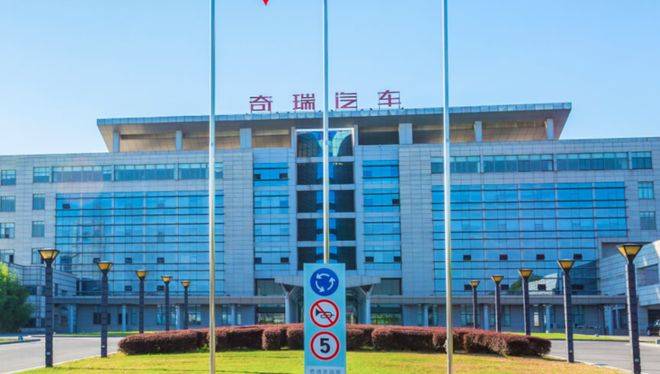
Chery's AI reform is still not aggressive enough.
Author | Jing Xing
Editor | Gu Nian
The entire automotive industry is anxious about AI.
This anxiety is not only reflected in the choice of technological routes but also in the speed of organizational restructuring, the intensity of resource allocation, and even the willpower of founders.
After the competition for intelligence enters the deep water zone, the divide among automakers has shifted from whether they have AI to whether they dare to go all-in on AI.
The aggressive players are rapidly reshaping their corporate forms.
XPeng Motors announced its transformation into a physical AI company with a single press conference launching the second-generation VLA model, unifying four major terminals: automotive intelligent driving, Robotaxi, flying cars, and embodied intelligence. It also merged its original Autonomous Driving Center and Intelligent Cockpit Center into a General Intelligence Center, with Liu Xianming reporting directly to He Xiaopeng.
The relatively conservative NIO has established an Artificial Intelligence Technology Committee internally, tasked with observing AI trends in the industry and leveraging AI to enhance workflow efficiency across the company. It also brought in Yang Sheng, a former algorithm expert from Alibaba's DAMO Academy, to lead pre-research on the foundation of intelligent driving large models.
Li Auto took its internal meeting at the beginning of the year and turned it into an AI pledge meeting. Li Xiang urged internally that 2026 represents the last window for automakers to adopt AI, predicting that no more than three companies globally will dominate the four key areas of models, chips, operating systems, and embodied intelligence in the future, and Li Auto must be one of them.
Traditional automakers are stepping up external collaborations.
FAW is strongly partnering with Huawei, with the Hongqi 9 series set to feature Huawei's full-stack solutions for intelligent driving, intelligent cockpits, and intelligent vehicle control. Great Wall Motors has shifted from fully supporting internal teams to embracing external partners. While Momenta is at a standstill, Yuanrong Qixing's intelligent driving solutions have been deployed on key models such as the WEY Blue Mountain, Gaoshan, and Tank.
Geely Auto is deepening its strategic partnerships with Qianli Technology and Jueyue Xingchen to accelerate the implementation of intelligent driving and intelligent agents. Li Chuanhai, President of Geely Auto Research Institute, publicly stated that the first half of the automotive industry is about mechanical bodies, while the second half is about the soul built through intelligence.
In comparison, Chery, focused on sprint (rushing towards) an IPO in 2025, seems to have only a slightly conservative AI 2.0 press conference at the AI level, remaining mostly at the dimension of showcasing technical capabilities and upgrading product functions, without rising to the level of organizational restructuring or shifting the company's strategic focus.
While peers are rewriting corporate structures, rearranging resource allocations, and reconstructing technological foundations, Chery's AI efforts remain primarily at the stage of catching up, rather than advancing into a new era of steering change.
Over the past two decades, Yin Tongyue's keywords have been scale, cost, and survivability. These have been the underlying methodologies for Chery to navigate multiple industry cycles. However, the challenges posed by the AI era are changing for him.
The competition for intelligence no longer just tests the automotive manufacturing system but tests whether an automaker dares to refactor (reconstruct) itself around AI. From catching up on intelligent driving to catching up on models, from supplier partnerships to self-research path selection, what Chery needs is not just a technological solution but a strategic leap led by the highest decision-makers.
In a sense, what Chery needs is a true 'Yin Tongyue-Style AI Great Leap Forward.' Like when he bet on independent brands and new energy in the past, he must once again stake the company's fate on a new direction. Because the AI era rewards not steady followers but those who switch directions and place their bets earlier.

Chery's Underwhelming Press Conference
XPeng's Physical Technology Day and Chery Auto's AI Night can serve as representatives of the AI actions of two types of automakers.
The market feedback to the two press conferences was starkly different. After XPeng's press conference, its stock price rose by approximately 29% over four trading days. After Chery's press conference, its stock price rose by 4.5% on the first trading day but then declined continuously, losing nearly 8% of its market value over eight trading days.
The reason lies in the different product directions of Chery and XPeng, with XPeng painting a 'pie' with a higher ceiling.
In XPeng's AI landscape, a core piece is the second-generation VLA large model. Simply put, XPeng's second-generation VLA is technologically closer to human drivers, able to skip linguistic translation and directly enter the understanding and execution phase after receiving visual signals. In intelligent driving scenarios, the second-generation VLA can handle complex situations more quickly, such as navigating through complicated road segments.
The application scope of this system is not limited to automobiles. He Xiaopeng stated that the second-generation VLA will serve as the 'operating system for the physical AI world,' being simultaneously applied to robots, land aircraft carriers, flying cars, and Robotaxi.
Chery's AI products, on the other hand, are centered around driving scenarios and lack a corresponding technological mainline.
At the press conference, Chery announced that the company is moving away from the era of software-defined cars and entering the stage of AI-defined cars. Throughout the event, Chery showcased four AI-related products: two new products—the super AI agent 'Xiaoqi Classmate' and the Lingxi intelligent cockpit solution—and two upgraded versions of the urban navigation-assisted driving system, Falcon Intelligent Driving, as well as the latest products related to the Mojia robot business.
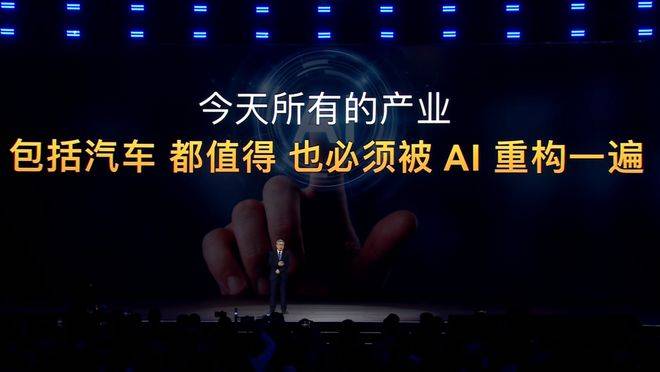
However, upon closer inspection, it becomes evident that Chery's AI 2.0 launch achievements have not reached the industry's cutting-edge level.
Take Chery's main push, Xiaoqi Classmate, as an example. According to official descriptions, Xiaoqi Classmate applies a new-generation AI architecture and human-like memory framework, integrating Chery's Falcon Intelligent Driving and Feiyu Digital Intelligent Chassis to provide users with personalized habit memory and voice and visual interaction functions for thousands of individuals. It also ensures 'privacy stays within the vehicle.'
As the core function of Chery's Lingxi intelligent cockpit solution, Xiaoqi Classmate can remember personalized information such as seat positions, Common routes (frequently used routes), and music preferences, eliminating the need for repeated instructions and supporting user control of vehicle functions through voice and even gestures.
However, compared to the industry's leading level, Chery's AI model still appears immature. Rather than a groundbreaking breakthrough, it seems that Chery has successfully followed the path of mature intelligent cockpit products already on the market.
In 2023, Li Auto's initial Mind GPT was already able to achieve voice interaction and integrate vehicle functions using its self-developed TaskFormer neural network architecture. Huawei's HarmonySpace 5's vehicle control intelligent agent, Agent, already supports completing complex tasks through fuzzy spoken language interactions.
What truly interests the capital market about Chery's AI 2.0 era is not Chery's ascent to the industry's top level but the value of 'AI equality.'
Just as BYD's market value soared after its 2025 Intelligent Driving Equality press conference, when it brought high-end intelligent driving to the mainstream market priced at RMB 100,000, Chery is now launching an AI equality campaign. BYD introduced high-end intelligent driving to the mainstream market, while Chery announced that intelligent cockpits would cover all brand models by the first quarter of 2026.
If XPeng's AI press conference focused more on storytelling, Chery's AI press conference focused more on sales guidance, using a gamble on added features to counter market competition.

Catching Up on Intelligent Driving with Multiple Suppliers
Setting aside the AI concepts from the press conference, intelligent driving, which truly influences consumer decisions, is of utmost importance.
Over the past two years, advanced driver-assistance systems have transformed from a bonus item on specification sheets to a core variable affecting purchase conversions. Whether in press conference concepts or terminal sales pitches, high-end intelligent driving is repeatedly highlighted. As intelligence enters the second half, competition among automakers increasingly focuses on who can first bring high-end intelligent driving from luxury vehicles to the mainstream price range.
Chery is clearly accelerating its efforts to catch up.
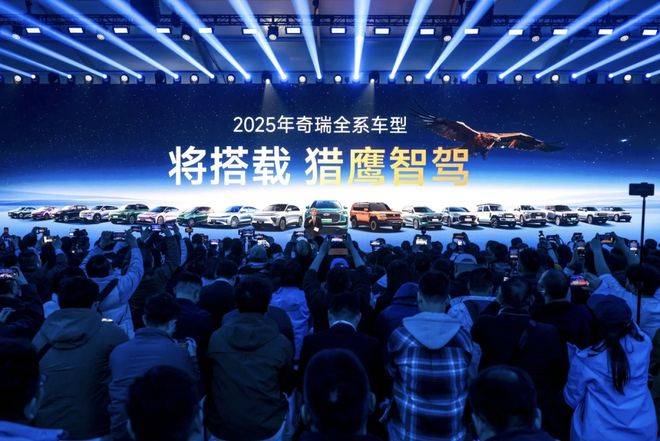
At its Intelligent Strategy press conference on March 18 last year, Chairman Yin Tongyue announced that Falcon Intelligent Driving would cover all models within the year. At this year's AI Night, Chery once again signaled that dozens of models would feature high-end assisted driving capabilities within the year. According to Chery's internal product rhythm, intelligent driving is being promoted with a major upgrade once a year.
This approach is quite similar to BYD's, characterized by typical traditional automaker features—rapid capability popularization through dense model deployments rather than single-point technological breakthroughs.
BYD's Divine Eye adopts a highly stratified technology and brand binding system: Scheme A corresponds to the luxury brand Yangwang, Scheme B covers mid-to-high-end series like Tengshi, and Scheme C is responsible for popularizing functions in the mainstream market, providing only memory piloting and high-speed piloting capabilities as the main volume driver. The core logic is to find mature solutions in the shortest time, dilute costs through large-scale installations, and then feed back into self-research capabilities.
In comparison, while Chery's Falcon Intelligent Driving also adopts a tiered approach, its logic leans more toward coverage. At last year's March press conference, Yin Tongyue boldly announced that Chery would launch more than 30 models featuring high-end Falcon Intelligent Driving by 2025, covering all powertrain forms.
The different series of Falcon products—200, 500, 700, and 900—correspond to experiences ranging from basic cruising to urban piloting and then to L3 and above. Chery seems to hope to find the market's greatest common divisor among powertrains, pricing, and intelligent driving factors through rapid trial and error. However, in its implementation path, Chery has not bound itself to a single technological route but instead exhibits a clear pattern of multiple suppliers operating in parallel.
Industry insiders state that BYD's Divine Eye Schemes A and B primarily rely on Momenta as the supplier, while Scheme C is mainly self-researched and has the largest installation volume.
In comparison, Chery's intelligent driving solutions seem to rely on a variety of suppliers.
Industry insiders told 『Shixiang』 that Chery's Falcon Intelligent Driving is more of a shell concept, with the actual suppliers being the key. Besides Momenta and Horizon Robotics, suppliers also include Bosch, WeRide, Qingzhou Intelligent Navigation, and Zhuoyu Technology. For example, the Falcon 700 Intelligent Driving system is equipped with Momenta's solution in the Chery Storm and Clouds (Fengyun) A9, while the Exeed ET5 uses Horizon Robotics' solution.
This was not Chery's original vision.
For a long time, Chery's strategy for intelligent driving has been focused on full-stack controllability, with departments freely choosing suppliers. Internally, there is the Forward-Looking Research Institute, Intelligent Driving Center, and even independent intelligent driving teams for each brand. Until the establishment of Dazhuo Intelligence in 2023, Chery, unwilling to surrender the soul of intelligent driving, fully supported its self-researched intelligent driving brand, Dazhuo Intelligence, deciding to pursue both L4 and L2 routes simultaneously and aiming to dominate the entire intelligent driving market.
The result was that Dazhuo Intelligence failed repeatedly in both routes. By the release of Chery's Falcon Intelligent Driving solutions in 2025, Dazhuo Intelligence had been reduced to a marginalized role. In May 2025, it merged with Xiongshi Technology and Chery R&D General Institute to form the Chery Intelligent Center, ending the previous fragmented situation.
The reason lies in Chery's origins as a private enterprise from the last century, which achieved survival through extreme cost control and investment from SAIC Motor. However, intelligent driving has long been a high-capital, high-talent-density, and long-research-cycle battlefield. Within the Chery system, Dazhuo Intelligence had to keep up with the market while lacking budget autonomy, resulting in a situation of expecting a horse to run fast while feeding it little grass.
A similar story unfolded at Great Wall Motors. Its supported intelligent driving venture, Momenta, also carried the group's ambitions for intelligent driving but gradually lost momentum amid strategic reversals and investment hesitations. As an adjustment, Great Wall later chose to invest $100 million in Yuanrong Qixing, externalizing some core capabilities. However, Chery has not yet found external partners with a deep cooperative relationship like Great Wall and Yuanrong, opting instead for a broad but shallow approach of making friends with many.

Chery is in a Hurry
'Every day on my way to work, I see employees dragging their tired bodies home after work, and I feel guilty. During bad weather, our employees work overtime in the heat to ensure production. I feel remorseful about this.'
This was a public statement by Yin Tongyue in 2022. However, the following year, an internal email from a Chery executive stating, 'Saturday is a normal working day for strivers. For administrative leaders, it must be a normal working day,' sparked widespread online debate. Facing the resulting public outcry, Yin Tongyue once again publicly reflected at the mid-year cadre meeting in July 2025:
'Chery has been very inhumane regarding overtime in the past. From now on, no meetings should be organized on Saturdays, and we must stop disregarding our employees' time.'
However, less than a month later, a Chery intern sent a public email opposing training on Saturday morning followed by a large meeting in the afternoon, forwarding the content to all leaders in the business unit.
The balance between internal competition and anti-internal competition has reached a delicate equilibrium within Chery. During the IPO sprint phase, this contradiction has peaked. The intern publicly advocating against internal competition is seen as a hero by employees. A former Chery employee told 『Shixiang』 that a Chery employee once died suddenly during a business trip, and instead of reflecting on the issue, Chery called on all employees to learn from him.
Anxiety Stems from a Sense of Crisis
Starting from January 1, 2026, China's purchase tax exemption for new energy vehicles will be adjusted from full exemption to a 50% reduction. At the same time, the maximum tax exemption per vehicle will decrease from RMB 30,000 to RMB 15,000, and the pure electric range requirement for plug-in hybrid vehicles will increase from 43 kilometers to over 100 kilometers.
The policy's purpose is clear: to raise standards, exclude non-compliant products from the tax exemption list, and force industrial upgrading. In the future, companies that have relied on mid-to-low-end entry-level models to benefit from market subsidies will face even tougher times.",
This is also the reason why Chery is fully committed to catching up in intelligence. As new energy subsidy policies further recede and the fuel vehicle market declines more sharply, the Group needs to find the next market excitement point to break through the valuation ceiling and define the ultimate answer for the next era. The AI track, on which automakers such as Li Auto, XPeng, and Tesla are fully betting, is a good prescription.
At present, Chery holds good cards. Its robotics business has entered commercialization, and Falcon Intelligence Driving is sparking a second wave of enthusiasm for intelligent driving democratization. In the mainstream price range of automobiles, Chery is becoming synonymous with the penetration of AI. However, compared to the new forces, Chery, which completed its listing throughout last year, may need to be more aggressive at the AI level and introduce more cutting-edge technologies and products.
-
![]()
Who’s Sounding the Alarm on ‘Rushed Vehicles’?
-
![]()
Over 5.3 Billion Yuan in Losses Over Three and a Half Years! Can Yonyou Reverse Its Fortunes Through Streamlining and AI Transformation?
-
![]()
Baidu AI Adopts Free Model: A Strategic Maneuver in Traffic and Monetization
-
![]()
Silicon-Based OLED Pioneer Unveils Financial Results: H1 Shipments Outpace Entire 2025 Volume
-
![]()
AI's First "Lost Summer"
-
![]()
Zeiss Makes Another €2.2 Million Bet: Will Eye Tracking Be the Next Big Thing in the Smart Glasses Industry?
-
![]()
RUNTO Ranking | Global Top TV ODM Factories' Shipment Figures for July 2026
-
![]()
Dealer Service Operational Prowess | How After-Sales Managers Can Harness Efficiency and Expertise to Secure Trust in the New Energy Era