Spring Festival Gala Robots Shine, but Need to Impress Factory Managers
 02/24 2026
 594
594
Source | Yuan Media Hub
When Unitree Robotics' humanoid robot bounded onto the stage of the 2026 Spring Festival Gala and flawlessly executed a challenging backflip, TV audiences collectively gasped. The silver-gray mechanical frame arced sharply through the air, landed as solid as a rock, and immediately dove into an intense “human-robot battle” with children from the Henan Shaxiao Martial Arts School.
In that instant, excitement soared.
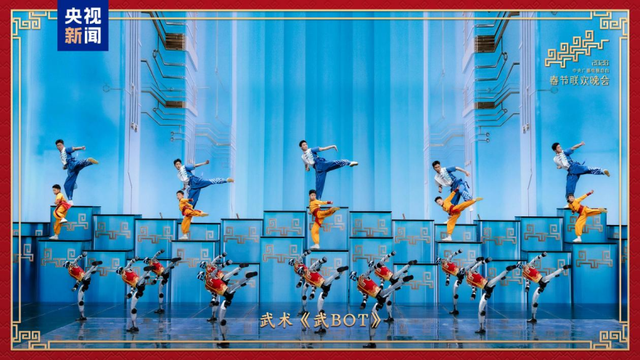
Image source: CCTV News
This marked the second time humanoid robots stole the spotlight on New Year's Eve, following the viral success of the 2025 yangko-dancing robot. However, unlike the previous year, the 2026 Gala featured not just Unitree Robotics but also Songyan Dynamics, Magic Atom, and Galaxy General—four robotics companies competing simultaneously, setting a new record for the Gala.
Behind the high-energy “martial arts stage,” deeper currents were at play.
From yangko dancing to martial arts, humanoid robots' performances grew increasingly impressive; from UBTECH to Unitree Robotics, and now to newcomers like Galaxy General, robotics companies emerged in droves. This reflects rapid technological progress and industrial growth.
Yet, no matter how dazzling the backflip, the industry must first tackle mass production and delivery. Commercialization remains the biggest hurdle.
01
“Martial Arts Stage” Thrills, Delivery Challenges Loom
Judging by the Spring Festival Gala alone, one might assume humanoid robots already possess the physical prowess of elite athletes.
In the Wu BOT program, Unitree Robotics' humanoid robot not only performed 360-degree rotating flips but also executed formation changes while sprinting at high speed. Galaxy General's robot, though relegated to the background, stole the show with rapid-fire tongue-twisters and intricate tasks like folding clothes and skewering sausages. Songyan Dynamics' “bionic robot” performed a skit alongside veteran artist Cai Ming, nearly indistinguishable from humans. Magic Atom's humanoid robot danced seamlessly with artists like Jackson Yee and Ken Chu in Intelligent Future.
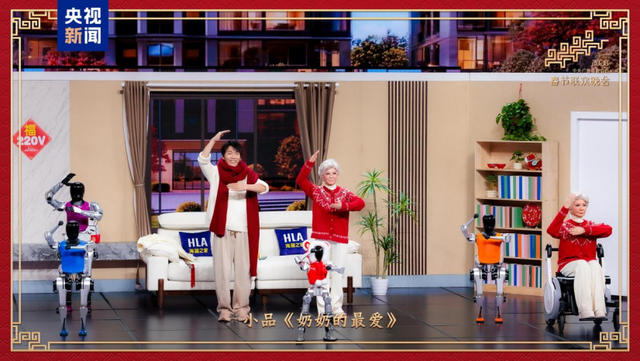
Image source: CCTV News
The impact was immediate. Within two hours of the Gala's start, searches for JD.com robots surged by over 300%, while customer inquiries and orders jumped 460% and 150%, respectively. “Gala-style” robots from brands like Unitree Robotics, Magic Atom, and Songyan Dynamics sold out within minutes, including two GALBOT General Robot G1 units priced at nearly 630,000 yuan each.
The hype was undeniable. But could these stage-dominating robots perform equally well in factories or homes?
Reality remains unforgiving. The humanoid robot industry currently straddles a divide between “lab confidence” and “commercialization anxiety.” Backflips, watermelon kicks, dance routines, and boxing matches have become standard fare for product launches. Yet behind the flair lie vulnerabilities in real-world applications.
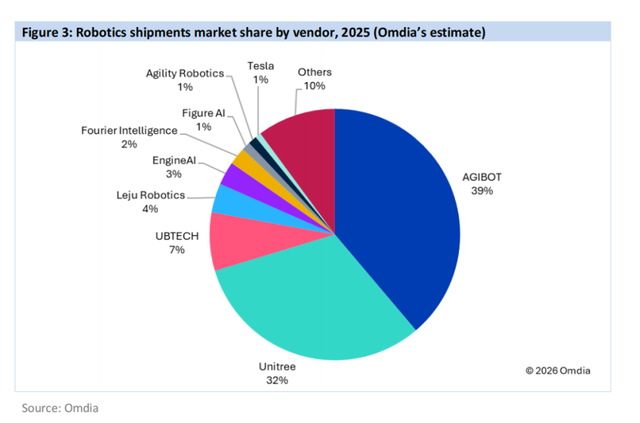
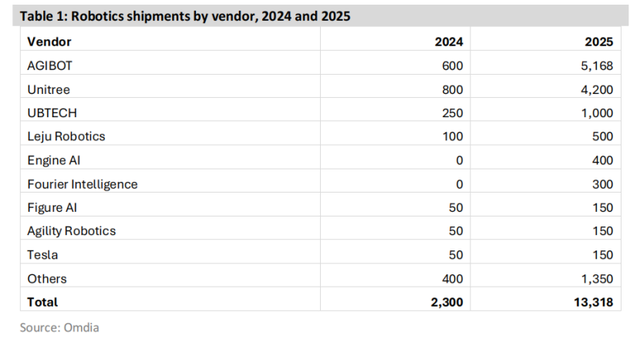
2025 was dubbed the “first year of mass production for humanoid robots,” and leading companies delivered impressive results. Institutional data shows Zhiyuan Robotics shipped 5,168 units, up sharply from 600 in 2024, capturing 39% of the global market. Unitree Robotics and UBTECH followed with 4,200 and 1,000 units, accounting for 32% and 7%, respectively. However, Unitree disputed these figures, claiming “over 5,500 humanoid robots shipped annually.”
Orders were plentiful. UBTECH reported nearly 1.4 billion yuan in humanoid robot orders in 2025, leading the globe.
But glossy numbers mask underlying issues. IDC data reveals that in 2025, demand for humanoid robots was driven primarily by entertainment performances, education, research, and data collection, with these two sectors accounting for 61.4% of the market. Simply put, these robots weren’t “moving bricks” in factories but residing in labs and exhibition halls.
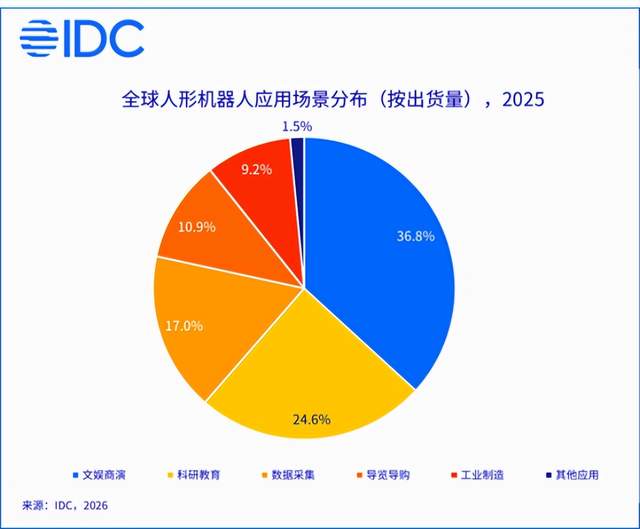
Image source: IDC
UBTECH's Walker S series robots did enter factories like BYD, Foxconn, and Zeekr, but their tasks remained “trivial”—transporting material boxes, affixing car logos, and inspecting seatbelts. As for Galaxy General's “factory training,” most efforts remained in the “internship phase”—capable but not yet reliable enough to replace human workers.
Efficiency poses an even greater challenge. A UBTECH executive revealed that the Walker S2 humanoid robot achieved just 30–50% of human productivity in tasks like stacking boxes and quality inspections. Meanwhile, the robot's price tag starts at an estimated 200,000 yuan. In other words, a costly robot might struggle to match the output of a skilled worker in an hour.
However, the executive expressed hope of boosting productivity to 80% of human levels by 2027—a goal worth anticipating. After all, unlike humans, robots can work 24/7 without breaks.
02
The 100 Million Yuan “Fundraising Spectacle”
With technology still immature and factory doors barely cracked open, why are robotics companies investing heavily to appear on the Spring Festival Gala?
The answer is simple: It’s a cost-effective “fundraising roadshow.”
According to reports, robotics partnership deals for the 2026 Gala ranged from 60 million to 100 million yuan. While steep, the Gala offers unparalleled global exposure—a rare asset for any brand, especially startups seeking to impress investors.
Data proves its value. By 24:00 on February 16, China Media Group's 2026 Spring Festival Gala reached 677 million users across platforms, with 13.5 billion new media live and on-demand views. The group’s proprietary apps logged 578 million video plays, up 53.39 million from last year.
Unitree Robotics emerged as the Gala's biggest winner. From its 2021 robotic ox “Ben Ben” debut to the viral 2025 Yangko BOT and the 2026 Wu BOT spectacle, each appearance boosted its valuation. By late 2025, the company completed IPO counseling, one foot in the door to becoming “A-share’s first humanoid robot stock” with a 12.5 billion yuan valuation.

Image source: 2025 Hurun Global Unicorn List
UBTECH, the “veteran” already listed on the Hong Kong Stock Exchange, was the first humanoid robot company to appear on the Gala—in 2016, 2018, 2019, and 2021. Tianyancha data shows it secured $1 billion and $820 million in funding in 2016 and 2018, respectively.
Drawing from UBTECH's “Gala experience” and the sector's enduring heat, companies vie for capital by strutting on CCTV’s stage. Even if their robots merely flaunt “flashy moves,” they can spin compelling narratives for investors: “Our robots can backflip now—technical barriers are higher, so shouldn’t our next valuation rise?”
Yet, hype cannot escape the “price” curse.
The most visible shift in China’s humanoid robot industry in late 2025 wasn’t technological breakthroughs but escalating price wars. To capture market share in entertainment and education, manufacturers slashed prices.
In July 2025, Unitree Robotics launched the R1 humanoid robot at just 39,900 yuan, a fraction of mainstream models’ average price. In October, Songyan Dynamics dropped a “depth charge” with the 9,998-yuan “Xiaobumi,” cheaper than top-tier smartphones.
This “price butcher” strategy collapsed the downstream rental market first.
On secondhand platform Xianyu, a dancing Unitree G1 rented for 10,000 yuan per day in early 2025 and was in high demand. By late 2025, daily rates plummeted to 4,000 yuan or less. The reason? Robot supplies surged, but demand for weddings and mall events remained static—supply and demand reversed overnight.
Price wars also exposed industry homogenization. Insiders argue that if humanoid robots remain confined to dancing and retail guiding without factory adoption, they’ll remain niche. Victory in this track hinges on leading factory applications.
Authorities noticed the frenzy. In late 2025, officials cautiously warned the robotics sector to balance “speed” and “bubbles,” urging caution against redundant product launches and stifled R&D innovation.
Yet, ignoring homogenization, Unitree Robotics and Songyan Dynamics slashing prices benefits C-end adoption. It drastically reduces barriers for ordinary consumers, signaling that high-tech products aren’t just for the elite—fulfilling the grand vision of “robots in every household.”
03
Key Hurdles Remain for Practical Applications
How far are humanoid robots from becoming genuine “tool robots”?
A cost analysis reveals the challenge: A humanoid robot capable of simple factory tasks costs hundreds of thousands or even millions of yuan. For business owners, hiring a worker for a few thousand yuan monthly is far cheaper than buying a robot prone to breakdowns.
The technological gap stings more. The “brain” remains humanoid robots' biggest bottleneck. Only after breaking through this layer can an “iPhone moment” arrive. In 2025, global humanoid robot shipments exceeded 10,000 units. Experts predict 150,000 units by 2030 and over 1 million by 2035. By these metrics, the industry is still in its infancy.
Critically, most humanoid robot firms remain stuck in concept validation or demonstration phases—none have truly progressed beyond. Industrial clients need to observe real-world feedback post-deployment, including efficiency gains, cost-effectiveness, and whether customers repurchase after 3–6 months.
This means humanoid robots face both cost-benefit imbalances and technological capability gaps. Application scenarios also remain murky. Beyond fixed industrial tasks like welding and material handling, their C-end and commercial value is unproven.
Take Galaxy General: While its team deployed robotic staff in over 100 “Galaxy Space Pod” convenience stores across 20+ cities, using robots costing hundreds of thousands to skew sausages or fetch parcels—tasks easily handled by humans—seems like “overkill.”
However, GGII data projects the global embodied AI humanoid robot market will reach 6.339 billion yuan in 2025, surpassing 100 billion yuan by 2030. Embodied AI applications will expand from simple commerce to structured, complex industrial settings and eventually spill into unstructured scenarios like households and elderly care.
This steep growth curve fuels industry confidence. But first, someone must conquer industrial scenarios and close the commercial loop to unlock the trillion-yuan market.
Currently, humanoid robots have a long road ahead to achieve true commercial viability.
As stage lights dim and curtains fall, robotics firms face a “commercialization exam” riddled with questions.
The first to shed the “flashy moves” label and become genuine factory-floor productivity tools will survive this marathon. The winner may not be the most agile backflipper but the one best understood by workshop managers.
After all, capital markets don’t believe in backflips—only cold, hard financial statements.
Some images sourced online. Please notify us for removal if copyright infringement occurs.
-
![]()
Who’s Sounding the Alarm on ‘Rushed Vehicles’?
-
![]()
Over 5.3 Billion Yuan in Losses Over Three and a Half Years! Can Yonyou Reverse Its Fortunes Through Streamlining and AI Transformation?
-
![]()
Baidu AI Adopts Free Model: A Strategic Maneuver in Traffic and Monetization
-
![]()
Silicon-Based OLED Pioneer Unveils Financial Results: H1 Shipments Outpace Entire 2025 Volume
-
![]()
AI's First "Lost Summer"
-
![]()
Zeiss Makes Another €2.2 Million Bet: Will Eye Tracking Be the Next Big Thing in the Smart Glasses Industry?
-
![]()
RUNTO Ranking | Global Top TV ODM Factories' Shipment Figures for July 2026
-
![]()
Dealer Service Operational Prowess | How After-Sales Managers Can Harness Efficiency and Expertise to Secure Trust in the New Energy Era