Spring Festival AI Showdown: Ant Group Emerges Victorious Against the Odds
 02/24 2026
 497
497

The 2026 Spring Festival witnessed an unprecedented battle among AI titans to capture user attention.
Should companies deliver on their commitments, a red envelope campaign exceeding RMB 4.5 billion will unfold, featuring super vouchers, cash rewards, robots, drones, and other enticing incentives. The objective is clear: to install AI assistants like Qianwen, Yuanbao, and Doubao on as many smartphones as possible within a week.
All the tech giants share a singular goal: to swiftly secure potential entry points for universal AI adoption.
However, as these "entry point" battlegrounds become increasingly contested, they risk devolving into drawn-out stalemates. On one hand, fierce competition dilutes investment returns. On the other, escalating marketing efforts may shuffle AI assistant rankings without truly securing user loyalty.
Especially now, as foundational large model technologies converge and product functionalities overlap, users can switch platforms with virtually no switching costs.
So, how can companies emerge as the "last ones standing" on users' phone screens? How can they break through in this high-stakes AI competition? Beyond aggressive marketing, AI giants must demonstrate greater irreplaceability, enabling ordinary people to genuinely perceive AI's true value.
Ant Group, making a comeback to the fray, is proving the viability of this approach. Rather than competing for universal entry points, Ant achieved over 100 million users in both "AI Health" and "AI Payment"—two specialized domains—securing precise AI entry positioning during this Spring Festival.
01
Specialized AI Takes Center Stage During the Spring Festival
In the first Spring Festival of widespread AI adoption, the battle for user mindshare was intense.
Amid a deluge of new AI products and red envelope promotions, internet users' attention was both highly fragmented and acutely focused. They flitted between general-purpose AI assistants like Qianwen, Doubao, and Yuanbao. Barring exceptions, the top five apps on Apple's App Store download charts during the Spring Festival were expected to be dominated by general-purpose AI assistants.
One notable outlier was the vertical AI assistant Ant Afu. Through campaigns like "Health Fortune," appearances on CCTV's Spring Festival Gala, and a wave of young migrants teaching family members to use Afu, the app's downloads surged, topping Apple's App Store overall download charts for several consecutive days.
As of February 23, Ant Afu remained fourth on the App Store download charts, trailing only Doubao, Qianwen, and Hongguo Short Drama, while Yuanbao had dropped to 31st.
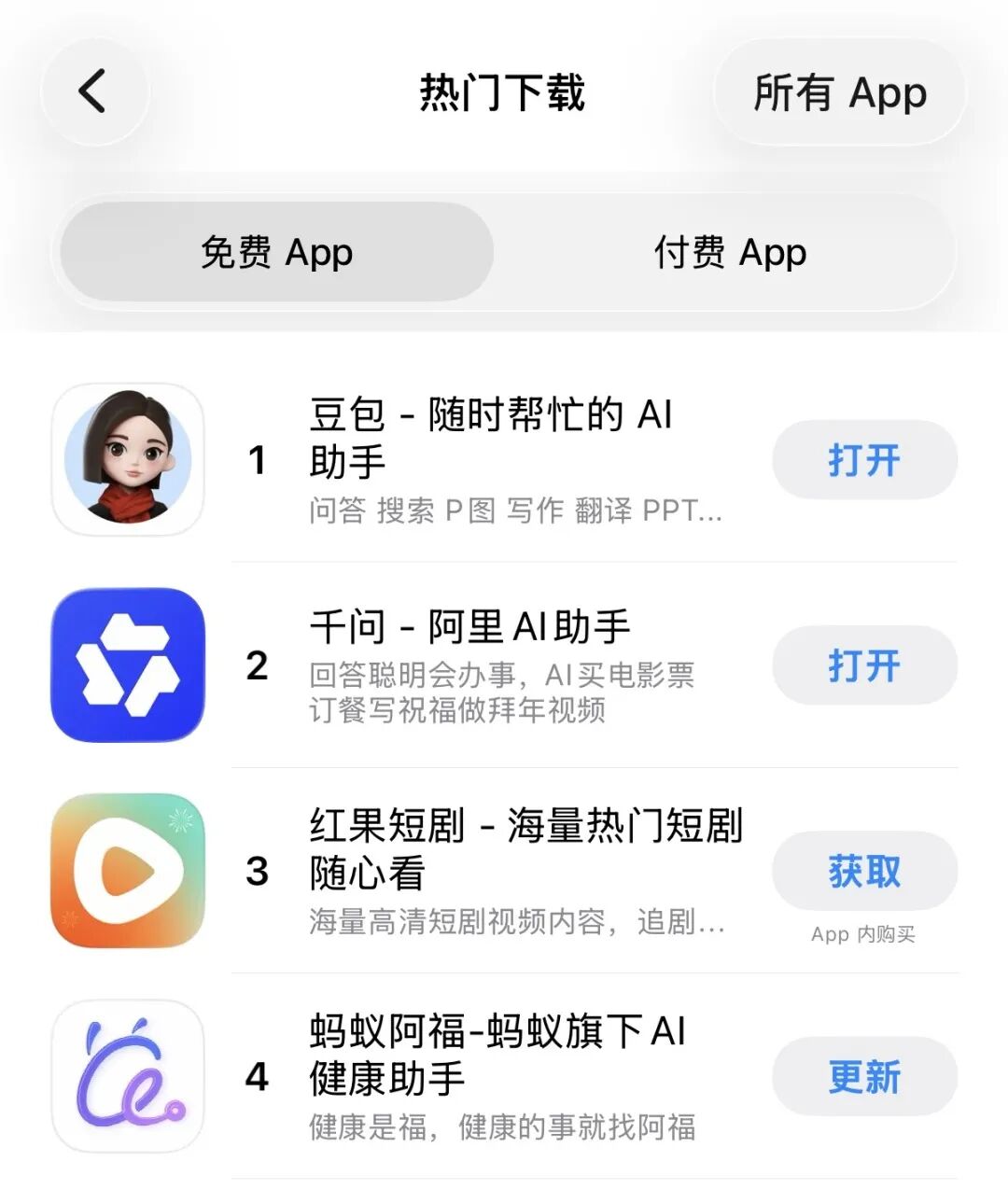
In the Spring Festival battle for user mindshare, Ant successfully stole the spotlight by taking a different path.
This assessment was validated on February 23, when Ant Group disclosed practical data (combat data) from the Spring Festival holiday, revealing comprehensive breakthroughs in its core AI businesses:
1. Alipay's "AI Payment" became the world's first AI-native payment product to surpass 100 million users and transactions, officially entering large-scale commercialization.
2. The standalone Ant Afu app rapidly exceeded 100 million total users, becoming the world's largest health AI app. Among its new Spring Festival users, 52% came from third-tier and lower cities.
3. The Bailing Large Model 2.5 was released, featuring trillion-parameter thinking models like Ring-2.5-1T and four flagship models from its embodied intelligence team, Lingbo Technology, which also open-sourced LingBot-VLA, LingBot-World, and others.
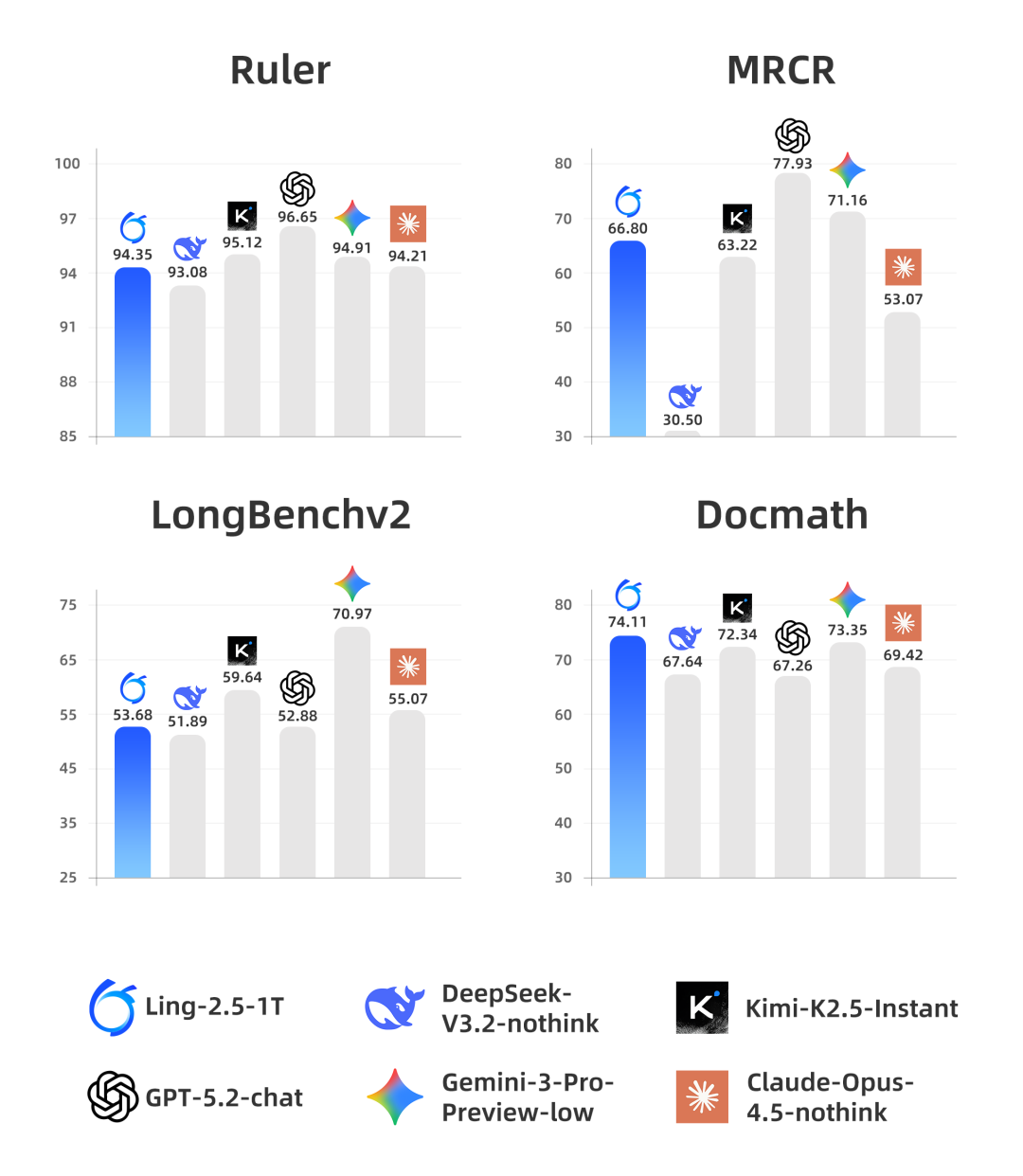
▲ Ling-2.5-1T's Performance Rankings Across Four Evaluation Tasks
Source: Bailing Large Model Official WeChat
Behind these advancements lies a clear strategic roadmap. While most internet firms competed for universal entry points, Ant avoided this fiercely contested market, focusing instead on high-threshold, trust-intensive specialized fields to achieve differentiated AI breakthroughs.
Ant Group CEO Han Xinyi revealed in media interviews that Ant aims to safeguard users' wealth and health through AI—a vision summarized as the "Two Flowers" strategy: "money to spend" and "health to enjoy."
Judging by its Spring Festival performance, this strategy is accelerating implementation: on one side, it deepens AI Health to tap into China's RMB 20 trillion health market and strengthen professional service offerings; on the other, it builds AI Payment to construct a "payment highway" for the impending Agent economy, fostering a new commercial ecosystem.
Both "flowers" represent specialized AI directions that create tangible value through technology. Regardless of whether trucks or sedans run on the Agent economy's "highway," the road itself remains essential. Similarly, health remains inextricably linked to individual quality of life, regardless of economic cycles.
This narrative bears some resemblance to developments across the Pacific.
In Silicon Valley's AI race, Anthropic initially lagged behind OpenAI, seen as a mere contender in the large model competition. Today, Anthropic has surged to the industry forefront by focusing on safety, programming capabilities, and enterprise clients, with Claude's "professionalism" driving breakthroughs. Its latest product updates even triggered a sell-off in U.S. software stocks.
Wall Street fears that capable enterprise AI could eventually displace SaaS.
02
What Kind of AI Products Endure?
As AI drives profound changes in specialized fields, metrics for evaluating technological commercial value have become more concrete.
This metric is measured by the depth of societal problem-solving.
Claude's programming capabilities save programmers countless hours of repetitive coding, while its deep workflow integration helps enterprises build customized tools. Alipay's "AI Payment" removes trust barriers for Agent capabilities, and Afu's "AI Doctor Avatars" enable rural users to access top-tier medical resources from big-city hospitals.
If this AI revolution aims toward AGI, a constant stream of new AI products and dazzling model iterations will become the norm. Like living in an era of tectonic activity, we'll grow accustomed to media headlines declaring "explosive debuts" and "overnight transformations." Technology knows no bounds—a foundational model update could render batches of AI products obsolete, and global tech trends may fade as quickly as they emerge. The question remains: What products and values endure? What leaves a lasting legacy, like the Himalayas after continental collision?
History suggests that products and services transforming ordinary lives hold the greatest potential.
In the mobile internet era, WeChat and Alipay exemplified this—even as communication technologies advanced from 3G to 5G, ordinary people remained reliant on instant messaging and mobile payments. In the AI era, products satisfying rigid societal demands and remaining "accessible, affordable, and willing to be used" by ordinary people will likely dominate.
Thus, the longevity of an AI product depends not on technical flashiness but on its ability to generate real value from the user's perspective.
Ant's bets on AI Payment and AI Health reflect this philosophy: only by anchoring in specific service scenarios and addressing ordinary people's needs can lasting commercial value be created.
Payment and health, though seemingly unrelated, share commonalities in serving users: both represent high-frequency, rigid-demand, high-value scenarios.
AI Payment serves as the final link for Agents to execute transaction decisions and enhance efficiency. An AI payment service capable of understanding intent and verifying identity essentially lays tracks for the Agent economy. The 120 million Alipay AI Payment transactions driven by Qianwen's Spring Festival super voucher campaign mark just the beginning of new payment technology penetration, akin to early ride-hailing or O2O battles in mobile payment's infancy.
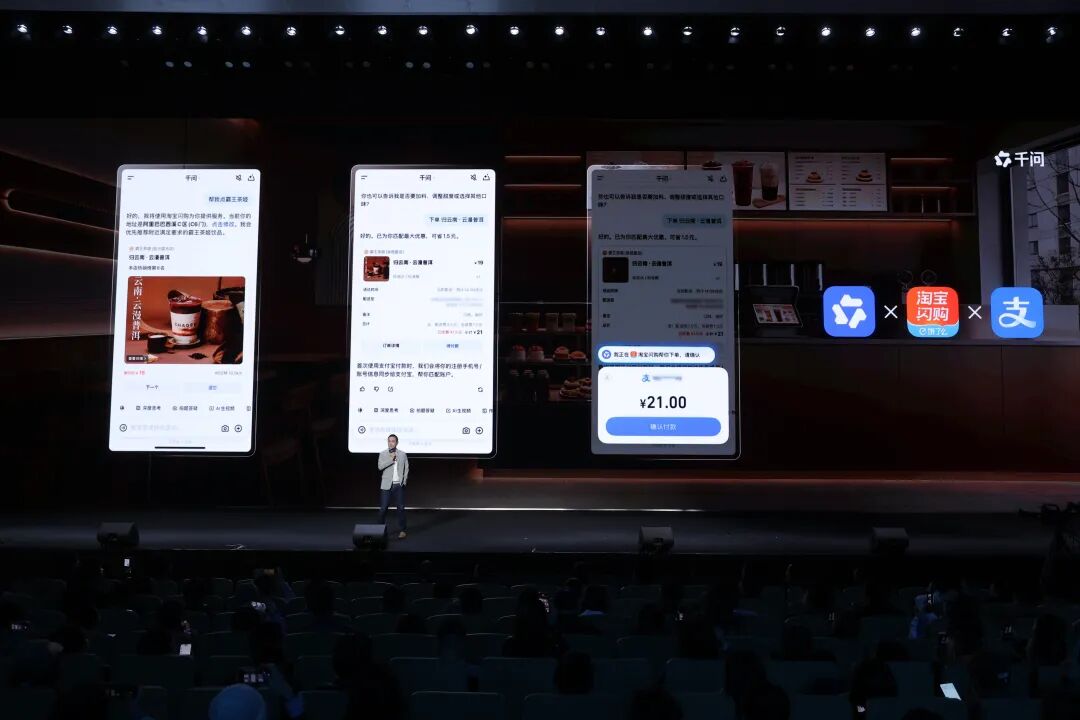
▲ Qianwen's Spring Festival Super Voucher Campaign Drives 120 Million Alipay AI Payment Transactions
Given mobile payment's current user coverage, daily usage frequency, and economic and social impact, AI Payment's future appears promising.
AI Health addresses universal needs, especially in China, where medical resources are unevenly distributed and health awareness is surging, creating vast potential for professional health companionship. This "potential" manifests in market scale—China's online health market is projected to reach RMB 480 billion (USD 69 billion) by 2025—and in the tangible improvements to ordinary people's quality of life with each technological interaction.
A 70-year-old widow suffering from insomnia chatted over 1,000 times with a sleep expert's "avatar" through Afu, alleviating both her sleeplessness and the stress of caring for her ailing spouse. Obstetrician Duan Tao, revered by anxious expectant mothers, can only treat 20 patients daily, but his "AI Duan Tao" on Afu has answered over 700,000 questions for 160,000 users in six months.
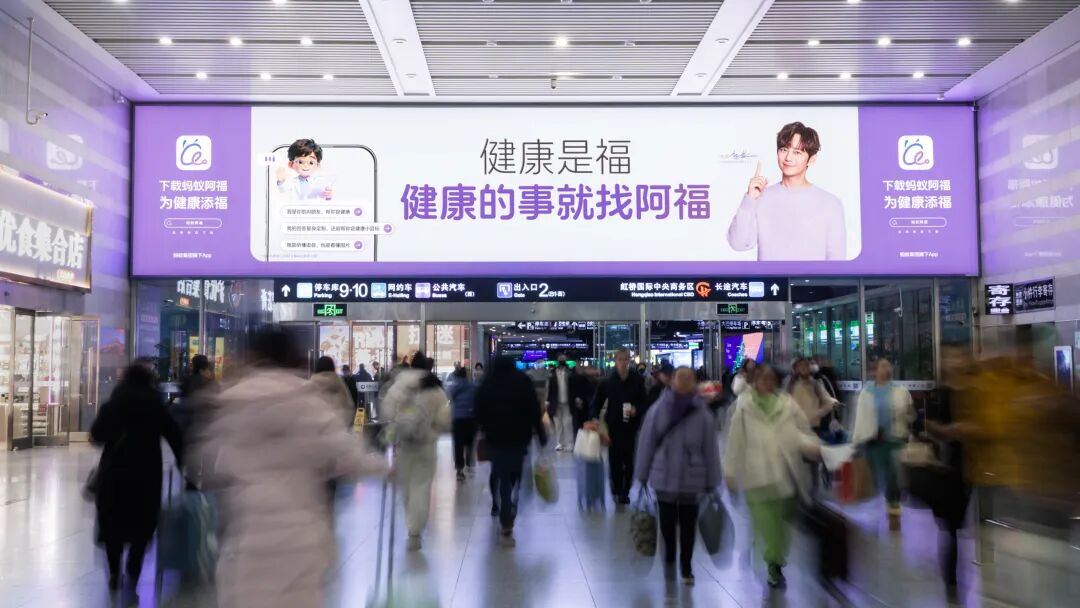
Once trust based on life and health is established, user loyalty and long-term commercial value become profound. Afu, for instance, offers not just personalized health advice and medical education but also end-to-end services from appointment booking and online consultations to offline treatment, medication purchase, and insurance payment—making user migration to other products unlikely.
A high-frequency, rigid-demand AI product with strong trust bonds inevitably leads to certain commercial value. Vast exploration opportunities exist in preventive healthcare, health management, commercial insurance, and health monitoring hardware.
Certain and enduring commercial value, in turn, enables AI products to go further.
03
Decade-Long Innovation Opportunities Beyond Universal Entry Points
Judging by the Spring Festival's AI breakthroughs, Ant's AI strategy increasingly resembles Microsoft's underlying logic.
When new technological waves arise, both giants leverage past accumulations to reinforce their moats rather than blindly innovate or compete for universal entry points.
Microsoft's strategy embeds AI into its cash cows—arming Office with GPT to enhance enterprise productivity, building Copilot as an AI operating system, and driving Azure's growth with AI-powered computing. Its financial performance in recent years validates this approach: in Q4 2025, AI contributed 16% to Azure's growth, with analysts projecting Azure's gross margin to reach 65% in 2026, surpassing AWS and Google Cloud.
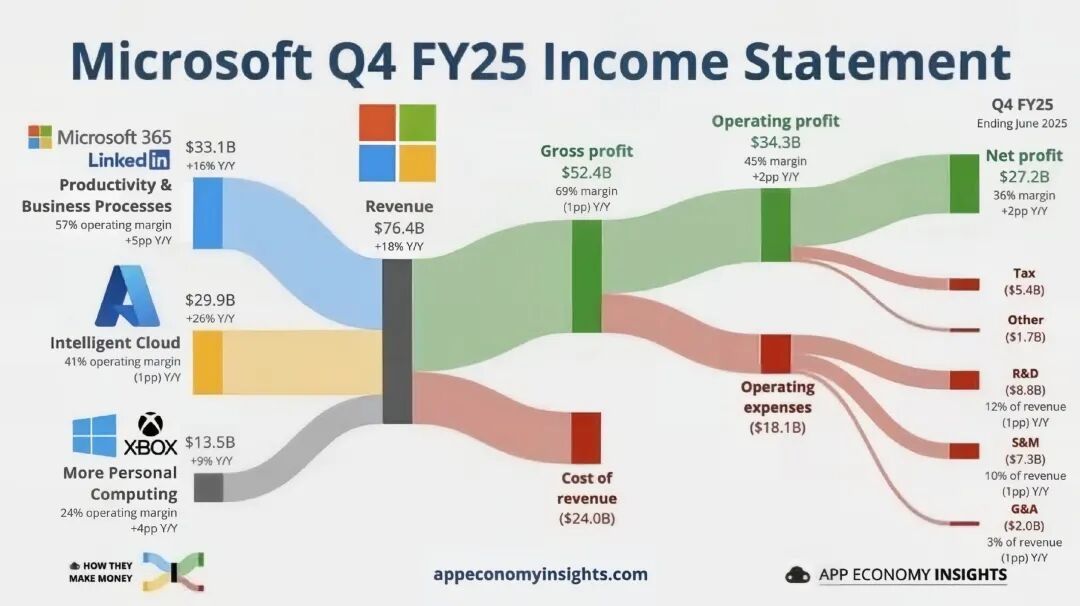
▲ Microsoft's Simplified Q4 2025 Profit Statement
Source: APP ECONOMY INSIGHTS
Ant's focus on AI Payment and AI Health similarly stems from years of accumulation in financial payments and healthcare digitization. Moreover, generative AI has fully activated Ant's healthcare capabilities, providing a unified B2C entry point for its services.
This similar path likely arises from the high barriers of existing businesses and the certainty driven by structural demand.
Take healthcare: Ant Group CEO Han Xinyi previously stated, "Ant has laid a deep foundation in healthcare digitization over the past decade—one that competitors cannot replicate shortly."
Health and finance are inherently high-threshold fields addressing vital societal pain points with clear, enduring demand. Against today's economic backdrop, the universal needs to "care for oneself and one's family's lives" and "manage health and wealth" have only amplified. Ant's strategy of building AI-era business models around these needs represents a continuation and reinforcement of past advantages.
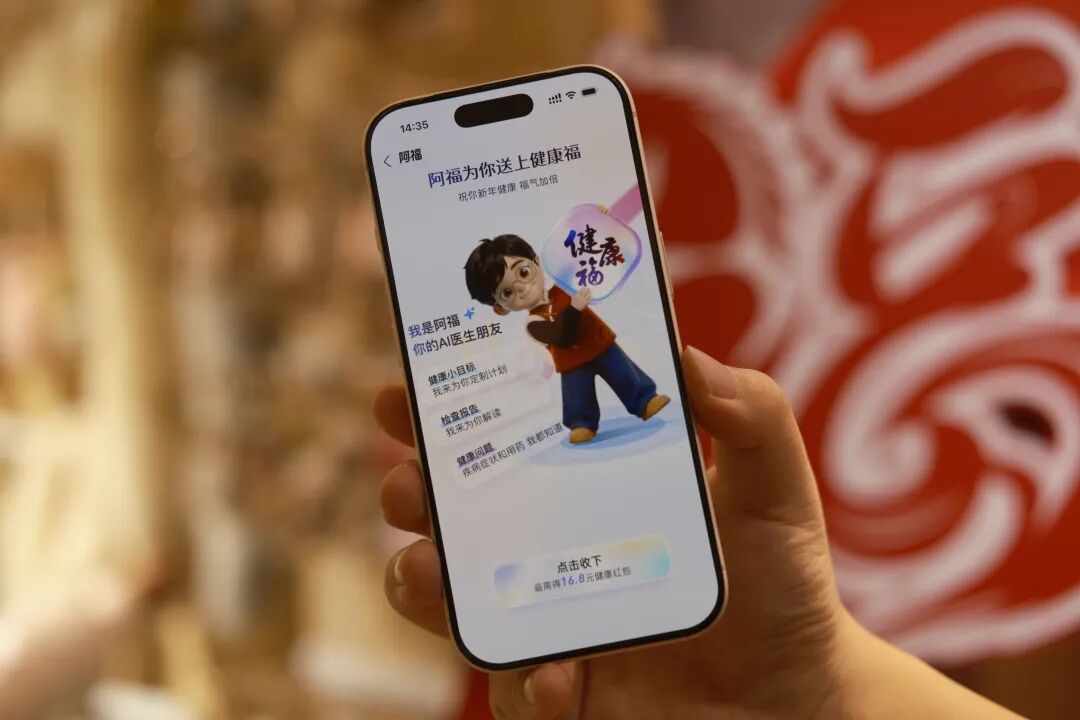
In our view, Ant's edge in these two businesses stems from two core pillars: technological capability and ecosystem.
Public information suggests Ant's AI strategy revolves around exploring AGI through open-source models, centered on foundational models (the Bailing Large Model) and extending toward general applications and embodied interactions. As the technical ceiling for AI application intelligence, the Bailing Large Model delivered a "triple play" during the Spring Festival, open-sourcing the multimodal Ming-Flash-Omni 2.0, trillion-parameter thinking model Ring-2.5-1T, and flagship base model Ling-2.5-1T.
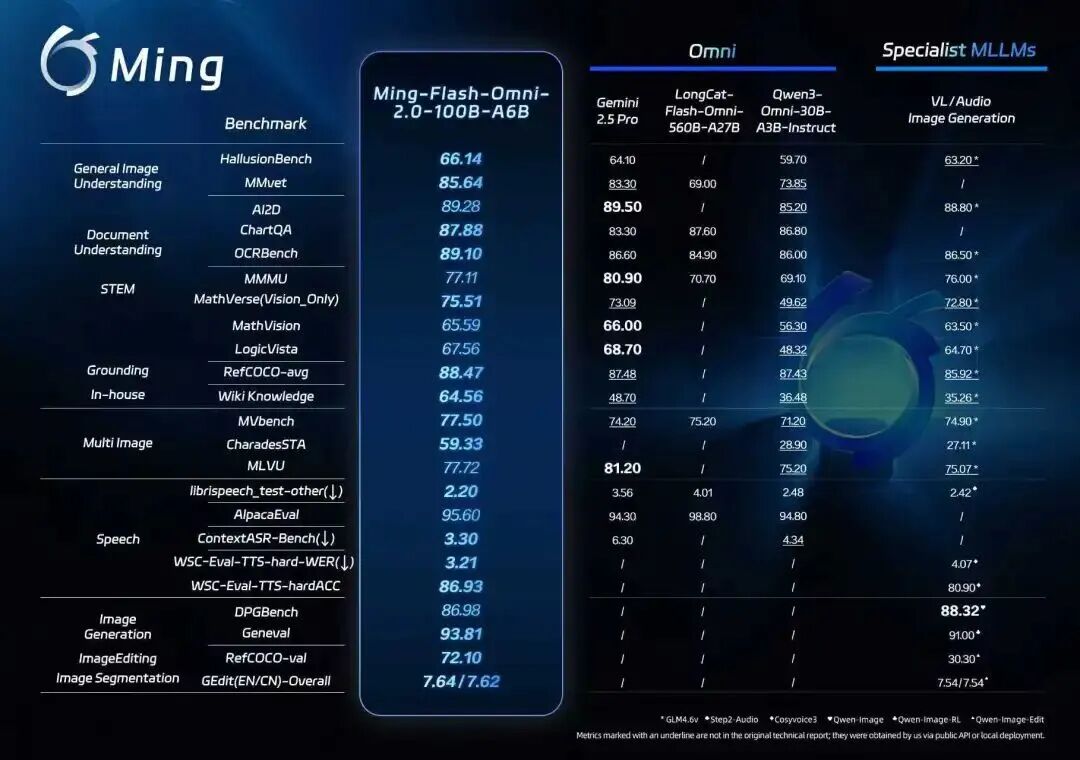
▲ Official Performance Evaluation Report for Ming-Flash-Omni 2.0
Surpassing Gemini 2.5 Pro Across Multiple Key Benchmarks
In frontier exploration, Ant systematically deploys foundational technologies for the next 5–10 years while accelerating external investments across the AI value chain—from large models and Agents to AI hardware and computing power.
Regarding ecosystems, Ant has deep roots in payments and healthcare, holding leading positions in market insight and resource accumulation. In healthcare, for example, Alipay has achieved full hospital online payment coverage, with over 800 million users linking their medical insurance information. Its 2025 acquisition of Haodafu Online further strengthened its service closed loop (closed loop), enabling Afu to stand out swiftly among AI products by leveraging a solid user base and scenario support shortly after launch.
Bloomberg also stated in a recent report that "competitors, including Tencent and DeepSeek, are expanding their healthcare expertise, but Ant Group established a strong foothold early on."
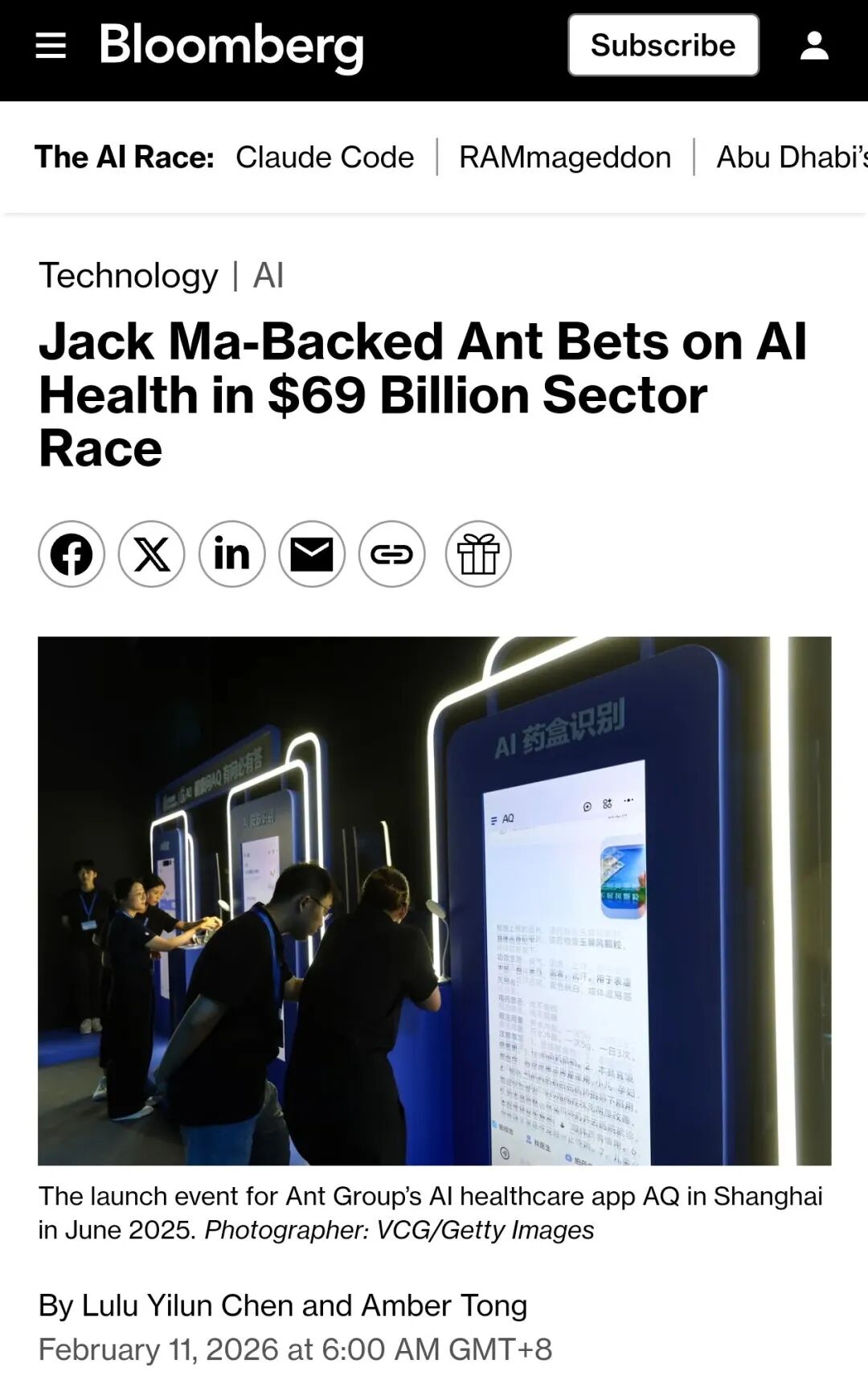
▲ Bloomberg Covers Ant Group's AI Business
Ant Group's decision has also demonstrated to the industry that competition in the realm of AI goes well beyond merely contending for entry points. Substantial innovation opportunities, spanning across 'decades', can also be unearthed in vertical sectors. Within the profound waters of AI application, where there is a return to professional services and a reinforcement of foundational infrastructure, vast commercial potential remains concealed.
Ultimately, irrespective of the trajectory of technological evolution, the value of AI must invariably hinge on addressing real-world social issues.
-
![]()
Doubao Work Unveiled! Domestic AI Leaders Fully Commit to the 'Work' Sector
-
![]()
Who’s Sounding the Alarm on ‘Rushed Vehicles’?
-
![]()
Over 5.3 Billion Yuan in Losses Over Three and a Half Years! Can Yonyou Reverse Its Fortunes Through Streamlining and AI Transformation?
-
![]()
Baidu AI Adopts Free Model: A Strategic Maneuver in Traffic and Monetization
-
![]()
Silicon-Based OLED Pioneer Unveils Financial Results: H1 Shipments Outpace Entire 2025 Volume
-
![]()
AI's First "Lost Summer"
-
![]()
Zeiss Makes Another €2.2 Million Bet: Will Eye Tracking Be the Next Big Thing in the Smart Glasses Industry?
-
![]()
RUNTO Ranking | Global Top TV ODM Factories' Shipment Figures for July 2026