The Strategic Choice Behind OpenAI's Shutdown of Sora and Industry Transformation
 03/27 2026
 750
750
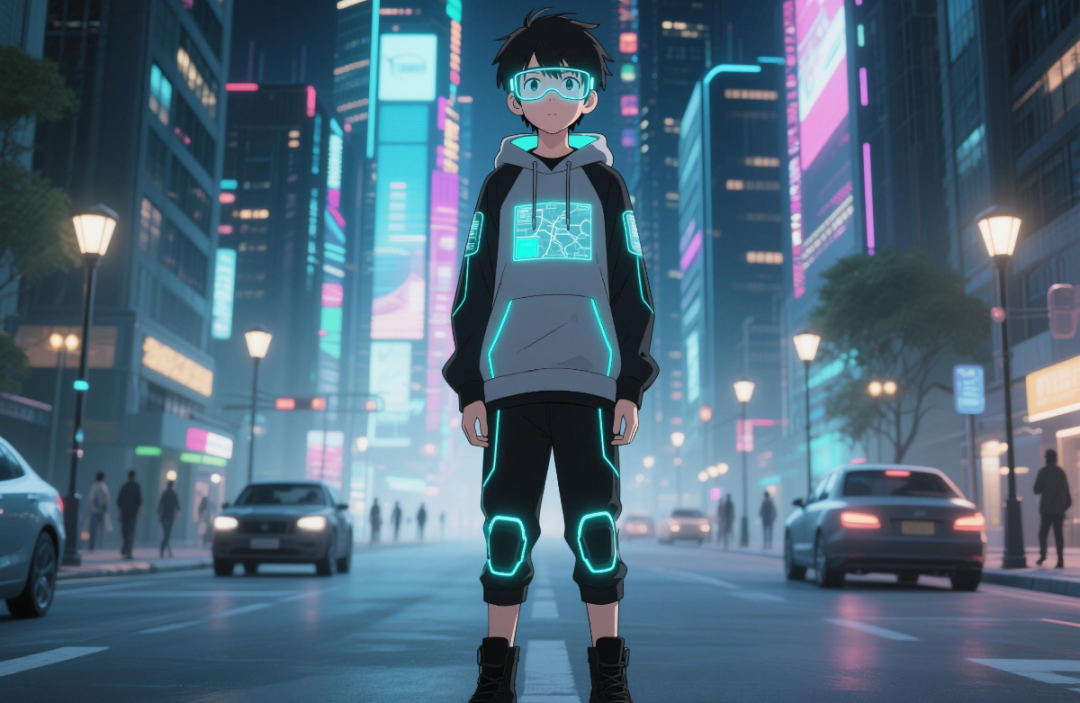
The End of an Era.
Editor: Captain Teemo
In early 2024, when a woman in a leather jacket walked through the neon-lit streets of Tokyo, the world believed the scepter of video creation had passed to AI. Sora, once hailed as a groundbreaking "reality simulator," experienced a meteoric rise and fall within just two years.
Social Media
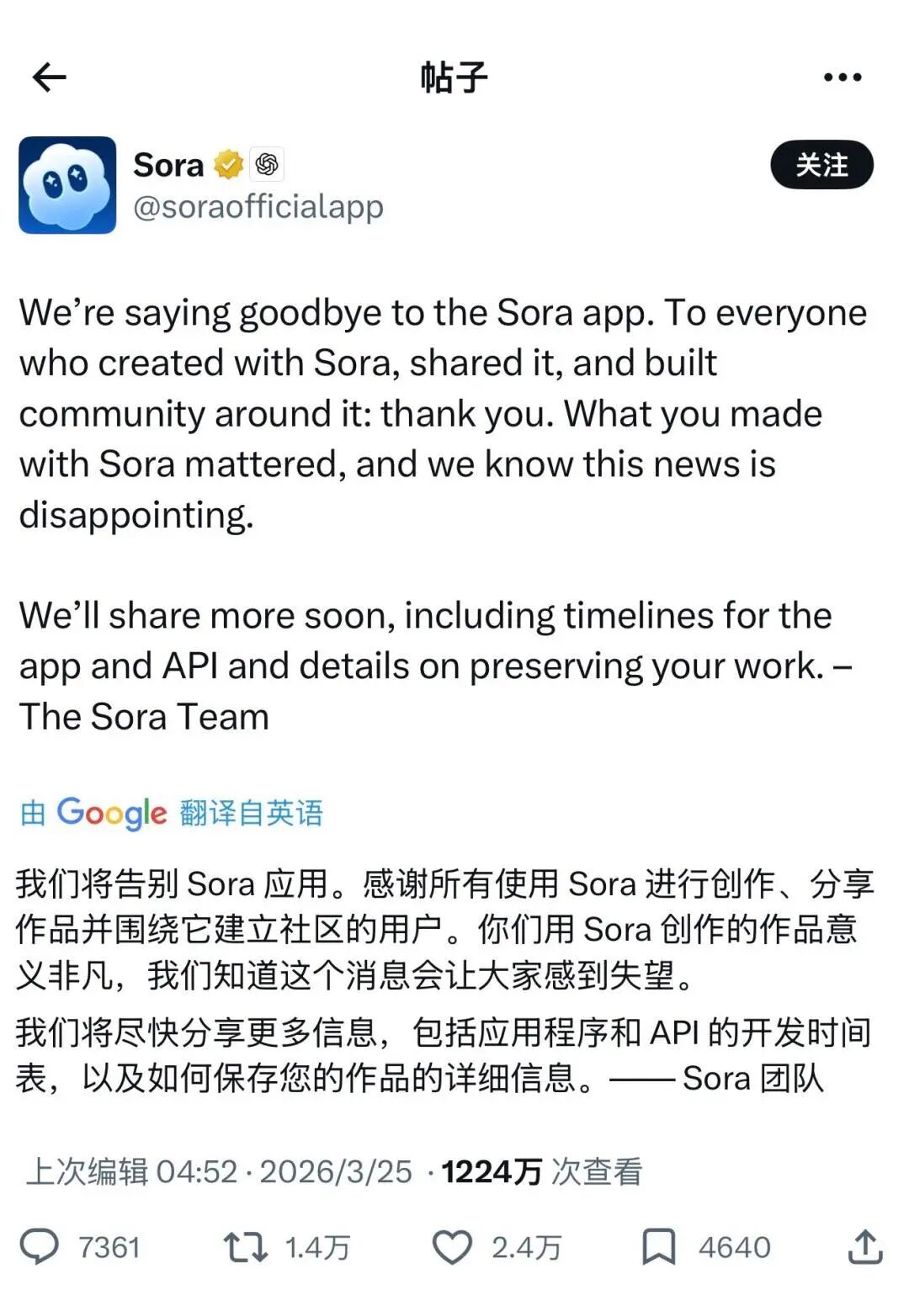
On March 24, 2026, the global AI industry was rocked by the news that OpenAI would fully shut down its flagship video generation product, Sora, including its standalone app, API access, ChatGPT-embedded video features, and official website. A detailed timeline for the shutdown will be announced soon. Once celebrated as the "iPhone moment for AI video," this phenomenal product closed its doors just six months after launch. This abrupt transition from global acclaim to emergency shutdown reflects not only OpenAI's strategic retreat but also a profound shift in the AI industry from technological showmanship to commercial profitability.
01
Sora's Two-Year Journey from Peak to Demise
Sora's lifecycle was highly dramatic. Its debut in early 2024 instantly outperformed all competitors with its ability to generate 60-second high-quality videos in a single run, leaving startups like Runway and Pika sleepless. It was hailed as the landmark product marking the dawn of AI video generation.
At the time, Sora broke through the limitations of traditional video generation models in terms of duration, quality, and logical coherence. It accurately simulated physical laws and maintained scene continuity, turning "text-to-video" from concept into reality and accelerating the entire AI video sector's development.
In September 2025, OpenAI launched Sora2 and its standalone app, introducing innovative features like "user integration into short videos." Within five days of launch, downloads surpassed 1 million, topping the Apple App Store and becoming a phenomenal consumer AI product. On social platforms, user-created adaptations of famous IPs and creative shorts went viral, positioning Sora as OpenAI's next growth engine after ChatGPT.
 Apple Store
However, crises lurked beneath the surface. By December 2025, Sora's app downloads dropped 32% month-over-month; in January 2026, installations plummeted another 45%, with user retention rates continuously declining (30-day retention at 1%, 60-day retention nearing zero). User enthusiasm faded rapidly, trapping the product in a "fun but useless" dilemma—from a beloved star to a low-engagement "side quest."
On March 24, 2026, OpenAI officially announced the shutdown of all Sora-related services, just six months after the standalone app's launch. The product, once carrying OpenAI's multimodal ecosystem ambitions, exited abruptly, leaving the industry to ponder its implications.
02
Cost Sinkhole and User Dilemma
Sora's exit was not a technological failure but a collapse of business logic and product positioning. Multiple factors made shutdown OpenAI's only choice.
(1) Economically Unsustainable Model
Operating Sora was a "money-burning race." Its massive user base incurred astronomical costs. The Beijing News reported that SemiAnalysis estimated Sora's daily operational costs neared $15 million, with annual costs reaching $5.4 billion, after burning billions in R&D and operations. An OpenAI project lead admitted, "The current economic model is entirely unsustainable." Video generation's computational demands far exceeded text/image generation—a single video's GPU resources could power dozens of ChatGPT queries, straining core business resources. With an IPO looming and capital demanding profit efficiency, this "costly" venture became expendable.
(2) Limited Use Cases and Trust Crisis
Sora's core feature, "user integration into short videos," was a one-time novelty lacking sustained demand. Users struggled to find long-term value after initial exploration, failing to build loyalty. Meanwhile, portrait privacy concerns became a major barrier, as most users refused to share facial data with AI. Content creation hit a ceiling of "fun but useless," unable to break into mainstream entertainment.
Additionally, AI-generated content oversaturation damaged Sora's reputation. By lowering video creation barriers, it flooded social platforms with low-quality, homogeneous AI videos, turning "AI-made" into a byword for inferior content and eroding user trust.
(3) IPO Rush and High-Profit Bet
The primary driver for shutting down Sora was OpenAI's IPO preparations. Valued at $730 billion, OpenAI is streamlining costs and profit structures for capital markets. In recent years, the company has cut non-core expenses, consolidating ChatGPT, browsers, Codex, etc., into a single desktop super-app to focus on high-growth, high-paying enterprise markets.
In contrast, Codex, a programming assistant, saw user numbers triple and usage quintuple annually, with over 2 million weekly active users. Meanwhile, competitors like Anthropic derived 80% of revenue from enterprise clients, highlighting the stark contrast between low-profit consumer markets and high-return enterprise sectors. OpenAI's strategy is clear: abandon non-core consumer lines, redirect resources to coding tools, enterprise services, and other core areas, making Sora a casualty of strategic realignment.
03
Sora's Exit Doesn't Cool AI Video Sector
Contrary to fears, the global AI video sector didn't enter a cold winter after Sora's shutdown. Instead, it entered a "Warring States" era of fierce competition without a dominant player.
AI video generation technology continues to evolve rapidly, with intensifying market competition. ByteDance's SeeDance2.0 impressed with Hollywood-grade production, precise editing, and angle control; Google's Veo tool, powered by the Genie world model, enabled real-time interaction in generated videos, setting industry benchmarks. Domestic players like Kuaishou's Kling AI also rose quickly, gaining advantages in lightweight design and commercialization. The global AI video landscape now features diversified competition.
 SeeDance2.0
Sora's exit sent a clear industry signal: The AI sector has moved from "technology first" to "profitability first." Companies no longer chase technological spectacle but focus on essential use cases, cost optimization, and sustainable models, concentrating resources in high-value areas like enterprise services, professional creation, and film production.
AI tech media outlet *Houchangcun* argued that Sora's shutdown marked the AI industry's return to rationality. It proved that even with cutting-edge technology, failure to resolve cost-efficiency and user demand paradoxes leads to market elimination.
04
AI Companies' "Trade-Off Philosophy" and Future Paths
Sora's rise and fall offer strategic lessons for global AI firms: Technological leadership ≠ commercial success. Blind expansion and resource dispersion demand adjustment.
OpenAI's "amputation for survival" reflects the wisdom of subtraction—cutting non-core, low-profit businesses to build core competitiveness for long-term growth.
For the AI industry, consumer AI products must escape the "novelty trap" to find essential use cases and sustainable payment models. The enterprise market becomes the competitive core, where specialized, scenario-driven, low-cost solutions thrive. Future AI video generation will deeply penetrate B2B sectors like filmmaking, advertising, and education, while C-end products evolve toward lightweight, personalized, and highly practical directions.
05
Conclusion
As technological hype fades and commercial rationality returns, the AI industry will shed its frivolity and mature into true industrialization and commercialization. Sora's story will remain a memorable footnote in the sector's development history.
-
![]()
The Allure of 'Acquisition Spree': Li Shufu's Left Turn, Xu Jiayin's Right
-
![]()
Strategic Transformation Yields Results: Phoenix Optics Reports 10.9% YoY Rise in Core Net Profit for H1 2026
-
![]()
Three Key Growth Trajectories Synergize! Crystal-Optech Reports 3.478 Billion Yuan in Revenue for H1 2026
-
![]()
Semi-Annual Report Sparks XPENG Motors Buzz
-
![]()
1.6 Billion Big Order Secured! SeeYA Technology's Revenue Soars by 287.87% in the First Half of the Year
-
![]()
Baidu's Profits Plunge by 68%: Unraveling the Mystery Behind the Numbers
-
![]()
Baidu’s Profits Tumble by 68%! Where Has All the Money Gone?
-
![]()
Hynix’s Taobao Store Shuts Down Abruptly: What Should Customers Do About Warranty Services for Memory Modules?