Microsoft AI Enters the Home Appliance Market! Your TV and Fridge Will Soon Become 'Smart'
 03/27 2026
 477
477

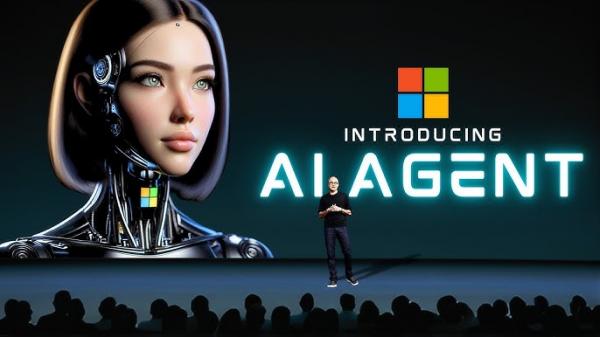
From 'you command, I obey' to 'I understand your thoughts,' home appliances are undergoing a silent revolution.
Have you ever imagined a day when your TV would proactively chat with you, your fridge would manage your groceries, and your air conditioner would figure out how to save energy on its own?
Don't think this is just a plot from a sci-fi movie. Recently, an AI storm sparked by Microsoft has been quietly transforming the familiar home appliances around us. Samsung, LG, TCL, Hisense, Lenovo—these well-known home appliance giants are all racing to integrate Microsoft's AI brain into their products.
TVs Are No Longer Just 'Dumb Boxes'
Let's talk about TVs first.
We used to call TVs 'dumb boxes,' and for good reason. You'd ask them to change the channel, and they'd take forever to respond. You'd ask about the weather, and they'd just stare at you blankly. But now, things are completely different.
Just a few months ago, Microsoft and Samsung made a big move: they integrated the Copilot AI assistant directly into Samsung's entire lineup of 2025 TVs and smart displays.
This isn't just an ordinary voice assistant. When you press the microphone button on your remote, a beige, round animated figure appears on the screen, its mouth moving in sync with your words. You can chat with it about movie recommendations, ask it to give you spoiler-free plot summaries, or inquire about daily questions—it can hold a conversation on just about anything.
A Microsoft executive made an interesting remark: 'Copilot brings AI out of your pocket and into your home.' In other words, AI used to be a little helper in your phone—now it's a member of your living room.
Not just Samsung, LG is also working closely with Microsoft. The two companies plan to jointly develop AI agents—smart assistants that can proactively figure out what you want instead of just waiting for your commands.
TCL Takes AI to the Next Level
If Samsung and LG are just adding AI assistants to their TVs, TCL is going all-in.
At this year's CES (the world's largest consumer electronics show), TCL showcased a range of products: their smart TVs, phones, tablets, air conditioners, and refrigerators were all 'armed' with AI.
The most interesting part is TCL's collaboration with Microsoft. They introduced a 'large-screen AI agent' on their TVs, capable of doing much more:
Just say what movie you want to watch, and it will search for it
Want an AI-generated picture book? No problem
Want to turn your family photos into artistic wallpapers? It can do that too
Even while watching a movie, it can translate subtitles in real-time, supporting dozens of languages
TCL also released something called the Note A1 NXTPAPER—a mouthful of a name, but it has a nifty trick: it can transcribe your speech into text in real-time and translate it into other languages. If you're video chatting with a foreign friend, this device acts as your personal interpreter.
Why Are Home Appliance Makers Turning to Microsoft?
You might ask: Can't these home appliance companies build their own AI? Why are they all turning to Microsoft? The answer is simple. These companies excel at making fridges, air conditioners, and TVs. But AI? That's Microsoft's bread and butter. Instead of reinventing the wheel, it makes more sense to use proven, user-friendly, and mature technology.
What does Microsoft offer these companies? In essence, a 'toolkit.'
Speech recognition technology: Lets home appliances understand your voice
Large language models: Enables appliances to comprehend your meaning rather than just recognizing a few fixed commands
Cloud services: Allows appliances to connect to the internet, learn, and update
The beauty of this toolkit is that home appliance makers can implement it without starting from scratch. Plus, with Microsoft's servers in over 190 countries and regions, your air conditioner can handle local speech recognition even if you sell it in Africa.
What Exactly Can AI Home Appliances Do?
After all this, you might still wonder: What makes an AI-equipped home appliance better than a regular one? Let me give you some practical examples.
They understand human language, not just commands. With old smart appliances, you'd say, 'Hey X, set the AC to 26 degrees.' In the future, you might just say, 'I'm feeling hot,' and it will know to turn on the AC and figure out the right temperature.
They learn your habits. Your AI TV will notice your favorite types of movies and suggest them as soon as you turn it on.
They anticipate your needs. LG and Microsoft are developing an AI agent that can predict what you want based on your usage habits. For example, if you wake up at 7 AM every day, it will start warming up your room at 6:50 AM.
They enable cross-device connectivity. TCL's system allows seamless interaction between TVs, phones, air conditioners, and refrigerators. You can pause a movie on your TV and continue watching it on your phone. Your AC can detect when you're home and adjust the temperature in advance.
This Revolution Is Just Beginning
Kang Rong, Microsoft's General Manager for Azure Business in Asia, made a insightful remark: 'We are at a critical inflection point.' What does that mean? It means AI home appliances are no longer a future concept—they're happening now.
Research shows that 30% of Chinese companies have already invested heavily in AI agents, with another 55% exploring and experimenting with them. This means you'll soon see more and more home appliances labeled 'AI-powered.'
Honestly, I'm excited about this future. Imagine coming home to a TV that automatically plays your favorite shows, an AC set to your ideal temperature, a fridge that reminds you to buy milk, and a washing machine that opens its lid when you approach.
That day isn't far off. When it arrives, today's home appliances might seem as primitive as brick-like feature phones do to us now.

-
![]()
Smartphone Prices Surge Amid Manufacturer Anxiety
-
![]()
Orbbec Soars to Record Heights, Eyes Further Capital Influx of 980 Million!
-
![]()
Tongding Interconnect Sets Up Shop in Shaoguan with 800 Million Yuan in Registered Capital
-
![]()
Before Kimi’s A-Share Debut, Zhipu Aims to Secure More 'Strategic Funding'
-
![]()
Innovative Leap | Fiber-Pluggable 1470nm Laser Source: Revolutionizing Precision Laser Weeding
-
![]()
73-Day Rapid Listing: Where Does Unitree's Wang Xingxing's 'Sense of Urgency' Come From?
-
![]()
AI Project Mindverse, Backed by Meituan, Faces Data Inflation Allegations Over Its Macaron Product
-
![]()
3000-word In-Depth Analysis | What Makes Physical AI So Magnetic? It Has Captivated Masayoshi Son, Jensen Huang, and Justin Sun All at Once