Kingsoft Cloud's Second Half: Zou Tao Still Needs to Prove Himself
 03/27 2026
 707
707
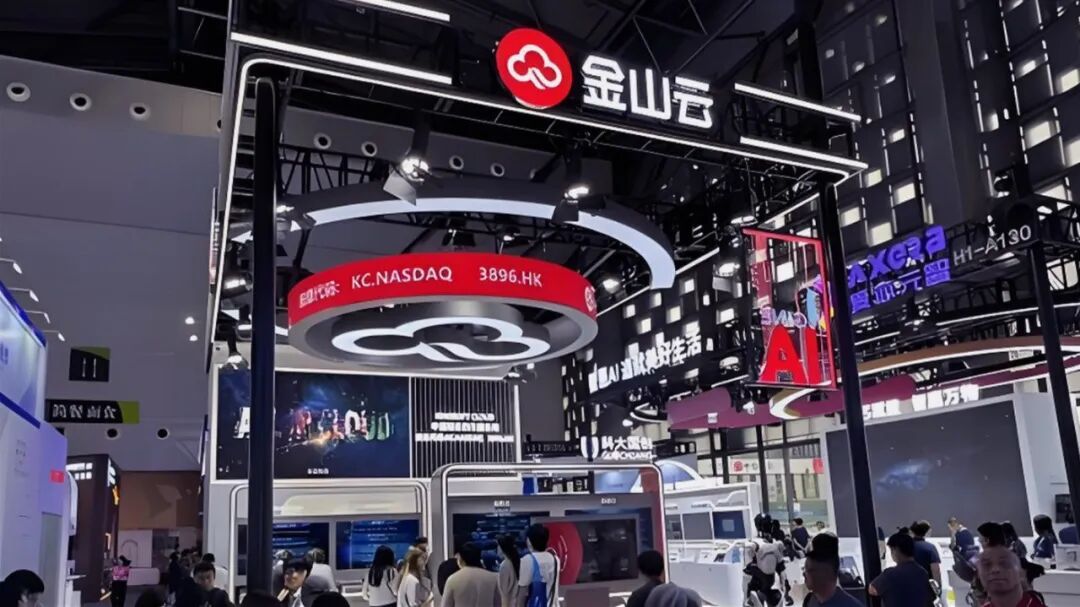
A critical case study for breakthroughs in the AI era.
On March 25, 2026, Kingsoft Cloud delivered two key reports: one on its financial results for the fourth quarter and full year of 2025, and the other on a major management reshuffle.
The financial report showed that Kingsoft Cloud's total revenue for 2025 reached RMB 9.559 billion, up 22.8% year-on-year; Q4 revenue hit RMB 2.761 billion, a 23.7% YoY increase, marking a new single-quarter revenue high. On the profit side, the company's non-GAAP operating profit turned positive for the second consecutive quarter, with full-year non-GAAP EBITDA reaching RMB 2.336 billion and a profit margin of 24.4%, up 16.2 percentage points from the previous year.
The announcement released on the same day revealed that Lei Jun resigned as non-executive director and chairman of Kingsoft Cloud due to work adjustments, with Zou Tao succeeding him as chairman and nomination committee chair, taking full charge of the company's strategic decisions. This personnel change marks Kingsoft Cloud's official entry into the Zou Tao era.
From its founding in 2012 to its dual primary listing in Hong Kong and the U.S. in 2022, Kingsoft Cloud completed its first decade.
During this period, it rose to the top tier of China's public cloud market with differentiated strengths in gaming and video clouds, while also enduring industry price wars, business contractions, and persistent losses.
Now, at the dawn of its second decade, with the cloud computing industry being reshaped by generative AI, Zou Tao must lead Kingsoft Cloud to win a new battle for the future.
01
First Decade: From Differentiated Breakthrough to Transformation Pain
Kingsoft Cloud's birth was itself a counter-trend breakthrough.
In 2012, when China's cloud computing market was still in its infancy, Alibaba Cloud had already been established for three years, and internet giants like Tencent and Baidu were entering the fray. Against this backdrop, Kingsoft Cloud was founded and, in 2014, drove a strategic consensus within Kingsoft to "All in Cloud," planning to invest $1 billion over the next 3-5 years.
Facing a market dominated by giants, Kingsoft Cloud avoided a "broad but shallow" approach from the start, instead targeting vertical industry differentiation.
Leveraging Kingsoft Group's three decades of experience in gaming, Kingsoft Cloud pioneered the gaming cloud sector, quickly securing leading game projects like
Around 2015, the mobile internet boom fueled rapid growth in video and live-streaming industries, and Kingsoft Cloud go with the flow (shùn shì, meaning "seized the opportunity") entered the video cloud space. During the September 3rd military parade live-stream that year, Kingsoft Cloud achieved the industry's lowest buffering rate, gaining instant fame.
It subsequently served leading internet companies like ByteDance, Kuaishou, and Bilibili, with video cloud becoming a core revenue growth engine. With these two dominant sectors, Kingsoft Cloud nearly became the leader of the second tier.
In May 2020, on its eighth anniversary, Kingsoft Cloud listed on NASDAQ, becoming one of the highest-grossing Chinese concept stocks in the first half of the year, with its market cap once exceeding $5 billion, marking its first decade's peak. At the time, its prospectus showed revenue growth exceeding 100% for three consecutive years—a standout performance in the rapidly growing cloud computing market.
But beneath the highlights, the industry's underlying logic was shifting. After 2021, China's public cloud market transitioned from high-speed incremental growth to mature inventory (cún liàng, meaning "existing") competition. Leading vendors launched fierce price wars for market share, particularly in the highly commoditized CDN business, where prices and margins continued to decline.
Kingsoft Cloud was not spared. In 2021, its annual revenue growth slowed sharply, and net losses widened. Facing industry upheaval, Kingsoft Cloud proactively adjusted, gradually reducing low-margin CDN business from Q4 2021 and shifting resources to core high-value areas like computing, storage, and enterprise cloudification.
This adjustment brought short-term pain. In 2022, revenue dipped to RMB 8.18 billion, and net losses expanded to RMB 2.688 billion, a record high since listing. That August, Wang Yulin resigned as CEO, and Zou Tao, CEO of Kingsoft Group, took over as acting CEO, tasked with steering the company through a critical transformation.
Zou Tao was no stranger to Kingsoft Cloud.
A Kingsoft veteran since 1998, he had worked with Lei Jun for over two decades, holding senior management roles across the group before joining Kingsoft Cloud's board in December 2016, giving him deep insight into the business and ecosystem.
But at the time, Kingsoft Cloud faced its toughest challenge: revenue decline from business contraction, widening losses, waning market confidence, and intensifying competition among cloud leaders.
Zou's immediate priority was stabilizing the core business and achieving a soft landing for the strategic transformation. He continued the business adjustment strategy, further scrutinizing low-margin projects, focusing on high-value core businesses, and deepening synergy with the Kingsoft-Xiaomi ecosystem to find new growth drivers.
02
Zou Tao's Transformation Report Card: From Turnaround to AI-Driven Growth
From August 2022 to March 2026, Zou Tao delivered visible changes to Kingsoft Cloud over three and a half years.
The most apparent improvement was in financial performance. In Q4 2024, Kingsoft Cloud's adjusted operating profit turned positive for the first time, ending years of losses; in 2025, it remained positive for two consecutive quarters, with full-year net losses narrowing to RMB 944 million from RMB 1.979 billion in 2024. Revenue returned to growth in 2024 and accelerated to 22.8% in 2025, outpacing the industry average.
Behind these improvements was ongoing business structure optimization.
After taking office, Zou Tao clarified a "public cloud + industry cloud" dual-drive strategy, abandoning low-margin commoditized public cloud businesses to focus on high-value computing services, while narrowing industry cloud focus to verticals like finance and high-end manufacturing to boost profitability.
What truly propelled Kingsoft Cloud back to growth was the generative AI opportunity. Under Zou's leadership, Kingsoft Cloud early-moved into AI intelligent computing, building a full-stack AI capability spanning IaaS infrastructure, PaaS platforms, and MaaS services. This layout (bù jú, meaning "strategy") paid off after 2024, becoming the core growth engine.
Financial data showed that in Q4 2025, Kingsoft Cloud's intelligent computing cloud billing revenue reached RMB 926 million, up 95% YoY, accounting for 49% of public cloud revenue—nearly half of the segment.
For the full year, rapid growth in intelligent computing cloud drove public cloud revenue to RMB 6.634 billion, up 32.5% YoY, far exceeding the 5.3% growth in industry cloud.
Technologically, Kingsoft Cloud upgraded its full-stack products for AI scenarios; in customer acquisition, it formed a structure of "ecosystem anchors + vertical deep dives + internet headline expansions." As the sole strategic cloud platform within the Kingsoft-Xiaomi ecosystem, Goldman Sachs projected in a report that revenue from Xiaomi alone would grow at a 37% CAGR from 2025 to 2028.
Additionally, Kingsoft Cloud partnered with leading domestic AI startups like Baichuan Intelligence, MiniMax, and Zhipu AI, handling substantial model training and inference workloads while supporting a top internet firm's online multimodal model inference operations.
From financial turnaround to business structure optimization and AI track (sài dào, meaning "track") implementation, Zou Tao led Kingsoft Cloud through three years of transformation pain, stabilizing the company and laying the foundation for its second decade.
But this does not mean Kingsoft Cloud is out of the woods. In the AI-reshaped cloud market, Zou and Kingsoft Cloud face challenges that are just beginning.
03
New Cloud Market Competition in the AI Era
Since 2025, the generative AI boom has fundamentally altered China's cloud computing market.
Omdia data showed that in Q3 2025, China's mainland cloud infrastructure services market reached $13.4 billion, up 24% YoY—the second consecutive quarter of over 20% growth—driven primarily by AI-fueled computing demand.
The cloud market has shifted from internet cloud adoption and government/enterprise digital transformation to an AI-driven growth cycle, with cloud vendors' competition focusing on AI computing supply, full-stack technical capabilities, and scenario implementation rather than past metrics like resource scale and price.
This industry reshuffle has elevated competition among leading vendors and rewritten market dynamics.
Alibaba Cloud remains market leader, with its public cloud IaaS share rising to 26.8% in Q3 2025—the fifth consecutive quarter of growth. In the AI era, Alibaba Cloud has shown strong aggression, with CEO Wu Yongming personally overseeing AI businesses and setting a target of $100 billion in cloud and AI commercial revenue over five years, while publicly aiming to capture 80% of China's new AI cloud market share in 2026.
Leveraging its self-developed Qianwen large model and Pingtouge GPU chips, Alibaba Cloud has built a full-stack "model + cloud + chip" capability, with AI-related revenue growing triple-digit for ten consecutive quarters. In March 2026, Alibaba Cloud led price hikes for AI computing and storage products, with increases up to 34%, sparking the first round of AI computing price upgrades.
Huawei Cloud, China Telecom Cloud, and China Mobile Cloud followed closely. Huawei Cloud capitalized on its domestic Ascend chip advantage to create integrated software-hardware solutions for government, enterprise, and industrial markets, with sustained data center investment in 2025. Operator clouds leveraged their resource advantages in integrated computing-network services and deep government/enterprise channels to achieve leapfrog growth, with all three operators planning increased AI computing investment in 2026 and targeting Token operation models to overtake rivals in the AI era.
Tencent Cloud achieved scaling (guī mó huà, meaning "scaled") profitability for the first time in 2025. Unlike Alibaba's heavy asset investment, Tencent Cloud focused on scenario implementation within the WeChat ecosystem, embedding AI through products like "Yuanbao" assistant to explore AI+social innovations rather than blindly betting on bottom layer (dǐ céng, meaning "foundational") computing power.
Meanwhile, ByteDance's Volcano Engine emerged as the dark horse of the AI era, achieving leapfrog growth in the AI computing market through low-price strategies and rapid expansion.
Fierce competition among leading vendors has placed unprecedented pressure on second-tier cloud players.
On one hand, AI computing competition demands massive capital investment—GPU procurement and data center construction require substantial funds, with leading vendors' capital expenditures reaching hundreds of billions, dwarfing second-tier players.
Goldman Sachs reported that Kingsoft Cloud planned RMB 9 billion in capital expenditures for 2026, primarily for GPU procurement—a significant increase from previous years but still far behind Alibaba Cloud's planned RMB 380 billion over three years and Tencent Cloud's RMB 17.9 billion in a single quarter of 2025.
On the other hand, market share concentration is intensifying, with leading vendors dominating the market.
IDC data showed that in 2025, Alibaba Cloud, Huawei Cloud, China Telecom Cloud, China Mobile Cloud, and Tencent Cloud combined held nearly 70% of the public cloud IaaS market, leaving the remaining space to be divided among dozens of second-tier vendors. In the AI cloud market, the head effect (tóu bù xiào yìng, meaning "winner-takes-most") was even more pronounced, with Alibaba Cloud and Baidu Intelligent Cloud combining for over 50% share in H1 2025.
In this landscape, Kingsoft Cloud, as the second-tier leader, must contend with pressure from both leading vendors and peers to break through—no easy feat.
In 2022, on its 10th anniversary, Kingsoft Cloud completed its dual primary listing in Hong Kong and the U.S. At the time, Zou Tao, newly at the helm, prioritized steering the company through transformation pain. Four years later, Kingsoft Cloud has stabilized and stands at the dawn of its second decade, with Zou Tao tasked with finding a long-term growth path to win this new battle for the future.
This new victory hinges not on short-term profit turnarounds but on securing an irreplaceable position in the AI-reshaped cloud market and establishing sustainable, high-quality growth.
For Zou Tao, achieving this requires breakthroughs in three core areas:
First, building differentiated competitive barriers in the AI intelligent computing market to escape commoditized computing price wars.
The current AI computing market already shows signs of price competition akin to the early CDN battles, with leading vendors using scale advantages to drive down prices, making it hard for second-tier players to compete on pure resources.
The key is to move beyond "selling computing power" and extend from IaaS resource supply to PaaS platform capabilities and MaaS model services, creating a full-stack "computing power + platform + scenario" solution to enhance business value and customer stickiness.
Kingsoft Cloud has already made strides in this direction with upgrades to its Xingliu platform, launch of MaaS trusted inference zones, and industry large model implementations. Future efforts must deepen these capabilities, particularly in vertical scenario implementations, to integrate AI capabilities with industry needs and create irreplaceable solutions.
Second, balancing ecosystem synergy with independent growth by deepening Kingsoft-Xiaomi ecosystem collaboration while expanding high-value external clients to optimize customer structure. Undeniably, the Xiaomi-Kingsoft ecosystem is Kingsoft Cloud's core foundation, especially in the AI era, but over-reliance on related-party transactions limits growth potential.
Ecosystem advantages must translate into external market competitiveness. For example, technologies and service experience gained from supporting Xiaomi's autonomous driving and large models can be replicated to other autonomous driving firms and AI startups to expand industry clients.
Meanwhile, leveraging Kingsoft Office's government/enterprise channels and client resources to co-develop industry solutions can also attract more government/enterprise clients and maximize ecosystem value.
Having joined Kingsoft in 1998, Zou Tao has worked at the company for 28 years, witnessing its transitions from office software to gaming and then cloud computing. Now, as he takes full command of Kingsoft Cloud at this pivotal AI-reshaped moment in the cloud industry, he faces a critical juncture.
For Kingsoft Cloud, the first decade captured mobile internet dividends to achieve a 0-to-1 breakthrough as a key player in China's cloud market; the second decade must seize generative AI opportunities to achieve a 1-to-10 leap, forging a differentiated growth path in a market dominated by giants.
This new victory is not only about Kingsoft Cloud, but will also serve as a key example for whether the second-tier vendors in China's cloud computing market can achieve a breakthrough in the AI era.
This article is original to Xinmou
— END —
-
![]()
AI Giants Start Borrowing to Fuel Computing Power Race
-
ByteDance Initiates Largest B2B Structural Adjustment, This Time It's Truly Different
-
![]()
Let's Talk About Kingsoft Office's Mid-Year Outlook and the True Strength of Its AI-Powered Office Solutions
-
Despite 150 Million Users, Struggles Persist: AIShige Faces Tough Competition from Seedance and Kling in AI Video Monetization
-
![]()
Ensuring Safe Gear Shifting in the Automotive Industry: Transitioning from 'Product Oversight' to 'Full-Chain Governance'
-
![]()
Net Profit Soars to $133.7 Billion! Azure Revenue Tops $100 Billion, with AI Fueling Microsoft's Growth
-
![]()
Before 6G Hits the Market, the U.S. Forges a 'Rules Alliance': What Challenges Await Chinese IoT Enterprises?
-
![]()
Intelligent Driving's 'Little Blue Light' Faces Ban: Night Glare and Cut-in Risks Prompt Official Action