DeepMind Publicly Recruits Talent, Alibaba Urgently Implements Stabilizing Strategies
 03/06 2026
 674
674
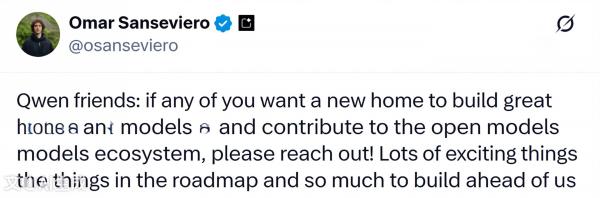
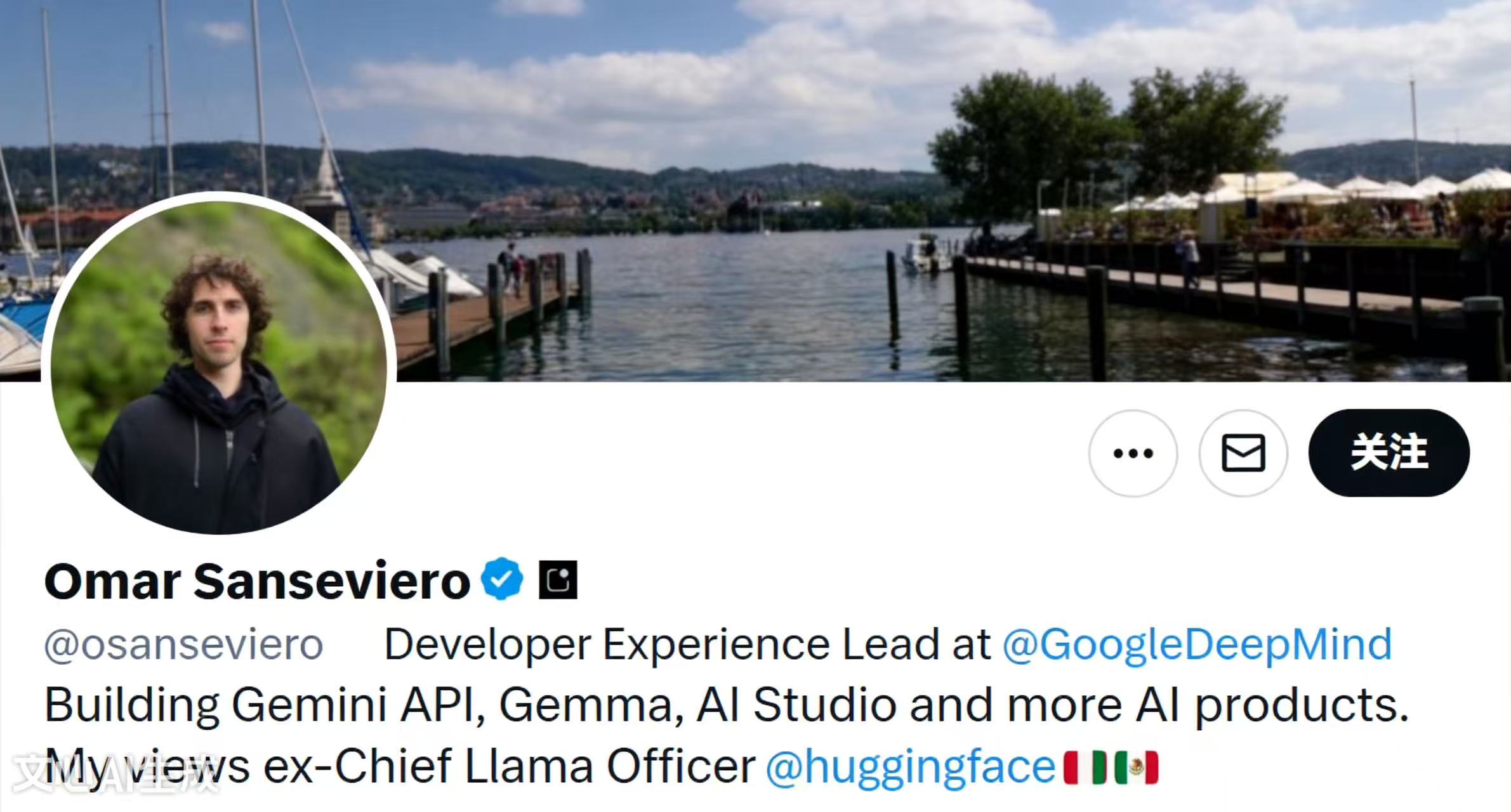
On March 5, 2026, personnel upheaval within Alibaba's Tongyi Qianwen (Qwen) core team continued to intensify, with Omar Sanseviero, the Head of Developer Experience at Google DeepMind, openly reaching out to the Qwen team on social media with an offer.
The Entire AI Community Is Taken Aback
Just a day prior, Lin Junyang, the core leader of Qwen, officially announced his resignation. This was followed by the departures of key team members, including Yu Bowen, the head of post-training; Hui Binyuan, the head of Qwen Code; and Li Kaixin, a core contributor.
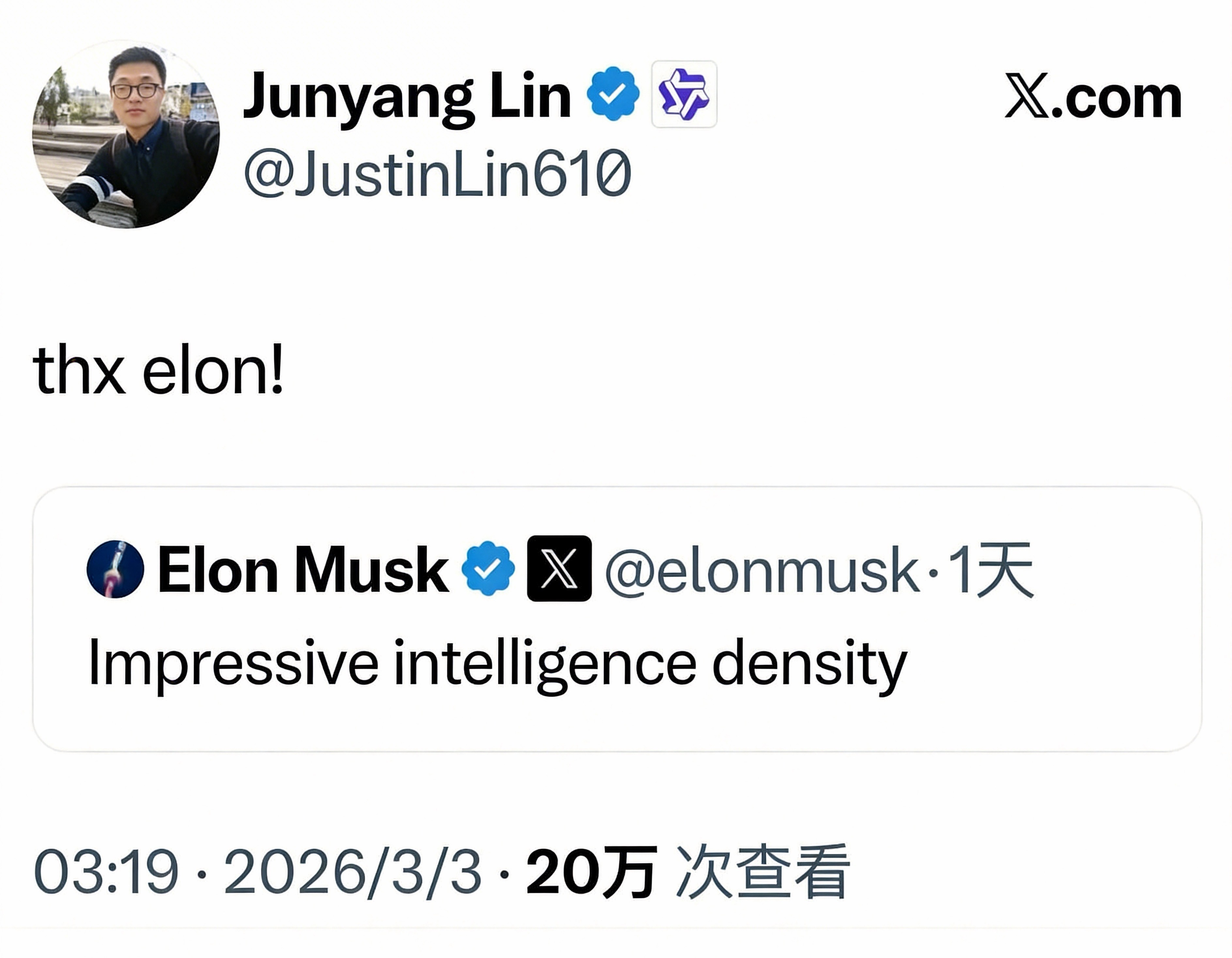
In the preceding 24 hours, the lightweight version of Qwen 3.5 had just garnered public acclaim from Elon Musk for its outstanding performance, with Musk describing its "intelligence density as astonishing." Lin Junyang was still actively engaging on social media, and Qwen was enjoying peak industry attention. Such an abrupt turn of events left the entire AI community reeling.
Omar Sanseviero, a prominent figure in the AI open-source community, oversees the developer ecosystem for core products such as DeepMind's Gemini and Gemma. His public recruitment efforts are seen by industry insiders as a direct competition between global top-tier AI institutions for China's leading large model talent.
In response, Alibaba acted swiftly to stabilize the situation. On the morning of March 5, CEO Wu Yongming issued an internal email formally addressing the matter, approving Lin Junyang's resignation and expressing gratitude for his past contributions. At the same time, it was clarified that Alibaba Cloud CTO Zhou Jingren would continue to lead the Tongyi Lab in its ongoing efforts. Additionally, a foundational model support team was established, jointly led by Wu Yongming, Zhou Jingren, and partner Fan Yu, to coordinate resources across the entire group in support of large model R&D.
Wu Yongming emphasized in the email that developing foundational large models is Alibaba's key strategic direction for the future. The company remains steadfast in its commitment to open-source model strategies and will continue to increase investment in AI R&D and the recruitment of outstanding talent.
Facing Numerous Challenges
As a benchmark for domestic open-source large models, Qwen's ascent has been closely tied to Lin Junyang. As the technical leader and public spokesperson of the team, he propelled Qwen to become the most internationalized and developer-recognized open-source large model in China through his significant technical influence. Under his guidance, the Qwen series encompassed full-scenario applications, including text, code, and multimodal capabilities, consistently ranking among the top performers domestically. It became the face of Alibaba's AI business and secured a place for Chinese large models in the global open-source market.
The changes within the Qwen team were not coincidental but rather the result of multiple overlapping conflicts, including organizational adjustments and ideological differences.
According to multiple sources, Alibaba recently planned a major structural overhaul for the Qwen team, dividing the originally vertically integrated team, which was uniformly led by Lin Junyang, into multiple independent modules such as pre-training, post-training, text, vision, and code. This marked a transition from "centralized efforts" to "horizontal division of labor." Simultaneously, the addition of Zhou Hao, a former senior researcher from DeepMind, who joined the Tongyi Lab to oversee post-training work earlier in the year, further exacerbated existing team tensions and disagreements.
Deeper conflicts arose from differing evaluation criteria. Alibaba Cloud attempted to assess the foundational model team using consumer internet metrics such as daily active users and user scale, which clashed with the team's focus on technical breakthroughs and building a long-term open-source ecosystem. The combination of organizational restructuring, shifts in authority and responsibility, and ideological clashes ultimately triggered this incident.
Despite Alibaba's swift measures to stabilize the situation and elevate the large model business to a group-level core initiative, Qwen still confronts numerous challenges. The loss of core talent could lead to a decline in technical and community influence, while model iteration and international collaboration rhythms may face pressure. Against the backdrop of intensifying competition from rivals such as Baidu's Wenxin, Tencent's Hunyuan, and ByteDance's Doubao, its market share and industry position are also at risk.
Three Unanswered Questions
DeepMind's public recruitment efforts have fully exposed the escalating global competition for AI talent, sounding an alarm for China's large model industry.
The Gemini and Gemma teams are fully committed to building an open-source ecosystem and urgently require top talent with strong practical skills, rich open-source experience, and high internationalization. The Qwen team is their ideal target. This cross-border talent acquisition essentially represents a direct confrontation between Chinese and U.S. AI giants over core talent, foreshadowing even fiercer competition for top large model talent in the future.
For the entire industry, Qwen's turmoil serves as a cautionary tale. The competition for large models has long since evolved beyond mere comparisons of model parameters and performance to a protracted battle involving organizational governance, talent retention, and strategic patience. While technology can be replicated and computing power can be procured, a core team that fosters consensus and a technical philosophy that stays true to its origins are the rarest and most critical assets for enterprises.
As of now, Lin Junyang and others have not yet revealed their next moves. Alibaba's Tongyi Lab has entered a critical period of adjustment, and the Qwen open-source community continues to operate, but the impact of the team changes is still unfolding.
This turmoil leaves the industry with three unanswered questions: Can the restructured team maintain Qwen's open-source advantages? Can Alibaba retain its remaining talent and fend off external recruitment efforts? Can Qwen sustain its innovative pace without its "key figure"? While the warmth of Elon Musk's praise lingers, the global talent competition has already commenced. For Qwen and China's large model industry, this is a rigorous test. Only by adhering to long-termism and building organizational resilience can they go further in the fierce global competition.
-
![]()
Doubao Work Unveiled! Domestic AI Leaders Fully Commit to the 'Work' Sector
-
![]()
Who’s Sounding the Alarm on ‘Rushed Vehicles’?
-
![]()
Over 5.3 Billion Yuan in Losses Over Three and a Half Years! Can Yonyou Reverse Its Fortunes Through Streamlining and AI Transformation?
-
![]()
Baidu AI Adopts Free Model: A Strategic Maneuver in Traffic and Monetization
-
![]()
Silicon-Based OLED Pioneer Unveils Financial Results: H1 Shipments Outpace Entire 2025 Volume
-
![]()
AI's First "Lost Summer"
-
![]()
Zeiss Makes Another €2.2 Million Bet: Will Eye Tracking Be the Next Big Thing in the Smart Glasses Industry?
-
![]()
RUNTO Ranking | Global Top TV ODM Factories' Shipment Figures for July 2026