Misinterpretation of Embodied AI: Measuring Two Entirely Different Paths with the Same Yardstick
 03/06 2026
 541
541

Editor: Lv Xinyi
What is the most bizarre aspect of embodied AI?
Within the industry, the same yardstick is used to measure physical entity and brain-centric companies: 'When will you start making money?'
The strangeness lies in the fact that although they operate within the same industry, the business logics of physical entity companies and brain-centric companies are entirely contradictory. The fulcrum for physical entity companies to leverage the commercial flywheel is production scale, which is one of the reasons why most physical entity companies prefer exhibition and performance scenarios. After all, the essence of shipping is to spread costs, and having orders to some extent equates to the feasibility of a commercial flywheel.
On the other hand, the commercial flywheel for brain-centric companies lies in models and data, following a commercial path where marginal costs trend towards zero and winners take all, rather than the linear growth typical of manufacturing. Before any absolute giants emerge among global brain-centric companies, this group needs to aggressively accumulate resources because, in the face of a trillion-dollar embodied market, the current growth curve is still 'flat.' The inflection point will come when the 'brain' bottleneck—enabling human-like intelligence in the physical world—is overcome.
Therefore, we observe that diverse funds, including state-owned capital, internet giants, and top-tier market-oriented investors, are flowing into companies developing embodied brains in the primary market, with investments reaching billions of yuan. When hot money pours in, brain vendors do not reciprocate with equally aggressive commercialization stances. Their commercialization slogans remain conservative, indicating that, in the embodied AI sector, discussing commercialization and implementation too early for brain enterprises may be a fatal misinterpretation of technological logic.
However, the prevailing commercialization anxiety within the industry is forcibly flattening the rhythmic differences between physical entity and brain-centric enterprises. Physical manufacturers are forced to sell scenarios before their algorithms mature, while model vendors are distracted by the pressure to find large-scale implementations.
This 'forced prosperity' can easily evolve into a scattered resource drain. Embodied brain enterprises do not necessarily need to prioritize commercialization at this stage because, on the eve of a qualitative leap towards general artificial intelligence, bending down to pick up money too early often means losing the qualification to look up and see the path ahead.

Over the past three months, the most frequent activity in the embodied AI sector has not been new product releases or updated production figures but rather a series of staggering financing rounds.
Several embodied AI companies focusing more on the 'brain' have completed financing rounds worth billions of yuan in the primary market, with a concentration and scale far exceeding previous industry expectations:
- In December 2025, Galaxy General completed a new round of financing worth $300 million (over 2 billion yuan), followed by another 2.5 billion yuan round in March;
- In January 2026, Independent Variable completed 1 billion yuan in financing; shortly after, on February 25, it completed several hundred million yuan in new financing;
- On February 11, 2026, Stellar Chart completed a new round of financing worth 1 billion yuan;
- On February 23, 2026, Intelligence Square announced the completion of 1 billion yuan in financing;
- On February 24, 2026, Qianxun Intelligence announced the completion of two rounds of financing totaling 2 billion yuan;
The model capabilities of these vendors generally support humanoid robots in performing some autonomous operations in factory production lines or commercial service areas, showing significant progress in driving humanoid robots to complete basic grasping, placing, and some relatively delicate long-duration flexible operations.

However, while we see substantial funds pouring into brain-centric enterprises, the invested parties have not provided short-term rewards to the market. There are no aggressive commercialization slogans, and some even directly state, 'There's no need to rush.' In contrast, the physical entity market same period (translated as 'at the same time') reports positive news such as 'production expectations doubling' and 'post-holiday sales surging.'
This contrast in temperature actually hides the formation of a consensus.
For embodied large model companies, the general sense of urgency is not about their shipment rankings but about how to 'stockpile ammunition.' Recently, Han Fengtao, CEO of Qianxun Intelligence, judged in a media interview that 'embodied AI in 2026 will be very much like large models in 2023. If you can't secure substantial funding and your model performance doesn't rank among the top, you won't even have a seat at the table.'
These embodied model companies dare to remain restrained in commercialization because they understand that this is a long-term battle. The training cycle, data accumulation, and algorithmic breakthroughs of embodied large models are essentially exponential curves, not linear iterations. Once a certain capability threshold is crossed, the model's generalization ability will rapidly spill over, replicating to different scenarios and physical entities, with marginal costs approaching zero.
When the goal is to become a general physical intelligence platform, short-term revenue does not equate to long-term value. Even at certain stages, such premature commercialization may become a strategic distraction. For example, impatient capital will inevitably demand commercial implementation from model companies while overlooking the technological development curve.
Just as in the intelligent driving sector, where more value is precipitate (translated as 'accumulated') in solution providers and algorithm platforms rather than single vehicle manufacturers, the long-term moat of embodied AI is more likely to be precipitate (translated as 'accumulated') in general physical world foundation large models and data flywheels.
From the attitude of model companies, it is still an early 'critical moment.' So, what exactly are investors betting on now?
After interviewing multiple investors, Embodied AI Research Society found that most investors are gradually realizing that the true bottleneck of embodied AI has shifted from hardware production and motion control algorithms to model capabilities. As Wang Xingxing put it a few months ago, 'The hardware is already sufficient,' but the models are not.
Embodied AI Research Society has also previously written that 'the engineering capabilities of humanoid robot bodies have crossed the critical point from '0 to 1,' and the industry's competitive focus is shifting towards higher-dimensional intelligent interaction.' What truly makes a difference is the ability to understand unstructured scenarios, fuse multimodal information, and maintain stability in long-term task planning—a mental competition.
At that time, investors were betting not just on the future of models but also on being able to suppress FOMO (Fear Of Missing Out) emotions and not miss out on the 'model version of Unitree.'

Pursuing commercialization is driven by investment logic. No investor will heavily bet on a company that cannot generate its own revenue in the long term, let alone bail out such a company. However, this can easily lead to cognitive misunderstandings. Should all companies be expected to be profitable in the short term and have the ability to be profitable?
The term 'embodied AI' has become so popular that brain-centric embodied large model companies and physical entity manufacturers primarily focused on humanoid robot configurations are often lumped together. The distinction between the two lies not just in product form but in fundamental differences in business DNA.
Building humanoid robots essentially involves constructing a highly complex engineering system. It compresses motion control, electric drive systems, structural design, material processes, and overall architecture into a scalable product form. Only when the proportion of self-developed core components increases, the supply chain system stabilizes, and the assembly process standardizes will the cost curve begin to bend, and reliability and consistency will form compound interest.
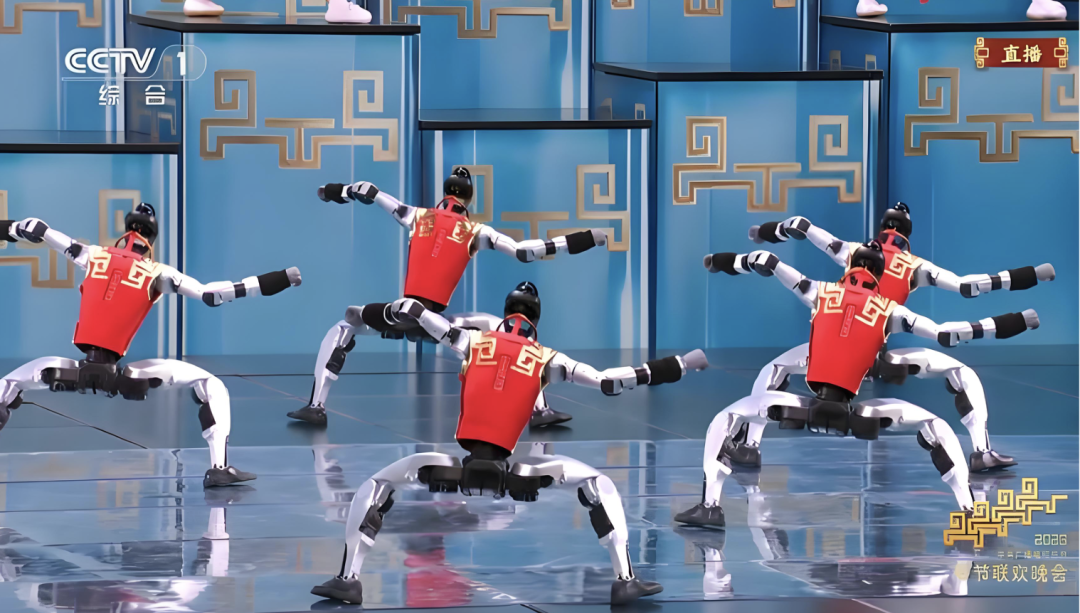
Its growth rhythm has the cyclicality unique to capital-intensive technology industries. It requires the engineering system to mature, the architecture to be validated, and the product to gradually develop standards and consistency. Its logical closed loop (translated as ' closed loop ' meaning 'closed loop') is: scale expansion - unit cost reduction - gross margin improvement - further scale expansion. Moreover, during the scaling process, the physical entity becomes the most reliable foundation for intelligence enhancement, with a large number of entities used for repeated validation and iteration of motion control algorithms.
This is the same logic as Unitree's training before the Spring Festival Gala. With enough physical entities and large enough scenarios, diverse feedback can be continuously provided to motion control algorithms during the training of high-difficulty movements, making motion control smoother and more attractive to external attention, thereby driving more orders.
This forms a complete commercial closed loop (translated as ' closed loop ' meaning 'closed loop').
In contrast, developing embodied brains is closer to software platform or even infrastructure logic. If the physical entity is the structural foundation of the physical world, then the large model establishes a universal layer of cognition and decision-making on top of this foundation. Once the model is trained, it can be deployed on countless hardware terminals. The cost of deploying additional machines is no longer a core consideration, while capabilities can continuously enhance through data feedback.
It follows an exponential growth logic: after capabilities cross a certain threshold, the market will rapidly concentrate among a few leading players. Its logical closed loop (translated as ' closed loop ' meaning 'closed loop') is: capability breakthrough - scenario generalization - large-scale implementation - data feedback - further capability breakthrough. Therefore, you will find that short-term imitation of physical entity companies by embodied brain enterprises, such as blindly investing in production, only increases costs. The main task for brain enterprises is to 'save money' and wait for the technological inflection point of the industry.
In the intelligent driving field, we have already seen a similar trend: ultimately, only a few solution providers with core algorithms and data closed-loop capabilities may remain, while a large number of vehicle manufacturers will build differentiated products around these capabilities. The future of embodied AI may also follow this 'oligopolistic foundation model competition,' where the number of large models with true general physical reasoning and operational capabilities will not be large.
Therefore, if embodied large model companies are prematurely pulled into the rhythm of 'taking orders - doing projects - customized development,' it is highly likely to weaken their exploration of universality and, to some extent, transform them into 'customized SaaS.' Moreover, continuously fine-tuning models to meet specific customer needs is also not a particularly attractive revenue curve in the short term. It is understood that such customized projects are time-consuming, labor-intensive, and costly, often resulting in a loss for each implementation and more commonly becoming a commercial story told in collaboration with investors.
This is precisely why they maintain a distance from commercialization. It's not that they don't want to make money but that they are unwilling to sacrifice an imaginative exponential curve for a potentially unrealistic linear income.

Unfortunately, we often see demands for commercialization orders from model companies.
Taking the past three months as an example, while physical entity manufacturers demonstrate their production capabilities and appear on the Spring Festival Gala stage, model vendors face increasing inquiries about their 'implementation capabilities.' This contrasts sharply with the foreign capital market, which has not yet seen Figure orders but has pushed its valuation to hundreds of billions, showing a clear difference in patience.
As a result, a seemingly cause-and-effect phenomenon has emerged. Six months ago, the 'full-stack capabilities' mentioned universally attracted capital favor; six months later, under the dual pressure of capital and the market, physical entity manufacturers are taking the initiative to tackle large models, hoping to master 'intelligence' capabilities in-house. Meanwhile, model vendors, after securing substantial financing, also need to prove their value to the market and begin showcasing implementation scenarios and large-scale deployment capabilities.
On the surface, this appears to be mutual promotion, with hardware filling the intelligence gap and models validating real-world scenarios. However, another possibility is a forced resource dispersion.
If model breakthroughs are slower than expected, physical entity manufacturers may have to build their own model teams out of commercialization necessity, investing significant resources to reinvent the wheel. If physical entity companies achieve certain profitability, model companies may be forced to dive into specific projects under question (translated as 'doubts') about their commercialization capabilities, splitting universal goals and shifting towards customized delivery.
The result is that both types of companies deviate from their most advantageous paths, scattering their efforts and multiplying the difficulty.
In other words, 'commercialization anxiety' is blurring the differences in corporate DNA. Model companies, which should grow with a platform logic, are being asked to follow a manufacturing rhythm; physical entity manufacturers, which should follow a manufacturing logic and build steadily, are expected to undertake the disruptive mission of foundation models (also for valuation purposes).
This simplification of the evaluation system easily creates an illusion of 'blossoming everywhere' but may weaken the true breakthrough forces.
However, some companies already have a clear understanding of this situation. Previously, Jiang Zheyuan, founder and CTO of Songyan Power, stated in a conversation with Embodied AI Research Society that the future robot market will form two types of companies: brains and bodies will become more differentiated, with brain companies leaving behind a group of companies with sufficient funds in their accounts to continuously invest in R&D; the remaining physical entity companies will become more segmented.
In summary, embodied AI is not a single-track sector but a composite structure intertwined with two curves: manufacturing and foundation models. The historical roles undertaken by different types of companies are not the same.
On the eve of a qualitative leap towards general artificial intelligence, perhaps the more important question is not who achieves profitability first but who can maintain their strategic boundaries. Because once human-like intelligence in the physical world truly crosses the critical point, value will be released non-linearly.
And before that, bending down to pick up money too early may truly mean missing the moment to look up and see the path ahead.
-
![]()
Doubao Work Unveiled! Domestic AI Leaders Fully Commit to the 'Work' Sector
-
![]()
Who’s Sounding the Alarm on ‘Rushed Vehicles’?
-
![]()
Over 5.3 Billion Yuan in Losses Over Three and a Half Years! Can Yonyou Reverse Its Fortunes Through Streamlining and AI Transformation?
-
![]()
Baidu AI Adopts Free Model: A Strategic Maneuver in Traffic and Monetization
-
![]()
Silicon-Based OLED Pioneer Unveils Financial Results: H1 Shipments Outpace Entire 2025 Volume
-
![]()
AI's First "Lost Summer"
-
![]()
Zeiss Makes Another €2.2 Million Bet: Will Eye Tracking Be the Next Big Thing in the Smart Glasses Industry?
-
![]()
RUNTO Ranking | Global Top TV ODM Factories' Shipment Figures for July 2026