The Aftereffects of Rising Storage Prices Arrive
 03/08 2026
 702
702
Previously, the Price Monitoring Center of the National Development and Reform Commission stated in an article that from September 2025 to the present, factors such as 'explosive' growth in demand and a 'cliff-like' shortage in production capacity have widened the global memory market gap, with memory chip prices continuing to rise. Over the past month, the upward trend in prices has accelerated, prompting attention to the impact of memory chip price increases on downstream sectors.
So, which downstream industries will be affected?
01
Across-the-Board Memory Price Surge Intensifies
The sharp increase in hardware memory prices has persisted for half a year, with the upward trend continuing to strengthen.
This round of price hikes covers the two mainstream memory categories—DRAM and NAND Flash—as well as niche segments like Nor Flash and automotive-grade memory, displaying characteristics of 'across-the-board increases with staggered, expanding margins.'
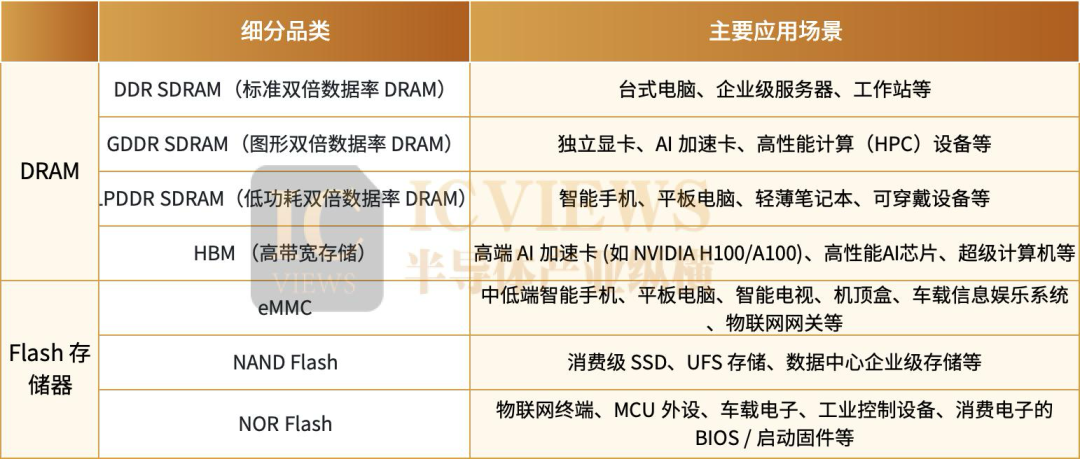
In the DRAM sector, enterprise-grade DDR5 memory modules have led the price surge. From early 2025 to February 2026, spot prices for DDR5 memory chips have surged by over 455%, with high-end DDR5 modules for servers rising by more than 600%. Some high-capacity, high-specification products have even seen price increases exceeding tenfold. Consumer-grade DDR5 memory modules have also experienced significant cumulative price hikes, generally reaching 250%–400%, with some popular models more than quadrupling in price compared to six months ago. In the NAND Flash sector, contract prices for 3D NAND wafers from original manufacturers have increased for six consecutive quarters, with single-quarter rises exceeding 20% from the fourth quarter of 2025 to the first quarter of 2026. Driven by this, prices for mainstream consumer-grade SSDs have risen by 50%–120% over six months, while enterprise-grade high-capacity, high-performance SSDs, which use more durable and customized solutions, have seen price increases exceeding 200%.
UBS currently expects DDR contract prices to rise by 72% quarter-on-quarter in the first quarter of 2026 (up from a previous forecast of +62%), with server DDR5 contract prices reaching $1.0 per Gb. Meanwhile, UBS anticipates NAND contract prices to rise by 65% quarter-on-quarter (up from a previous forecast of +40%).
The supply-demand imbalance in the distribution market is even more pronounced. Some domestic memory distributors admit that the industry's core challenge is 'high prices with no stock.' Even if downstream customers accept price hikes, securing sufficient inventory is difficult. Even if manufacturers open additional production lines, it will take at least a year to fill the current supply-demand gap. The cycle for building, commissioning, ramping up yield, and achieving mass production for new memory chip production lines is at least 12–18 months, making significant short-term supply-side improvements nearly impossible and reversing the upward price trend difficult.
02
Server and Computing Power Market: Surging Costs Reshape Business Logic
The storm of rising memory chip prices has first hit the server and data center industries at the core of the AI supply chain. Surging costs have not only reconfigured industry cost models but also directly altered the business rules of the computing power market.
Currently, prices for core enterprise-grade memory chips have surged by 5–10 times, directly driving up hardware replacement and construction costs for data centers. Take high-end AI servers as an example: the procurement cost for just 32 64GB memory modules in an H100 server exceeds 300,000 yuan. The total price for an 8-card RTX 5090 system paired with a CPU and memory has risen from 350,000 yuan to nearly 500,000 yuan, while the price of an H200 system has rebounded from over 1.9 million yuan to nearly 2.4 million yuan.
Soaring costs have directly impacted downstream project implementation. A distributor of data center server processors revealed that cost increases across the supply chain have led to stalled sales and postponed projects for many clients. 'For example, an end-user completed a bidding process in August last year. After the integrator won the bid, memory prices had risen by 7–8 times, making the original quote completely unprofitable. Some projects have had to be delayed or canceled.'
Against the backdrop of high costs for building in-house computing power, the computing power rental market has seen explosive growth, initiating its strongest-ever price hike cycle. Business personnel from server manufacturers note that computing power rental orders, which saw lackluster interest in previous years, have surged in demand this year due to memory price hikes, as the cost of building in-house servers now far exceeds rental costs.
Currently, overseas cloud providers have taken the lead in raising prices, with Amazon AWS increasing some GPU instance prices by 15% and Google Cloud raising H100 rental prices by 20%. Domestic provider UCloud has also announced price increases for its entire product and service lineup effective March 1. Tight supply has turned the computing power rental market into a 'seller's market,' with 'having computing power = having bargaining power' becoming an industry consensus. Companies that deployed computing power centers and stockpiled high-performance computing chips by 2025 or earlier now hold a clear first-mover advantage.
03
Smartphone Costs Under Pressure: Industry Launches Largest-Scale Collective Price Hike in Five Years
Compared to the data center industry, the consumer electronics sector, which directly faces end consumers, faces dual pressures of 'rising costs and price-sensitive sales.' Domestic mainstream smartphone brands have taken the lead in adjusting terminal prices.
Domestic smartphone giants OPPO, OnePlus, vivo, Xiaomi, iQOO, and Honor have all scheduled a new round of product price adjustments for early March 2026, marking the largest-scale and most significant collective price hike in the smartphone industry in five years. Even Apple, the industry's profit leader, faces a 100% price hike demand from Samsung in memory procurement negotiations, directly driving up supply chain costs.
This round of collective price hikes in the smartphone industry primarily stems from differing profit margins among manufacturers, leading to varied cost absorption capacities. Apple dominates over 80% of global smartphone industry profits, with some reports suggesting its profit share reaches 83%–91%. In contrast, domestic mainstream smartphone manufacturers have long catered to China's extreme cost-performance market, with gross margins typically ranging from 5%–10%—far lower than Apple's ~40% and Samsung's ~20%. Faced with the same magnitude of memory procurement cost increases, high-margin overseas manufacturers can control terminal price hikes by sacrificing some profits, stabilizing market expectations and sales volumes. However, domestic manufacturers, with razor-thin margins, have no room to absorb cost increases and must raise terminal prices to avoid losses.
From a product structure perspective, the higher the proportion of memory in a smartphone's bill of materials (BOM) cost, the greater the impact of price hikes. Mid-to-low-end smartphone models, which have a relatively higher memory cost share, are most affected. Compared to markets in Europe, America, Japan, and South Korea, China has a higher proportion of mid-to-low-end smartphones, resulting in a broader impact from soaring costs and relatively larger terminal price increases.
Meanwhile, the global memory market remains dominated by overseas manufacturers like Samsung, SK Hynix, and Micron, while domestic memory is still in the development phase. Overseas smartphone manufacturers have deeper partnerships and stronger bargaining power with leading memory suppliers, enabling them to lock in prices through long-term contracts and hedge against price risks. In contrast, domestic manufacturers have weaker bargaining power and must bear more of the cost pressure from price hikes. Notably, Apple's iPhone series has long adopted a conservative memory configuration strategy. Even the iPhone 17 series' top-tier Pro model maxes out at 12GB of RAM, while same period Android flagship models generally offer 16GB as standard, with mid-to-high-end models commonly featuring 12GB or more. This makes Android models' memory cost share higher and more directly impacted by price hikes.
04
PC and DIY Market: Across-the-Board Price Hikes Reshape Market Dynamics
Beyond smartphones, the laptop and PC DIY markets have not been spared, with price hikes covering all product categories, from entry-level office laptops to top-tier gaming rigs.
Leading PC manufacturers like Lenovo, Dell, and HP have initiated price hikes across their product lines, with increases generally ranging from 10%–30% and some top-tier models rising by over 5,000 yuan. Mainstream laptop prices have increased by 10%–20% overall. The DIY market has also seen widespread price increases, with memory modules and SSDs being the hardest hit, significantly driving up system build costs.
Market research firm Gartner notes that PC manufacturers have no choice but to raise terminal product prices in response to rising memory costs, making it difficult to offer high-performance hardware at 'entry-level' prices to gamers in the future.
Paradoxically, the secondhand market has seen 'larger memory = better value retention,' with used laptops and desktops featuring large memory configurations strengthening in price despite market trends. Some devices over six months old still command secondhand prices close to their original launch prices, primarily due to Continuously rising new machines prices and tighter supply of large-memory products.
Amid this industry-wide rigid cycle of 'rising costs → terminal price hikes,' Apple held its spring product launch event as scheduled on March 4. Not only was this Apple's first-ever spring event held in Shanghai, China, but it also introduced multiple new terminal products, including the iPhone 17e and MacBook Neo. The MacBook Neo, priced at a breakthrough low, became Apple's cheapest laptop ever, directly disrupting the PC market's consensus on price hikes and delivering a strong shock to an industry already in flux.
The MacBook Neo's low-price strategy essentially represents Apple's precise hedging against the price hike cycle through its full-supply-chain advantages. First, Apple maintains its consistent conservative baseline memory configuration strategy, with the MacBook Neo's base model featuring just 8GB of unified memory + 256GB SSD, minimizing cost increases from memory price hikes and avoiding the risks of soaring prices for high-capacity memory hardware. Second, Apple's overall gross margin exceeds 40%, far higher than the 10%–20% of mainstream Windows PC manufacturers, providing ample profit buffer space. This allows Apple to lower the price band of entry-level products despite industry-wide price hikes. For a detailed analysis, see 'Dipping Below 4,000: Apple Finally Bows.'
05
New Energy Vehicles: Price Hike Pressures Mount, Becoming a New Cost Pain Point
With the rapid development of intelligent vehicles, automobiles have become another critical application scenario for memory chips. This wave of price hikes has also begun to affect the new energy vehicle (NEV) industry, becoming a new source of cost pressure for automakers.
The NEV industry is highly dependent on chip supply, but automakers have consistently been at a disadvantage in the global competition for memory chip production capacity due to their far lower profit margins compared to AI industry clients. The supply stability of automotive-grade memory chips now faces severe challenges. UBS research estimates that for a typical mid-sized intelligent electric vehicle, memory chip price hikes alone have increased costs by 4,000–7,000 yuan, significantly squeezing automakers' profit margins. Memory chip price hikes have become the largest cost pressure source for the automotive industry in 2026, even surpassing price increases for battery raw materials.
In intelligent NEVs, memory chips are used across multiple vehicle systems. The in-vehicle infotainment system (IVI) is the largest consumer of memory chips, accounting for about 80% of total vehicle memory usage, covering scenarios such as central display systems, in-vehicle audio systems, and multimedia content storage. The advanced driver-assistance system (ADAS) accounts for about 10% of memory usage, handling core functions like camera data caching, radar data processing, and autonomous driving algorithm execution. Additionally, systems like the smart cockpit domain, autonomous driving domain, in-vehicle information system, and instrument panel system all heavily rely on memory chips.
A mainstream intelligent NEV typically equips 4–16 DRAM chips for temporary data processing and 2–6 NAND Flash chips for long-term data storage, along with other memory types like SRAM, eFlash, Nor Flash, and EEPROM. As intelligent driving levels advance, vehicles' demands for the quantity, capacity, and performance of memory chips will continue to rise, further intensifying cost pressures from memory price hikes.
06
The Price Hike Wave is Reshaping Consumer Behavior and Industry Dynamics
This sustained wave of memory price hikes has far exceeded mere price fluctuations, triggering industry-wide transformations that span consumer behavior, corporate strategies, and industrial dynamics.
At the consumer level, across-the-board terminal product price increases have directly lengthened replacement cycles and weakened market purchasing power. If terminal prices continue to rise, a negative cycle of 'rising costs → terminal price hikes → weakening demand → manufacturer production cuts → worsening supply-demand imbalance' may form, impacting recovery in the consumer electronics and automotive industries.
At the corporate strategy level, soaring hardware procurement costs have driven more companies to accelerate migration of IT architectures to the cloud. For small and medium-sized enterprises, the cost of building in-house servers and local IT systems now far exceeds the long-term costs of computing power rental, making cloud services the optimal choice to hedge against hardware inflation risks. This will further drive consolidation in the cloud computing industry.
At the industrial dynamics level, this round of price hikes presents a historic development opportunity for the domestic memory supply chain. Faced with persistent supply shortages and price increases, downstream terminal manufacturers have increased procurement from domestic suppliers, while domestic memory manufacturers are accelerating capacity expansion plans.
-
![]()
Doubao Work Unveiled! Domestic AI Leaders Fully Commit to the 'Work' Sector
-
![]()
Who’s Sounding the Alarm on ‘Rushed Vehicles’?
-
![]()
Over 5.3 Billion Yuan in Losses Over Three and a Half Years! Can Yonyou Reverse Its Fortunes Through Streamlining and AI Transformation?
-
![]()
Baidu AI Adopts Free Model: A Strategic Maneuver in Traffic and Monetization
-
![]()
Silicon-Based OLED Pioneer Unveils Financial Results: H1 Shipments Outpace Entire 2025 Volume
-
![]()
AI's First "Lost Summer"
-
![]()
Zeiss Makes Another €2.2 Million Bet: Will Eye Tracking Be the Next Big Thing in the Smart Glasses Industry?
-
![]()
RUNTO Ranking | Global Top TV ODM Factories' Shipment Figures for July 2026