Trillions! NDRC Sets Tone, AI Industry Ushers in 'Golden Five Years'
 03/06 2026
 713
713
This afternoon, at the economic-themed press conference of the Fourth Session of the 14th National People's Congress, Zheng Shanjie, Director of the National Development and Reform Commission, pointed out that by the end of the 15th Five-Year Plan period, namely 2030, the scale of China's artificial intelligence-related industries will grow to over 10 trillion yuan.
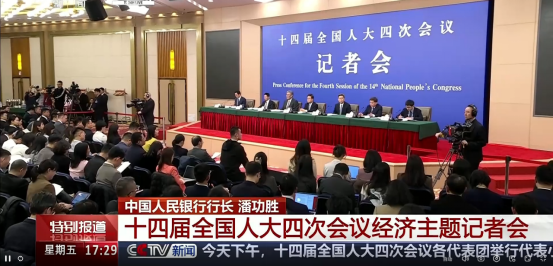
Accompanying this goal is a firm path of 'deepening the 'AI Plus' initiative.' This signifies that artificial intelligence has officially evolved from a cutting-edge technology to a core engine driving China's economic growth over the next five years.
'AI Trillion-Yuan Goal'
Also at this press conference, Director Zheng Shanjie announced another goal: to continue implementing the Beidou large-scale application project, driving the Beidou industry's scale to surpass 1 trillion yuan within five years.
The juxtaposition of 'Beidou Trillion-Yuan Goal' and 'AI Trillion-Yuan Goal' clearly outlines China's strategic focus during the 15th Five-Year Plan period—balancing critical infrastructure vital to national well-being with strategic emerging industries leading global transformation.
The Beidou system is the 'national treasure' safeguarding the nation's lifeblood, while artificial intelligence is the 'innovative spear' pioneering future frontiers.
'Deepening the 'AI Plus' initiative' is the sole path to the trillion-yuan goal, marking AI's integration with economy and society entering uncharted waters.
Recalling August 2025, when the State Council issued the 'Opinions on Deepening the Implementation of the 'AI Plus' Initiative,' accelerating artificial intelligence's development. Now, the NDRC's reaffirmation signals a full-scale shift from policy blueprint to large-scale, deep-rooted implementation.
What is the essence of 'AI Plus'? It is not merely 'grafting' AI technologies onto traditional industries. Its core lies in systematically reconstructing the entire R&D, production, management, and service processes using AI's mindset and capabilities. As emphasized at the Central Economic Work Conference, AI must '+ unleash new vitality for development.'
From 'never-tiring' quality inspection robots in smart factories to drones performing precision irrigation in fields, and intelligent assistants in our phones capable of conversation and creation, AI is transforming from a 'tool' to a 'partner,' shifting from 'assistance' to 'leadership.'
What starting line do we stand on?
Where does the confidence come from in setting such an ambitious goal? The answer lies in China's AI industry's rapid trajectory over the past few years.
First, a solid industrial foundation. According to the China Internet Network Information Center, China's AI industry scale surpassed 700 billion yuan in 2024, maintaining over 20% annual growth for years. With over 5,100 enterprises, accounting for about 15% globally.
Even more inspiring is the innovation vitality. China leads the world in AI patent applications, accounting for 38.58%; by July 2025, 1,509 large models had been released, also ranking first globally.
Second, unparalleled application scenarios. China possesses the world's most complete industrial system, richest application scenarios, and largest unified market. This provides an unmatched 'testing ground' for rapid AI technology iteration and commercialization. Whether intelligent doctor assistants serving hundreds of millions or AI penetrating countless industries, they demonstrate how technology implementation and market feedback form a powerful virtuous cycle.
Scenario-driven development is China's AI industry's most distinctive feature and greatest advantage.
Third, unwavering top-down determination. From 'artificial intelligence' first appearing in the government work report to eight mentions in the 15th Five-Year Plan proposals, and top-level design documents issued by the State Council, Intensive policy signal release (frequent policy signal releases) have injected the strongest certainty into industrial development. Departments like the Ministry of Science and Technology and SASAC have clearly committed to strengthening AI's top-level design and systematic deployment. This model combining national system strength with market vitality is precisely the institutional guarantee for challenging the trillion-yuan goal.
While the goal is set, the path ahead is far from smooth. Achieving a trillion-yuan scale requires multiplying the industry several times within five years, demanding we overcome several critical 'hurdles.'
The first hurdle is solidifying core technologies. Despite diverse applications, we still need sustained breakthroughs in 'root technologies' like high-end AI chips, underlying frameworks, and foundational algorithms. As emphasized by SASAC, breakthroughs must be achieved in areas constrained by others, shouldering the responsibility for supplying key common technologies.
The second hurdle is deepening integrated applications. Currently, AI applications remain 'fragmented' and 'superficial.' Future efforts must drive AI beyond point applications to achieve systemic, full-chain integration with manufacturing, services, and other key industries, truly enhancing total factor productivity.
The third hurdle is maintaining ecosystem health. While encouraging innovation, we must simultaneously improve laws, regulations, ethical guidelines, and governance systems to ensure this trillion-yuan growth is safe, reliable, and inclusive, allowing all people to share in the intelligent dividends.
Conclusion
The authoritative statement from the NDRC Director also declares the official launch of China's artificial intelligence industry's 'Golden Five Years.' The trillion-yuan goal represents China's ambition to transition from 'following' and 'running alongside' to 'leading' in the global intelligent revolution.
For each of us in this era, this presents both immense opportunities and the need to rethink and reposition. Enterprises must consider how to deeply integrate AI into their DNA; individuals must consider how to enhance 'AI literacy' to collaborate with intelligent agents; cities and nations must consider how to build infrastructure and governance systems adapted to the intelligent era.
-
![]()
Doubao Work Unveiled! Domestic AI Leaders Fully Commit to the 'Work' Sector
-
![]()
Who’s Sounding the Alarm on ‘Rushed Vehicles’?
-
![]()
Over 5.3 Billion Yuan in Losses Over Three and a Half Years! Can Yonyou Reverse Its Fortunes Through Streamlining and AI Transformation?
-
![]()
Baidu AI Adopts Free Model: A Strategic Maneuver in Traffic and Monetization
-
![]()
Silicon-Based OLED Pioneer Unveils Financial Results: H1 Shipments Outpace Entire 2025 Volume
-
![]()
AI's First "Lost Summer"
-
![]()
Zeiss Makes Another €2.2 Million Bet: Will Eye Tracking Be the Next Big Thing in the Smart Glasses Industry?
-
![]()
RUNTO Ranking | Global Top TV ODM Factories' Shipment Figures for July 2026