Figure Releases New Video of Helix 02 Neural Network, Bringing Humanoid Robots into the Living Room!
 03/10 2026
 531
531
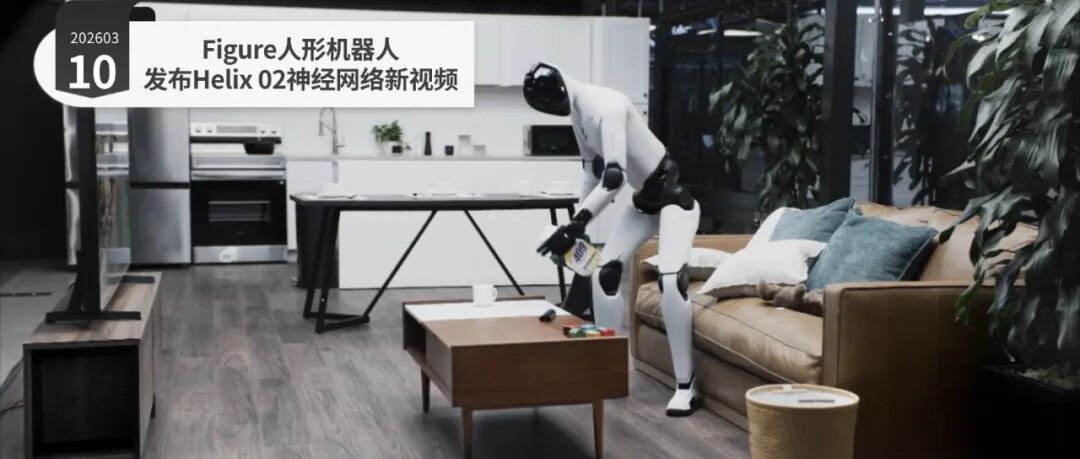
On March 10, the humanoid robot sector achieved a landmark breakthrough.
U.S. unicorn company Figure AI officially released its latest demonstration video, showcasing its Figure 03 robot, equipped with the Helix 02 AI system, successfully completing fully autonomous tidying tasks in a real-world living room environment. From wiping tables and organizing toys to flexibly using tools and maneuvering through tight spaces, the entire process unfolded without any human intervention or pre-scripted sequences. The fluidity of its coordinated movements and adaptability to complex environments closely mirrored human daily behavior patterns.
This is not the first time Figure AI has surprised the industry. Just over a month ago, the company introduced the Helix 02 AI system—a groundbreaking innovation as a single neural network capable of directly driving the robot's full-body movements through pixel inputs, without the need for segmented control. At the time, a robot equipped with this system successfully completed kitchen tidying tasks. Expanding the scenario to the living room not only further tests the technology but also represents a solid step toward bringing humanoid robots into ordinary households. After all, compared to kitchens, living rooms present higher complexity and better demonstrate the robot's practical value.
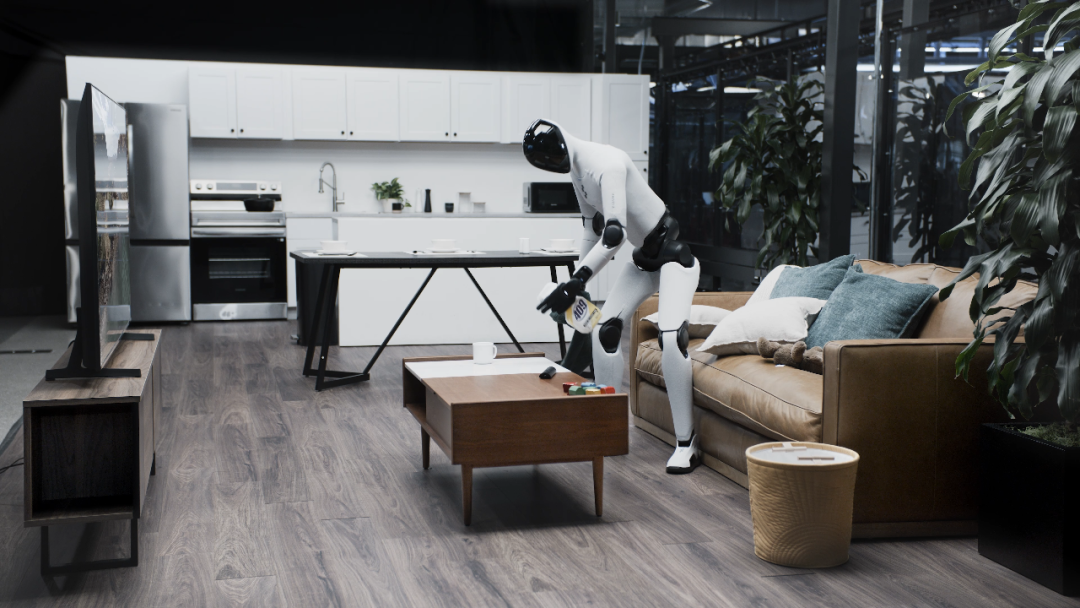 Those familiar with humanoid robot development know that living room scenarios pose far greater challenges than kitchens. Kitchens feature relatively fixed structures and more predictable task sequences, whereas living rooms are filled with scattered toys, randomly placed towels and pillows, narrow gaps between furniture, and irregularly shaped soft items like towels—all testing the robot's perception, decision-making speed, and motion control precision in what amounts to an ultimate trial of humanoid intelligence.
Traditional humanoid robots often exhibit a "choppy" operational feel, akin to a "turn-based" system where they must pause to complete hand movements, unable to synchronize walking and manipulation. Figure 03, however, completely shattered this industry limitation in its demonstration. It seamlessly sidestepped through the narrow gap between a coffee table and sofa while continuing its cleaning tasks, deftly clamped storage containers under its arms to free its hands for picking up toys, and even draped towels over its shoulders temporarily to operate spray bottles—all with naturally fluid motion sequences that align perfectly with human logic and habits. The core breakthrough enabling Figure 03's exceptional performance in complex scenarios lies in Helix 02's single universal neural architecture. Unlike traditional robots that require engineers to write custom algorithms and conduct extensive debugging for each new task, Helix 02 needs no additional engineering code—simply input relevant training data, and it rapidly acquires new skills. This scalable capability represents precisely the core trait needed for general-purpose humanoid robots.
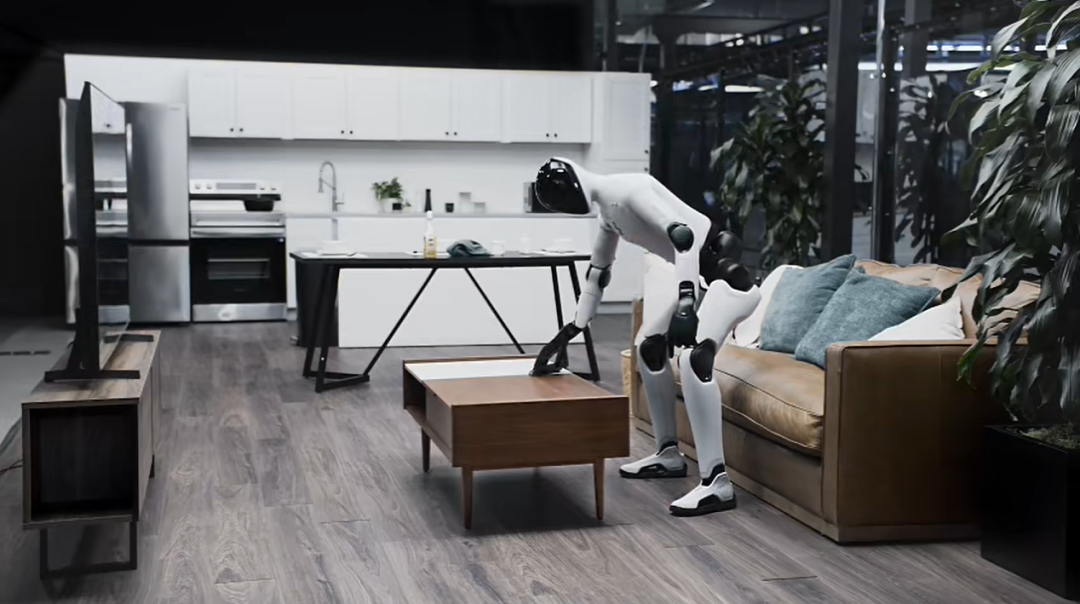 The demonstration video clearly shows that Figure 03's capabilities precisely meet core needs for home scenarios: vigorously wiping tables after spraying cleaner demonstrates proficient tool coordination; using both hands to scoop blocks into containers showcases excellent hand-eye coordination; flexibly adjusting a remote control's orientation and precisely pressing buttons to turn off the TV tests fine motor skills; and swiftly tossing pillows back onto the sofa highlights dynamic motion control. Importantly, these actions weren't isolated command executions but autonomous decisions and reactions based on real-time environmental perception. Figure AI emphasized that all movements in the demonstration were fully autonomously executed by the Helix 02 system without remote control or pre-scripted sequences—every decision stemmed from the robot's own perception and judgment. This capability stems from Helix 02's end-to-end learning approach "from pixels to actions," where the robot captures environmental information visually, and a single neural network directly converts visual signals into full-body movements, eliminating all intermediate segmentation and debugging steps to dramatically boost efficiency and autonomy.
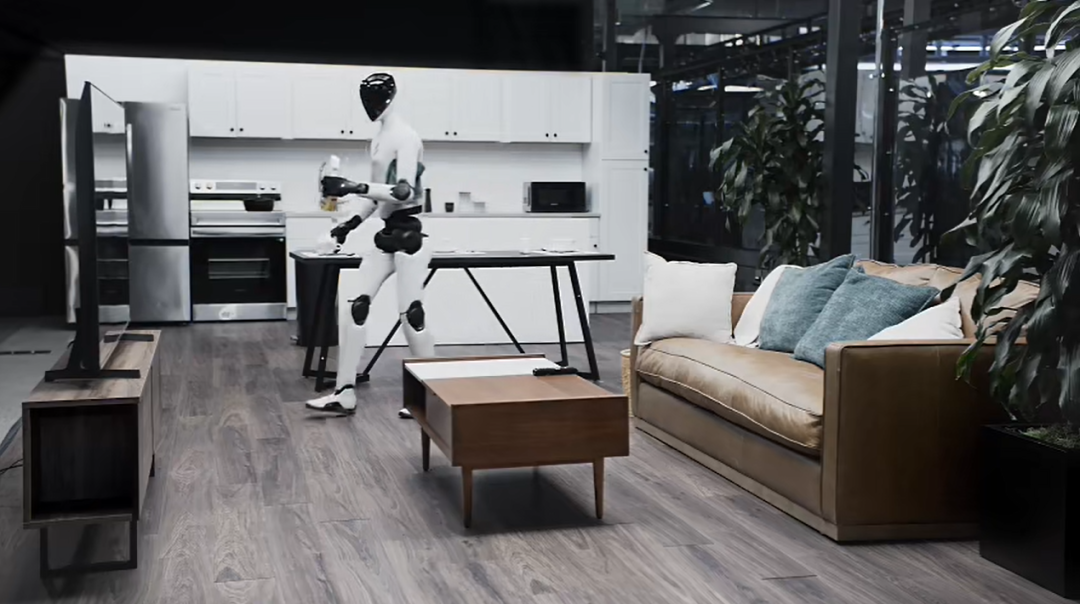 This "data-driven" technical approach not only solves the inefficiency issues in traditional humanoid robot development but also provides a viable solution for scalable deployment of general-purpose humanoid robots. Previously, expanding a new skill for humanoid robots required significant engineer time for debugging, resulting in high costs and long cycles. Helix 02, however, enables rapid skill acquisition through additional training data, substantially reducing R&D and deployment costs while making household adoption of general-purpose humanoid robots far more feasible.
Currently, the humanoid robot sector stands at a critical intersection of technological breakthroughs and practical deployment. Figure 03's demonstration represents more than a simple technical upgrade—it signals a clear trajectory: humanoid robots are gradually moving beyond laboratories into real-world home environments. As the Helix system continues iterating and optimizing, the era of general-purpose humanoid intelligence completing daily tasks autonomously in home and office settings may soon transition from distant vision to tangible reality.
-
![]()
Doubao Work Unveiled! Domestic AI Leaders Fully Commit to the 'Work' Sector
-
![]()
Who’s Sounding the Alarm on ‘Rushed Vehicles’?
-
![]()
Over 5.3 Billion Yuan in Losses Over Three and a Half Years! Can Yonyou Reverse Its Fortunes Through Streamlining and AI Transformation?
-
![]()
Baidu AI Adopts Free Model: A Strategic Maneuver in Traffic and Monetization
-
![]()
Silicon-Based OLED Pioneer Unveils Financial Results: H1 Shipments Outpace Entire 2025 Volume
-
![]()
AI's First "Lost Summer"
-
![]()
Zeiss Makes Another €2.2 Million Bet: Will Eye Tracking Be the Next Big Thing in the Smart Glasses Industry?
-
![]()
RUNTO Ranking | Global Top TV ODM Factories' Shipment Figures for July 2026