Flashing a Phone Transforms It into Xiaomi: What Might Be the Outcome of Raising Lobsters?
 03/11 2026
 508
508
MOMO in the Yangtze River Delta
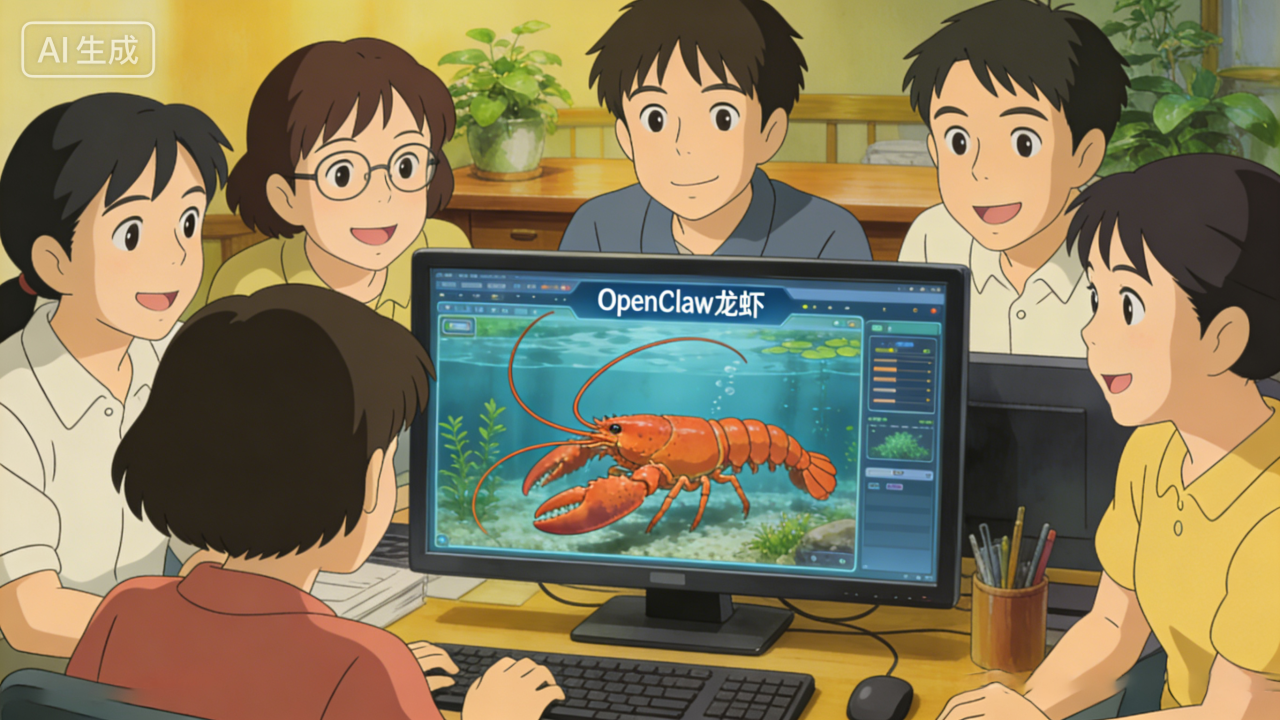
A decade ago, many people's immediate action after purchasing a phone was to flash it. Nowadays, a group of enthusiasts have begun "raising lobsters" on their computers. Perhaps in a few years, people will recognize this as the precursor to the emergence of the next generation of intelligent terminals.
Today's smartphone users often experience automatic system upgrades while they sleep. However, prior to 2010, many smartphone users were actively seeking ROM flashing packages and tutorials.
Times have evolved, yet patterns of human behavior persist. In every era, there are services akin to "valet parking"—in the past, phone stores would flash your phone for a fee of 50 yuan, and now, they'll set up lobsters for you at the same price.
Flashing has served as a proving ground for many new technologies to transition from geek circles to the mainstream.
At Baidu Intelligent Cloud's OpenClaw offline experience event in Shanghai, over 300 enthusiasts queued up, with those unable to get in watching the livestream from the steps outside. In Shenzhen, a "Lobster Installation Station" was established beneath Tencent Tower, with hundreds of reservation slots selling out in an instant. Even Pony Ma commented on Moments: "I didn't anticipate such popularity."
During the flashing era, Xiaomi emerged as the biggest winner. In a sense, Xiaomi's journey began with a "flashing package."
1
Flashing: The Prelude to a Breakthrough
In 2010, a system named MIUI was introduced on a forum as a ROM package. Users had to manually flash it onto their phones to use it. The system underwent weekly updates, with new versions released every Friday. Many users eagerly awaited the "Friday update," installed it, and then provided feedback on bugs in the forum.
Several years later, the team behind this system launched their first phone. The rest, as they say, is history—the familiar tale of Xiaomi's rise.
I recall Lei Jun, Xiaomi's co-founder and the leader of MIUI development, revealing in a retrospective that MIUI already boasted hundreds of thousands of users before Xiaomi's first phone was released. In other words, the system was already in use by many before the Xiaomi phone even existed.
Looking back, those years actually validated something quite intriguing.
Many technologies initially surface not as complete products but as "geek tools." A small group of enthusiasts begins experimenting with them, writing tutorials, creating plugins, and modifying features, gradually uncovering the potential of a technology. The MIUI example above perfectly illustrates this, having pre-validated the feasibility of prioritizing system development.
Doesn't this scenario bear a striking resemblance to the current trend of "raising lobsters"?
This is a classic case of agile entrepreneurship—utilizing the most accessible executable program to validate market demand before making substantial capital investments to establish a business model.
To jest a bit, it wouldn't be an exaggeration to say that Xiaomi, a Fortune Global 500 company, was essentially "flashed" into existence.
2
What Might Be the Outcome of Raising Lobsters?
Investors have already begun viewing this phenomenon from a broader perspective.
A few days ago, at a "Lobster Gathering," Zhu Xiaohu exclaimed, "The ecosystem is incredibly powerful, and the pace is astonishing!" He also mentioned that lobsters clearly represent a significant starting point, essentially determining the OS (operating system) of the AI era.
The key distinction between lobsters and chatbots is that lobsters seem to be striving to have AI "operate computers"—automatically organizing files, searching for information, executing tasks, and even opening software and clicking buttons on your behalf.
However, this stage is still quite rudimentary. Installation steps are somewhat intricate, and configuration isn't straightforward. Many tutorials are authored by programmers and resemble technical documentation. So, just like in the early days of phone flashing, the current early adopters are predominantly tech enthusiasts.
But as development progresses, things will gradually evolve. Take, for instance, CyanogenMod, one of the most renowned ROM projects during the flashing era.
This system was initially crafted by a single programmer but later attracted a large number of developers, supporting an increasing number of phone models. At its peak, tens of millions of devices worldwide were running this system. In 2013, the team even founded a company and secured investment. Although the system didn't become mainstream, many of its features were incorporated into Android.
So, how did the practice of flashing eventually fade away?
Phone manufacturers integrated those user demands into their systems. The systems became increasingly mature, and updates became more convenient. Ordinary users no longer needed to scour forums for ROM packages. Flashing gradually became a thing of the past.
But what it left behind is actually evident in today's phones.
Today's "raising lobsters" is likely to undergo a similar process, and we may currently be in an early stage, transitioning from the "geek experience phase" to the "technology popularization phase."
This state usually doesn't persist for long. Moving forward, it may no longer exist as a "tool" but directly become an integral part of devices. Computers, phones, and even various household devices may all come equipped with an AI assistant that helps you accomplish tasks.
3
Who Will Prevail: Hardware or Software?
If things indeed progress in this direction, the next practical question is: Who will create such products?
I believe competition will likely unfold between two types of companies.
One type comprises AI model giants like Alibaba, ByteDance, and OpenAI. They possess the core capability—the model itself. If lobsters truly become the operating system of the AI era, these companies are unlikely to remain on the sidelines.
The other type consists of hardware companies like Xiaomi and Apple. Over the past two decades, a clear pattern has emerged: Many technologies only truly become mass-market products when integrated with hardware. Smartphones have already validated this.
Of course, no one knows who will ultimately emerge victorious. But one thing is certain: If this direction proves viable, many new companies will emerge, and quite a few projects will likely falter halfway.
So, what should new startups do? Zhu Xiaohu's perspective is that during the PC internet era, there weren't as many giants, and even during the mobile internet era, big companies occasionally made mistakes. But now, companies like ByteDance rarely err, leaving increasingly less space for startups.
Therefore, a more pragmatic approach is to find a smaller entry point. First, delve deep into a specific niche scenario. For example, many startup teams' current strategy is to "ride the lobster wave"—leveraging this ecological opportunity to integrate their products, survive first, and then gradually see if they can cultivate something of their own.
After all, many technologies that later transformed our lives initially appeared to be just a group of geeks tinkering away.
MOMO in the Yangtze River Delta
-
![]()
Doubao Work Unveiled! Domestic AI Leaders Fully Commit to the 'Work' Sector
-
![]()
Who’s Sounding the Alarm on ‘Rushed Vehicles’?
-
![]()
Over 5.3 Billion Yuan in Losses Over Three and a Half Years! Can Yonyou Reverse Its Fortunes Through Streamlining and AI Transformation?
-
![]()
Baidu AI Adopts Free Model: A Strategic Maneuver in Traffic and Monetization
-
![]()
Silicon-Based OLED Pioneer Unveils Financial Results: H1 Shipments Outpace Entire 2025 Volume
-
![]()
AI's First "Lost Summer"
-
![]()
Zeiss Makes Another €2.2 Million Bet: Will Eye Tracking Be the Next Big Thing in the Smart Glasses Industry?
-
![]()
RUNTO Ranking | Global Top TV ODM Factories' Shipment Figures for July 2026