“A Monthly Salary of 20,000 Can’t Support a Single ‘Lobster’”: Unveiling the Truth Behind the Exorbitant Costs of AI Workers
 03/12 2026
 672
672
We’re not raising AI—we’re feeding our efficiency anxiety.
Original content from Dianshu · Digital Economy Studio
Author | Uncle You
Recently, many people’s social media feeds have been flooded with talk of 'lobster farming.'
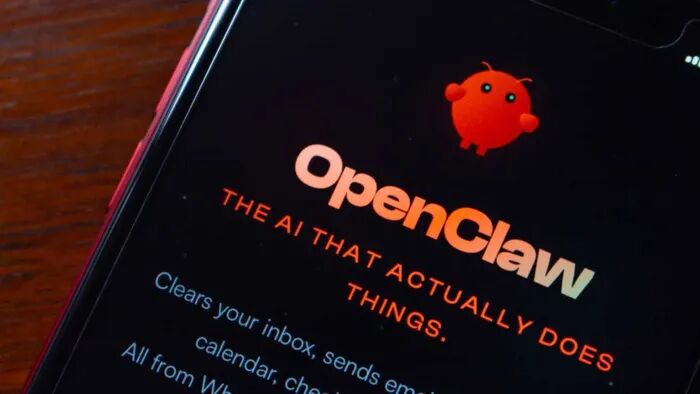
Here, the 'lobsters' aren’t the spicy crayfish from late-night food stalls but an open-source AI assistant called OpenClaw.
Its most appealing feature is transforming AI from a 'chat buddy' into a 'digital worker,' capable of reading and writing files, automating browser operations, sending emails, managing schedules, and writing code. Raising a few 'lobsters' can enable full-time team operations, even inspiring countless people to dream of 'one-person companies.'
Within months of its launch, OpenClaw’s favorites soared to nearly 300,000 on the world’s largest open-source platform, with some calling it the fastest-growing open-source project in history. Even NVIDIA CEO Jensen Huang praised it, saying, 'This is the most important software release of our time,' and NVIDIA has since launched related products.
The rapid advancement of AI agents makes it feel like the future is already here. Today, let’s discuss what opportunities and risks lie behind this 'lobster craze,' as well as what it teaches us ordinary people about the AI era.
Why is 'lobster farming' so popular?
The term 'lobster farming' is a playful nickname coined by netizens for deploying the open-source AI agent OpenClaw.
Unlike traditional AI like ChatGPT or Kimi, which only 'answer questions,' OpenClaw represents a breakthrough in the 2026 AI Agent era, transitioning from a 'suggester' to an 'executor.' It’s not just software but a 'silicon-based assistant' capable of directly controlling computer systems.
It can organize files, run code, scrape web data, and even remotely operate devices to complete workflows via natural language commands. It also supports plugin extensions, theoretically enabling infinite functional expansion. The nickname 'lobster' comes from its English pronunciation and logo, reflecting hopes that it will be as 'claw-some (profitable)' as a lobster, boosting efficiency and earnings.
Cheetah Mobile CEO Fu Sheng shared that while bedridden for 14 days with a dislocated hip, he 'raised' eight lobsters to handle his work: automatically sending 611 personalized New Year greetings, producing six WeChat articles, and planning a short video with 300,000 views—all via voice commands, completing a month’s workload from bed.
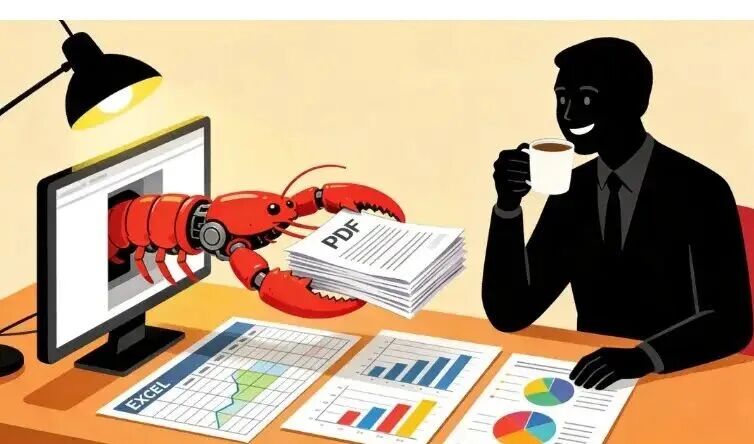
Here’s how lobsters work: You grant the lobster full computer operation permissions and 'raise' it to understand your preferences, behaviors, and work habits while expanding its learning. Then, the lobster becomes your digital avatar—reading news, sending emails, writing code, posting rental listings, and even spending or earning money on your behalf.
A few days ago, hundreds of developers and AI enthusiasts lined up outside Tencent’s Shenzhen headquarters to deploy OpenClaw in the cloud with engineer assistance. The queue included people of all ages, all eager to 'adopt' a 'lobster.'
To many, 'lobsters' are digital workhorses, and everyone hopes to cash in on the trend. Thus, Uncle You hears voices like, 'Everyone’s farming lobsters; not participating makes me anxious.'
Amplified by social sharing and FOMO (fear of missing out), this craze quickly broke out of tech circles. From tech communities to social media, from influencer 'reviews' to ordinary users 'jumping on the bandwagon,' 'lobster farming' evolved from a tech novelty into a mainstream social topic. Some even rushed to install it without understanding its capabilities, driven by the fear of being left behind.
Thus, the 'lobster farming' craze is no accident but the result of technological trends, social amplification, and human psychology.
Is 'lobster farming' easy?
So, can ordinary people farm lobsters?
Simply put, 'lobster farming' involves deploying the OpenClaw AI agent on a personal computer or cloud server. You need basic computer equipment or a cloud host, apply for a large language model API key for support, and use a pre-made one-click deployment script. Follow the tutorial to copy-paste code, complete initialization and key binding, and wait a moment to open the dedicated interface in a browser. Then, assign tasks via clear natural language commands, install plugins, and debug gradually to adapt the AI to your workflow.
However, the process isn’t as plug-and-play as mobile apps. Ordinary users without technical experience often face obstacles in environment setup, network configuration, and parameter adjustments. Even after successful deployment, using it efficiently requires time to refine commands, assess plugin safety, and balance permissions with costs. Many seek remote or on-site debugging help due to these practical barriers.
On the other hand, 'lobster farming' isn’t cheap.
Token costs are the core ongoing expense of using OpenClaw. Tokens are the 'billing units' for AI processing and generating information—every text command, AI-processed content, and executed operation is converted into token counts for billing.
Token prices vary by model: the basic version costs a few to over ten yuan per million tokens. While single-use costs seem low, consumption varies wildly by scenario. Organizing a thousand-word document might cost a few mao, but 24/7 background operation for email monitoring, web scraping, and multitasking can easily exceed ten million tokens daily, costing over 100 yuan per day. Worse, poorly set automation tasks can cause infinite loops, with one user racking up 14,700 yuan in overnight fees due to unchecked token consumption.
Even after deployment, controlling token costs is tricky. It’s hard to predict exact token usage per task, and without optimizing commands, disabling unnecessary background processes, or capping token limits, users often face hundreds or thousands of yuan in monthly costs—far exceeding initial expectations.

Additionally, 'lobster farming' requires aligning technical threshold (thresholds) with actual needs. Most ordinary users who pay for installation neither have high-intensity workflows nor the skills to debug OpenClaw, leading to frequent task crashes and operational errors. The tool often becomes a 'psychological comfort'—paid for but never truly used.
OpenClaw’s popularity has also fueled short-term growth in related industries. Guojin Securities analysis shows it has driven token consumption to 8.52T, ranking first in popularity on the OpenRouter platform.
Many users also spend thousands on hardware or hundreds monthly on cloud servers to run OpenClaw smoothly, boosting short-term demand for related products and services.
Faced with high 'lobster farming' costs, some who queued to 'raise lobsters' yesterday are now paying to uninstall them.

Risks and hidden dangers of 'lobster farming'
Behind the hype lie risks worth heeding.
First is the economic cost black hole. OpenClaw’s ongoing costs are the real 'money pit.' A blogger tested it over a weekend, asking a few questions and scraping data, only to burn 1 million tokens overnight and end up in debt. Another user’s first-month bill hit 18,000 yuan, prompting jokes like, 'A 20,000-yuan salary can’t afford a single lobster.' Hardware and cloud servers bought for it often become idle assets due to impracticality.
Scarier than costs are the ubiquitous security risks. The Ministry of Industry and Information Technology’s Cybersecurity Threat and Vulnerability Sharing Platform detected high security risks in some OpenClaw instances under default or misconfigured settings, making them prone to cyberattacks and data leaks.
On March 10, the National Internet Emergency Center issued another security warning about OpenClaw, citing fragile default configurations vulnerable to full system control by attackers. Four severe risks have emerged: prompt injection, misoperations, plugin tampering, and security flaws.
Experts from the China Academy of Information and Communications Technology note that while OpenClaw’s latest version patches known vulnerabilities, risks aren’t entirely eliminated.
Thus, experts urge government agencies, enterprises, and individual users to exercise caution with OpenClaw and similar agents. If security flaws or attacks are detected, they should be reported promptly to the MIIT’s Cybersecurity Threat and Vulnerability Sharing Platform, which will organize responses under the *Network Product Security Vulnerability Management Regulations*.
Another risk is the 'IQ tax' from chasing trends.
For example, hackers uploaded a fake 'Official OpenClaw Installer' to download platforms, infecting 178 users. Their browser passwords, wallet keys, and remote login credentials were stolen.
Others overpaid for services like remote installation (20–200 yuan per order), with sellers upselling 'full packages' including communication tool access, optimization, and Q&A groups, doubling income. Some Taobao shops sold over 3,000 installations monthly, earning 300,000–450,000 yuan from setups alone. On-site installations cost 500–2,000 yuan, with template and course sales following (tens to hundreds of yuan each), including automation templates, guides, and skill plugins.
These 'shovel sellers' profited first from the 'lobster farming' craze, while trend-chasers became the first victims.
How to navigate the AI era’s opportunities?
AI technology is advancing rapidly. Today, OpenClaw is the trend; tomorrow, new AI agents and large models will emerge. As ordinary people, how should we adapt? How can we find our rhythm in the AI era? Three insights emerge from the 'lobster craze.'
First, cultivate risk awareness and guard against security and cost overruns. Whether using OpenClaw or other new tech, assess risks first. AI agents are still early-stage; ordinary users might wait for mature commercial versions instead of rushing to experiment.
Second, learn to coexist with AI, treating it as an 'assistant' not a 'miracle tool.' AI boosts productivity but won’t make you rich overnight. Those who truly master AI don’t chase every trend but find ways to integrate it into their work, using it as an efficiency enhancer—not a source of anxiety.
Psychologically, 'cyclical tech anxiety' strikes whenever a technological 'singularity' emerges: social media hypes myths, capital chases trends, education adjusts passively, individuals panic-learn, and gray markets profit swiftly.
Rejecting anxiety is key in the AI wave. New tech concepts flood screens periodically, creating fear of being 'left behind.' But tech iteration isn’t a linear race. OpenClaw and other AI tools are efficiency boosters, not measures of personal worth.
When 'human labor' meets 'intelligence,' there’s no need for self-doubt. Instead, assess your real needs calmly. Tech should serve people, not trap them in endless anxiety and comparison. By maintaining a rational pace, you can find your place in the AI era.
-
![]()
Doubao Work Unveiled! Domestic AI Leaders Fully Commit to the 'Work' Sector
-
![]()
Who’s Sounding the Alarm on ‘Rushed Vehicles’?
-
![]()
Over 5.3 Billion Yuan in Losses Over Three and a Half Years! Can Yonyou Reverse Its Fortunes Through Streamlining and AI Transformation?
-
![]()
Baidu AI Adopts Free Model: A Strategic Maneuver in Traffic and Monetization
-
![]()
Silicon-Based OLED Pioneer Unveils Financial Results: H1 Shipments Outpace Entire 2025 Volume
-
![]()
AI's First "Lost Summer"
-
![]()
Zeiss Makes Another €2.2 Million Bet: Will Eye Tracking Be the Next Big Thing in the Smart Glasses Industry?
-
![]()
RUNTO Ranking | Global Top TV ODM Factories' Shipment Figures for July 2026