Huawei’s New AI Products Set for Launch, Concept Stocks Surge 14%
 03/12 2026
 748
748
Recently, Huawei Data Storage officially announced that it will hold the "Huawei China Partner Conference 2026 · Data Storage Summit" at the Shenzhen International Convention and Exhibition Center on March 20. The summit will focus on the entire lifecycle of "AI Corpus Preparation — AI Training — AI Inference," aiming to tackle the challenges of high-performance, high-reliability, and cost-effective storage amid the data explosion in the era of large AI models.
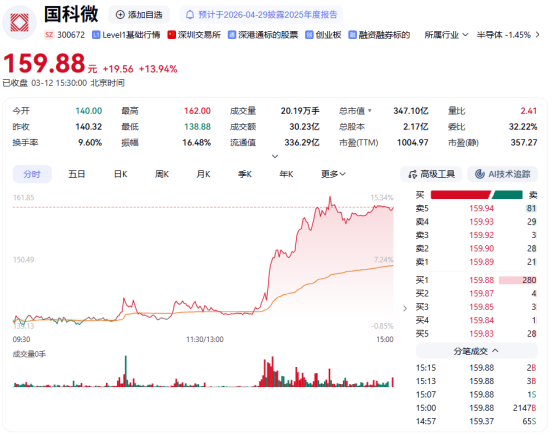
Anticipating Huawei’s upcoming release of new AI storage products, Goke Microelectronics, a supplier of high-density SSD controller chips such as the eKitStor Xtreme 116P, saw its stock price jump by approximately 14% today.
According to the latest official updates, Huawei will introduce its new-generation OceanStor storage series tailored for the full AI chain at the summit. The focus will be on breakthroughs in three key technological areas: unstructured data management, storage-compute collaboration acceleration, and data privacy security.
Additionally, on March 17, Huawei will host a Spring New Product Launch Event titled "Comprehensively Reshaping AI Data Infrastructure to Accelerate AI Industry Adoption." The close timing of these two events underscores Huawei’s strategic focus on the AI storage sector. The summit on March 20 is widely seen by industry experts as a pivotal moment where Huawei redefines the value of data infrastructure in the AI age.
The AI industry currently faces core challenges beyond just insufficient computing power—issues like data quality and data storage are equally critical. Xie Liming, Vice President of Huawei’s Data Storage Product Line, put it bluntly in an interview: "Much of the data cannot be directly utilized by AI, making rapid AI deployment difficult."
Consider a scenario where a company invests heavily in high-end GPUs, only to discover that these expensive computing resources are processing low-quality data daily. The GPU clusters are running, consuming electricity, yet the model training results remain unsatisfactory. The root cause lies in the data "supply chain."
Traditional data storage systems were designed for humans to query data and generate reports. However, AI requires structured knowledge that machines can directly "understand" and "process."
Xie Liming offered a vivid analogy: "Think of raw data as flour. In the past, simply storing and managing the flour was sufficient, but AI is about making pastries. If you don’t first process the flour into dough, it can’t be used directly."
Thus, the central themes of Huawei’s upcoming event are the three critical stages of "AI Corpus Preparation — AI Training — AI Inference," showcasing Huawei’s commitment to managing the entire data lifecycle.
During the AI corpus preparation stage, Huawei focuses on refining "dirty data" into high-quality corpus that AI can directly use. Huawei’s AI data platform, unveiled at MWC 2026, has already demonstrated this capability, achieving over 95% retrieval accuracy by converting multi-modal data into high-precision knowledge through lossless parsing and token-level encoding.
In the AI training stage, Huawei provides "external brain capacity" for GPUs. When the GPU’s internal capacity is insufficient, Huawei supplements it with "external storage," similar to expanding virtual memory through high-speed SSDs.
Moreover, in the AI inference stage, Huawei enables intelligent agents to possess "long-term memory." Through an internal memory mechanism, historical states, execution paths, and key experiences are stored and retrieved as needed during subsequent inferences, offering continuous support for intelligent agents.
-
![]()
Doubao Work Unveiled! Domestic AI Leaders Fully Commit to the 'Work' Sector
-
![]()
Who’s Sounding the Alarm on ‘Rushed Vehicles’?
-
![]()
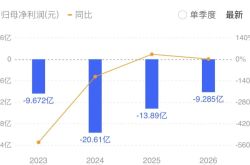
Over 5.3 Billion Yuan in Losses Over Three and a Half Years! Can Yonyou Reverse Its Fortunes Through Streamlining and AI Transformation?
-
![]()
Baidu AI Adopts Free Model: A Strategic Maneuver in Traffic and Monetization
-
![]()
Silicon-Based OLED Pioneer Unveils Financial Results: H1 Shipments Outpace Entire 2025 Volume
-
![]()
AI's First "Lost Summer"
-
![]()
Zeiss Makes Another €2.2 Million Bet: Will Eye Tracking Be the Next Big Thing in the Smart Glasses Industry?
-
![]()
RUNTO Ranking | Global Top TV ODM Factories' Shipment Figures for July 2026