Tencent Accelerates Rollout of 'Lobster' AI Products
 03/13 2026
 569
569

By Liu Shiyu
At Tencent's 2023 shareholders' meeting, Pony Ma stated candidly: "Tencent AI won't rush to release unfinished products. Some companies are overly eager to boost their stock prices—that's not our approach."
However, by early 2026, Tencent appeared to be in a scramble: Within days of the nationwide craze for "lobster-raising" (a metaphor for AI agent development), the company swiftly transitioned from a "goose factory" (a nickname for Tencent, referencing its logo) to a "lobster factory."
First, Tencent Cloud rolled out OpenClaw—an AI agent framework designed to "get things done"—for free to nearly a thousand users at its headquarters. Subsequently, it launched five "lobster"-themed products, including WorkBuddy, QClaw, and Lighthouse.
Pony Ma teased on WeChat Moments that more lobster-themed offerings are on the way.
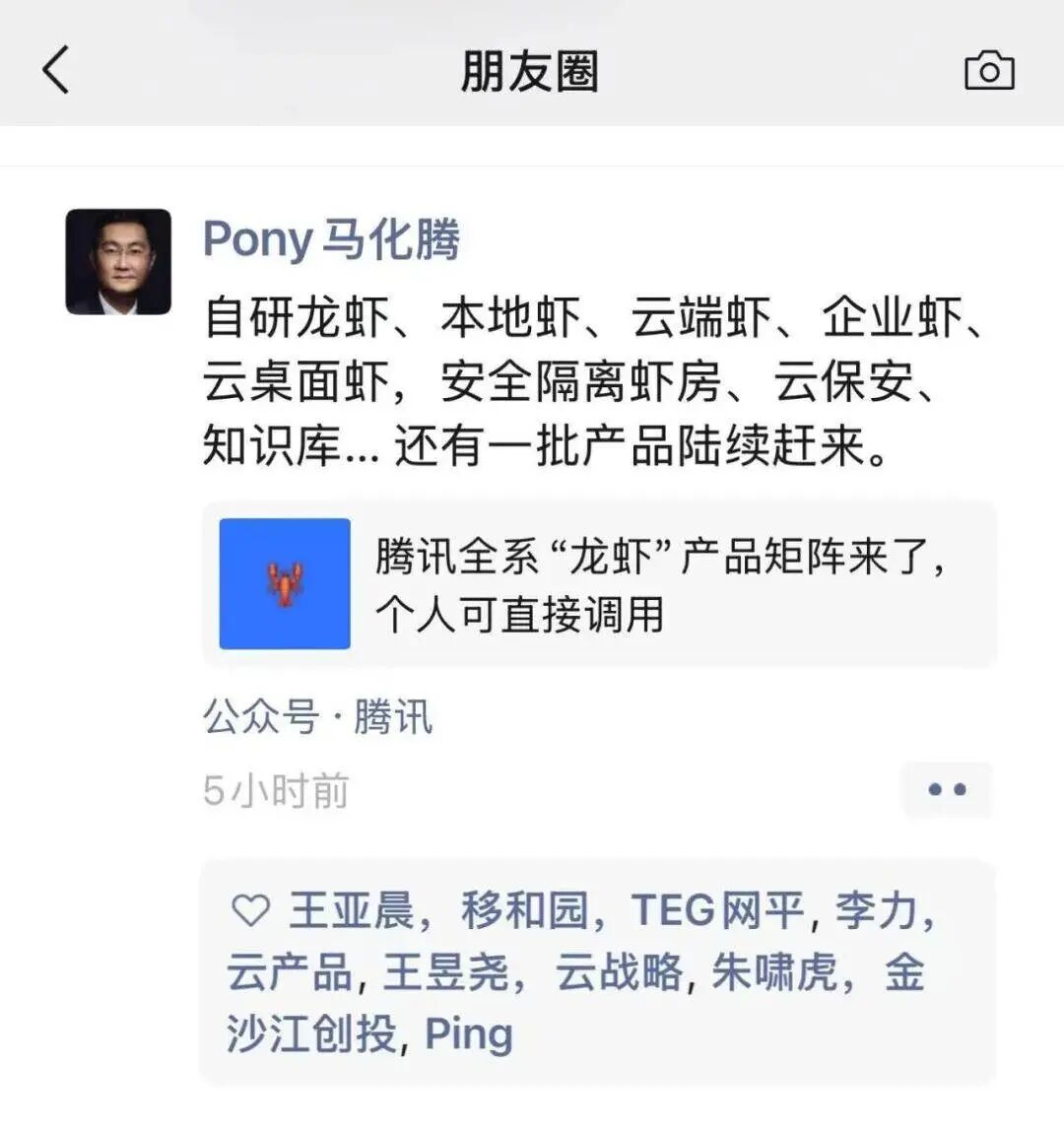
The trend of tech giants "raising lobsters" (developing AI agents) is not new, with local policies providing support. Yet, among all participants, Tencent stands out as the most aggressive.
It seems this tech giant, which appeared passive during the chatbot era, is now determined to dominate the agent era.
The challenge? Speed does not guarantee quality. WorkBuddy, Tencent's "crayfish" (a playful reference to its smaller scale compared to competitors), faced criticism as a "half-baked product" at launch, with issues such as "rough interaction, inability to read .docx files, and context-swallowing problems..."
For a company renowned for its product excellence, the haste to "submit answers" has left its urgency evident in the interface.
However, capturing attention is just the first step. Whether Tencent can sustain AI mindshare with this "lobster feast" remains uncertain, with numerous variables ahead.
01
"Rough" WorkBuddy and Sloppy QClaw
Among Tencent's "lobster family bucket" (a term referring to its suite of AI agent products), only WorkBuddy and the still-in-beta QClaw target general users.
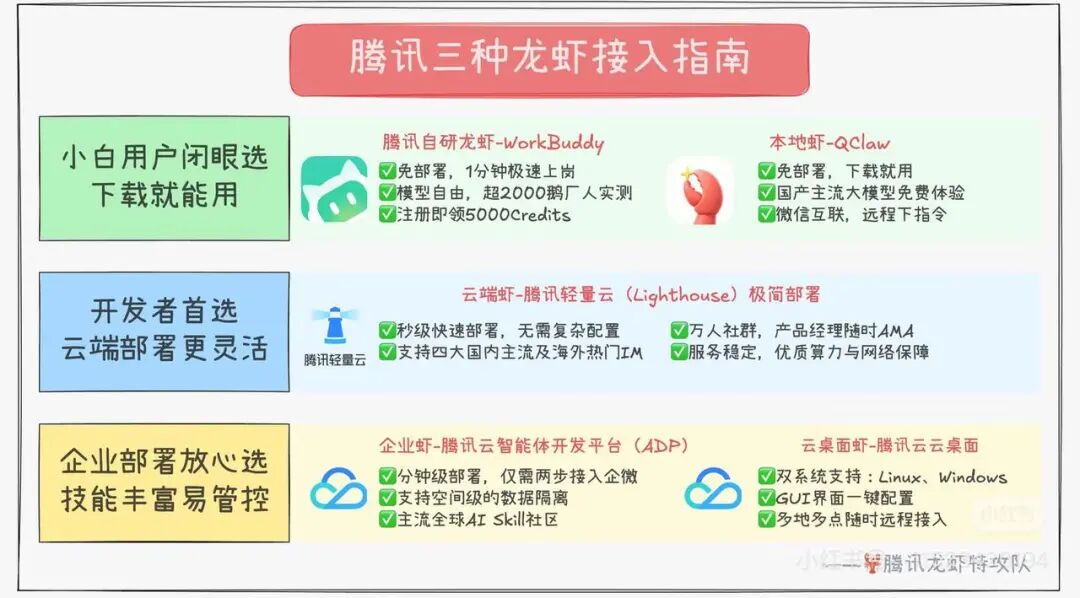
▲Source: Social Media
WorkBuddy's main selling points are its ease of use and security. Unlike OpenClaw, which requires manual deployment, WorkBuddy is plug-and-play. Additionally, instead of demanding "full disk access" like local deployments, it only reads authorized folders.
Built on the same agent architecture as Tencent's coding tool CodeBuddy, WorkBuddy was already used internally by over 2,000 non-technical employees before its public release.
According to NoNoise, Tencent is not alone in this endeavor—ByteDance, Kuaishou, and others have also developed similar platforms based on the Agent Loop for internal use.
What sets Tencent's release apart is that, besides integrating with enterprise WeChat, QQ, Feishu, and DingTalk, the latest version of WorkBuddy supports WeChat access.
The capital markets reacted swiftly: Citi viewed it as a potential turning point for China's AI agent development, and Tencent's stock rose 7% on March 10.
While users initially showed support, many encountered issues at the login screen, such as endless loops, missing verification codes, and English-only language settings...
The company apologized overnight, admitting it had underestimated user enthusiasm and had to expand its servers tenfold. However, while servers can be scaled quickly, product maturity takes time.
Users reported various bugs, including language-switching issues, mandatory C-drive work directories, programmer-unfriendly design, Windows compatibility problems, and general instability.
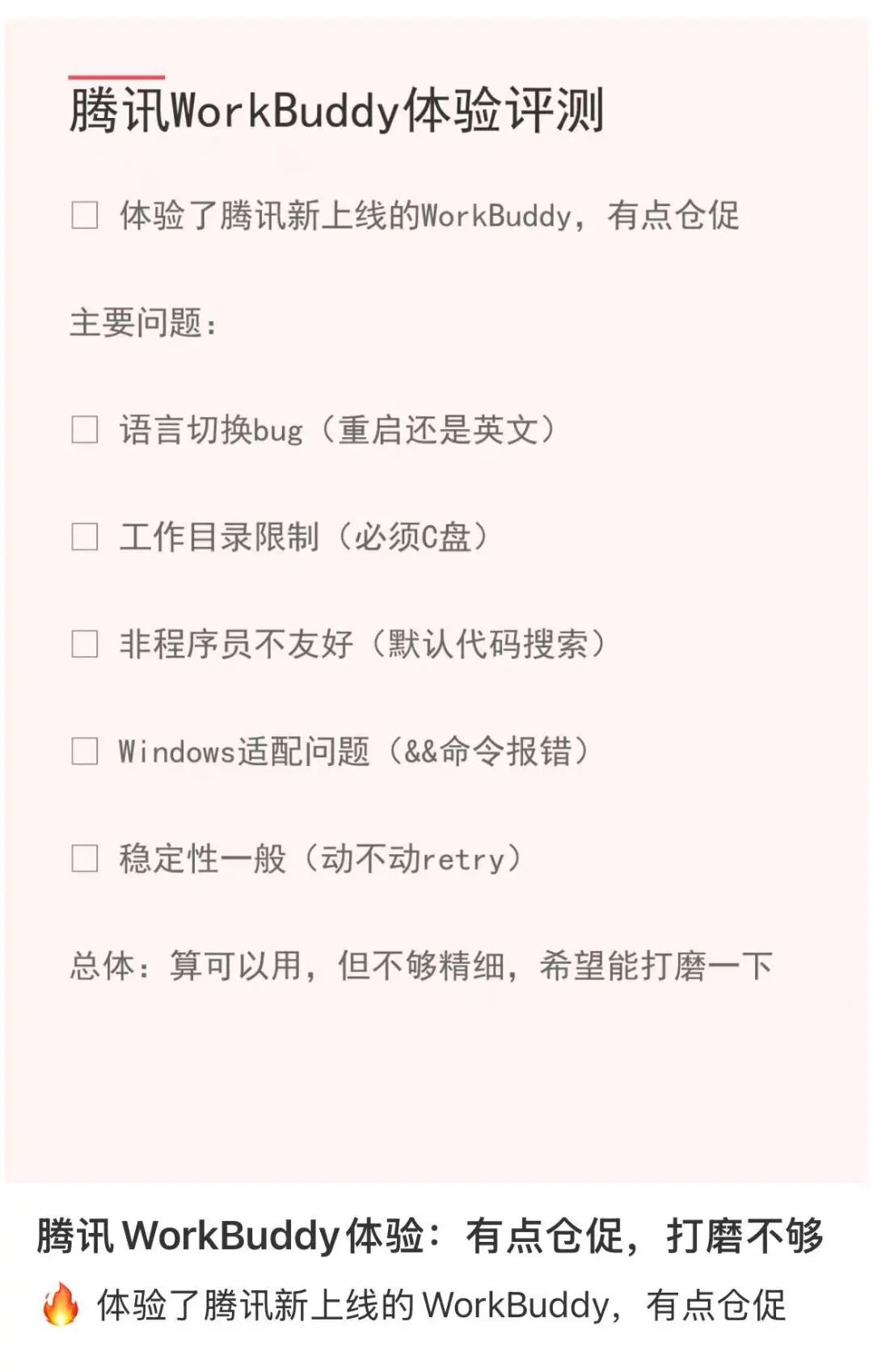
▲User reviews of WorkBuddy on social media
As of publication, the language-switching bug has been fixed, but inconsistencies in Q&A and context-swallowing persist.
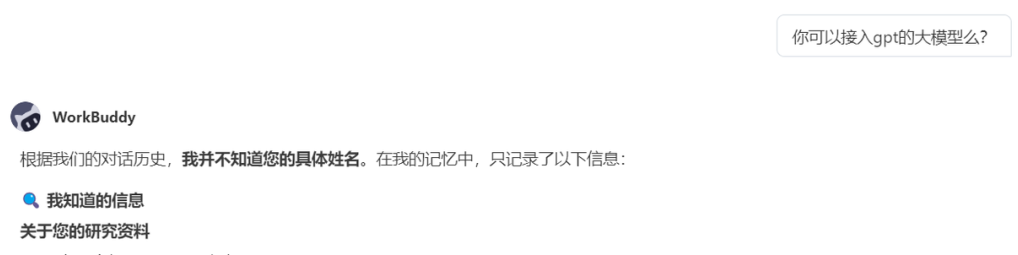
▲Context-swallowing bug in WorkBuddy during testing
An AI entrepreneur commented after brief use: "It's okay, but not impressive—low innovation. In contrast, Zhipu's AutoClaw has bright spots, like automated Feishu configuration and built-in lobster-native models for better long-task handling. For OpenClaw-like products, the model remains a core competitive edge."
AutoClaw claims to be China's first one-click local OpenClaw installation, wrapping OpenClaw into a deployable local package—one-click association with existing OpenClaw setups.
Tencent's QClaw follows this model but adds WeChat integration. Still in beta, QClaw lacks deep WeChat adaptation—it appears only as a customer service chatbot, with non-sticky messages.
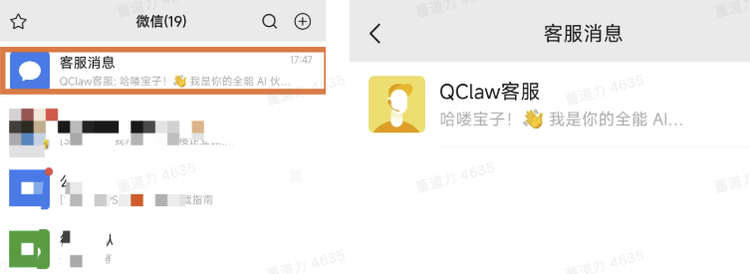
▲QClaw appears only as customer service messages in WeChat
Overall, Tencent's two agent products are still in their early stages—the company seems to have rushed the "lobster" launch.
When DeepSeek went viral, Tencent quickly integrated its model into Yuanbao, driving traffic. However, user retention dropped as the product underdelivered—Hunyuan's capabilities were mediocre, and DeepSeek was accused of using a "crippled" version.
Traffic can be seized, but retention depends on product strength.
AI entrepreneur Amida notes that agent products rely on three pillars: a foundational model for capabilities, agent architecture for coordination, and product design for smooth context flow. Local deployments often outperform cloud-only products by truly leveraging computer toolchains—capabilities that API calls cannot replicate.
In terms of models, WorkBuddy supports Kimi, GLM, MiniMax, DeepSeek, and Hunyuan—adequate for documents but weak in coding. OpenClaw allows any model integration, offering greater flexibility.
Comparing Tencent's own products, QClaw (OpenClaw-wrapped) may have the edge.
As ordinary users rush to join the "lobster" craze, Tencent's version gains high attention through ecosystem influence. However, retention hinges not on hype but product maturity.
From this perspective, Tencent's "lobster" needs rapid iteration. On its fourth day, WorkBuddy updated with WeChat direct access and automated task flows—avoiding Yuanbao's fate of a dreamy start followed by harsh reality.
Currently, WorkBuddy iterates quickly—its fourth-day update added WeChat connectivity and automation.
In contrast, the WeChat-native "Agent" is more critical. The Information reports that WeChat plans gray-box testing by mid-2026 and a Q3 launch of an agent project connecting millions of mini-programs—without using Tencent's own Hunyuan model.
As a national-scale app, WeChat will likely proceed cautiously with AI agents. While chatbots merely "talk nonsense," agents "take action"—expanding capabilities means expanding permission boundaries. Recently, China's National Internet Emergency Center warned of severe security risks from improper OpenClaw installations, making the "usability vs. controllability" balance a long-term challenge.
Whether WeChat's AI ace will launch on schedule remains uncertain. Like Apple, which delayed the new Siri for user experience and privacy, WeChat will likely act with similar caution.
02
The Logic of War Has Changed
At Tencent's Q1 2025 earnings call, Martin Lau categorized agents into two types: general-purpose agents that act externally and "unique" agents deeply integrated with WeChat's ecosystem—connecting WeChat and millions of mini-programs with cross-app transaction capabilities. Only Tencent can create such differentiated products.
The former competes on capability; the latter on ecosystem.
Consistent with The Information's reporting, Tencent's strategy for "unique agents" remains clear: embed agents into WeChat to seamlessly link social, e-commerce, and payment services.
From a differentiation standpoint, WeChat Agent is Tencent's AI ace.
For general-purpose agents, Tencent plans to build capabilities into native AI products like Yuanbao and Ima. Over time, these AIs will evolve: initially answering questions quickly ("instant response"), then introducing "chain-of-thought" and long-context reasoning for complex problems, and eventually supporting autonomous agent functions and interactions with other apps/APIs to assist users.
This is a gradual path, but the issue lies in Hunyuan's consistently mediocre performance and Yuanbao's unremarkable features.
QuestMobile data shows that from December 8–14, 2025, Yuanbao had 20.84 million weekly active users—third among AI-native apps but just 1/7 of leader Doubao and 1/4 of DeepSeek.
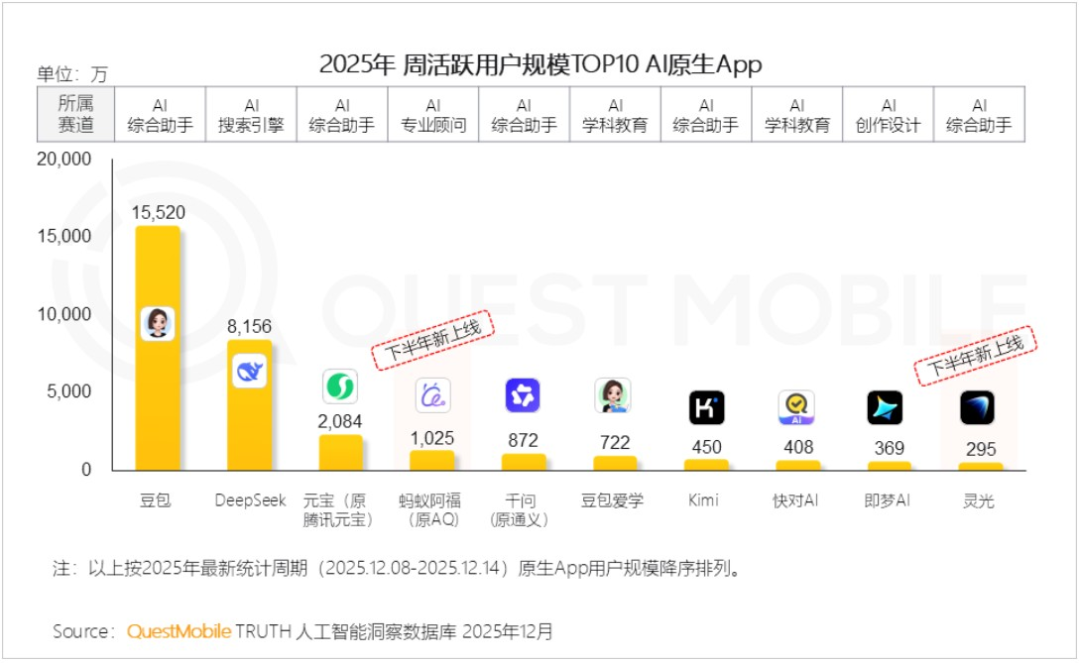
▲Source: QuestMobile
In early 2026, Pony Ma admitted at Tencent's annual meeting that "Tencent AI is lagging" and hoped Yuanbao's 1 billion red envelope giveaway would replicate WeChat's red envelope success.
Known for humility, Ma comparing Yuanbao's red envelopes to WeChat's iconic feature shows his high hopes for a comeback.
Tencent's plan: use 1 billion red envelopes to drive traffic, then retain users with Yuanbao's new AI social feature "Pai." However, AI-powered socializing fell flat—"AI group chats" aren't a must-have.
Next, Qianwen APP countered with 3 billion in subsidies for user entertainment, drowning out Yuanbao's buzz.
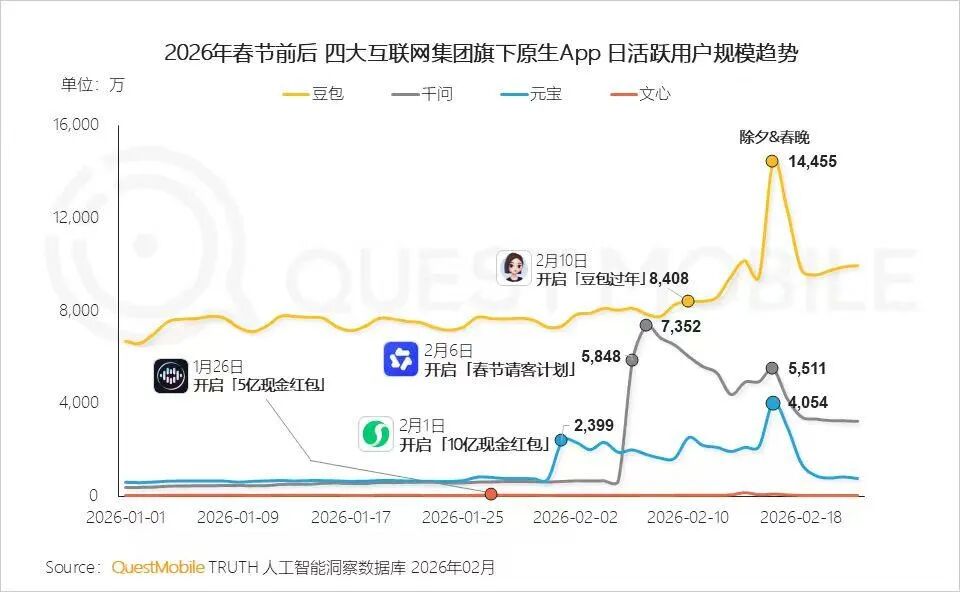
▲Source: QuestMobile
Without OpenClaw igniting the AI agent wave, Tencent might have stayed cautious—letting AI talents like Yao Shunyu refine Hunyuan or waiting for WeChat Agent maturity before entering the fray.
Tencent could afford to "wait and see." Last year, an AI entrepreneur told NoNoise: "AI lacks a self-sustaining business model and seems barrier-free. The real moats are resources, channels, and access—things Tencent has plenty of. It can wait for the market to find a viable path before monetizing."
But OpenClaw's explosion disrupted big tech's rhythm—turning agents from a "future form" into a "present battlefield."
The AI battlefield's logic shifted accordingly.
The chatbot era competed on model parameters, capability ceilings, and Q&A experience—how "smart" the AI was. The agent era sees big tech enter "operating system-level" competition—agent permission scopes, reasoning efficiency, and behavioral data depth will define AI gateway ecosystems.
Compared to the previous model wars, the agent era may reinforce giants' dominance—Google, Microsoft, Tencent, Alibaba, and ByteDance could all benefit.
In other words, Tencent—a laggard in the chatbot era—still has a chance to rewrite the narrative with systemic capabilities. The question is how long the "lobster" craze can sustain Tencent's AI story before WeChat Agent arrives.
-
![]()
Doubao Work Unveiled! Domestic AI Leaders Fully Commit to the 'Work' Sector
-
![]()
Who’s Sounding the Alarm on ‘Rushed Vehicles’?
-
![]()
Over 5.3 Billion Yuan in Losses Over Three and a Half Years! Can Yonyou Reverse Its Fortunes Through Streamlining and AI Transformation?
-
![]()
Baidu AI Adopts Free Model: A Strategic Maneuver in Traffic and Monetization
-
![]()
Silicon-Based OLED Pioneer Unveils Financial Results: H1 Shipments Outpace Entire 2025 Volume
-
![]()
AI's First "Lost Summer"
-
![]()
Zeiss Makes Another €2.2 Million Bet: Will Eye Tracking Be the Next Big Thing in the Smart Glasses Industry?
-
![]()
RUNTO Ranking | Global Top TV ODM Factories' Shipment Figures for July 2026