OpenClaw Goes Viral, Will Lobster Take the Surname 'Goose'?
 03/13 2026
 652
652

In the era of AI agents, WeChat must maintain its position as the indispensable first entry point for users.
Written by | BlueHole Business Zhao Weiwei
"Self-developed Lobster, Local Shrimp, Cloud Shrimp, Enterprise Shrimp, Cloud Desktop Shrimp, Secure Isolation Shrimp House, Cloud Security Guard, Knowledge Base... and a batch of products are on the way." In the early hours of March 11, Tencent founder Pony Ma's WeChat Moments post once again fueled the hype around the open-source software OpenClaw.
Currently, companies such as Tencent, ByteDance, Alibaba, and Minimax have all launched OpenClaw (domestically nicknamed "Lobster")-style products. Among them, Tencent boasts the most diverse product matrix, including multiple offerings such as WorkBuddy for individual users, the under-testing QClaw, and Tencent Cloud Lighthouse for enterprises and developers.
QClaw is particularly noteworthy: it enables remote control via WeChat conversations. Users can simply send instructions to QClaw on WeChat, and the computer will automatically generate reports and transfer files. This deep integration with WeChat has generated high expectations for QClaw, but as it has not yet opened for registration, social media is flooded with requests for beta invitation codes.
Just a day before Pony Ma's WeChat Moments post, Tencent's stock price reversed its slump, surging 7% and regaining a market capitalization of HK$5 trillion.
The core driving factor was a report by foreign media The Information, which revealed that Tencent is developing a "top-secret" AI agent that will be directly embedded in WeChat. This agent can assist users with tasks like hailing rides, buying groceries, booking flights, and connecting with millions of WeChat Mini Programs to execute tasks, undoubtedly transforming WeChat into a more versatile super app.
As for its specific launch date, reports suggest that Tencent plans to roll it out to all users in the third quarter of this year. The report cited two individuals familiar with Tencent's senior leadership, stating that Tencent cannot risk damaging WeChat's massive user experience with immature technology.
OpenClaw and WeChat's AI agent have become Tencent's next hope. After the AI red envelope battle during the 2026 Spring Festival, Tencent Yuanbao took the lead but faced retention challenges: daily active users (DAUs) for Doubao and Qianwen dropped 28%-50% from their peaks, while Yuanbao's DAU fell to just 7.685 million, an 81% decline from its peak, making it the worst performer among the three in terms of user retention.
The competition for the AI super entry point will only intensify. Currently, ByteDance's Doubao holds an advantage in traffic entry, Alibaba's Qianwen excels in scenario penetration, while Tencent's Yuanbao must answer: beyond relying on WeChat, what are its core competitive advantages?
Amid this business anxiety, OpenClaw represents an ecological defense battle for Tencent to secure the AI super entry point—because as AI agents begin to take over the internet, WeChat must remain the indispensable first entry point for users.
Tencent is the most user-friendly, ByteDance the most cloud-oriented
Using OpenClaw requires a complex installation process and a high entry barrier, deterring many ordinary users.
This presents an optimization and development opportunity for domestic tech companies: Tencent, ByteDance, and Alibaba have all launched various Claw derivatives, while large model companies like Yuezhiyinmian, Zhipu AI, and MiniMax have introduced exclusive programming model subscription packages for OpenClaw.
"Raising Lobsters" involves significant Token consumption and requires obtaining the highest system permissions to work like a human. Users only need to issue natural language instructions, and OpenClaw will automatically operate the computer, call tools, and complete tasks.
The question arises: When OpenClaw becomes the AI entry point, do users still need to manually open Taobao, WeChat, or browsers? This is one reason why domestic tech companies are flocking to the space—to keep users within their ecosystems, using different AI models to complete tasks.
This represents a competition that precedes even the race for AI application entry points, with Tencent, ByteDance, and Alibaba all getting involved.
Tencent's WorkBuddy stays closer to OpenClaw's core design, retaining a localized work framework and lowering the entry barrier through a client. It integrates models like Kimi and GLM and offers free usage. Another product, QClaw, though not yet available, claims to keep all data local without uploading to the cloud and shares highly similar functions with WorkBuddy.
In comparison, Alibaba's Copaw supports multi-channel conversations across DingTalk, Feishu, QQ, Discord, and iMessage, offering six installation methods (from scripts to desktop applications). However, its configuration process is relatively complex, primarily targeting developers and technicians.
ByteDance takes a unique approach with ArkClaw, which adopts a pure cloud strategy instead of local downloads. This method offers zero hardware barriers and quick onboarding, maximizing inference performance requirements. However, its drawback is evident: privacy and data exposure risks become a shortcoming (weakness), deterring many large enterprises from fully entrusting their data to the cloud.
Feishu continue (follows) ByteDance's cloud strategy, introducing one-click OpenClaw deployment capabilities through the Miaoda platform. It supports users in creating digital avatars, handling work tasks, and facilitating smooth communication, claiming "2-minute access"—faster than ArkClaw—and even declaring "Feishu is the best platform for accessing OpenClaw." The cloud deployment strategy outperforms local installation modes in scalability and ease of use, marking one of ByteDance's most distinctive features in "raising Lobsters."
As of now, DingTalk, Feishu, and WeChat Work have all integrated OpenClaw: WeChat Work's operation is relatively complex, requiring a Tencent Cloud account registration; DingTalk adopts a limited-time free strategy—from March 10 to 31, using OpenClaw to call DingTalk-related APIs, Webhooks, or Stream services grants unlimited free calls.
The race to install faster and simpler, emphasizing usability, is a key point of competition for ByteDance, Alibaba, and Tencent in localizing OpenClaw. But this is just the beginning. As OpenClaw's popularity intensifies, the security of "raising Lobsters" has become a focal point for the industry.
Feishu CEO Xie Xin also expressed his stance on WeChat Moments, arguing that running agents on personal computers and using them in enterprises are entirely different matters. "Personal agent exploration is about discovery, while enterprise agent use is about responsibility. Mistakes in personal scenarios can be redone; in enterprise scenarios, they could lead to file deletions and data breaches."
Domestic "Lobsters" Are More "Cooked"?
China's market is more enthusiastic about OpenClaw than the U.S. market.
Searching Google Trends, you'll find that OpenClaw's popularity in the U.S. market has grown over the past 90 days but remains only one-tenth or even lower compared to ChatGPT's heat (popularity).
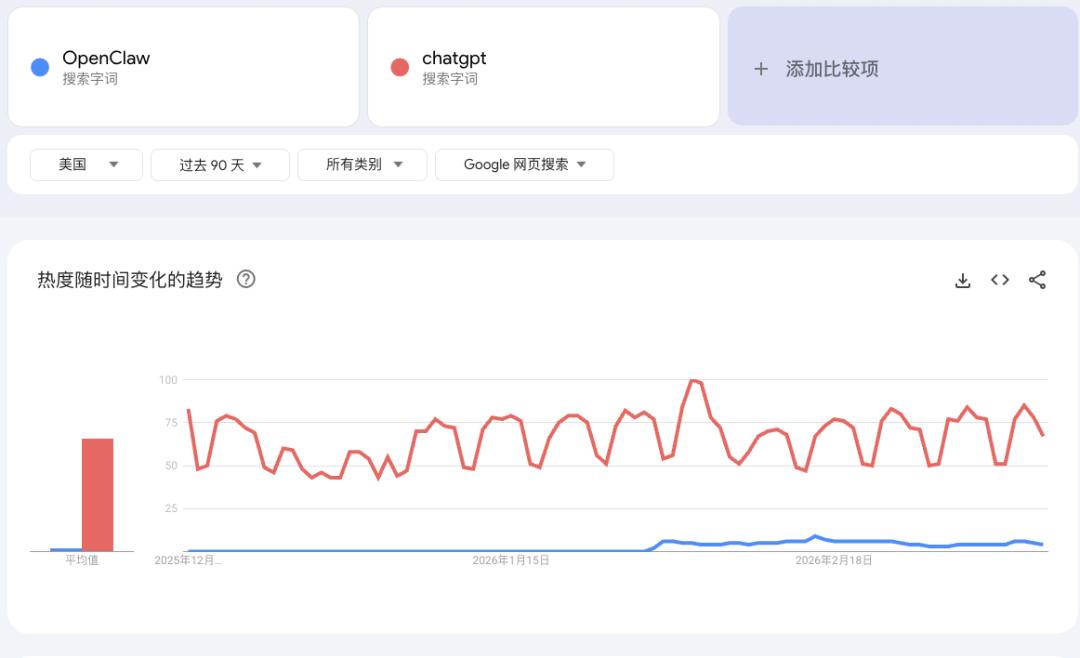
ChatGPT remains the absolute leader in AI conversation tools in the U.S. market, with highly concentrated user mindshare and search demand. Its popularity curve shows no significant changes, while OpenClaw is only searched by a small number of users incidentally driven by ChatGPT's heat (popularity), lacking independent triggers.
In contrast, OpenClaw's popularity in China has surpassed Doubao in the past 30 days.
WeChat Index shows that after March 6, OpenClaw's popularity has soared, currently more than double that of Doubao, forming a clear lead. Doubao's popularity, while diverted by OpenClaw, remains sluggish in growth but maintains a stable base traffic (traffic).
Thus, OpenClaw has already exploded in the Chinese market, becoming a topic of national discussion. Its transmissibility (spread) and user attention within the WeChat ecosystem have surpassed domestic leading AI product Doubao. However, OpenClaw has not achieved this mythology (miracle) in the U.S. market, where China's market welcomes it more enthusiastically than the U.S.
A significant reason behind this is that the U.S. market places greater emphasis on privacy protection, imposing many restrictions on U.S. companies adopting OpenClaw, while personal use is more limited to developers and entertainment. Relatively, China's market not only has tech giants driving promotion but also sees OpenClaw become a trend due to relevant policy encouragement.
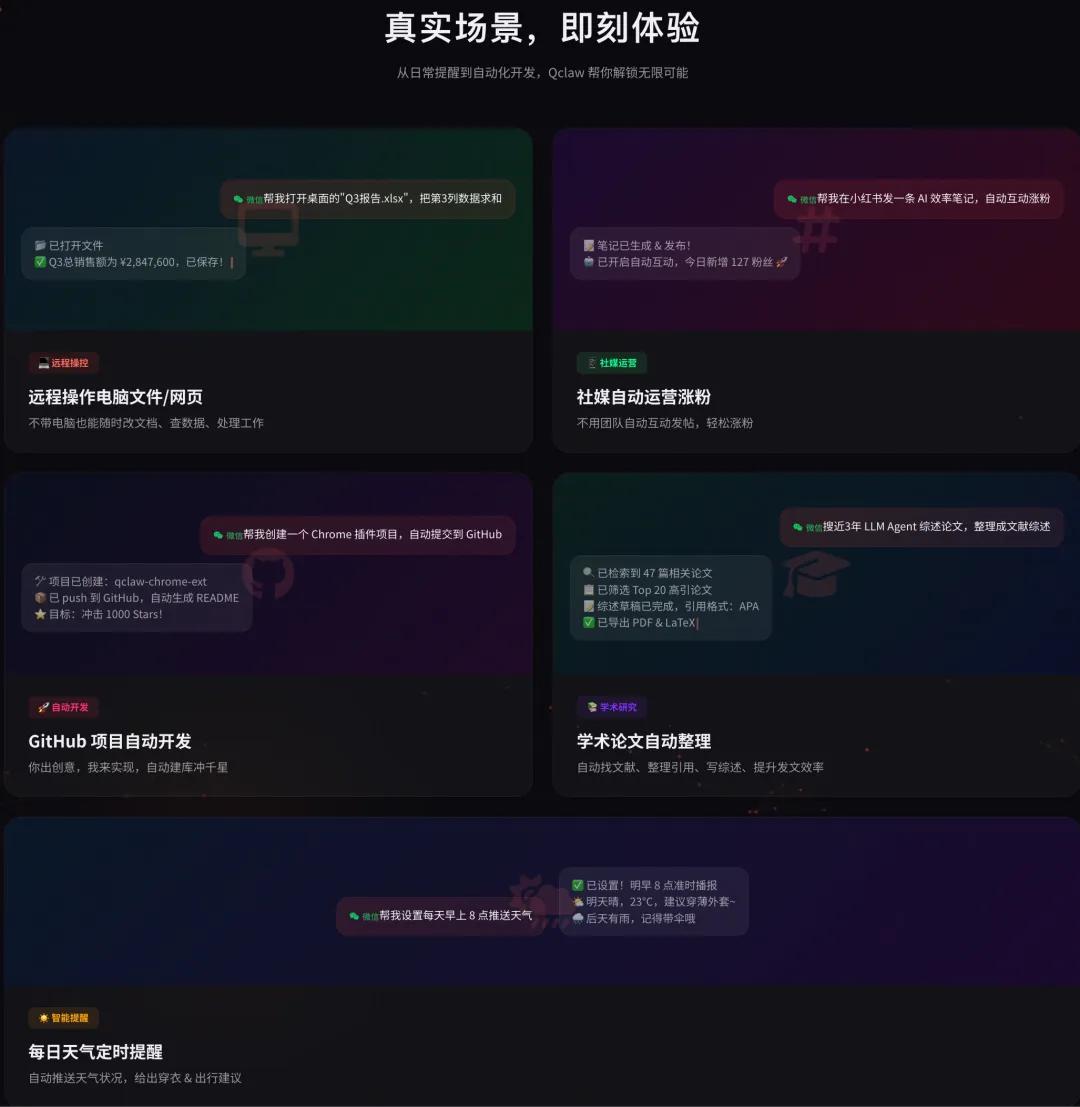
In reality, both individual and enterprise users face significant security risks. Authorizing excessive permissions could lead to security incidents like database deletions and sensitive information leaks through open-source OpenClaw. Moreover, personal use of ClawdBot consumes large amounts of Tokens, offering low cost-effectiveness for individual users, as many tasks and operations can be fulfilled by AI large models alone.
Currently, OpenClaw's popularity trends in China and the U.S. have evolved into two distinct paths.
One pursues technological limits: OpenClaw founder Peter Steinberger joined OpenAI, stating that while OpenClaw has exploded in geek circles, its widespread adoption requires deeper security models and cutting-edge research permissions. His goal is to evolve agents from script execution to autonomous planning based on advanced models like OpenAI.
The other pursues commercial breadth: The commercial hunger displayed by Chinese tech companies has accelerated the process of Chinese users liberating their hands with agents. Long queues for installation at Tencent's headquarters and on-site "Lobster keepers" on Xianyu essentially represent the rush to commercialize agents. Tech companies know that while native AI applications cannot achieve certain tasks, agents can—such as having Yuanbao place orders on Taobao.
China's Hundred Model Wars (hundred-model battle) is over, and now the "hundred-Lobster battle" has begun.
The Rushed Agent Era
As the "hundred-Lobster battle" commences, rapid entry from all parties has "rushed" the development of agent operating systems in China's market.
Cloud vendors see a commercial path in computing power consumption and model purchases, representing future productivity infrastructure. Developers witness a shift in human-AI interaction, where conversations with AI yield not just answers but delivered results. For ordinary people, agents are no longer just toys but a way to glimpse the future through play and learning.
Transitioning from chat agents to executive agents involves not just who is smarter but who has boundaries.
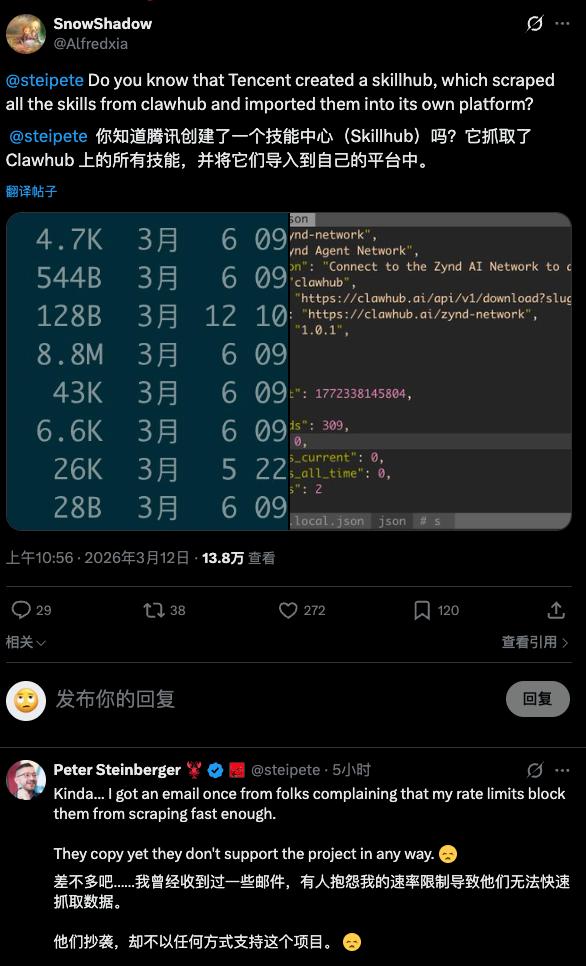
Tencent recently launched the AI skill community SkillHub, but OpenClaw's founder publicly criticized Tencent on social media, accusing them of "plagiarizing without supporting the project in any way."
In response to this accusation, Tencent replied under the tweet, stating that SkillHub is merely a local mirror site for Chinese users, crediting ClawHub as the original source. Additionally, Tencent distributed 180GB of data (870,000 downloads) to users in its first week, pulling only about 1GB from the official source, thus helping to alleviate traffic. Furthermore, the team members themselves are contributors to the project's code and PRs, hoping to continue supporting the ecosystem.
In fact, Tencent's "rushed" approach does not constitute plagiarism legally but damages the open-source spirit morally.
It's as if OpenClaw freely shared a complete "AI toolkit" with various useful functions and tutorials, and Tencent created its own "AI tool platform," directly copying all the content from others' toolkits using technical means onto its platform without even changing the download links.
For future or more source developers, they may set stricter licenses due to this influence. For Tencent, successfully collaborating with the OpenClaw foundation could represent a turning point for cooperation, as OpenClaw is still in its infancy.
Subsequently, Chinese users criticized Tencent's SkillHub for "wasting Tokens" after installation, as every user instruction is "force-inserted" with preset prompts guiding the agent to use its skill store. Many developers consider this Tencent's first "rogue software" in the agent realm.
Tencent has not yet responded, highlighting the conflict between user and commercial interests behind the "rushed" agent development.
Tencent's SkillHub also reflects its anxiety, with the underlying motivation being a battle to defend traffic and social ecosystems. If users make decisions through agents on other platforms, opening WeChat will no longer be their first social stop. Only by radiating AI's atomic capabilities through OpenClaw can Tencent completely resolve (completely solve) the issue of app silos.
By then, AI agents will take over the internet, but WeChat will remain the indispensable master key for users—there must be lobsters that take the surname 'Goose.'
-
![]()
Doubao Work Unveiled! Domestic AI Leaders Fully Commit to the 'Work' Sector
-
![]()
Who’s Sounding the Alarm on ‘Rushed Vehicles’?
-
![]()
Over 5.3 Billion Yuan in Losses Over Three and a Half Years! Can Yonyou Reverse Its Fortunes Through Streamlining and AI Transformation?
-
![]()
Baidu AI Adopts Free Model: A Strategic Maneuver in Traffic and Monetization
-
![]()
Silicon-Based OLED Pioneer Unveils Financial Results: H1 Shipments Outpace Entire 2025 Volume
-
![]()
AI's First "Lost Summer"
-
![]()
Zeiss Makes Another €2.2 Million Bet: Will Eye Tracking Be the Next Big Thing in the Smart Glasses Industry?
-
![]()
RUNTO Ranking | Global Top TV ODM Factories' Shipment Figures for July 2026