Pour Cold Water on OpenClaw
 03/13 2026
 707
707
Text by Xiaofeng
Source: Bowang Finance
China has a population of 1.4 billion. How can there be a nationwide shrimp farming craze? It's nothing more than hype from news media and some companies. Just a bunch of people busy reaping the harvest.
Have you been feeling anxious about OpenClaw lately? Worried about your job being replaced or facing layoffs? Afraid that your industry or business will be flooded with competitors? If you're a shrimp farmer, are you anxious about not being able to make money from it?
Actually, there's no need for all this anxiety. The recent frenzy in the AI circle is excessive. It reminds one of the past few years' crazes over virtual currencies, the metaverse, blockchain... and going further back, e-commerce, short videos, and live-stream shopping.
The progress in agent technology and the increase in productivity are undoubtedly commendable. But I advise everyone not to lose their minds.
Do you often read stories like this online?
"In March, in a Shenzhen office building, programmer Xiao Chen transformed his workstation into a 'shrimp pond.' He typed instructions to the red lobster icon on his screen, instructing the tool called OpenClaw to automatically organize financial report data and generate PPTs. Meanwhile, he kept an eye on his Xianyu orders for his part-time OpenClaw on-site deployment service, priced at 500 yuan per session, with weekend schedules already booked until the end of the month."
At the same time, online stories also say that another scene unfolded in a conference room in Haidian, Beijing.
"Product managers argued incessantly around the QClaw demo machine. Next door at ByteDance, the SaaS version of ArkClaw had just quietly launched. Meanwhile, a warning from the Ministry of Industry and Information Technology leaked out: over 230,000 instances of OpenClaw were exposed on the public internet, with 87,800 cases experiencing data leaks."
Is this nationwide 'shrimp farming' craze a revolution in efficiency for ordinary people, or a new battleground for tech giants' computing power contention?
Should ordinary people be anxious about this?
01
After large models, tech giants find a new battleground
In the tech circle of 2026, the smoke of battle over large models has not yet cleared, and a new war has erupted in the 'shrimp farming' pool.
The starting point of this war is a 'lobster that can work.'
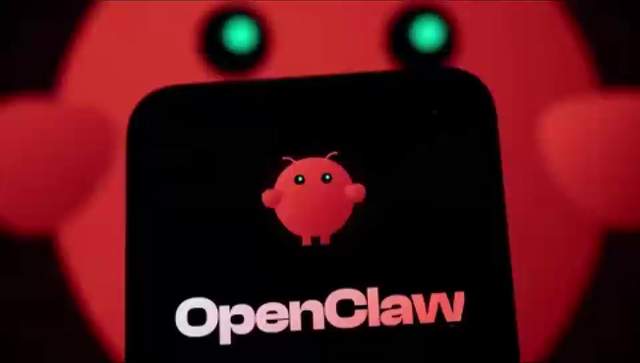
In December 2025, the overseas team ClawAI released the test version of OpenClaw, which officially launched in January 2026. With a red Boston lobster as its icon, users need to customize it through data feeding and instruction training, much like raising lobsters. Hence, the term 'lobster farming' spread.
As of March 9th, it has surpassed 260,000 stars on GitHub, with over 1.5 million downloads in a single week, growing at a rate far exceeding established open-source projects like Linux and React.
What truly escalated this craze was the collective entry of tech giants.
Tencent is a key participant, offering free installations at its doorsteps, leading many to exclaim that another generation's 'eggs' are being collected.
Next, it seems that the tech giants forgot about their fierce competition over large models in February and quickly turned to the shrimp farming battle. They're chasing every trend that comes along.
On March 6th, Xiaomi launched Xiaomi Miclaw based on the MiMo large model, initiating mobile closed beta testing; on March 7th, Meituan, in collaboration with Lenovo Baiying, launched remote deployment services.

Tencent also launched WorkBuddy, integrating OpenClaw into WeChat Work; on March 9th, ByteDance's Volcano Engine officially launched ArkClaw, a cloud-based SaaS agent service. In just a few days, over a dozen tech giants made dense moves (intensive moves), forming a pattern of 'nationwide shrimp farming, tech giants setting the stage.'
The core of this competition is not the large models themselves but the contend for (contention for) entry points into AI agents. In the past, tech giants relied on apps to retain users.
Now, OpenClaw has made the leap from 'can speak' to 'can do' – it can autonomously operate files, browsers, and terminals, running in the background 24/7, becoming a true 'digital employee.' Whoever can control this entry point can lock in users' computing power consumption and data traffic, thereby reconstructing the industrial ecosystem.
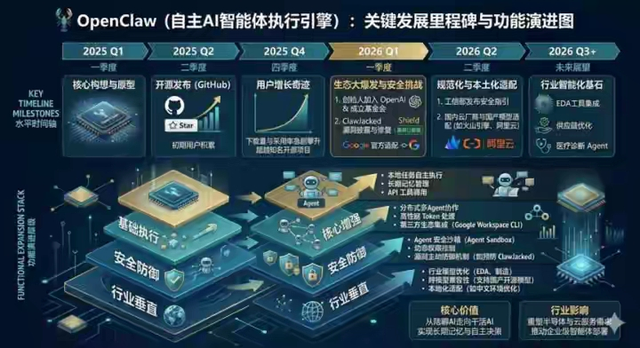
Outsiders believe that the essence of this competition is an inevitable choice for the implementation of large model technology. When model capabilities become homogeneous, scenario-based and tool-based agents become the best carriers for technological monetization.
Just like in the smartphone era, the competition over operating systems ultimately hinged on the app ecosystem. In the AI era, the ultimate battleground is precisely these 'digital employees' that can deeply integrate into users' daily work. Beneath the craze lies the tech giants' early positioning for digital entry points in the next decade.
02
Why the fierce competition? Because everyone has their own agenda
The collective charge of tech giants may seem crazy (crazy), but each has its own calculations; the enthusiastic participation of individuals and entrepreneurs also hides different expectations.
Let's look at the tech giants first.
Cloud providers have the clearest calculations: OpenClaw is a 'computing power hog.' Every task execution consumes a large number of tokens, driving continuous demand for computing power.
Some providers offer free deployment services, seemingly at a loss, but in reality, they aim to capture the subsequent computing power consumption market. Once users form habits, they become long-term computing power consumers.
Hardware and ecosystem providers aim to bind user scenarios. Smartphone manufacturers launch 'smartphone lobsters,' with the core goal of integrating OpenClaw into their entire ecosystem, making it the core entry point on mobile devices.
Others target enterprise collaborative office scenarios, attempting to activate internal ecosystems with agents, while still others focus on the rigid demand (rigid demand) market for data security.
Each tech giant is building its own 'shrimp pond' around its core business, transforming the open-source OpenClaw into a 'traffic entry point' for its ecosystem.
Capital's calculations are even more direct.
Computing power leasing stocks have hit limit up collectively, with related listed companies' stock prices surging. Institutions estimate that the Chinese AI agent market will reach 600 billion yuan in 2026. This craze has become a 'wealth creation game' for capital, with stock prices reacting in advance even though many companies have not yet achieved profitability in related businesses.
Now, let's look at individuals and entrepreneurs. For office workers, OpenClaw is an efficiency booster. Financial professionals use it for automated investment research, self-media creators rely on it for bulk content generation, and administrative staff use it to organize files, saving 1-2 hours of repetitive work daily. For entrepreneurs, this is a rare window for lightweight entrepreneurship.
It seems wonderful.
On Xianyu, remote installation services charge 150-500 yuan, with on-site services reaching up to 800 yuan. Some practitioners have earned over 260,000 yuan in just one week; others have formed 'AI employee teams,' mass-producing content and selecting products for cross-border e-commerce, achieving scaling profits through 'shrimp farming.'
Student groups have also joined the craze, using it to collect thesis materials and organize notes, while retirees use it to manage bills and make appointments.
Everyone is seeking their own 'dividends' in this craze.
This multi-party 'shrimp farming' battle is, to be honest, a redistribution of interests. Tech giants compete for ecosystems, capital seeks quick profits, individuals pursue efficiency, and entrepreneurs look for opportunities. Behind the seemingly nationwide craze lies different groups' precise positioning of their interests amidst the tidal wave of the times.
03
Media fanning the flames, don't be fooled by OpenClaw shrimp farming
As 'shrimp farming' becomes a nationwide craze, many people become obsessed with the beautiful imagination of digital employees or making money for themselves, ignoring the risks and bubbles behind it.
If it's an efficiency tool, it can indeed bring some benefits.
But if you think it's going to become something extraordinary, you're probably mistaken.

First, there's no such thing as a free lunch. OpenClaw itself is open-source and free, but making it truly work requires strong computing power support. Institutions estimate that the average monthly operating cost for a single OpenClaw is about 20,000 yuan, equivalent to the average monthly labor cost of 2.4 white-collar workers.
For ordinary people, they either bear high computing power costs or choose cloud services from tech giants, which precisely falls into the tech giants' computing power trap. What's even more alarming is data security. The 87,800 cases of data leaks warned by the Ministry of Industry and Information Technology mostly stemmed from users' non-standard local deployments. Many people are busy 'raising shrimp' but forget to install 'security doors' for their 'shrimp ponds.'

Second, the entrepreneurial craze has already started to become highly competitive, with those making money either selling tools or courses. On Xianyu, installation service prices have dropped from 50 yuan to 100 yuan, with merchants even offering value-added services like 'installation comes with a homemade meal.'
Entrepreneurship requires business models, competitive moats, product core competitiveness, capital, risk-taking ability... not just efficiency upgrades brought by tools, despite their helpfulness.
The so-called 'AI employee teams' also face homogeneous competition and compliance risks. Many people jump on the bandwagon only to find the market already saturated, ultimately leaving in a hurry. Those cases claiming 'over 10,000 yuan in income' are after all (ultimately) the minority, with more people becoming 'cannon fodder' for the craze.
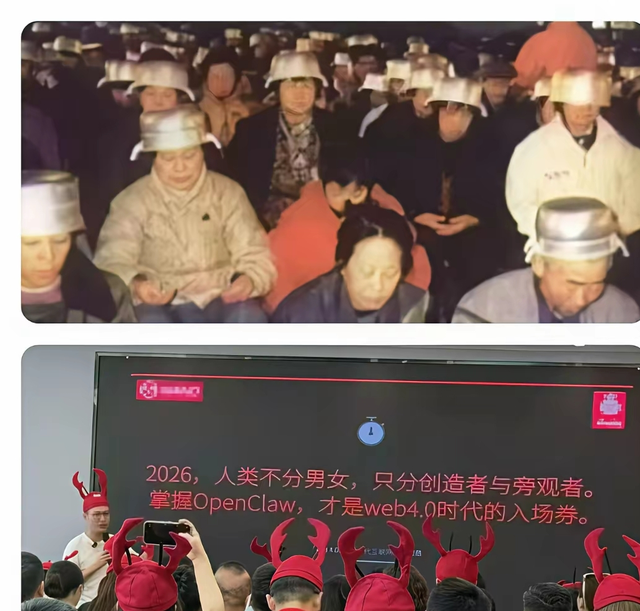
More importantly, OpenClaw's capabilities have been severely exaggerated. It can indeed complete simple repetitive tasks but still has many limitations in complex decision-making and creative work.
A securities investment research team found during testing that reports generated by OpenClaw had obvious flaws in data interpretation and logical analysis, ultimately requiring significant manual revisions. Using it as an auxiliary tool is fine, but over-reliance can lead to losing one's core competitiveness.
This craze is, after all, a trial and error for the tech industry. Open-source OpenClaw, like a stone thrown into a lake, has arouse (stirred up) Layers of ripples (layers of ripples). Tech giants use it to position their ecosystems, capital exploits it to hype concepts, and ordinary people gain temporary efficiency improvements. But when the tide recedes, those who can truly stay are not those who followed the 'shrimp farming' trend but those who can rationally view technology and deeply integrate it with their businesses.
Faced with the shrimp farming craze, I advise you to recognize yourself. That's the most important thing.
-
![]()
Doubao Work Unveiled! Domestic AI Leaders Fully Commit to the 'Work' Sector
-
![]()
Who’s Sounding the Alarm on ‘Rushed Vehicles’?
-
![]()
Over 5.3 Billion Yuan in Losses Over Three and a Half Years! Can Yonyou Reverse Its Fortunes Through Streamlining and AI Transformation?
-
![]()
Baidu AI Adopts Free Model: A Strategic Maneuver in Traffic and Monetization
-
![]()
Silicon-Based OLED Pioneer Unveils Financial Results: H1 Shipments Outpace Entire 2025 Volume
-
![]()
AI's First "Lost Summer"
-
![]()
Zeiss Makes Another €2.2 Million Bet: Will Eye Tracking Be the Next Big Thing in the Smart Glasses Industry?
-
![]()
RUNTO Ranking | Global Top TV ODM Factories' Shipment Figures for July 2026