How to Fight a Battle of 10 Trillion? The Beginning of the Intelligent Economy is Constrained by Implementation and Computing Power
 03/16 2026
 733
733
Shortly after the 2026 Two Sessions concluded, Zheng Shanjie, Director of the National Development and Reform Commission, announced a figure at an economic-themed press conference: by the end of the 15th Five-Year Plan period, the scale of the artificial intelligence-related industry will grow to over 10 trillion yuan. Reporters scribbled notes in the audience while the speaker remained calm on stage, but this figure caused quite a stir in the industrial sector—after all, the scale of China's core AI industry was just over 1.2 trillion yuan in 2025. An eightfold increase in five years means adding the equivalent of the 2025 scale every year on average.
The Two Sessions report mentioned for the first time the phrase "building a new form of the intelligent economy." While the language in the document was restrained, those in the know understand that this signifies AI's official elevation from a technological concept to the new foundation of the national economy. Data from the Ministry of Industry and Information Technology shows that by 2025, China had over 6,200 AI enterprises, covering a complete industrial system from basic infrastructure and model frameworks to industry applications. However, industrial scale is one thing; whether the 10 trillion yuan can be effectively realized is another.
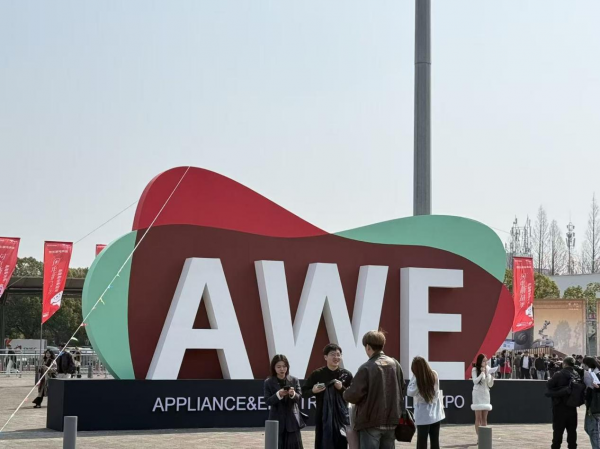
New Hope Group told a story at AWE2026 about meat cutting. They collaborated with a robotics company to introduce a "meat-cutting robot" into their factory. National regulations require that the net content of meat products must not be less than 100 grams, with a tolerance of plus or minus 5 grams. Previously, manual operations, fearing penalties for insufficient amounts, averaged 107 grams per cut. The robot, estimating weight through touch, controlled errors within 2%, averaging 102 grams.
The difference between 107 grams and 102 grams is 5 grams. Liu Yonghao said, "Don't underestimate this 5%. It represents tremendous value."
This story illustrates the essence of the intelligent economy more clearly than any grand narrative—it's not a sci-fi movie about the future, nor is it a policy document that needs to be interpreted word for word. It's about the numbers: Can your costs be reduced further? Can your errors be minimized? Can your skilled workers be replaced less painfully? The 10 trillion yuan market ultimately comes down to differences like these 5 grams of meat.
01
The War Over Five Grams of Meat
Liu Yonghao's "meat-cutting robot" is not an isolated case. At AWE2026, Roborock showcased its first wheeled-legged floor-cleaning robot, G-Rover, capable of autonomous movement and cleaning in complex layouts like duplexes and villas, extending automation from single-level spaces to multi-level environments. Dreame's floor-cleaning robot, equipped with a second-generation bionic mechanical arm, achieved high-degree-of-freedom dynamic adaptation and deep cleaning. The X60 Pro also integrated AI light-sensing multi-dimensional dirt recognition and binocular obstacle avoidance. Tinco's "Fuwan Station View" intelligent floor washer combined a transparent waterway system with an intelligent anti-clogging drainage system.
The logic behind these products is the same: squeezing out efficiency and reducing errors, whether in visible or invisible ways. For floor-cleaning robots to climb an extra floor or washers to clean an additional corner, algorithms are crunching the numbers behind the scenes—calculating the shortest path, identifying the dirtiest areas, and returning to the charging dock before the battery runs out.
Warehouse logistics is another sector where calculations are ruthless. Geek+ recently disclosed a set of data: a 31.7% year-on-year increase in new orders in 2025, with adjusted net profit turning positive. The word "positive" is rare in the robotics sector. Most players are still burning cash for growth, with valuation bubbles inflating faster than technological iteration. Geek+'s success isn't because they make cool humanoid robots but because they focus on a highly in-demand niche—warehouse logistics. In JD.com's warehouses, Geek+'s AMR (Autonomous Mobile Robots) scurry around, providing end-to-end fully automated warehouse solutions that boost efficiency and reduce human labor. Only when the numbers add up are customers willing to pay.
Globally, the warehouse automation industry is undergoing a reshuffle. Established players like Japan's Daifuku and Germany's Dematic have relied on fixed automation production lines for decades. Chinese companies have achieved a leapfrog advantage using AMR technology—Chinese companies now account for over 40% of the global AMR market, with Geek+ ranking first globally for seven consecutive years. However, this doesn't mean everyone in the sector is profitable. Most players are still experiencing "revenue growth without profit increase," trapped in price wars or holding technology without finding scalable implementation scenarios.
The pricing logic in capital markets has already changed. High premiums for technological concepts are a thing of the past; now, only commercialization closed loop (closed-loop commercialization) is recognized. Companies still relying on financing through storytelling will find it increasingly difficult to secure funds if they cannot deliver profitability models by the end of the year. Geek+'s "turning positive" serves as a wake-up call to the industry: the era of the intelligent economy has arrived, but it's not the era for all forms—it's the era for those who can crunch the numbers and penetrate scenarios.
02
Humanoid Robots Dance on Stage While Home Appliance Makers Calculate Behind the Scenes
At Shanghai's AWE2026, humanoid robots stole the spotlight. Unitree's G1 boxed on stage, while Shishi Zhihang's A1 robot set a Guinness World Record for assembling sub-millimeter-level wire harnesses the most times in an hour. Haier unveiled three categories of household service robots, including the "Haiwa Cleaning Robot," "Haiwa Companion Robot," and "Haiwa Household Robot." Hisense has been layout (strategically positioning) in the humanoid robot sector for years, focusing on commercial service scenarios, along with AI butler robots and small companion robots. Gree signed an agreement with JD.com, setting a target of selling 10 million AI-series air conditioners within three years.
Crowds surrounded the exhibits, with smartphones held higher than heads.
However, after touring the exhibition hall, reporters noticed an interesting phenomenon: most home appliance companies are taking a wait-and-see approach toward "Longxia," an AI agent capable of complex tasks—helping you apply for a phone, automating OA system approvals, or remembering cleaning preferences for each room by robot vacuum cleaner (floor-cleaning robots) without repeated adjustments. Ecovacs integrated "Longxia" into their butler robot, "Bajie," enabling autonomous storage and three-dimensional organization.
But Wang Zhiguo, CTO of Skyworth, put it bluntly: "Integrating 'Longxia' directly into televisions isn't a good idea; it comes with many risks." Zhu Lei of Gree was even more cautious, stating that smart home appliances are signal-controlled, and embedding "Longxia" might pose safety risks. Gree opted for localized deployment. More unnamed manufacturers privately admitted: while this technology can enhance efficiency internally, it's not yet time to install it in products sold to consumers.
This caution contrasts sharply with "Longxia's" explosive popularity outside the exhibition hall. The tech circle hails it as a revolutionary AI agent product, with developers in open-source communities enthusiastically engaging with it. However, hardware makers are asking practical questions: Who bears the cost of integration? Who is responsible for bugs? Do consumers really need a TV that can apply for a phone by itself?
This isn't conservatism; it's the ledger speaking. The home appliance industry operates on razor-thin profit margins, and any feature that increases costs without directly translating into higher selling prices must be carefully weighed. AI companies still relying on storytelling for financing may not have crunched these numbers.
Also at AWE, Robam Appliances unveiled an AI cooking glasses product, equipped with their self-developed AI large model for cooking, "Shishen." These glasses can coordinate with range hoods, stoves, steam ovens, and other appliances to complete the entire cooking process from preparation to serving. While it sounds impressive, Han Wei, Vice President and COO of Vatti, poured cold water on the idea: "We once integrated remote controls into phones, thinking it was cutting-edge, but it overshadowed the main function. True intelligence lets consumers feel at ease without needing to figure out how to operate it or adapt to the machine's language."
Lu Chunshui, President of TCL Realty China Region, put it more directly: "Previous AI smart home appliances were simply 'smart for the sake of being smart.' Functions like smart activation, voice dialogues, and voice control from a few years ago only provided novelty but quickly lost consumer interest. Now, smart home appliances focus on truly solving consumer pain points, rethinking product development to deliver qualitative leaps in experience."
These remarks highlight an industry phenomenon: the biggest bubble in AI implementation isn't technological inadequacy but the misalignment between technology and demand. Those humanoid robots punching on stage are still far from entering households. Products that can crunch costs and penetrate scenarios are quietly capturing the market.
03
The Invisible Foundation Costs More Than Visible Flashiness
Anshan Iron and Steel once proposed a nine-word mantra: "Business poses the questions, technology provides the answers, and data grades the results." These nine words burst the illusion of many enterprises: digital transformation (digital transformation) fails not because technology isn't advanced enough but because technical and business teams operate on different wavelengths. Business departments articulate needs that technical teams don't understand; technical teams build systems that business departments can't use. In the end, money is spent, systems are launched, but no one uses them, rendering them obsolete.
Anshan Iron and Steel addressed this by establishing a Digital Intelligence Committee, led by the Party secretary, and incorporating digital transformation assessments into annual performance evaluations, accounting for 10%. What does this mean? Officials who can't use data won't fare well in year-end evaluations. More noteworthy than the systems they implemented is what they did first. Anshan Iron and Steel didn't jump on the large model bandwagon but spent a year breaking down data silo (data silos). Decades-old systems in coking, sintering, ironmaking, and steelmaking, with inconsistent data standards and incompatible interfaces, were unified through a central data platform. Only after this was done could AI thrive.
Data silos aren't unique to Anshan Iron and Steel. Bai Chong'en, a member of the National Committee of the Chinese People's Political Consultative Conference and Dean of Tsinghua University's School of Economics and Management, pointed out during the Two Sessions that China's vast application scenarios and rich data resources are two major advantages for AI development. However, turning these advantages into victories requires first breaking down data silos.
Fan Shukui, Chairman of the All-China Federation of Mergers and Acquisitions Association and also a member of the National Committee of the Chinese People's Political Consultative Conference, mentioned that public data, as a national strategic resource, its market-oriented development and utilization directly determine the breadth and depth of data value release and influence the underlying supply capacity of AI industry development. Before the Two Sessions, Liu Liehong, Director of the National Data Bureau, emphasized at the 4th Beijing AI Industry Innovation and Development Conference that "the vast ocean of AI requires rivers of data to flow." The biggest challenge for current AI development isn't computing power but the lack of high-quality, trainable, and applicable industry data.
Computing power is another hyped concept. The Government Work Report explicitly proposed implementing new infrastructure projects like ultra-large-scale intelligent computing clusters and collaborative computing-power and electricity systems. However, computing power isn't something every enterprise needs to build itself. Bai Chong'en calculated that large model training exhibits significant economies of scale, and for most application-level enterprises, building their own computing power centers faces prohibitively high initial investments and operational costs. He suggested a collaborative approach—large cloud service providers or capable local governments should Centralized construction (centrally construct) ultra-large-scale, green, and efficient public computing power infrastructures, while small and medium-sized enterprises focus on vertical scenario algorithm optimization and application innovation.
This suggestion highlights a practical issue: China's SME cloud adoption rate is only 15%, far below the over 60% in Europe and the U.S.; public cloud computing power accounts for less than 30%, compared to over 65% in the U.S. Without scalable public cloud development, the proliferation of intelligent agents will remain constrained by high costs. Computing power should flow like water and electricity—pay for what you use, without needing to dig wells or generate power yourself. While this sounds simple, implementation involves infrastructure investment, pricing mechanisms, and data security issues. However, the direction is correct—lowering the threshold for AI adoption across society to prevent innovation from being strangled by computing power costs.
Inspur Cloud once compared AI to an employee who comes to work for the business, not to replace it. But as the boss, you need to know how to assign tasks. This captures the essence of how the intelligent economy reshapes traditional industries. It's not a magic wand that turns everything to gold. It's a "new employee" that requires training, data feeding, and integration into business processes. Enterprises willing to let this "new employee" into workshops, production lines, and warehouses are turning their former moats into impassable chasms for others.
How to tackle the 10 trillion yuan market? Start with meat cutting, floor cleaning, and AMRs running in warehouses. Liu Yonghao's "meat-cutting robot" is still slicing away in factories, reducing costs from 107 grams to 102 grams, carving out invisible profits daily. "Longxia" at AWE is still waiting for hardware makers to figure out integration. Geek+'s AMRs continue to run in warehouses, writing "turning positive" into financial statements.
The intelligent economy, as it descends from the Two Sessions report to the ground, manifests in these scenarios. It's not about future imagination but about present ledgers. If your costs are 50 cents lower and your errors are 5 grams smaller than competitors, you've secured your ticket to the next round.
The reshuffling of traditional industries has begun. This time, there are no spectator seats.
-
![]()
Doubao Work Unveiled! Domestic AI Leaders Fully Commit to the 'Work' Sector
-
![]()
Who’s Sounding the Alarm on ‘Rushed Vehicles’?
-
![]()
Over 5.3 Billion Yuan in Losses Over Three and a Half Years! Can Yonyou Reverse Its Fortunes Through Streamlining and AI Transformation?
-
![]()
Baidu AI Adopts Free Model: A Strategic Maneuver in Traffic and Monetization
-
![]()
Silicon-Based OLED Pioneer Unveils Financial Results: H1 Shipments Outpace Entire 2025 Volume
-
![]()
AI's First "Lost Summer"
-
![]()
Zeiss Makes Another €2.2 Million Bet: Will Eye Tracking Be the Next Big Thing in the Smart Glasses Industry?
-
![]()
RUNTO Ranking | Global Top TV ODM Factories' Shipment Figures for July 2026