Why Did Japanese Home Appliances, Once Dominant for Half a Century, End Up Selling Even Their 'Leftover Assets' to China?
 03/16 2026
 604
604
Why Did Japanese Home Appliances, Once Dominant for Half a Century, End Up Selling Even Their 'Leftover Assets' to China?
Source | Jiadianpai (jiadpai)
Author | Xiaoxiao
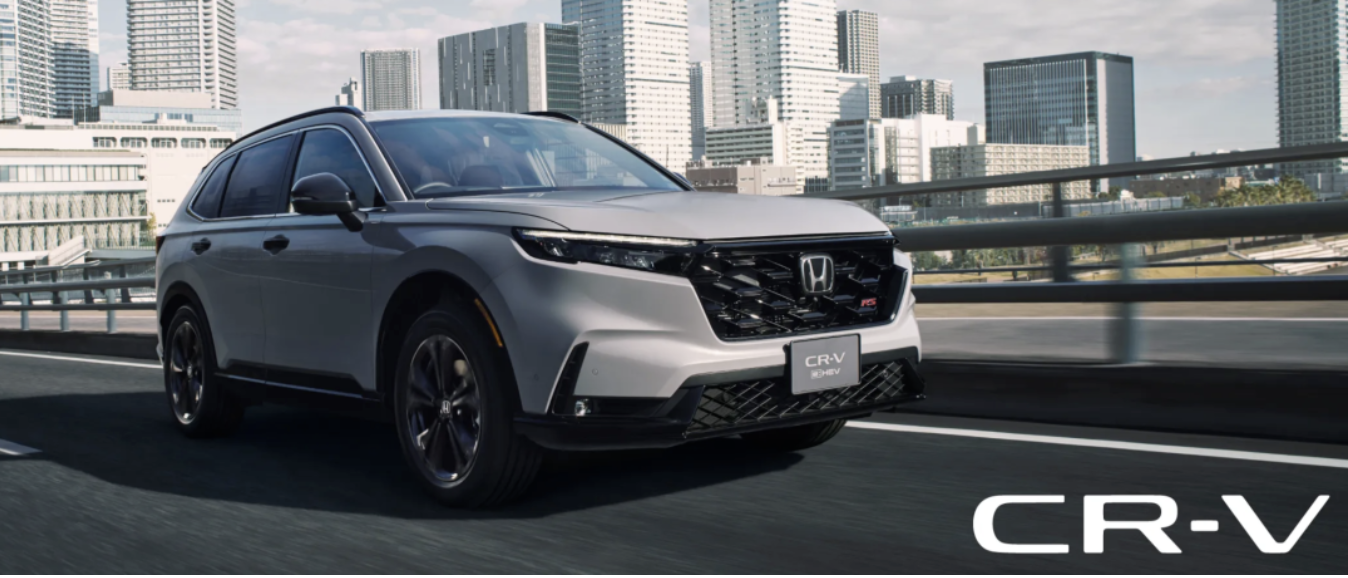
Recently, the automotive industry has been shaken by another significant development. Honda, after abandoning part of its North American electric vehicle plans, is projected to incur losses amounting to hundreds of billions of yen overnight, causing its U.S. stock price to plummet by over 8%.
This naturally raises concerns: Automobiles have long been seen as the 'last bastion' of Japanese manufacturing. If even this stronghold is crumbling, what will remain of Japanese manufacturing's competitive edge?
To answer this, one need not look far; simply revisit the former 'flagship' of Japanese manufacturing—home appliances. That sector was effectively lost more than a decade ago, in a decline that serves as a vivid case study of transitioning from invincibility to 'selling off assets for survival.'

From 'Acquiring American Assets' to 'Divesting Family Jewels'
There was a time when Japanese home appliances were synonymous with 'quality.' In the 1970s and 1980s, brands like Sony, Panasonic, Toshiba, and Sharp were revered worldwide.
How confident were the Japanese back then?
They even coined a slogan: 'One Tokyo can buy the entire United States.'
What was the state of Chinese enterprises at that time? Frankly, they were 'newcomers.' Domestic air conditioner factories seeking better Japanese compressors had to wait in line at the mercy of the Japanese, only to receive the lowest-grade models. The Japanese strategy was clear: keep the best for themselves, sell the next tier to Europe and America, and only then, the worst, to Chinese assembly plants. Back then, domestically produced air conditioners were jokingly referred to as 'only slightly better than fans.'
But who could have imagined that, thirty years later, Japanese home appliances would essentially become a saga of 'divestiture, divestiture, divestiture.' Let's outline a timeline:
In 2011, Panasonic sold its washing machine and refrigerator businesses to Haier;
In 2014, Sony sold its once-prestigious notebook brand, VAIO;
In 2016, Toshiba sold its white goods business to Midea, and a year later, its TV business to Hisense;
That same year, Sharp, the 'pioneer of LCD' with a 114-year history, sold itself entirely to Foxconn.
Today, most Japanese-branded home appliances you see in domestic malls are actually operated by Chinese companies and manufactured in Chinese factories. An empire that once dominated half the global market has crumbled.
How did this unfold? How did the Japanese lose it all?

The Japanese Made Three Critical Mistakes
First, they were too 'rigid' and inflexible. The Japanese product development mindset is quintessentially engineer-driven: 'I must make an air conditioner that scores 99, with a compressor lifespan of 20 years and 18 decibels of noise.' They invested heavily to refine their products into works of art.
But is there really a noticeable difference between 18 decibels and 22 decibels for the average person? And a 20-year lifespan when Chinese households might move every 10 years? This is classic 'technological overengineering.'
Even more damaging was their bet on technological routes. Back then, Panasonic stubbornly pursued plasma technology, believing its picture quality was unbeatable; Canon and Toshiba developed SED, while Sharp bet on LCD. The result? Plasma lost to LCD, causing severe internal strife within Japanese companies, as they watched South Korean giants Samsung and LG grow during the LCD boom. By the time the Japanese realized their mistake, the market had been devoured.
Second, they were too 'slow' to grasp market dynamics. Japanese companies suffer from 'headquarters-centricity.' What does that mean? All decisions must come from the Tokyo headquarters; Chinese branches are just 'extensions' without decision-making power. To redesign an air conditioner, feedback had to go to Japan, taking three years for changes to be implemented. Meanwhile, Midea could roll out customized models in three months.
How do Chinese companies operate? When Midea was developing products, engineers visited 706 kitchens in 22 cities, talking to households one by one. They discovered that Chinese grandmothers' biggest complaint wasn't that the air conditioner wasn't cold enough, but that 'the wind gives me a headache.'
Japanese engineers could never grasp this pain point: 'How can an air conditioner cool without blowing air?' But Midea understood and launched 'windless' air conditioners, selling tens of millions over a decade, securing over 300 patents, and defining a new market segment. This level of insight into local needs was beyond the Japanese.
Third, they were too 'arrogant' to adapt. Japanese home appliance companies were once truly wealthy. In 1989, Sony dared to spend $3.4 billion to acquire Columbia Pictures, when the dollar was far more valuable than today. Such success bred arrogance.
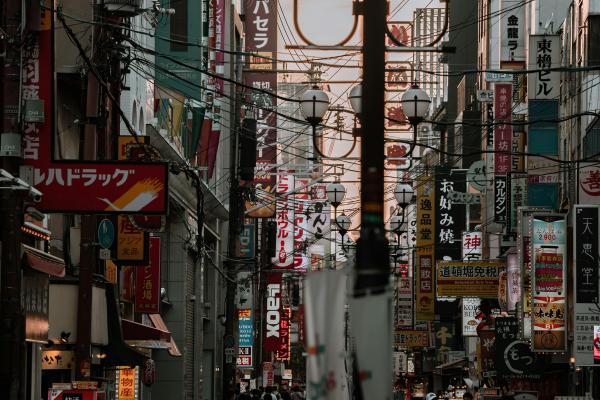
Having stayed in this 'protected environment' for too long, Japanese home appliances became a classic example of the 'Galápagos syndrome'—evolving only on their own island, utterly clueless about global trends. For instance, the Japanese still don't understand why Chinese consumers prefer cheaper domestic products with similar functions over their 'craftsmanship.'

How Did China 'Learn from the Best' and Then 'Surpass Them'?
Looking back at the Chinese companies' turnaround, there's no mystique—just an unyielding spirit.
In 1993, Midea first attempted variable-frequency air conditioners, assembling them from Japanese imported parts, only to see all 2,000 units fail. Engineers, armed with Japanese manuals, disassembled, repaired, and drew diagrams, eventually mastering the technology through sheer perseverance.
This grit led to the 2004 joint venture between Midea and Toshiba Carrier. But this time, it wasn't just 'market for technology'; the Chinese learned and then established their own R&D centers, postdoctoral workstations, and invested in core algorithms.
By 2011, Midea made a bold move: establishing a joint variable-frequency technology R&D center in Shunde, with a key focus on independent intellectual property. This meant mastering everything from variable-frequency chips and control algorithms to compressors and motors. Gone were the days of Chinese companies buying Japanese technology; now, they were partnering with the Japanese to sell technology globally.
The most devastating blow came in late 2024. When Japan's Ministry of Economy, Trade, and Industry announced its annual 'All-Japan Energy Conservation Awards,' the R&D team on stage was named Midea.
Invading the opponent's home turf and winning their award on their home ground—that's true 'breaking barriers.'

Conclusion
In 2024, Midea air conditioners claimed the top spot globally with 71.83 million units sold and a 27.5% market share. Sony's former CEO, Nobuyuki Idei, once lamented in a book, 'We lost to China.'
Why did Japanese home appliances lose? The list is long: technological misjudgments, rigid decision-making, market sluggishness, cost overruns. But the fundamental reason is simple: the era changed, the rules changed, and they stayed put. While the Chinese embraced 'internet thinking' for hardware, used 'user pain points' to drive R&D, and leveraged 'economies of scale' to cut costs, the Japanese were still obsessed with whether compressors could be 2 decibels quieter.
Is there any such thing as an eternal champion in this world?
Those who fail to outrun the times must accept being crushed by them.
END
-
![]()
Hardware is the skeleton, AI is the soul, and data integrates the two
-
![]()
China’s AI Industry: A Unified Pivot Towards Monetization?
-
![]()
New Progress! Infineon Completes Acquisition of ams OSRAM's Non-Optical Sensor Business
-
![]()
35 Million Bet on an Optical Future! Tengjing Technology Makes a Move in AR
-
![]()
Why World Models Get Stuck on Construction Roads in Autonomous Driving Applications
-
Alibaba Initiates Cultural Transformation: Is Jack Ma Making a Strategic Comeback?
-
Tianfeng Heads to Hong Kong for IPO with RMB 3.8 Billion in Funds: Xingyu's Cross-Border Foray into Embodied AI Faces Uncertain Future
-
![]()
Mengshi Auto’s High-End Aspirations Dashed: Huawei Partnership Fails to Revive Sales, New Model’s Entry Price Dips Below 300,000 Yuan