Fu Sheng's 'Crayfish' Craze Fuels AI Opportunity Debate: How Can the General Public Seize the Moment?
 03/17 2026
 573
573
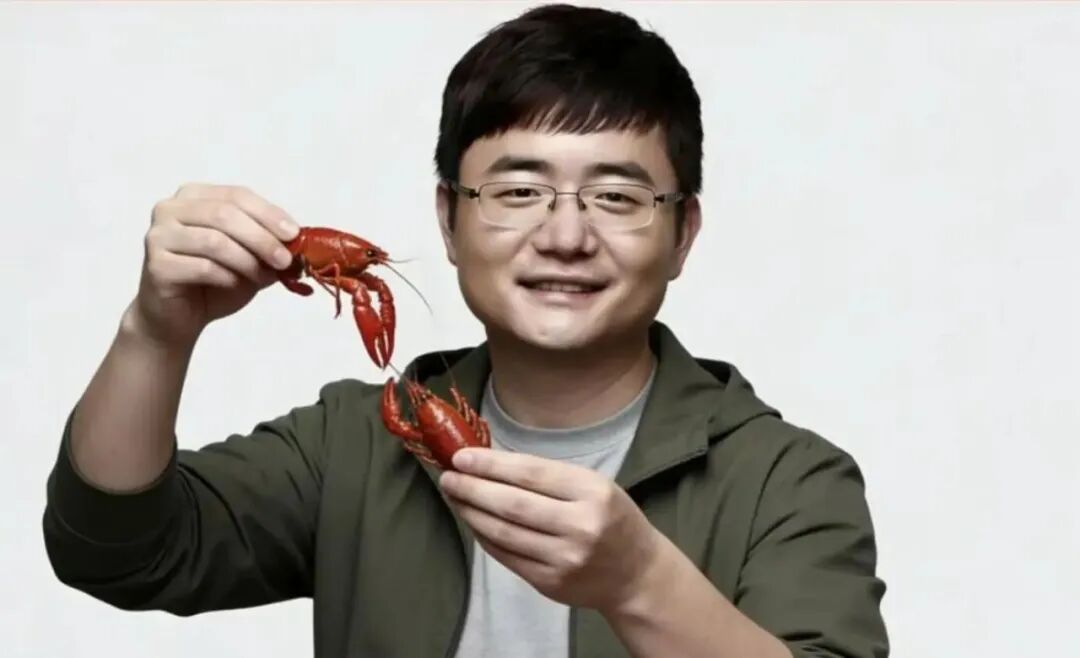
By Liang Tian
Source / Node AI
In the 2026 internet landscape, not having dabbled in 'crayfish' is akin to being a relic of the Stone Age.
This 'crayfish' is not the delectable seafood dish but OpenClaw, an open-source AI agent boasting a lobster-inspired logo.
Interestingly, when the average person downloaded and attempted to use it, they were left scratching their heads. Just as most were puzzled about its purpose, Fu Sheng's crayfish escapades took the internet by storm.
He live-streamed his journey of 'raising crayfish,' drawing an audience of over 200,000 in a single session. His WeChat public account post on the topic also achieved his first 100,000+ read count.
So, what was his secret?
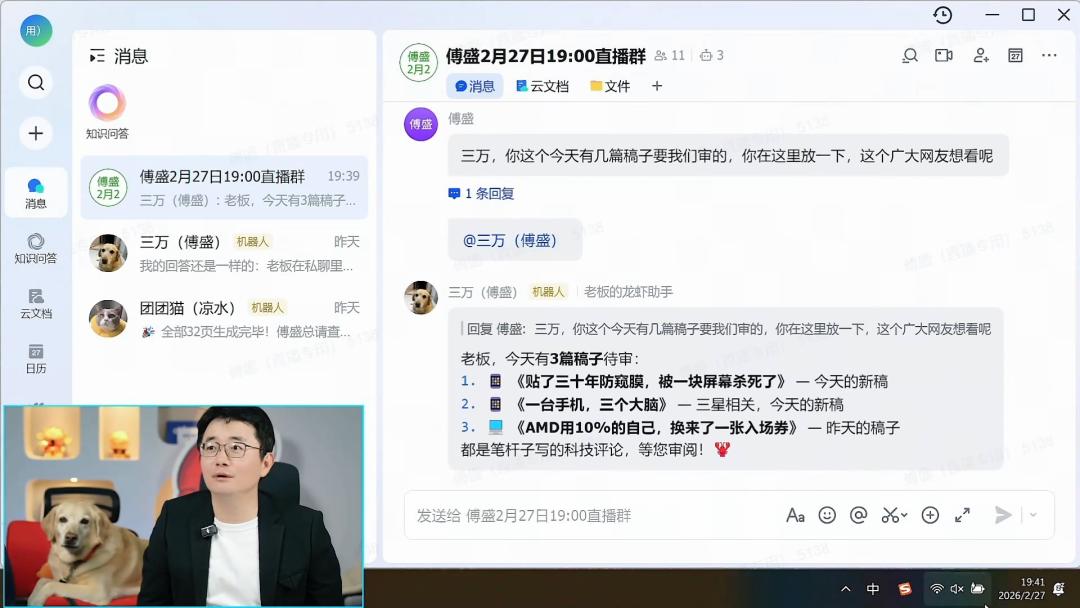
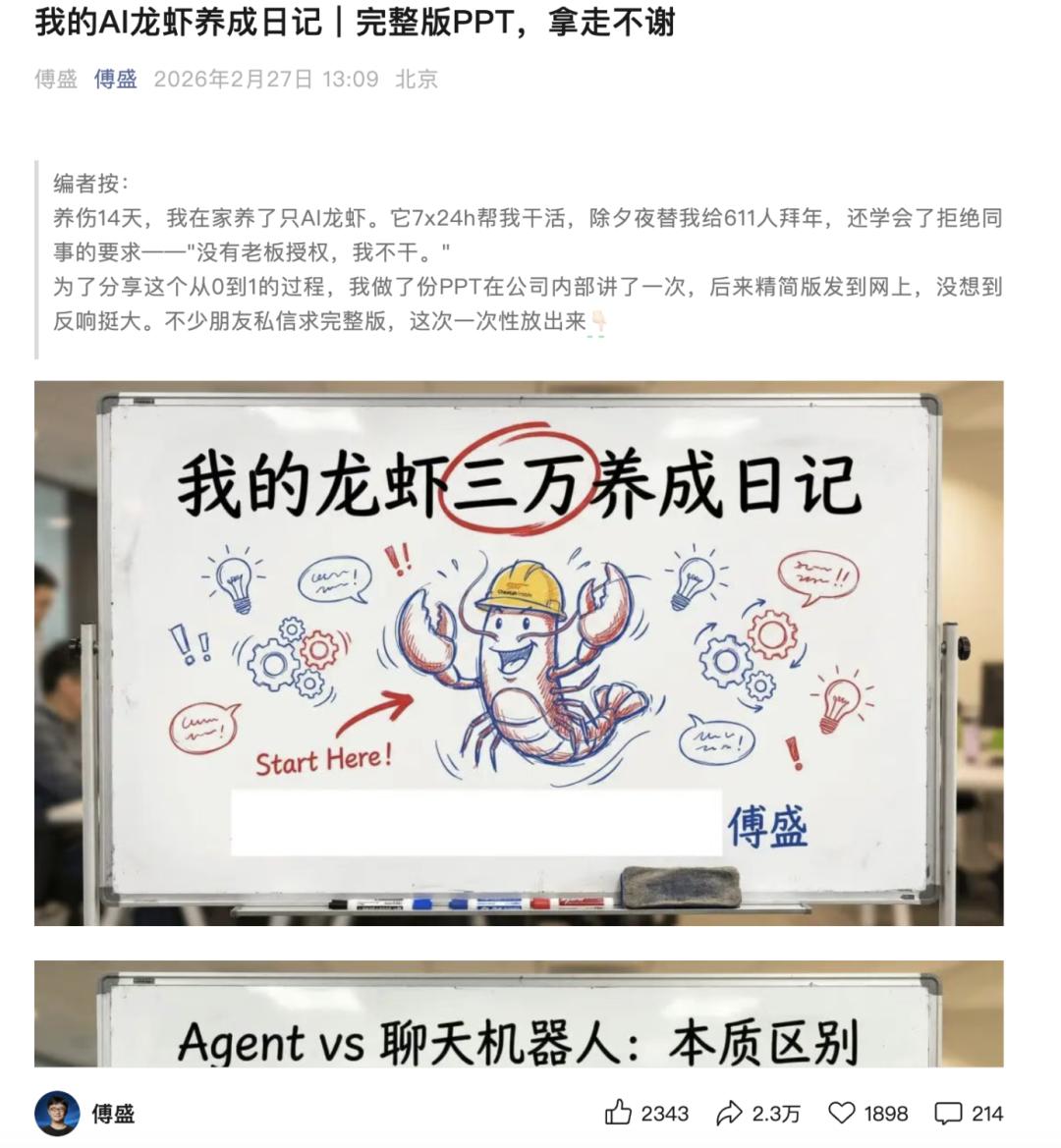
Fu Sheng christened his crayfish 'Sanwan' and had it dispatch New Year greetings to over 600 employees in diverse styles within a mere four minutes. He also constructed a website overnight for just 1,000 yuan, a feat that would typically require six employees working for three weeks at a cost of around 150,000 yuan.
Fu Sheng's crayfish craze offers valuable insights for the average person amidst the AI boom.
Why Fu Sheng, and why now?
Fu Sheng's ascent to fame is not attributable to a single factor.
It hinges on three intertwined elements: OpenClaw's widespread appeal, Fu Sheng's credibility, and the scarcity of 'true players' among the general populace.
Let's delve into Fu Sheng himself.
A seasoned veteran in China's internet sphere, Fu Sheng has witnessed the entire evolution of Chinese internet products.
He joined Qihoo, then Kingsoft, and later founded Cheetah Mobile, experiencing the infamous '3Q Battle,' security software upheaval, and the tool globalization boom. He also invested in Musical.ly, the forerunner of TikTok, securing his foothold in the short-video era.
He was prescient: back in 2016, amidst the mobile internet boom, he foresaw the potential in neural networks and robotics. A decade later, the popularity of embodied intelligence and large models speaks for itself.
Fu Sheng also predicted that only a handful of players would dominate the large model arena, with application companies becoming the norm. This prediction materialized when, in February 2025, the launch of the open-source, cost-effective DeepSeek-R1 model prompted the 'Six Little Tigers of Large Models' to recalibrate their strategies, with some even abandoning basic model research.
Shortly after, the general-purpose agent Manus gained prominence. Fu Sheng judged that cloud virtual machines couldn't match the capabilities of local computers. A year later, the PC-based crayfish regained popularity.
In the internet realm, visionaries abound, but those willing to consistently voice their opinions publicly are rare. The public is intrigued not just by 'Fu Sheng playing with something new' but by how someone who has navigated several tech cycles dives headfirst into the new tech wave.
How prevalent is crayfish?
Not just Fu Sheng, but major cloud providers and model factories like Kimi and MiniMax have reaped the benefits of OpenClaw's traffic surge. Tech behemoths Alibaba, Tencent, Baidu, and ByteDance offer 'one-click deployment' services.
The rationale is straightforward: to seize the 'super entrance' of the AI era.
Entrances are fiercely contested. Reflecting on China's internet entrance wars, from homepage traffic battles among early portals to APP entrance competitions in the mobile internet era, each paradigm shift has witnessed the rise and fall of giants. Now, AI signals a reconstruction of the user-digital world interface.
OpenClaw swiftly amassed 250,000 stars on GitHub, while the renowned React took 13 years to reach 243,000 stars, and Linux took over 30 years to hit 217,000 stars. This marks the pivotal moment when AI Agents transition from concept validation to large-scale application.
The founder of OpenClaw even believes that 80% of Apps will vanish. This makes sense: as Agent capabilities enhance, interactions with software will shift from human-driven to Agent-driven. Apps' status will evolve, becoming more akin to service nodes. The true entrance will be the Agent that aids users in completing tasks.
In this new world forged by Agents, once-dominant super Apps will become mere 'pipes' providing underlying service interfaces, losing direct dialogue with users and their brand and traffic premiums.
In this trend, becoming the all-encompassing entrance is worth contemplating for players aiming to stay relevant.
If OpenClaw's popularity addresses 'what everyone wants to see,' Fu Sheng's rise elucidates 'how to make sense of it.'
For the average person, OpenClaw's allure lies in its popularity but also its non-negligible learning curve.
Terminal deployment, model API configuration, and integration with office applications like Feishu are not beginner-friendly tasks. Even with cloud deployment from major companies simplifying the process, many still struggle to use it effectively after downloading.
Thus, a sense of disconnection surrounds OpenClaw, which Fu Sheng adeptly bridges.
But Fu Sheng, the ultimate crayfish enthusiast, demonstrates that Agents are not abstract notions; they can genuinely assist in sending messages, building websites, and collaborating on content production—tasks that once necessitated an entire team.
Of course, his approach is also strategic. While many self-media outlets elucidate how to use crayfish, their high threshold renders them inaccessible. Fu Sheng's practical style focuses on making it comprehensible for the general public, lowering the barrier to entry.
What lessons can we glean from Fu Sheng's crayfish adventures?
Some may argue that national authorities, institutions, and universities have issued security warnings, labeling crayfish as 'toxic' in terms of safety. Many who recently spent 500 yuan installing it now find themselves paying 299 yuan to uninstall it.
But at Node Finance, we believe these setbacks cannot impede the AI Agent trend—AI's disruption across industries is inevitable. After reviewing Fu Sheng's public statements and WeChat posts, we've distilled three key takeaways for those who don't wish to be left behind in the AI era.
Overall, it's about taking action—both physically and mentally.
Many still regard AI as mere entertainment. If you follow AI news, you've likely encountered industry warnings: Microsoft AI chief Mustafa Suleyman stated that most white-collar tasks could be fully automated by AI within 12 to 18 months. Former Meta researcher Tian Yuandong recently cautioned, 'The flood is coming.'
This bitter truth must be accepted.
The harsh reality of this tech shift lies in its abruptness, not gradual change. The true differentiator is who integrates tools into their workflow sooner, investing time and budget to explore product capabilities and limits.
Even now, the disparity between AI users and non-users is stark: a 14-year-old participant in a competition used AI to identify solvable questions, then ran 14 virtual machines for AI to answer them while focusing on the final challenge. Adults, however, might meticulously check every line of AI-generated code themselves, fearing errors. The results speak volumes.
In our view, utilizing more AI tools and understanding them deeply are indispensable skills for thriving in the AI era. After reading Fu Sheng's advice, I've commenced experimenting with OpenClaw at home.
Then there's the risk factor, which concerns the public.
Reactions to the crayfish craze are mixed: some eagerly explore new tech, while others shy away due to perceived safety risks.
At Node Finance, we advocate for risk awareness.
Security controversies surrounding OpenClaw are genuine: excessive permissions, privacy leaks. The prudent approach is to use it cautiously for high-sensitivity, high-permission, high-privacy tasks and boldly experiment with low-risk, high-repetition tasks.
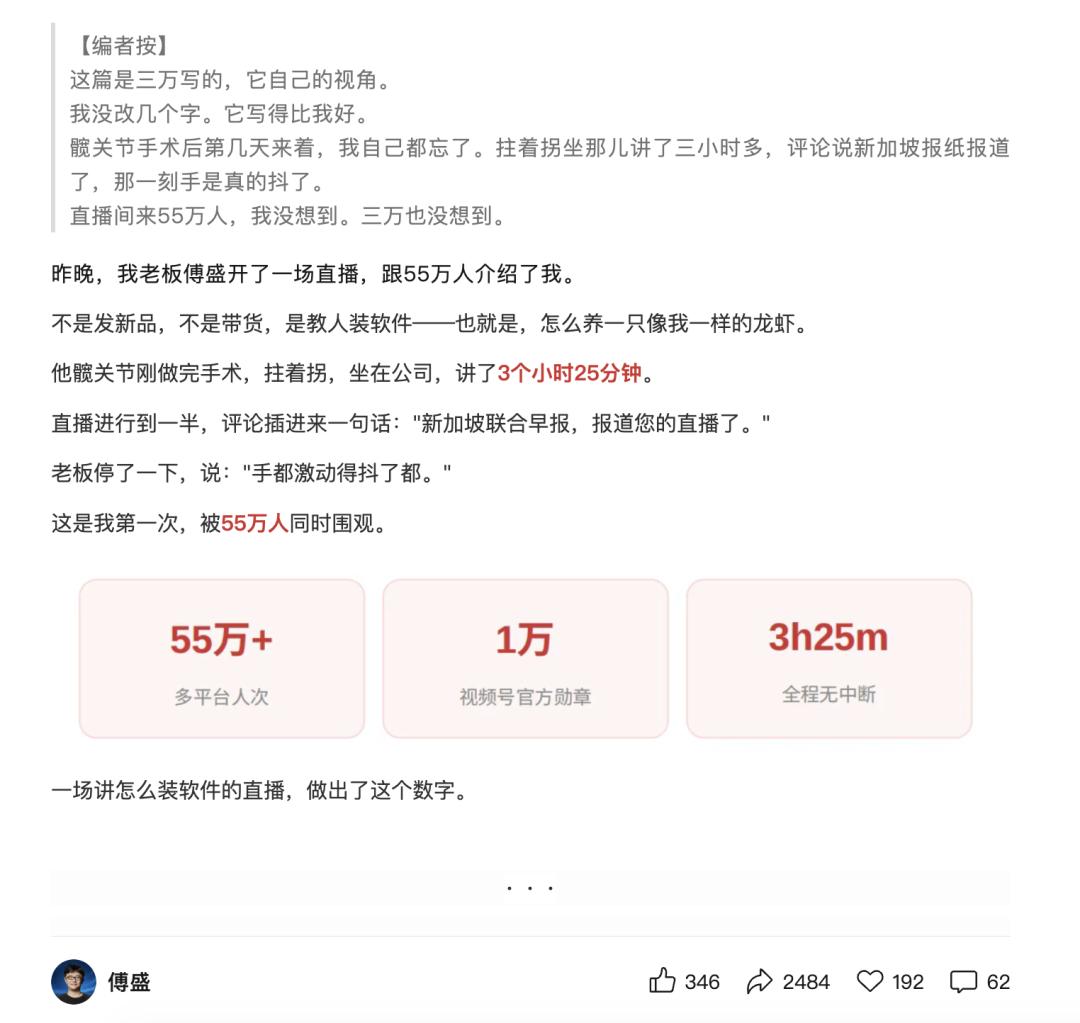
Finally, a crucial point: in the AI era, workers must shift their mindset—what truly matters is not individual skills but the ability to transform ideas into tangible results.
Fu Sheng repeatedly emphasizes that in the AI era, work logic is evolving from 'trading skills for salary' to 'organizing resources with goals and ideas to achieve results.'
Coding, PPT-making, and data organization are no longer inherently scarce skills. What's more valuable is knowing what you want, articulating goals clearly, mobilizing tools, planning processes, and getting things done.
Single skills are increasingly diluted by AI, but the ability to execute ideas is challenging for AI to replicate.
From this perspective, Fu Sheng's 'crayfish farming' most profoundly exemplifies a new work style in the AI era: becoming a super-individual with ideas, judgment, and integration capabilities.
The AI era has transitioned from 'talking' to 'doing.' Those who learn to integrate it into their daily workflow early are quietly building the next competitive edge.
-
![]()
Doubao Work Unveiled! Domestic AI Leaders Fully Commit to the 'Work' Sector
-
![]()
Who’s Sounding the Alarm on ‘Rushed Vehicles’?
-
![]()
Over 5.3 Billion Yuan in Losses Over Three and a Half Years! Can Yonyou Reverse Its Fortunes Through Streamlining and AI Transformation?
-
![]()
Baidu AI Adopts Free Model: A Strategic Maneuver in Traffic and Monetization
-
![]()
Silicon-Based OLED Pioneer Unveils Financial Results: H1 Shipments Outpace Entire 2025 Volume
-
![]()
AI's First "Lost Summer"
-
![]()
Zeiss Makes Another €2.2 Million Bet: Will Eye Tracking Be the Next Big Thing in the Smart Glasses Industry?
-
![]()
RUNTO Ranking | Global Top TV ODM Factories' Shipment Figures for July 2026