At AWE2026, we witnessed the collective 'evolution' of robots!
 03/17 2026
 708
708

Human-Machine Symbiosis: AWE Showcases True Innovation
On the 15th, the 2026 China Home Appliances and Consumer Electronics Expo (AWE2026) just concluded.
This tech extravaganza, themed 'AI Technology, Enabling a Smart Future,' adopted a 'one exhibition, dual zones' model for the first time, simultaneously taking place at the Eastern Hub International Business Cooperation Zone and the New International Expo Center. The 170,000-square-meter exhibition area brought together over 1,200 enterprises.
Among them, the New International Expo Center exhibition area spanned 13 halls with over 140,000 square meters of display space, focusing on 'AI+Ecosystem' and showcasing the deep integration of smart home appliances, consumer electronics, and whole-house smart ecosystems.
The newly established Eastern Hub exhibition area, covering 30,000 square meters, focused on cutting-edge hardcore technologies. Here, traditional home appliance displays were absent, replaced by breakthroughs in AI chips, computing power, and embodied intelligence. Thanks to institutional innovations like 'product tax exemptions and visa-free entry for personnel,' international visitors could arrive without a Chinese visa and head straight to the exhibition halls with their luggage, making this a 'global meeting place' for Chinese smart manufacturing to directly engage with global buyers.
Stepping into the Eastern Hub exhibition area, refrigerators and air conditioners were no longer the absolute stars. Instead, visitors saw humanoid robots wielding pens, stair-climbing robotic vacuums, and even flying cars poised to enter the low-altitude economy. If one word could define this year's AWE, it would be—'disruptive evolution.'
01 Flying Cars: From Concept to Low-Altitude Breakthrough
If flying cars were still 'unattainable' conceptual models last year, at the Eastern Hub exhibition area this year, they stood before visitors in tangible form. The most eye-catching was XPENG AEROHT's 'Land Aircraft Carrier.'
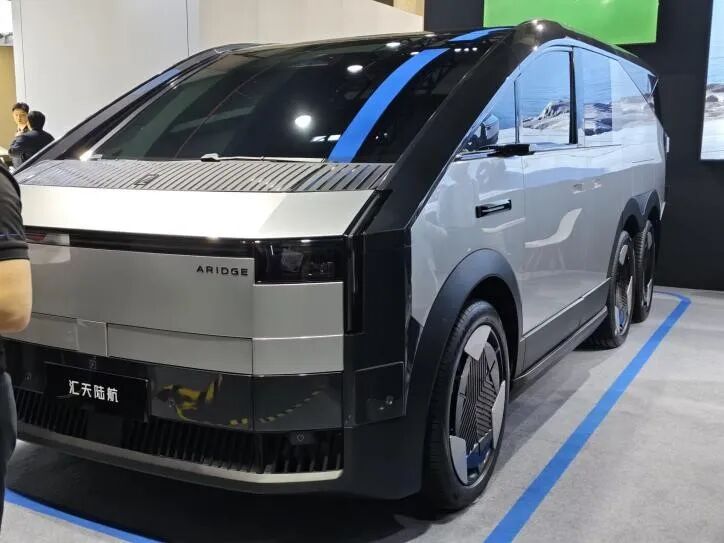
XPENG AEROHT 'Land Aircraft Carrier' - Photo Source: RoboFrontline, AWE2026 On-Site Footage
This world's first mass-produced split-body flying car unveiled three color options: Stellar Ring Silver, Lunar Rock Gray, and Superstar White. Its highlight lies in its 'split-body' design: the ground vehicle is a three-axle, six-wheel extended-range hybrid car with a CLTC combined range exceeding 1,000 kilometers, drivable with a standard Class C license. The flying vehicle features a six-axis, six-rotor dual-duct configuration that folds neatly into the trunk. According to on-site staff, its automatic onboard separation/integration mechanism can split or combine within five minutes, with the flying vehicle offering over 500 kilometers of range. Even if two of its six rotors fail, it can still fly safely.
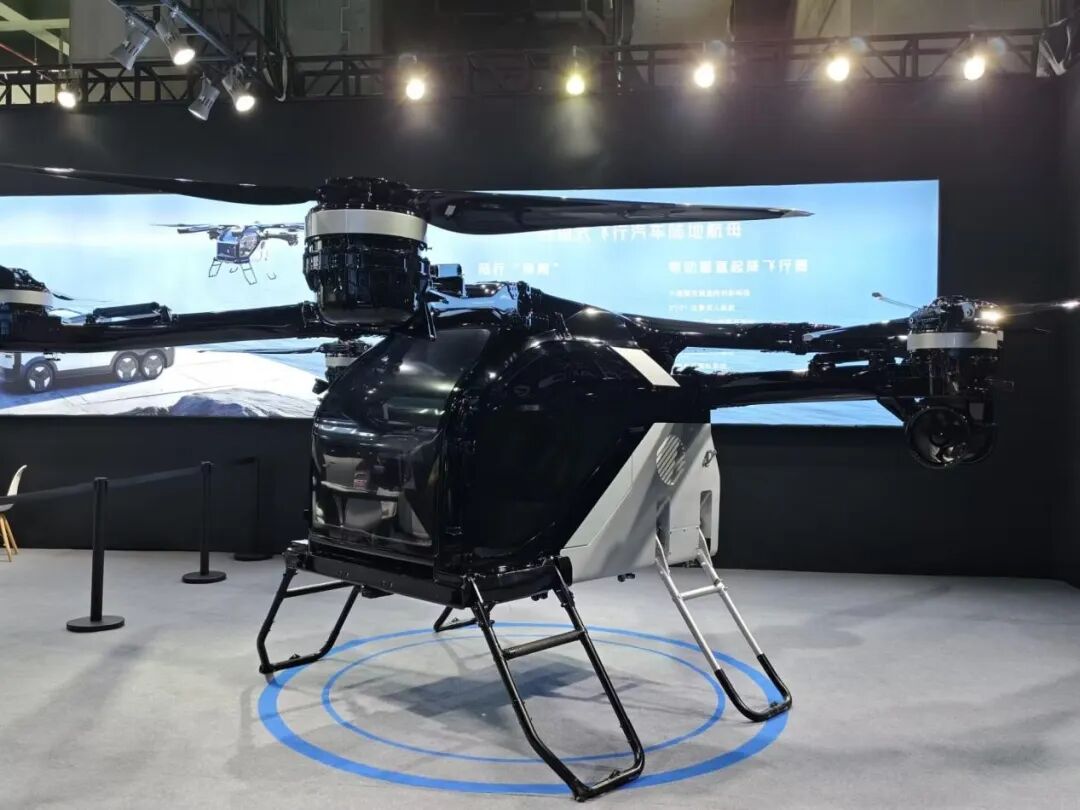
Flying Vehicle - Photo Source: RoboFrontline, AWE2026 On-Site Footage
Standing before this colossal machine, as an on-site observer, my feelings were complex. On one hand, I was astounded by China's supply chain integration capabilities for complex engineering; on the other, I pondered how the design of recharging the ground vehicle 5-6 times via the flying vehicle, while resolving range anxiety, meant users must balance dual maintenance and scenario switching between 'car' and 'aircraft.'
Besides XPENG AEROHT, the exhibition area also showcased deep collaborations between Dreame Technology's RortiX Rotor Era and Shine Technology, as well as the M1 eVTOL from WindRider, one of Shanghai's 'eVTOL Five Dragons.' The low-altitude economy was no longer a PPT dream but had entered a stage of tangible industrial implementation.
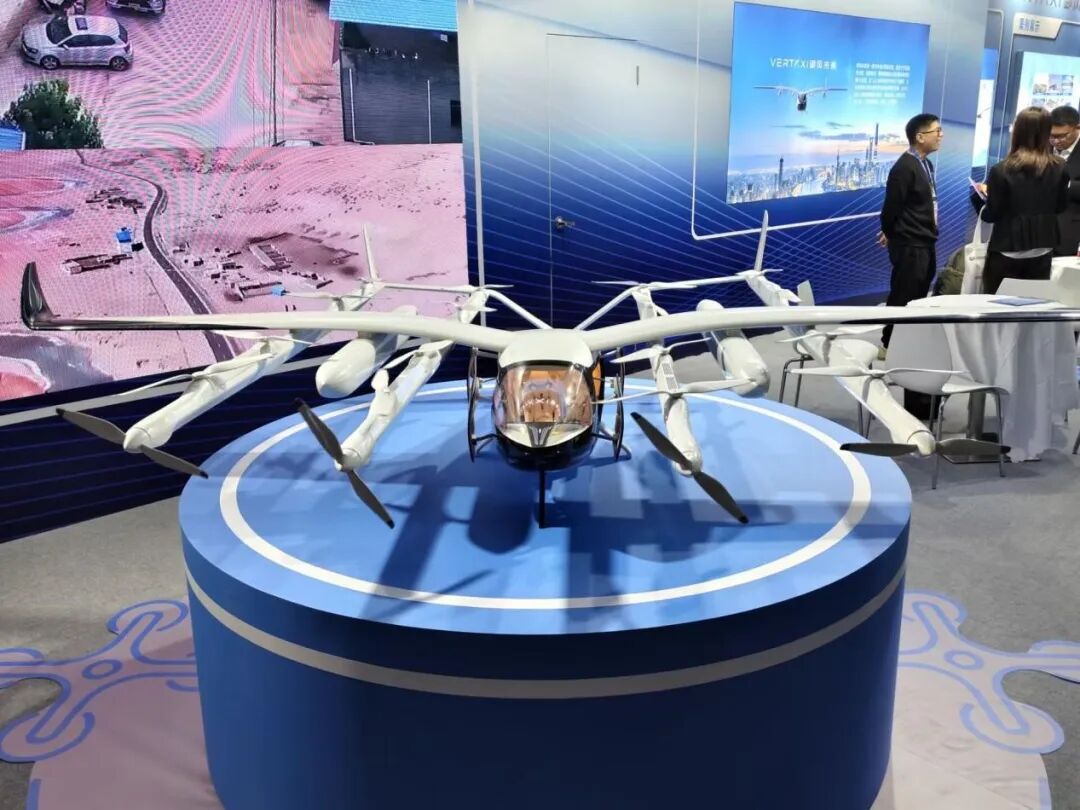
WindRider M1 eVTOL - Photo Source: RoboFrontline, AWE2026 On-Site Footage
02 Humanoid Robots Awaken: From 'Showmanship' to 'Productivity Tools'
Humanoid robots undeniably stole the spotlight at this year's AWE. At the Eastern Hub exhibition area, numerous 'humanoid figures' bustled about in various corners, yet their roles differed starkly.
Zhiyuan Robotics debuted its full product lineup in a truly impressive display. The Expedition A2 full-size humanoid robot wielded a pen to write the Chinese characters for 'Fortune' and 'Prosperity.' Though its strokes appeared unrefined, its focused demeanor evoked the image of a student practicing calligraphy. Custom-built for interactive service scenarios, this robot stands 169cm tall, weighs approximately 69kg, boasts over 40 degrees of freedom, and houses a 700Wh battery supporting roughly 2 hours of operation.
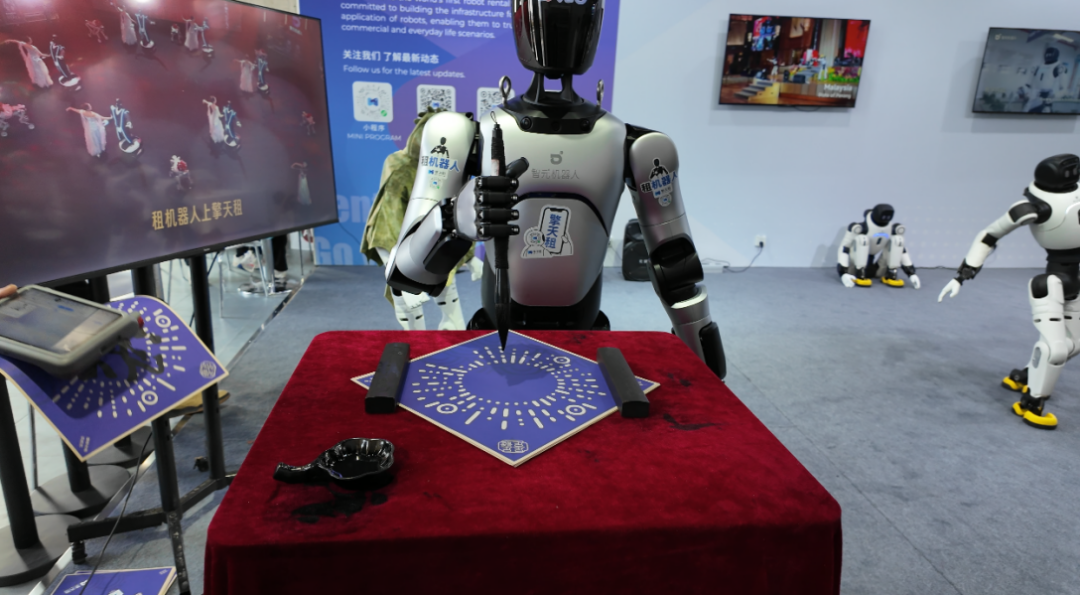
Expedition A2 - Photo Source: RoboFrontline, AWE2026 On-Site Footage
Nearby, the Lingxi X2 danced to music with measured movements, even engaging in real-time dialogue with the audience, demonstrating the potential of small humanoid robots in entertainment scenarios. As the first truly 'agile robot' with complex interaction capabilities, it offers millisecond-level interaction response and visual understanding to perceive the world.
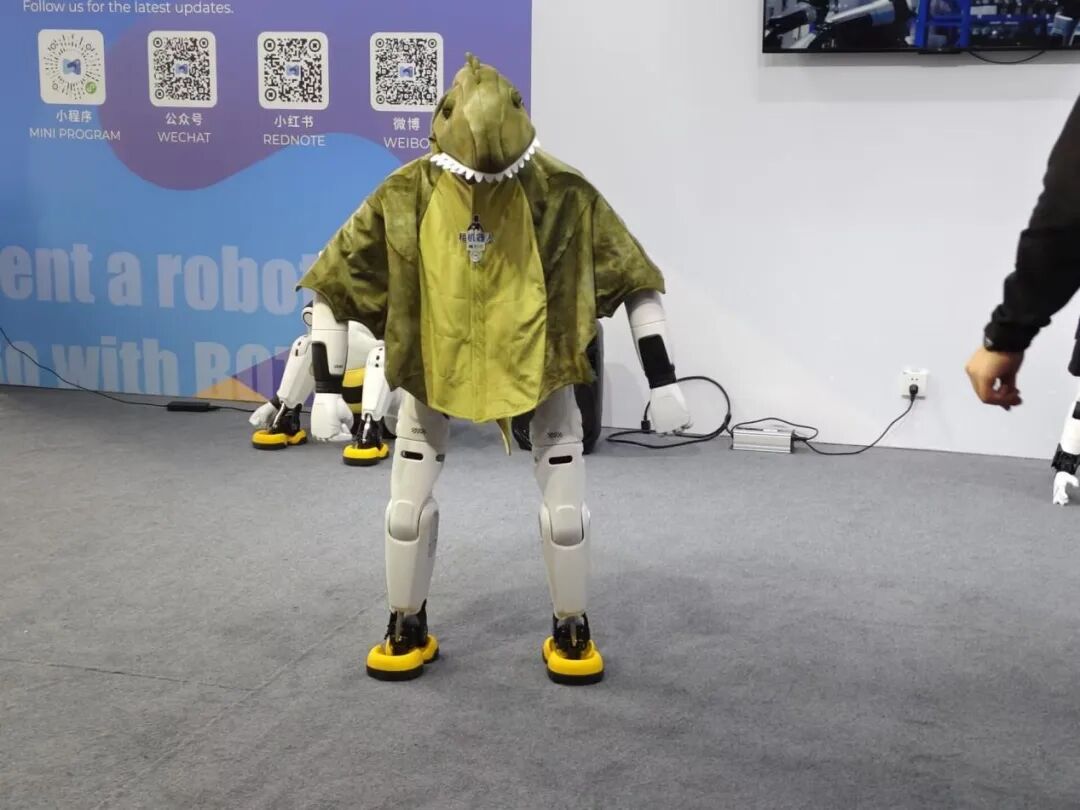
Lingxi X2 - Photo Source: RoboFrontline, AWE2026 On-Site Footage
The industrial-grade interactive embodied robot Elf G2 danced with the audience, using its high-precision industrial robotic arm to deftly grasp plush 'Lucky Horse' toys. Notably, Elf G2 supports continuous multi-person voice dialogue and knowledge base Q&A, employing dual-battery hot-swappable technology for rapid 'recharging' to sustain performances.
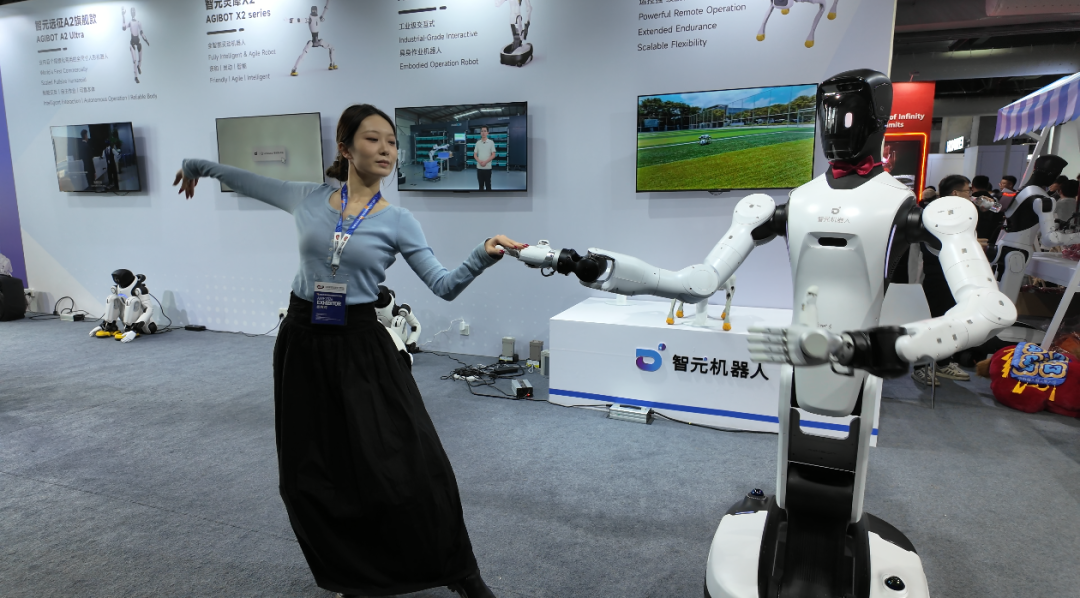
Elf G2 - Photo Source: RoboFrontline, AWE2026 On-Site Footage
Unitree Robotics' booth buzzed with energy. They erected a boxing ring where their Spring Festival Gala-featured G1 humanoid robot, dubbed the 'Iron Fist Champion,' staged combat demonstrations. Weighing just ~35kg, it performed backflips, jumps, and other complex maneuvers thanks to its proprietary high-performance motors and motion control algorithms. On the ring, it delivered straight punches, hooks, dodges, and counterattacks with fluid precision, shattering stereotypes of robotic stiffness.
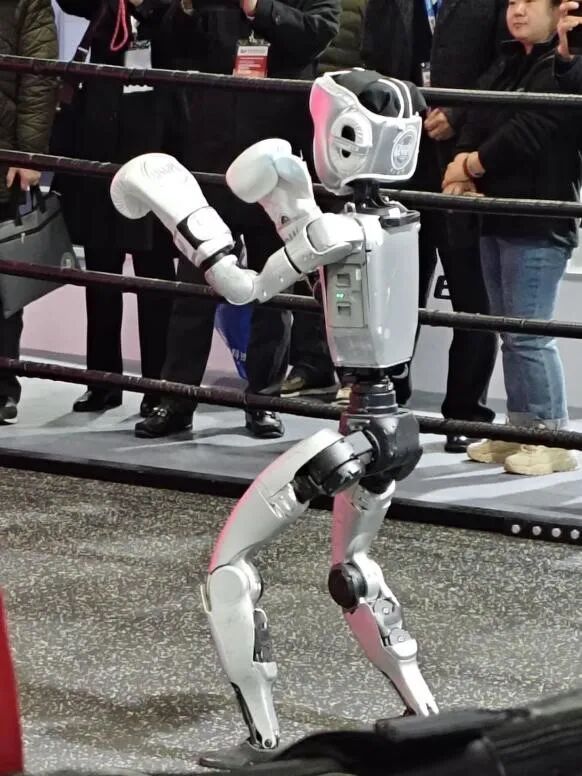
Unitree G1 - Photo Source: RoboFrontline, AWE2026 On-Site Footage
In rehabilitation medicine, Fourier Intelligence's GR-3 humanoid robot represented a gentler force. As a general-purpose humanoid robot, the GR-3 was designed with rehabilitation training and disability assistance in mind. Its force control system senses subtle patient exertion and provides appropriate assistance.
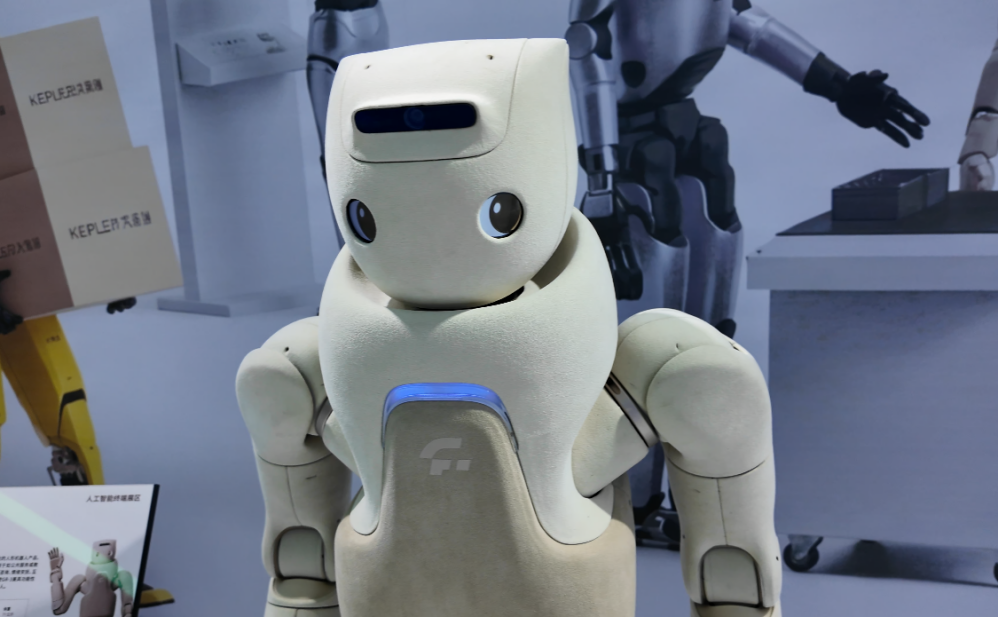
Fourier GR-3 - Photo Source: RoboFrontline, AWE2026 On-Site Footage
From these exhibits, it's clear that humanoid robots are evolving along two distinct paths: First, the 'athletic performance' camp represented by Unitree and Zhiyuan's Expedition series, pursuing extreme agility and power for industrial inspections and specialized operations; Second, the 'human-machine interaction' camp exemplified by Fourier GR-3 and certain interactive robots, emphasizing force control safety and emotional communication for medical, elderly care, and service scenarios requiring deep human-robot collaboration.
Neither path is superior; success hinges on who first finds paying customers in niche scenarios and completes the critical leap from 'showman' to 'productivity tool' through commercialization.
03 Quadruped Robots: Beyond 'Dogs' to Bionic Evolution
Quadruped robot exhibition areas always drew crowds due to their agility and 'cuteness.' This year, however, they aspired to be more than walking dogs.
DeepRobotics showcased two models. The Jueying Lite3, a lightweight quadruped robot, demonstrated its off-road capabilities, effortlessly climbing slopes and traversing gravel paths thanks to its upgraded perception systems and motion algorithms.
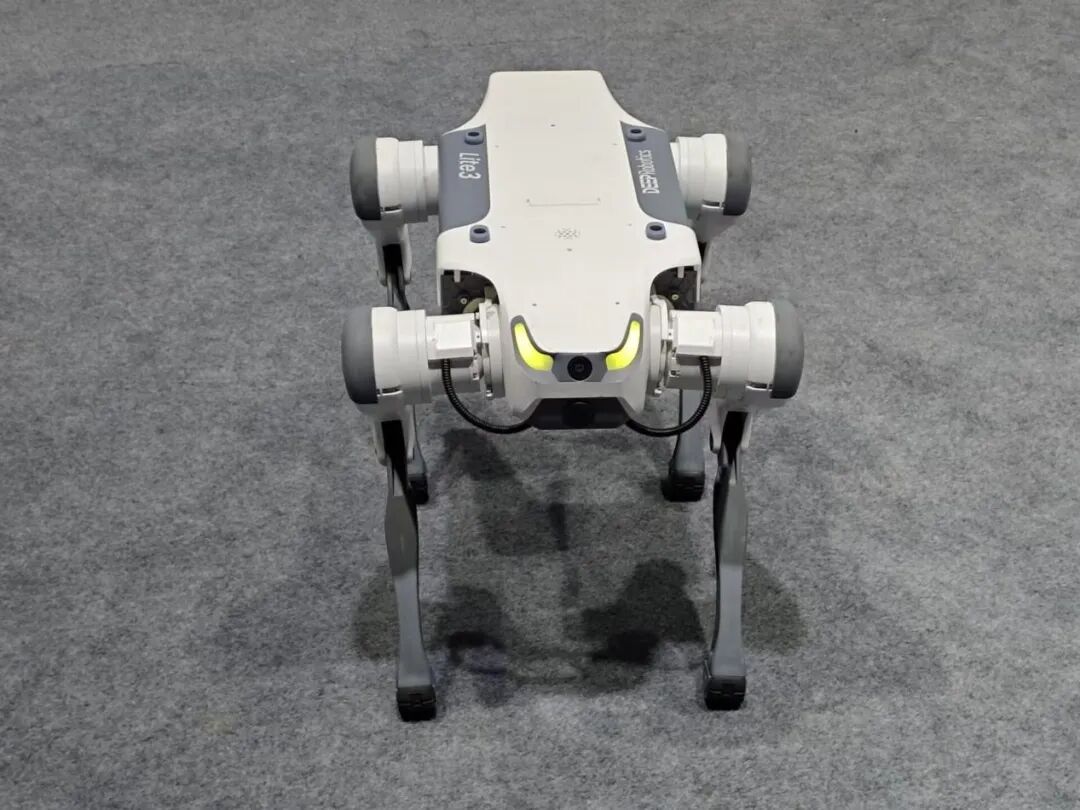
Jueying Lite3 - Photo Source: RoboFrontline, AWE2026 On-Site Footage
The other model, the Cloud Steed, dazzled visitors with its larger size and stronger load capacity. Styled as a 'Flame Horse' complete with lighting effects, it resembled a mythical creature come to life. This attempt to IP-ify and culturally package industrial-grade quadruped robots was a clever move to expand commercial applications.
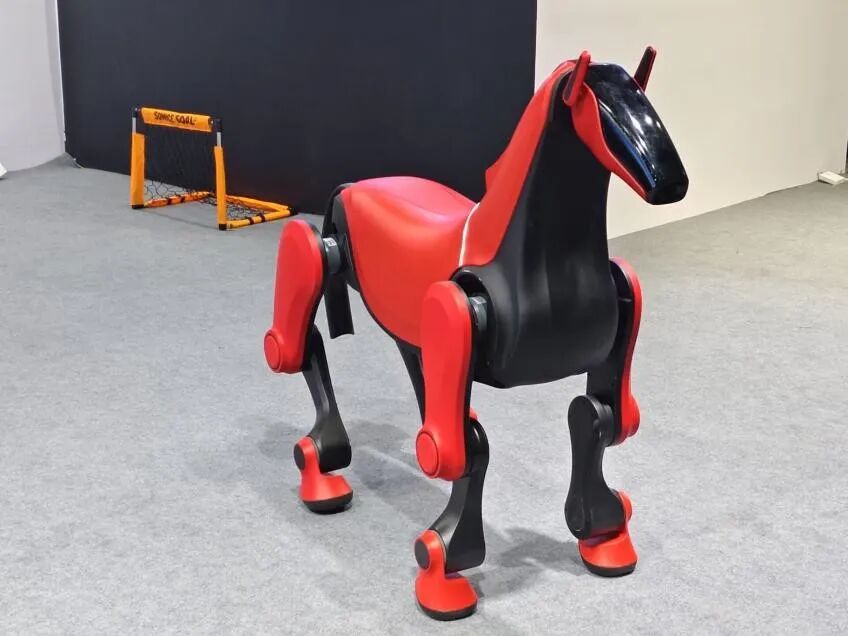
Cloud Steed - Photo Source: RoboFrontline, AWE2026 On-Site Footage
Zhiyuan Robotics' Kuto D1 offered similar creativity. More than a quadruped robot, it transformed into various forms—Flame Horse, Panda Dog, Lion Dog—performing dynamic stage routines. This DIY aesthetic approach to suit different scenarios (theme parks, commercial events) reduced robot aesthetic fatigue and extended product lifecycles.
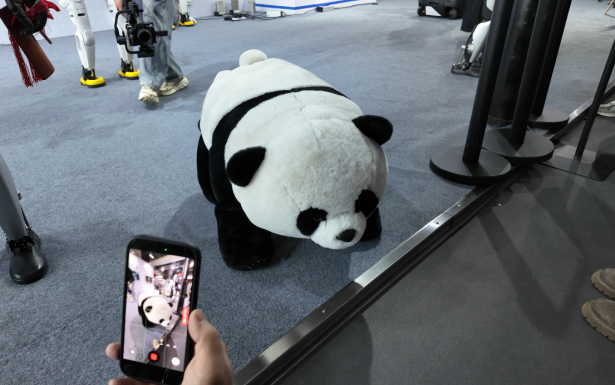
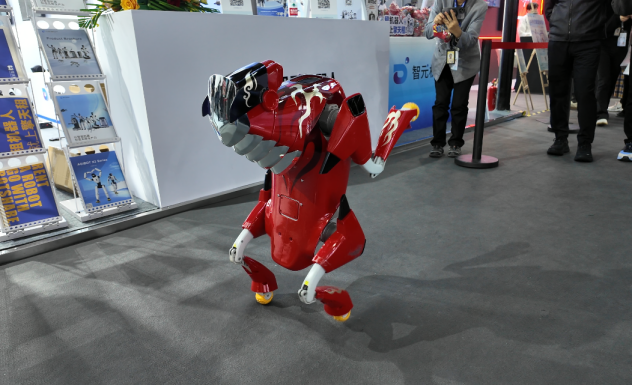
Kuto D1 - Photo Source: RoboFrontline, AWE2026 On-Site Footage
Unitree's Go2 quadruped robot, paired with G1 as a 'biped+quadruped' powerhouse, completed the full-scenario lineup. Equipped with self-developed 4D ultra-wide-angle LiDAR (360°×90° perception), its environmental awareness improved 200% over previous models, enabling all-terrain adaptive walking. With an AI large model decision system, it autonomously planned paths, serving professional inspection, scientific research, family companionship, and commercial interaction scenarios while complementing humanoid robots to broaden market reach.
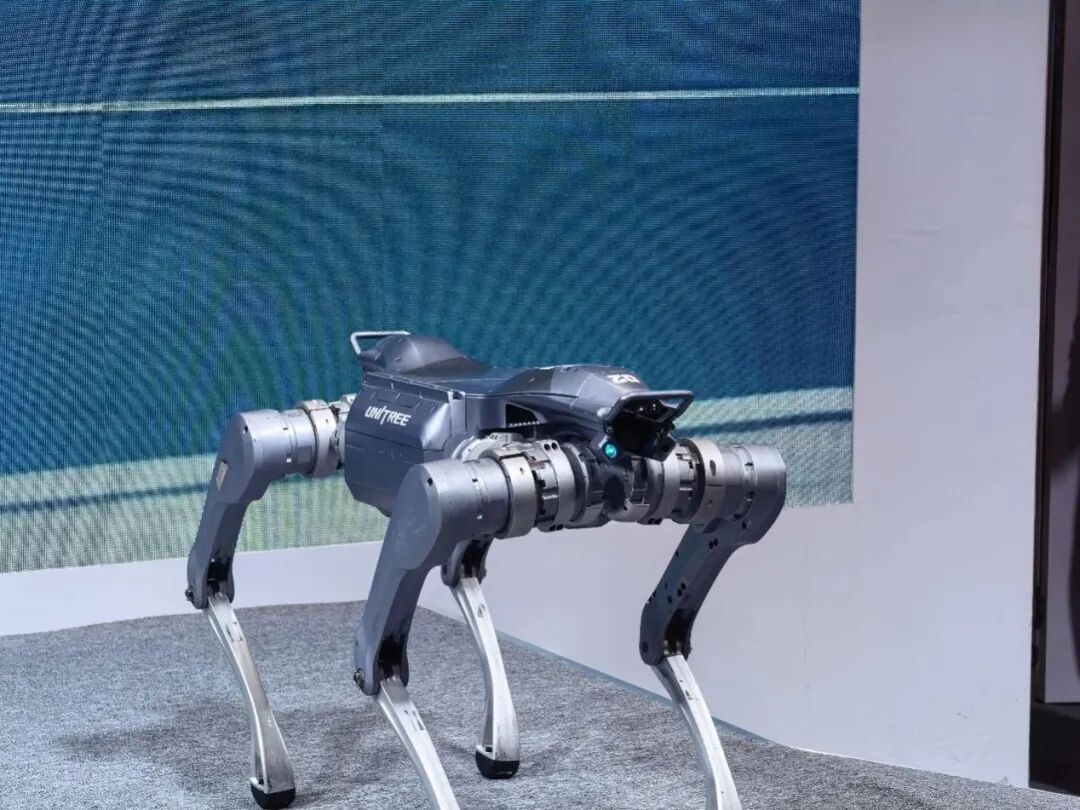
Unitree Go2 - Photo Source: RoboFrontline, AWE2026 On-Site Footage
All this indicates that quadruped robot technology has matured, with competition shifting from 'hardware specs' to 'scenario definition.' When mobility is no longer an issue, aesthetic appeal and environmental integration become key to transitioning from B2B to B2C markets.
04 AI Robots Invade Household Niches
At the Eastern Hub exhibition area, another group of robots operated less conspicuously but hit closer to home—quietly reshaping domestic life.
TCL's AI companion robot AiMe, with its rounded, adorable design, attracted many families. As a modular AI robot, it freely navigated rooms, proactively followed users to take photos, and—more importantly—used large models to understand children's emotions for personalized interaction, becoming both a 'playmate' and 'tutor' on their growth journey. When connected to other smart home devices, it also managed the household as a smart home butler.
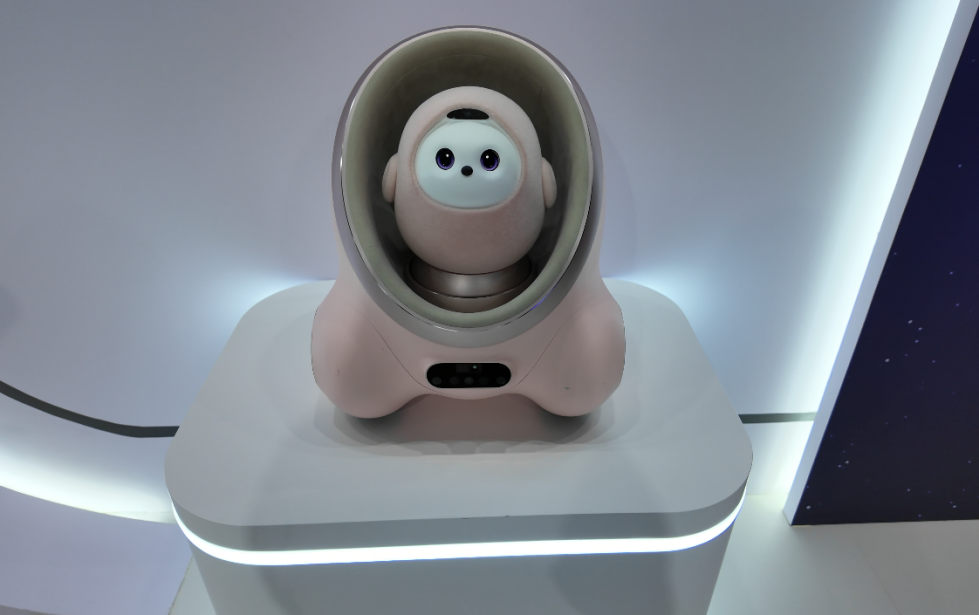
AiMe Image Source: Filmed on-site at AWE2026 by RoboFrontline
The PETKIT booth was crowded with young pet owners. This time, they brought the world's first fully automatic AI wet pet food feeder, which just won an award at CES 2026. The product features a built-in 1080p ultra-wide-angle AI camera that captures pets' eating behaviors in real-time and provides personalized dietary data analysis for each cat through a multi-cat recognition algorithm. This precisely addresses the pain points of wet food feeding in multi-cat households—food spoilage and inability to track each cat's intake.
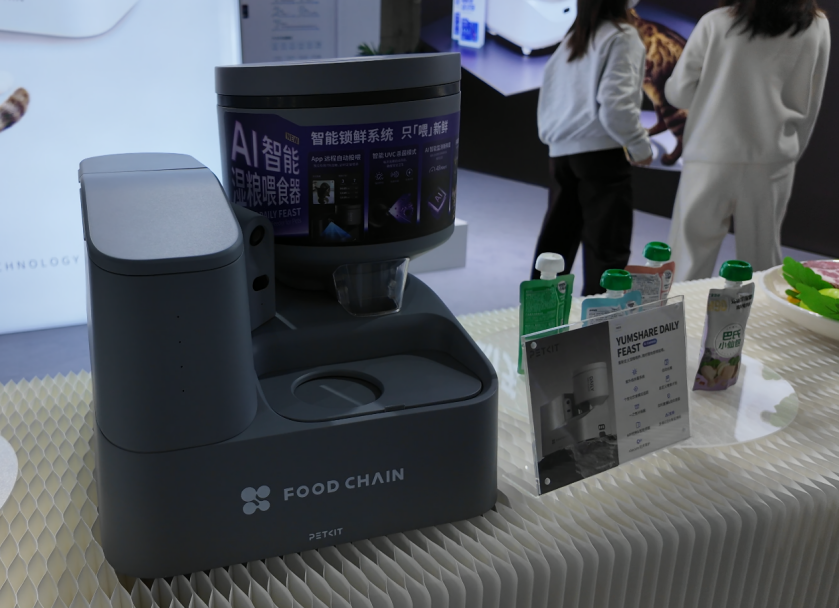
Feeder Image Source: Filmed on-site at AWE2026 by RoboFrontline
In contrast, the PETKIT smart litter box on the same stage faced some on-site skepticism. Although it integrates a camera, its design appears somewhat awkward, as if it were "forcedly added"; the rear litter compartment is as large as the front one, resulting in a significantly larger footprint, making it slightly difficult for larger cats to enter. This shows that AI hardware design cannot simply "add" features; finding a balance between functional stacking and user experience remains a crucial challenge for all hardware manufacturers.
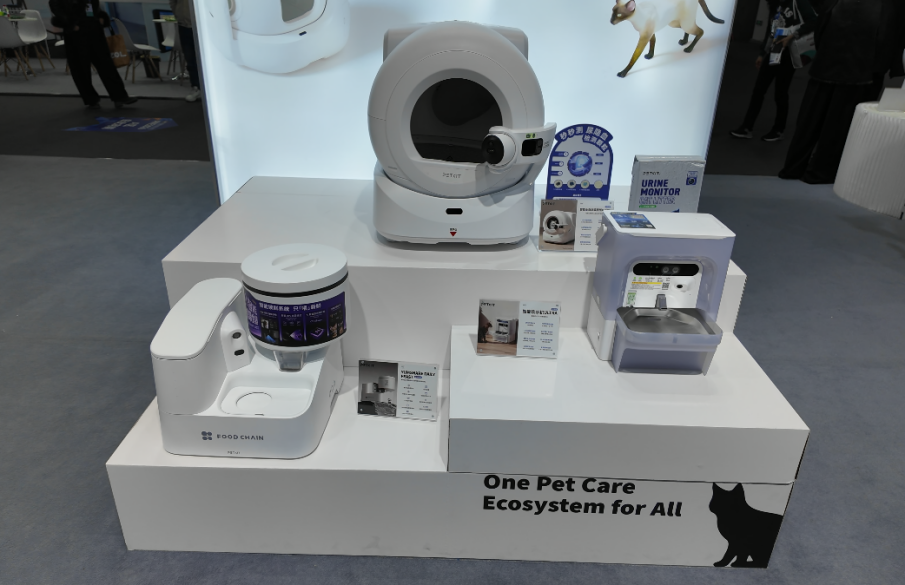
Smart Litter Box Image Source: Filmed on-site at AWE2026 by RoboFrontline
Additionally, the Luka picture book reading robot, designed specifically for children, was quietly making its mark on-site. Through AI recognition technology, it reads aloud whichever page is opened, finding its niche in parent-child companionship scenarios.
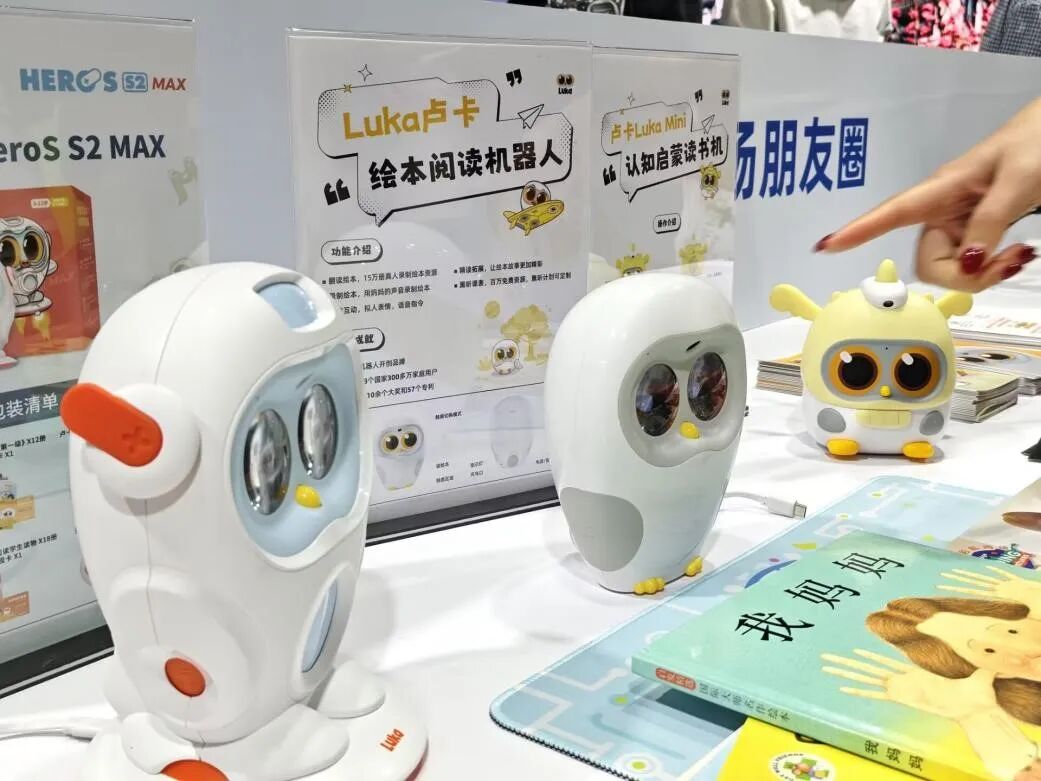
Luka Image Source: Filmed on-site at AWE2026 by RoboFrontline
Some startups, established just a few years or even months ago, are injecting new possibilities for robots to truly integrate into daily life with differentiated product approaches.
For example, Qingxin Yichuang's Amoo, the world's first embodied character intelligent robot, became one of the "crowd favorites" at this year's expo. Standing less than 80 centimeters tall, this ultra-small bipedal robot features an innovative plush soft-cover design with no sharp edges or hard shells, offering a soft and healing touch. On-site, Amoo would proactively approach the audience, interacting with everyone with lively eyes. When asked to sing, it would "dodge the question" and respond with innocent, wide-eyed stares; when teased as "clumsy," it would immediately narrow its eyes, place its hands on its hips, and protest with a "nah—nah—" sound.
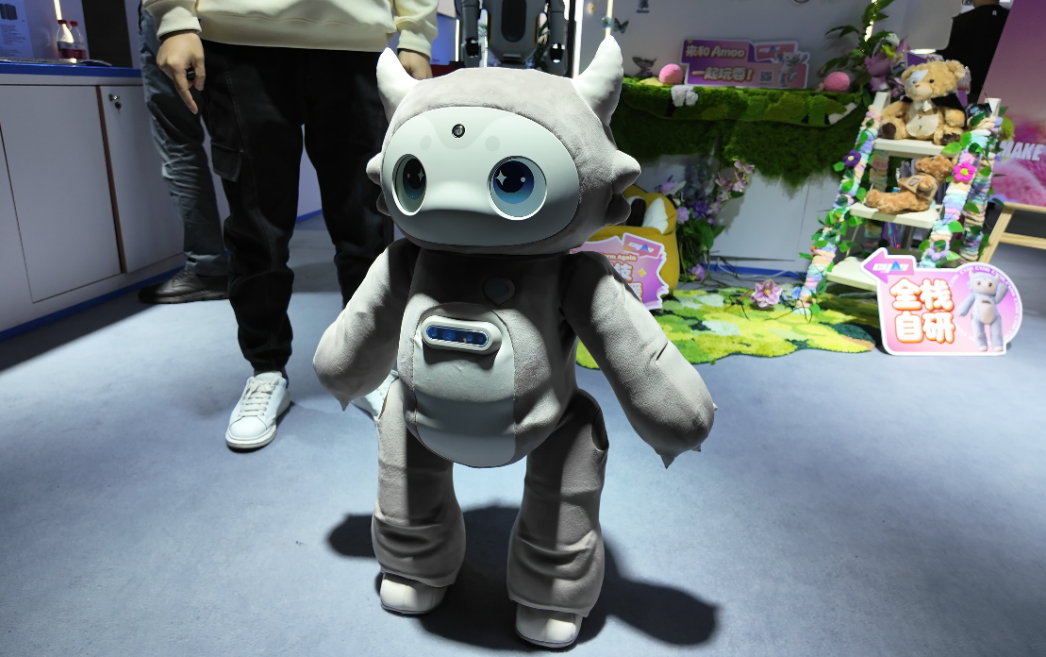
Amoo Image Source: Filmed on-site at AWE2026 by RoboFrontline
This "personality-driven" performance stems from Qingxin Yichuang's self-developed Agentic OS and emotional gait large model, which synchronizes eye, language, and limb (Note: ' limb ' is kept as is for context, but in a full English context, it would be 'body language' or 'physical movements') responses within 30 milliseconds, achieving true "emotional synchronicity." Notably, Amoo also incorporates a flexible control design, ensuring no counterforce when its limbs are pulled but instead responding gently to external force, minimizing safety hazards during interaction.
While these startup products may not be large-scale, they precisely address niche needs in family scenarios, injecting diverse possibilities into the robotics track (Note: ' track ' is kept as is; in English, it would be 'sector' or 'field') dominated by major players through differentiated technological paths and product definitions.
Moreover, it is evident that the family scenario has been unanimously recognized by all companies as the ultimate goal of the robotics industry. However, judging from the exhibits at this year's AWE, there is still a long way to go from "usable" to "user-friendly." Whether it's TCL AiMe's emotional companionship, PETKIT feeder's precise segmentation, or the design controversy surrounding the litter box, all point to a consensus: the value of AI hardware lies not in feature stacking but in truly integrating into family life.
05 Conclusion
The three-day expo passed in a flash. At AWE 2026, we witnessed flying cars delivering on mass production, humanoid robots showcasing scenario differentiation, quadrupedal robots demonstrating bionic evolution, and household service robots striving to transition from "usable" to "user-friendly."
As the world's largest robotics market, China accounts for 55% of global robotics production. At this expo, we saw not only technological breakthroughs but also the power of industrial collaboration. The future once confined to sci-fi movies is now steadily materializing on AWE's exhibition floors, one step at a time.
*Images sourced from the internet. Please contact for removal if infringement occurs.
-
![]()
Doubao Work Unveiled! Domestic AI Leaders Fully Commit to the 'Work' Sector
-
![]()
Who’s Sounding the Alarm on ‘Rushed Vehicles’?
-
![]()
Over 5.3 Billion Yuan in Losses Over Three and a Half Years! Can Yonyou Reverse Its Fortunes Through Streamlining and AI Transformation?
-
![]()
Baidu AI Adopts Free Model: A Strategic Maneuver in Traffic and Monetization
-
![]()
Silicon-Based OLED Pioneer Unveils Financial Results: H1 Shipments Outpace Entire 2025 Volume
-
![]()
AI's First "Lost Summer"
-
![]()
Zeiss Makes Another €2.2 Million Bet: Will Eye Tracking Be the Next Big Thing in the Smart Glasses Industry?
-
![]()
RUNTO Ranking | Global Top TV ODM Factories' Shipment Figures for July 2026