Anxious Cross-Border Players: Will You Be Left Behind Without 'OpenClaw'?
 03/17 2026
 554
554
Author|Yangzi
Editor|Liu Jingfeng
If you don't keep up with the times, you'll be left behind.
At the dawn of 2026, a FOMO-fueled (Fear of Missing Out) entrepreneurial wave swept through the Chinese market. Amidst this fervor, taking action emerged as the best antidote to anxiety. From major companies offering free installations to paid services for uninstalling 'crayfish', many were already overwhelmed by information without fully understanding what 'crayfish'—a metaphor for OpenClaw—really was.
On Xiaohongshu, a blogger shared, "After using OpenClaw, I feel like I've become Master Fan in the AI era." They continued, "It creates anxiety step by step because someone will inevitably join the bandwagon. As more people see others advancing to the third stage (on a metaphorical stretcher), they feel compelled to at least reach the first or second stage themselves."


When being associated with OpenClaw becomes a source of traffic in itself, perhaps its actual usability takes a backseat. As long as one rides the wave, there will always be those compelled to "jump on board." Some argue that the pace of change in 2026 is even more frenetic than in 2025, to the point where information from the previous day becomes obsolete by the next.
The author contends that the actual speed of change in 2026 isn't as relentless as perceived. Noise and emotions spread faster than real transformations. This article aims to observe the practical outcomes of ordinary people adopting OpenClaw, with a submission deadline of March 16, 2026, to capture the evolving landscape. Amidst turbulent times, it's crucial to find your own rhythm rather than being swept along.

Let's first address the question: What exactly is OpenClaw, and how does it improve upon previous AI Agents?
Simply put, OpenClaw enables AI to do more than just chat—it can take action.
Huachuang Securities described it as follows: Traditional cloud-based large models act like all-knowing remote consultants, providing only text-based solutions. In contrast, OpenClaw has system-level permissions equivalent to users, allowing it to directly operate computer terminals, write code, and manage files—it's a true "hands-on" executor.
Compared to earlier AI Agents, OpenClaw integrates three core capabilities: planning, memory, and tool usage, representing a new generation of "autonomous Agents." It no longer requires complex coding or remote instructions from humans.
Thus, OpenClaw's emergence is dubbed the "second paradigm revolution" in AI, marking a leap from "talking" to "doing."
In China, OpenClaw's rapid rise to fame is more of a marketing triumph. From the perspective of cloud providers, offering free installations conceals a clear business model.
When Agents perform complex tasks, Token consumption spikes hundreds of times compared to ordinary conversations. Larger user bases and higher usage frequencies translate to greater commercial value from model calls. Helping more people adopt OpenClaw essentially expands the user base for AI services.
In this scenario, whoever provides the deployment environment can set their model as the default. Alibaba Cloud's official documentation explicitly states that OpenClaw installed in its environment defaults to using Tongyi Qianwen, with fees based on Token usage.
When the wind blows, opportunities to acquire customers through installations arise. Traffic fuels more traffic, and hype chases hype, creating the perfect breeding ground for selling anxiety.
On March 14, a sunny Saturday in Shenzhen, a seminar titled "How to Safely Raise Crayfish" was packed to capacity. By the author's estimate, over a thousand attendees showed up, with many standing due to lack of seats. Parents even brought their children.
Developers of China's version of "OpenClaw" told Xiaguang Society that since the year began, nearly every day in Shenzhen has seen a "crayfish"-themed salon. The root of this collective anxiety lies in emotions. The Dawan District Psychology Community, in a recent CBT-based discussion, dissected "crayfish anxiety"—the feeling of being left behind as others adopt the technology, which directly impacts behavior.
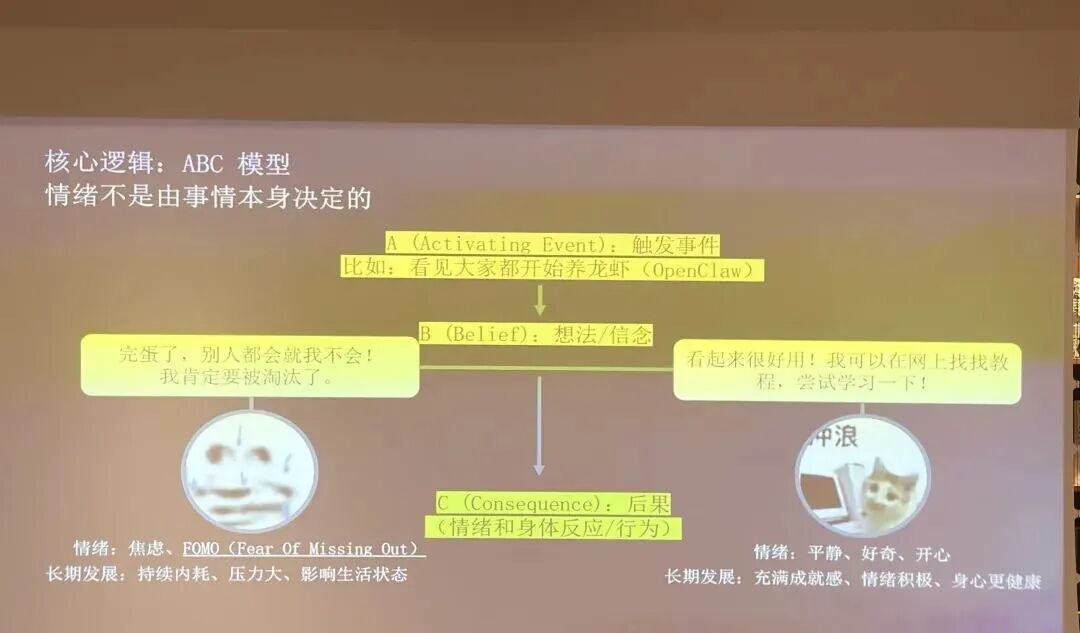
For ordinary people, the "crayfish" craze brings more anxiety about job displacement. If "crayfish" boosts efficiency—completing tasks in minutes that once took an hour manually—which will be replaced: humans or "crayfish"? When AI can perform human jobs, does that mean more roles will be automated? Who will the future workforce be: AI or "smart workers"?
The rise of "crayfish" has pushed anxiety to new heights. Yet, Xiaguang Society found that many attending salons or seeking installations haven't thought through their plans. "But not installing it seems like falling behind," they say.

However, some have found success with "crayfish."
Zhan Qi, a partner at Bandu Chuhai, shared that by using OpenClaw, she automated the process of converting recorded audio into marketing copy. The workflow involved:
Downloading the faster whisper large-v3 model to reduce costs and enhance data security, avoiding cloud-based transcription fees.
Enabling OpenClaw to call the local model for short audio transcription tasks, ensuring smooth initial operation.
Creating a local folder for audio files (e.g., a "voice" folder in the root directory with structured subfolders) and copying the path.
Sending task prompts to OpenClaw, such as generating to-do lists, archiving memory banks, creating verbatim transcripts, or writing WeChat articles, using the copied path.
Testing the workflow and iteratively debugging issues to optimize automation.
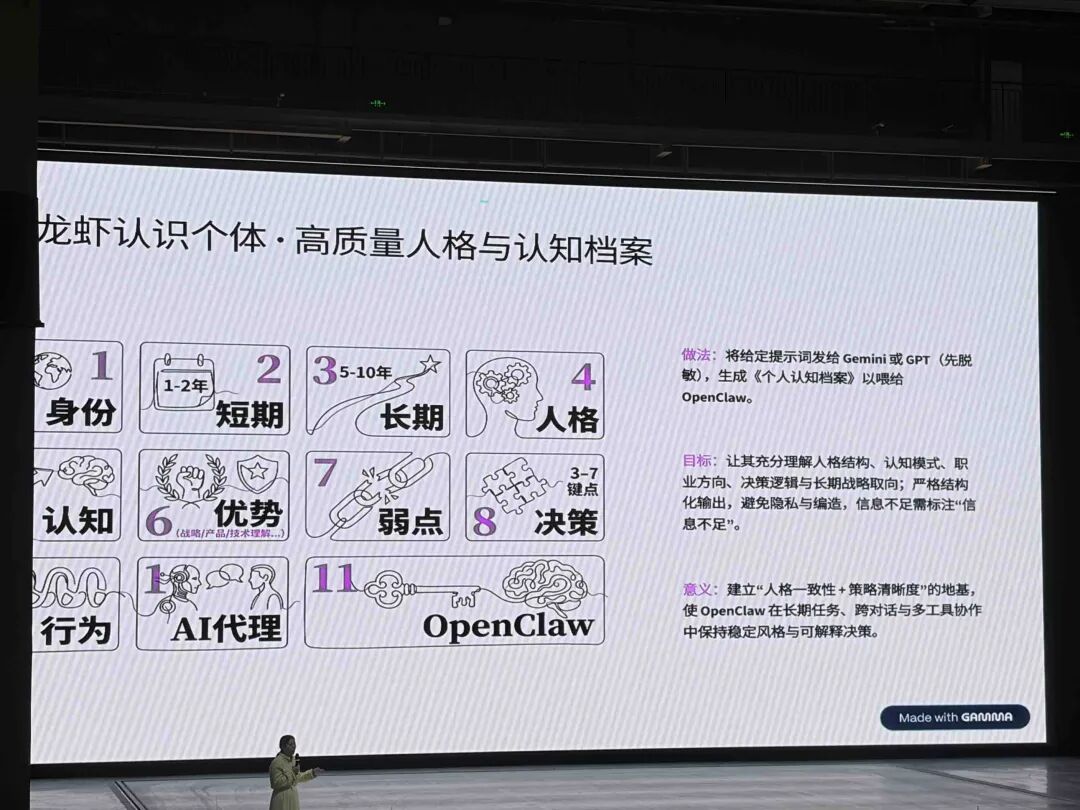
However, Zhan emphasized that building a foundation of "personality consistency + strategic clarity"—to ensure OpenClaw maintains a stable style and explainable decisions in long-term, multi-tool collaborations—requires a 5–10-year strategy with AI. Continuously feeding Gemini or GPT-generated "Personal Cognitive Profiles" to OpenClaw is essential.
Focusing on cross-border e-commerce, the main time-consuming tasks include product selection, listing, shipping, and after-sales. Here, market trends dictate direction, platforms serve as channels, and product selection is the key.
A cross-border e-commerce manager shared that she spent two weeks training "crayfish" to automate signal monitoring, competitor scraping, product selection, listing, and ongoing operations, creating over 20 skills and 3 web management pages. However, she noted that without OpenClaw, these tasks could still be automated with existing tools—and without Token costs.
How expensive are Tokens? An operator responsible for ad placements told Xiaguang Society, "For one product on Amazon, the ad process—from keyword libraries to competitor analysis to ad landing pages—cost $1.1." She added, "Using a dozen skills, not counting Gemini fees, makes this a luxury only the wealthy can afford."
When asked about productivity gains, most respondents said supply chains and factories remain critical, requiring "legwork" that AI can't replace.
"Crayfish" is more of a product that evolves over time. In Zhan's practical sharing, she highlighted an optimal setup: a primary research Agent paired with multiple specialized sub-Agents (e.g., qualitative research, comment analysis, trend monitoring, report generation). This structure balances flexibility, depth, and cost. The primary Agent acts as a chief researcher, defining tasks and outputting reports, while sub-Agents function like a specialized team, building comprehensive market and user insights.

Entrepreneurial directions built around OpenClaw fall into two categories: B2B and B2C.
B2B involves creating digital employees for enterprises, often customized. Successful adopters include large corporations with established SOPs seeking to automate workflows, and small startups aiming to optimize operations with machine-driven processes.
Notably, a digital employee startup told Xiaguang Society they price custom services at 30% of the original labor costs. Regardless of actual savings, business owners are paying for peace of mind.
Internally, many companies prioritize security. OpenClaw testing is confined to personal or new accounts, focusing on e-commerce automation. A Deskclaw staff member told Xiaguang Society, "Business owners mostly want to experiment with automation on existing systems."
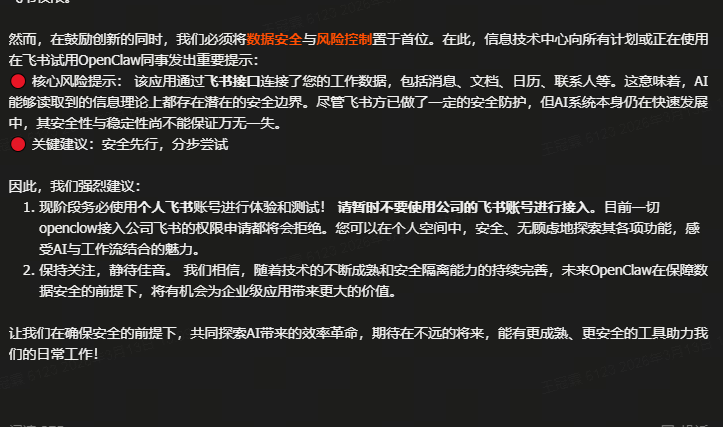
B2C applications show fewer tangible results so far.
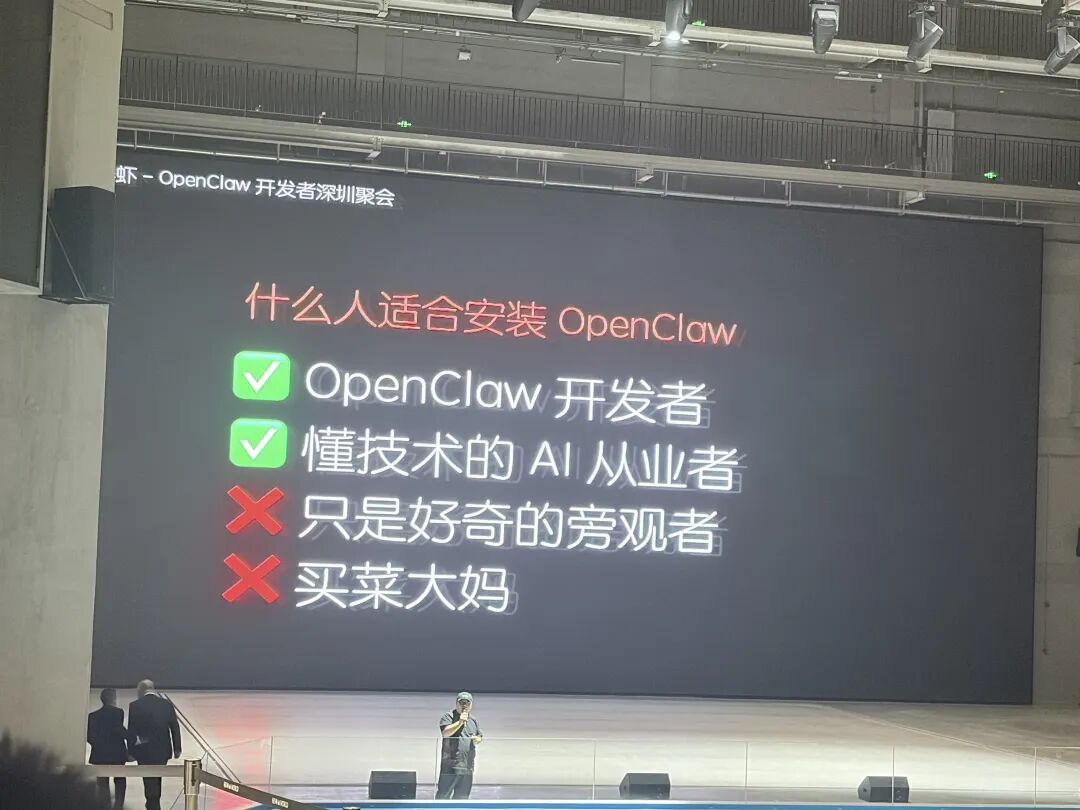
This is because "crayfish" has significant drawbacks: excessive Token consumption, imbalanced system access permissions and weak defenses, fragile system design, malicious skill threats in marketplaces, exposed public ports, and critical data storage flaws. At the "How to Safely Raise Crayfish" seminar, AGI-X Community founder Luo Xuan stated that OpenClaw is suitable only for tech-savvy AI practitioners and developers.
Recently, the Ministry of Industry and Information Technology issued "Six Dos and Don’ts for Managing OpenClaw ('Crayfish') Open-Source Agent Security Risks," highlighting persistent safety concerns.
To address these risks, startups are exploring alternative forms. For example, Violoop, a hardware device, secured two rounds of funding in a month. Unlike OpenClaw's deployment challenges, Violoop offers plug-and-play functionality with built-in skills, accessible even to novices. It isolates data security physically, though its crowdfunding success and long-term viability remain unproven.
Every industrial revolution eliminates some jobs and reduces others, but it also creates new industries and roles. The World Economic Forum's "Future of Jobs Report 2025" predicts that while 92 million jobs globally may be replaced by AI by 2030, 170 million new roles will emerge.
The Worker's Daily reported a case at Xiamen Port's Hairun Terminal: Traditionally, unloading a 100,000-ton vessel required 50 workers for scheduling, loading assistance, container stacking, and safety supervision. With AI, only one remote operator is needed. The remaining 49 workers transitioned into process optimizers, training AI systems—effectively becoming "teachers" to the machines.
This exemplifies the ideal approach in the AI era: embracing change and evolving continuously.
Finally, this article was crafted by human hands. OpenClaw founder Peter Steinberger said in a podcast interview that he prefers awkwardly written human text over AI-generated content, even appreciating typos. Like Peter, I deeply value humanity.
-
![]()
Doubao Work Unveiled! Domestic AI Leaders Fully Commit to the 'Work' Sector
-
![]()
Who’s Sounding the Alarm on ‘Rushed Vehicles’?
-
![]()
Over 5.3 Billion Yuan in Losses Over Three and a Half Years! Can Yonyou Reverse Its Fortunes Through Streamlining and AI Transformation?
-
![]()
Baidu AI Adopts Free Model: A Strategic Maneuver in Traffic and Monetization
-
![]()
Silicon-Based OLED Pioneer Unveils Financial Results: H1 Shipments Outpace Entire 2025 Volume
-
![]()
AI's First "Lost Summer"
-
![]()
Zeiss Makes Another €2.2 Million Bet: Will Eye Tracking Be the Next Big Thing in the Smart Glasses Industry?
-
![]()
RUNTO Ranking | Global Top TV ODM Factories' Shipment Figures for July 2026