Is Alibaba's Token Business Group Ultimately Aiming to 'Collect Rent'?
 03/18 2026
 671
671
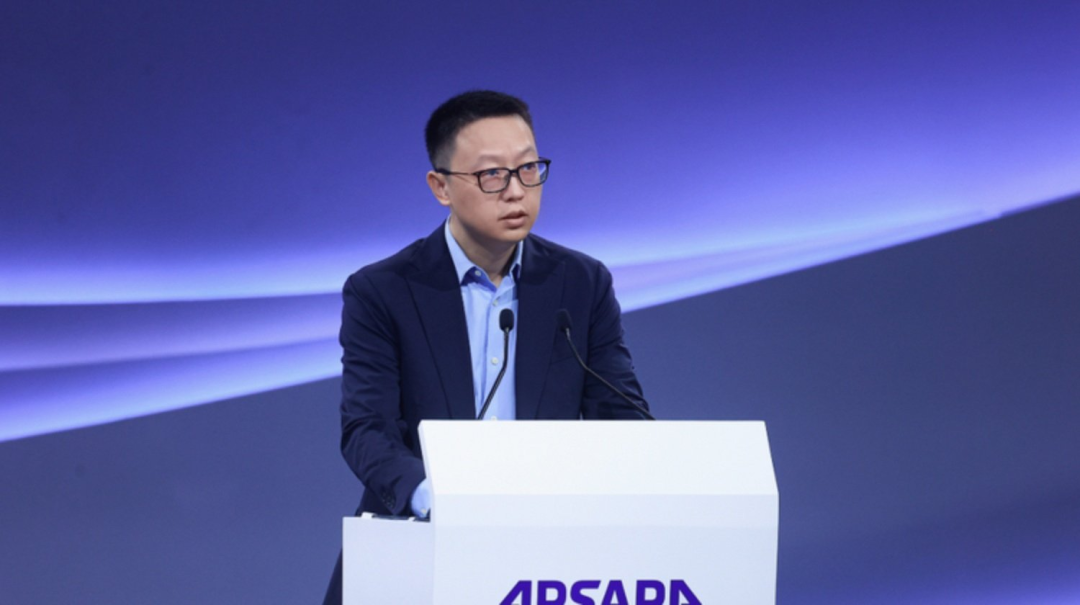
Can Wu Yongming become China's AI counterpart to Powell?
On the afternoon of March 16, Alibaba unveiled the formation of the Alibaba Token Hub (ATH) Business Group, a new entity dedicated to the core objectives of 'Token Creation, Distribution, and Application.' This group will operate under the direct supervision of CEO Wu Yongming.
According to reports, the Alibaba Token Hub encompasses the Tongyi Lab, MaaS business line, Qianwen Business Unit, Wukong Business Unit, and AI Innovation Business Unit. It presents a comprehensive ecosystem, spanning from foundational model R&D and model service platforms to AI applications tailored for both individuals and enterprises.
While the establishment of the ATH Business Group may seem somewhat spontaneous, aimed at sparking intense competition in Token consumption in 2026, it is, in fact, a strategic move that aligns with Alibaba's longstanding inclination to act as a 'central banker.' This development is not surprising but rather has been anticipated for some time.
In this new digital realm forged by large language models and myriad Agents, Alibaba is no longer content with merely supplying computing power servers. It aspires to bypass the diligent entrepreneurs developing applications, reach directly into the heart of this new digital economy, and seize control of the money-printing mechanism.
After all, delving into the business strategies of industry giants reveals that they essentially boil down to collecting rent in one form or another.
Setting aside specific business models, the commercial empires of several leading domestic internet companies are fundamentally built on underlying 'taxation' systems across various dimensions.
Tencent, for instance, collects a 'social head tax.'
By monopolizing China's most fundamental social relationship chains through WeChat and QQ, Tencent effectively controls the traffic hubs of the digital world. Whether it's access for games, music, or external applications, obtaining traffic from this domain necessitates paying this 'toll' obediently.
ByteDance, on the other hand, collects a 'dopamine commission.'
Toutiao and Douyin have constructed a colossal attention black hole, dictating the rhythm of users' dopamine secretion. Within this closed loop, content creators, advertisers, and live-streaming merchants alike must continuously pay substantial admission fees to the platform to vie for the scarce attention resources.
Alibaba's 'taxation mindset' is even more pronounced.
For instance, Taobao's e-commerce system (Diamond Exhibition, technical service fees, affiliate commissions, clickstream advertising) essentially functions as a 'business levy.' As long as you list items and engage in commerce, regardless of profitability, this fixed cost must be borne.
Alipay, meanwhile, operates more like a 'value-added levy.' Merchant withdrawal fees, credit installment interest, and short-term capital precipitation (settlement) all constitute 'rent' in Alipay's commercial ecosystem. As long as transactions persist and the flow continues, the entity controlling the valve will never lack profit.
This path dependency of collecting rent by providing underlying infrastructure is deeply ingrained in Alibaba's DNA.
Now, as the wheel of history turns towards the AI era, Alibaba has keenly sensed a new landscape of wealth creation.
In this new digital continent forged by large models and Agents, underlying computing power serves as the land, while upper-layer applications function as the shops. Tokens, the hard currency that binds everything together and sustains the entire system, are the lifeblood.
Alibaba has bluntly named its new business group 'Token Hub,' revealing its ambition. Having grown accustomed to collecting business levies in e-commerce and value-added tolls in finance, Alibaba now aspires to be the 'central bank' in the AI field of this new era.
No matter how flashy an AI application developed by upper-layer developers may be, as long as it starts operating, whether it's retrieving information, analyzing data, or engaging in self-refuting reasoning in the background, it is, in reality, consuming Tokens.
This represents a 'piece-rate levy' with extremely fine granularity and complete imperceptibility. The system doesn't require explicit payment demands or account reconciliations; profit is silently deducted in the milliseconds of each data interaction.
Once a company's core workflow operates on Alibaba's models and platforms and becomes accustomed to this Token settlement system, the prohibitively high migration cost forms an impenetrable rent net. Switching to a different foundation would entail rebuilding the company's digital brain from scratch.
Alibaba has no interest in competing with entrepreneurs in front-end applications. Its sole ambition is to be the 'king' of the new world, set the rules, and then passively collect tolls.
Such strategic calculations are truly quintessential Alibaba.
- END -
-
![]()
Doubao Work Unveiled! Domestic AI Leaders Fully Commit to the 'Work' Sector
-
![]()
Who’s Sounding the Alarm on ‘Rushed Vehicles’?
-
![]()
Over 5.3 Billion Yuan in Losses Over Three and a Half Years! Can Yonyou Reverse Its Fortunes Through Streamlining and AI Transformation?
-
![]()
Baidu AI Adopts Free Model: A Strategic Maneuver in Traffic and Monetization
-
![]()
Silicon-Based OLED Pioneer Unveils Financial Results: H1 Shipments Outpace Entire 2025 Volume
-
![]()
AI's First "Lost Summer"
-
![]()
Zeiss Makes Another €2.2 Million Bet: Will Eye Tracking Be the Next Big Thing in the Smart Glasses Industry?
-
![]()
RUNTO Ranking | Global Top TV ODM Factories' Shipment Figures for July 2026