Was OpenAI’s Acquisition of Astral a Strategic Win?
 03/20 2026
 712
712
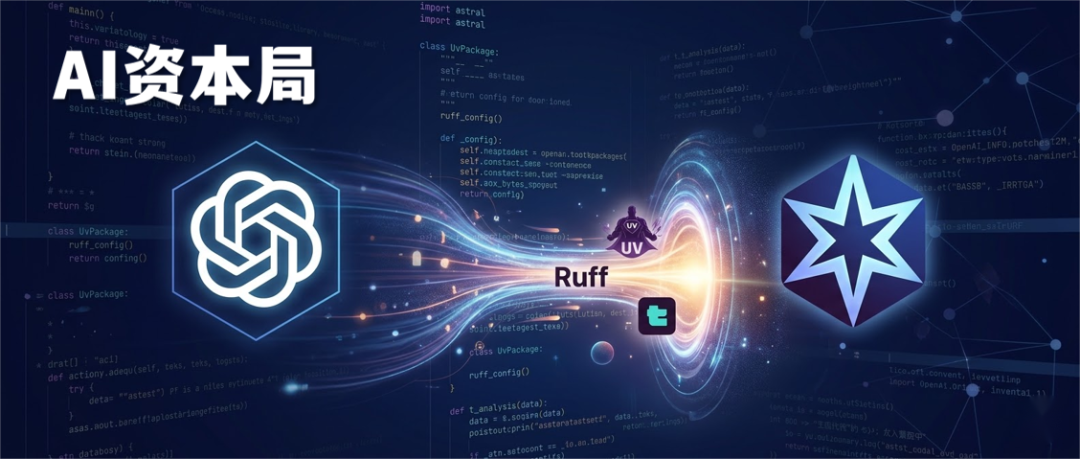
On March 19, OpenAI quietly acquired Python tool developer Astral. While the deal may appear niche, it has sent ripples through the AI programming landscape, signaling a potential shift in industry dynamics.
Astral has carved out a reputation in the developer community with its high-performance Python tools—uv, Ruff, and ty. OpenAI’s move is more than a technical upgrade; it represents a strategic pivot from “code generation” to “engineering control,” positioning OpenAI as a key player in the AI developer ecosystem.
For Astral, the acquisition brings both opportunities and uncertainty.
OpenAI’s Acquisition of Astral: A Strategic Response to Anthropic
OpenAI’s acquisition of Astral is primarily aimed at strengthening its AI programming platform, Codex.
Codex currently boasts over 2 million weekly active users, with its user base and engagement growing exponentially this year. However, OpenAI’s ambitions extend beyond mere scale. Thibault Sottiaux, head of Codex, has emphasized the platform’s evolution from a “code generator” to a “comprehensive intelligent development system.”
Astral’s tools, including the Rust-based, ultra-fast package manager uv and the efficient code linter Ruff, address critical gaps in Codex’s engineering efficiency. This integration promises to elevate the quality, speed, and reliability of AI-generated code, marking a significant leap forward.
The acquisition also reflects the intensifying competition in AI programming. New entrants like Anthropic’s Claude Code and Cursor’s Composer 2 are challenging OpenAI’s dominance. Notably, Cursor’s Composer 2 has outperformed Claude Opus 4.6 in certain coding benchmarks while offering better cost-effectiveness. OpenAI’s move to acquire Astral is a strategic countermeasure, aiming to deepen its competitive moat by integrating essential tools and attracting top talent.
Investment Motivation: OpenAI’s “Three-Pronged Strategy”—Ecosystem, Experience, Full-Stack
OpenAI’s investment logic can be distilled into a “three-pronged strategy”:
“Ecosystem Expansion”: Python as the AI Era’s Operating System
Python is the “lingua franca” of AI and data science, and the health of its ecosystem directly shapes the boundaries of AI technology. Astral’s tools serve as foundational infrastructure for Python developers. By acquiring Astral, OpenAI gains control over key entry points in the AI developer ecosystem. Once developers rely on OpenAI’s integrated toolchain, ecosystem loyalty becomes deeply entrenched—akin to Microsoft’s historical dominance over the software ecosystem through its operating system.
“Ultimate Experience”: From Functional to Usable AI Code
AI-generated code is no longer novel, but making it “usable,” “efficient,” and “maintainable” remains a challenge for developers. Astral’s high-performance tools enable Codex to better understand, manage, and optimize Python projects, offering smarter and more comprehensive development assistance. This not only strengthens Codex’s product offering but also establishes a clear competitive edge in user experience.
“Full-Stack Ambition”: OpenAI’s Imperial Blueprint
OpenAI’s strategic vision extends far beyond single-model offerings. From investing in hardware to developing tools, OpenAI is building a full-stack AI empire that spans underlying infrastructure, core models, upper-layer applications, and development tools. This integration aims to maximize control over the technology stack, optimize performance, and provide a solid foundation for future AI innovations.
Astral’s “Integration”: Ascension or Alienation?
For Astral, the acquisition marks a pivotal moment. Founder Charlie Marsh assured that Astral’s open-source tools will continue to receive support from OpenAI and will advance software development frontiers as part of Codex. In the short term, this is positive news for its user community.
However, OpenAI’s recent shift toward closed-source strategies for its core models has raised concerns. Will Astral’s open-source ethos survive? Will its future development primarily serve OpenAI’s commercial goals? These questions remain unanswered.
Nevertheless, joining OpenAI’s vast resource and technology platform offers unprecedented opportunities for the Astral team. They will gain access to cutting-edge AI technologies, collaborate with top researchers and engineers, and collectively push the boundaries of AI programming. For Astral’s technological innovation and talent development, this is a significant catalyst.
Community Debate: Open-Source Ideals vs. Commercial Giants
The acquisition has sparked intense discussions within the developer community. Some developers remain optimistic about OpenAI’s commitment to supporting Astral’s open-source tools, believing it will bring more resources and broader development opportunities.
A senior Python developer commented on social media: “OpenAI’s involvement could bring more attention and investment to uv and Ruff, which is great for the Python ecosystem. However, I hope OpenAI stays true to its open-source promises.”
Others, however, have expressed skepticism.
They argue that OpenAI’s business model will inevitably lean toward closed-source systems and commercialization, potentially alienating Astral’s open-source DNA.
An anonymous tech analyst stated bluntly: “OpenAI’s move is a natural extension of its ecosystem strategy, aiming to lock more developers into its platform. While short-term open-source support is tactical, long-term integration of these tools with OpenAI’s commercial products is almost inevitable.” The debate over open-source ideals versus commercial interests has only just begun.
AI Capital Bureau’s Perspective: AI Programming Competition Enters a New Phase
OpenAI’s acquisition of Astral is a landmark event in the AI investment landscape. It not only highlights the fierce competition among AI giants at the programming tool level but also signals a shift in AI programming from mere code generation to deeper engineering management and ecosystem construction.
Through this acquisition, OpenAI has solidified its strategic position in the AI ecosystem and taken a significant step toward its vision of full-stack AI. This also serves as a reminder to investors that while AI models remain a focus, greater attention should be paid to investment opportunities in underlying infrastructure and development toolchains. In the “new infrastructure” wave of AI programming, those who control the foundation may shape the future.

AI Capital Bureau is a professional platform focused on analyzing capital market trends in the artificial intelligence field. We closely track financing, listings, and mergers and acquisitions among AI and embodied intelligence companies, providing in-depth insights into industry trends and corporate development trajectories. Our mission is to bridge AI innovation and capital markets, helping Chinese hard-tech companies achieve value discovery and growth.
Risk Warning and Disclaimer: The market carries risks, and investment decisions should be made with caution. This article does not constitute investment advice and should not be used as a basis for practical operations. Trading risks are borne by the investor.
-
![]()
A Computing Power Titan Unveils a Revolutionary Product: Performance-to-Power Ratio Skyrockets by 450 Times!
-
![]()
Doubao Work Unveiled! Domestic AI Leaders Fully Commit to the 'Work' Sector
-
![]()
Who’s Sounding the Alarm on ‘Rushed Vehicles’?
-
![]()
Over 5.3 Billion Yuan in Losses Over Three and a Half Years! Can Yonyou Reverse Its Fortunes Through Streamlining and AI Transformation?
-
![]()
Baidu AI Adopts Free Model: A Strategic Maneuver in Traffic and Monetization
-
![]()
Silicon-Based OLED Pioneer Unveils Financial Results: H1 Shipments Outpace Entire 2025 Volume
-
![]()
AI's First "Lost Summer"
-
![]()
Zeiss Makes Another €2.2 Million Bet: Will Eye Tracking Be the Next Big Thing in the Smart Glasses Industry?