Is Alibaba's Wukong Just Nurturing an E-commerce Version of 'Lobster'?
 03/23 2026
 512
512
Wukong Initiates a True 'Intelligent Driving Mode' for E-commerce.
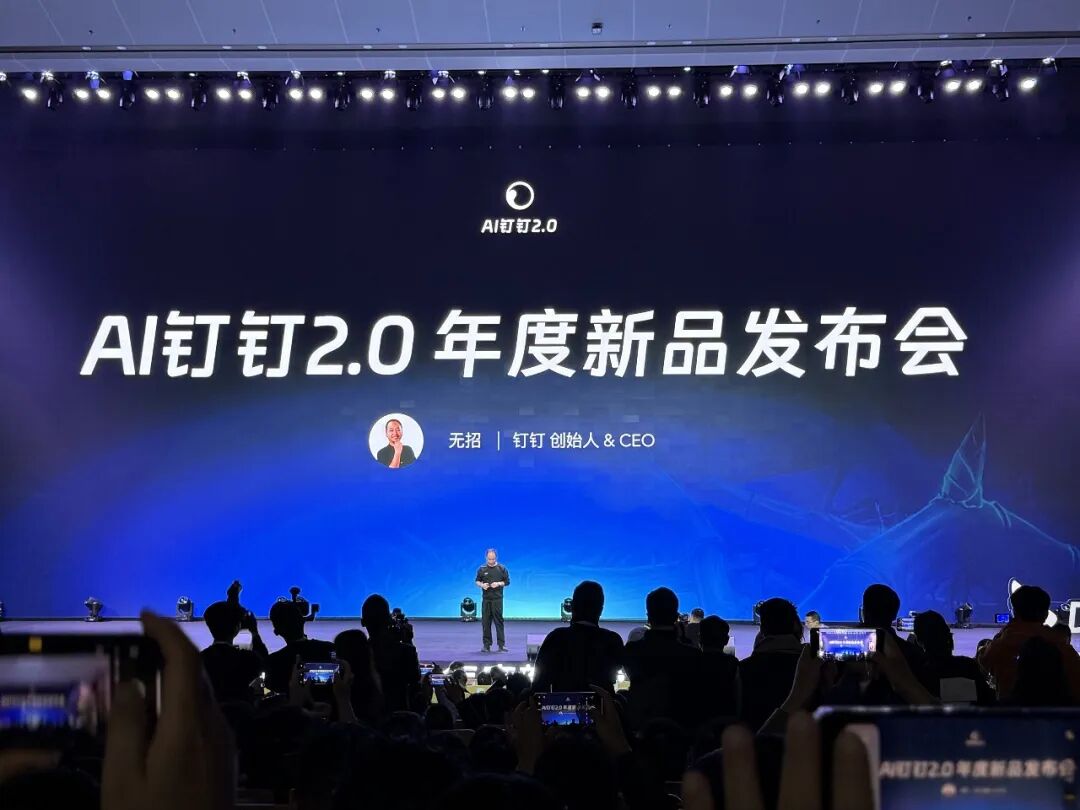
On March 17, the world's first enterprise-level AI-native work platform, 'Wukong,' developed by the DingTalk team, was officially launched. It will exist in two forms: as a standalone app and as a built-in plugin within DingTalk. Chen Hang (alias 'Wu Zhao'), founder and CEO of DingTalk, stated, 'In the past, people used DingTalk for work. In the future, AI will use DingTalk for work.'
Over the past year, many of Alibaba's major AI initiatives have been unveiled at the Hangzhou Xixi Campus. Examples include AutoNavi's Street View Rankings 'Flying Street View' and QianWen's initiation of the 'AI Era for Handling Affairs.'
Wu Yongming, CEO of Alibaba Group, has also been present at these events, reinforcing internal and external confidence in 'AI as Alibaba's top priority project.'
'Shattering' DingTalk to Forge 'Wukong'
This time, Wu Yongming once again attended the event, putting significant pressure on Wu Zhao on stage. To welcome this 'Great Sage,' DingTalk underwent organizational and product 'reconstruction' in a dual sense.
On one hand, the day before Wukong's debut, Alibaba announced the establishment of the Alibaba Token Hub (ATH) business group, led directly by Wu Yongming. This group oversees the Tongyi Lab, MaaS business line, QianWen Business Division, Wukong Business Division, and AI Innovation Business Division, covering the entire layout from basic model research and development, model service platforms, to personal and enterprise-end AI applications.
This structural adjustment has clarified Alibaba's AI direction and strategy. The Wukong Business Division is positioned as a 'B-end AI-native work platform that deeply integrates model capabilities into enterprise workflows.' DingTalk falls under this division and operates independently as a brand.
On the other hand, DingTalk has undergone a fundamental renewal, with the core being the transformation of the DingTalk CLI (Command Line Interface) to build an AI-operable atomic instruction system. This means reconstructing all of DingTalk's enterprise-level capabilities into command-line instructions that AI can invoke.
Wu Zhao said this is not just interface encapsulation but 'actually similar to establishing a Unix-like underlying kernel control system.'
Around the CLI, DingTalk has also developed its own AI-native file system, RealDoc, and an enterprise-level security system. The latter is the fundamental difference between Wukong and OpenClaw (Lobster). From its inception, it has targeted the core pain points of enterprise applications: security, controllability, and auditability. From identity and permission control, security sandboxes, dedicated model spaces to certified Skills, it establishes an independent and secure operating space for enterprise users.
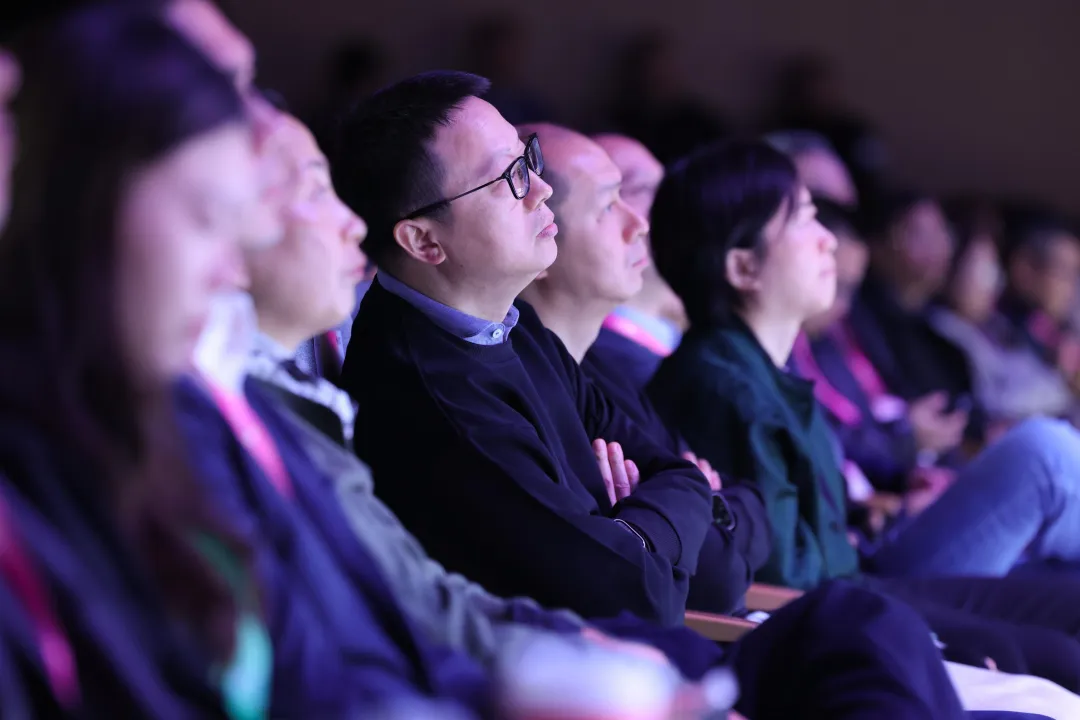 Figure | Alibaba CEO Wu Yongming at the Wukong launch event
China Entrepreneur Magazine evaluated that Lobster's logic is AI simulating human screen clicks. Once the interface changes, the program may become confused and fail. DingTalk, however, has completely reconstructed the traditional graphical user interface (GUI) into an AI-native command-line interface (CLI). AI no longer needs to 'find buttons and click icons' but uses standardized instructions to invoke over a thousand core capabilities of DingTalk.
In short, Lobster is AI learning to operate a computer like a human, while Wukong directly transforms itself into a platform for efficient AI operation.
Wu Zhao stated on site, 'Today, we shatter DingTalk and rebuild it with AI to forge 'Wukong.' DingTalk will merge into Wukong. Whether it's still called DingTalk doesn't matter.' 'What you truly want to give users is not a software but a revolution in thinking. That's the most powerful weapon.'
In other words, Wukong is a complete 'smashing' and recreation of DingTalk. It is DingTalk, but it's also not DingTalk anymore.
Initiating a True 'Intelligent Driving Mode' for E-commerce
I noticed another key piece of information: Alibaba's business ecosystem's ToB capabilities will gradually be integrated into Wukong in the form of Skills, becoming a unified outlet for Alibaba's AI capabilities in enterprise office scenarios.
Among the ten OPT (One Person Team) solutions demonstrated by Wu Zhao, e-commerce is included. The Skills of Alibaba's B-end commercial capabilities, such as Taobao, Tmall, 1688, Alipay, and Alibaba Cloud, will gradually be integrated.
This means that Alibaba's e-commerce infrastructure, merchant service capabilities, and commercial system built over the past two decades, such as business operations, store management, marketing and shopping guidance, data analysis, and payment and settlement, have been 'atomized' and encapsulated into standardized 'Skills (skill modules).'
When all these capabilities converge into Alibaba Wukong, merchants can combine these Skills like building blocks to create their own AI workflows on Wukong and build an AI Agent team covering all aspects of opening a store, selecting products, marketing, operations, and shipping.
This model is similar to raising lobsters, leading some to say, 'The e-commerce version of Lobster is here.' But Wukong is not just a simple 'e-commerce lobster'; it represents a fundamental reconstruction of e-commerce by AI Agents. For millions of merchants, it also signifies a generational shift in e-commerce operation modes from 'manual transmission' to 'intelligent driving mode.'
Before Wukong's emergence, e-commerce merchants were not lacking in AI tools.
At the 2025 Tmall Double 11 launch event, Kaifu, President of Search and Recommendation Intelligence at Alibaba's China E-commerce Business Group, referred to it as 'AI reconstructing Taobao.' In communications with media including Tang Chen, he stated that TaoTian aims to create 'useful AI' and the team has primarily done three things: improving traffic matching efficiency, reducing costs and increasing efficiency for merchants, and creating new AI shopping guide products.
This year's Tmall 'Double 11' was also known as the 'first Tmall 'Double 11' where AI was fully implemented,' with surprising efficiency gains brought by AI. Public data shows that 'Business Butler,' through an Agent combination of one 'AI store manager' and six 'AI employees,' served 5 million merchants, helping them save an average of 30% workload and increasing efficiency by 1.5 times. AIGC capabilities generated a total of 150 million images and video materials, and through AB testing, AI product images helped merchants increase product click-through rates by 10%.
However, while AI is rewriting e-commerce operation modes, there is also a practical pain point: AI tools are fragmented.
In traditional modes, a typical e-commerce merchant's workflow might look like this: finding sources on 1688 every day, listing products in the Taobao backend, viewing data in Business Advisor, adjusting advertising in Direct Train, and finally reconciling accounts on Alipay.
Even if there are corresponding AI assistance capabilities at each stage, they are independent and cannot be linked. Merchants still need to act like skilled drivers, frantically switching between seven or eight dashboards and manually connecting the entire process.
What merchants lack is not a single-point 'assisted driving' function but a unified, reliable, and safe 'autonomous driving system' that can schedule all resources. Lobster provides a new idea for AI to transform e-commerce, but it doesn't understand e-commerce and cannot delve into e-commerce platforms. The key issue is the presence of fatal security risks.
'What kind of revolution can Wukong bring to merchant operations?' In Wu Zhao's words, 'One store owner + Alibaba Wukong = an e-commerce team.'
He also demonstrated a scenario on site: The user only needs to say, 'Help me find high-selling children's toys on 1688,' and Wukong automatically invokes 1688's product selection Skill for analysis. Then, if the user says, 'I want to buy Deli A4 paper,' it immediately invokes the supplier investigation Skill for price comparison and background checks. If it finds that the product's main image has a low click-through rate, it automatically invokes the material optimization Skill for adjustments and even directly generates a weekly business report.
In addition to e-commerce operations, merchants can also access various professional Skills such as finance and taxation, legal affairs, design, and technology development through Wukong, forming a complete set of enterprise function AI Agent teams. The core of this 'intelligent driving mode' is the atomization of e-commerce capabilities. Wukong uniformly schedules the originally scattered service capabilities to achieve AI-driven operations.
An ideal scenario: In the future, when merchants select products and find sources on 1688, 'Wukong' can help conduct a panoramic supplier background investigation, Compare prices across the entire network (price comparison across the entire network), and automatic mine clearance. When merchants open new online stores, they can quickly list products through AI-driven automatic operations based on 1688's official distribution supply chain. This deep business integration embeds model capabilities from simple conversational interactions into the core business processes of enterprises. For small and medium-sized merchants, this is also a form of 'AI capability empowerment,' shifting their role from executors to decision-makers, with core competitiveness changing from 'who types faster' to 'whose judgment is more accurate.'
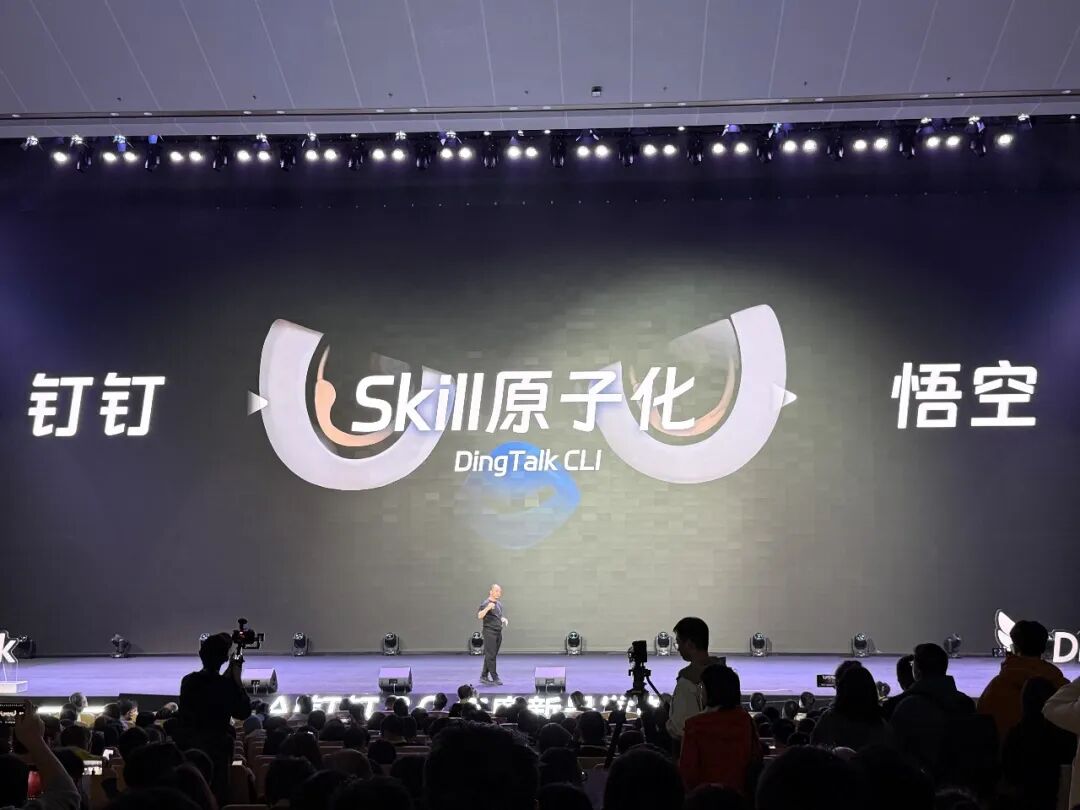 Figure | Wukong's 'atomized' capabilities, photographed by Tang Chen
Wukong's mission is not just to improve efficiency; it is not merely a new product. Its true value lies in being the AI-driven outlet for Alibaba's entire commercial ecosystem. It is also rewriting rules at two levels:
First, the boundaries of vertical SaaS are dissolving. In the past, merchants would pay for various vertical SaaS services, such as product selection tools and ERP systems. However, Wukong packages ready-to-use, on-demand, and pay-per-result Skills into the operator's toolkit. This also gives rise to a new MaaS (Model as a Service), with Token as its currency standard.
Second, the world's largest ToB Skill market is taking shape. Relying on the scale of Alibaba's business ecosystem, an AI service market covering tens of millions of merchants is taking shape. Enterprises and developers can standardize their experience (such as unique product selection logic and customer service scripts) into Skills and list them for transaction. What is being traded is no longer software but 'work capabilities' themselves.
The rewriting of rules at these two levels is also realizing Wu Yongming's plan to elevate the strategic position of MaaS. In his view, the growth driven by MaaS business is a core key factor for AI and cloud revenue.
In other words, in the AI race among major companies, Wukong has built a new dam for Alibaba and is driving Alibaba's transformation from a traffic-based model to a productivity service provider.
As Wukong's capabilities continue to improve, the intelligence of Alibaba's e-commerce is also further deepening, initiating a true 'autonomous driving' era for the e-commerce industry. Future e-commerce operations will eventually break free from the shackles of labor-intensive models and shift towards an 'intention-driven' decision-making model, where every merchant can have a digital operations team that operates 24/7.
However, Alibaba also faces many challenges. For example, e-commerce involves real money, and the tolerance for AI 'misoperations' is extremely low. How to establish a reliable 'braking mechanism' and permission barriers, and how to make merchants accustomed to hands-on operations truly trust AI, are all hurdles that must be overcome.
These are the difficulties Wukong must face on its 'journey to the West,' but now that the path has been cleared, it can continue indefinitely.
References:
China Business Journal, 'The Other Side of Alibaba's Financial Report: AI Has Evolved from an 'Optional Tool' to a 'Infrastructure' for Merchants'
China Entrepreneur Magazine, 'Dialogue with Wu Zhao: Shattering DingTalk, Breaking Free from 'Ego''
-
![]()
1.6 Billion Big Order Secured! SeeYA Technology's Revenue Soars by 287.87% in the First Half of the Year
-
![]()
Baidu's Profits Plunge by 68%: Unraveling the Mystery Behind the Numbers
-
![]()
Baidu’s Profits Tumble by 68%! Where Has All the Money Gone?
-
![]()
Hynix’s Taobao Store Shuts Down Abruptly: What Should Customers Do About Warranty Services for Memory Modules?
-
![]()
A Computing Power Titan Unveils a Revolutionary Product: Performance-to-Power Ratio Skyrockets by 450 Times!
-
![]()
Doubao Work Unveiled! Domestic AI Leaders Fully Commit to the 'Work' Sector
-
![]()
Who’s Sounding the Alarm on ‘Rushed Vehicles’?
-
![]()
Over 5.3 Billion Yuan in Losses Over Three and a Half Years! Can Yonyou Reverse Its Fortunes Through Streamlining and AI Transformation?