Why Did Sora 'Collapse'? Soaring Compute Costs From Lobster Craze Crush AI Video Model
 03/26 2026
 711
711
Compute Reallocation Leaves AI Video as the 'Sacrificial Lamb'
Today (March 25), OpenAI made a sudden decision: to shut down Sora.
This is no routine product adjustment. OpenAI only launched the standalone Sora app alongside Sora 2.0 last September, and in December, inked a $1 billion partnership with Disney to enable Sora-generated Disney characters.
Yet just over three months later, OpenAI wielded the axe. Beyond the Sora app shutdown, the developer API is also on the 'chopping block'—certain to be phased out in the coming period.
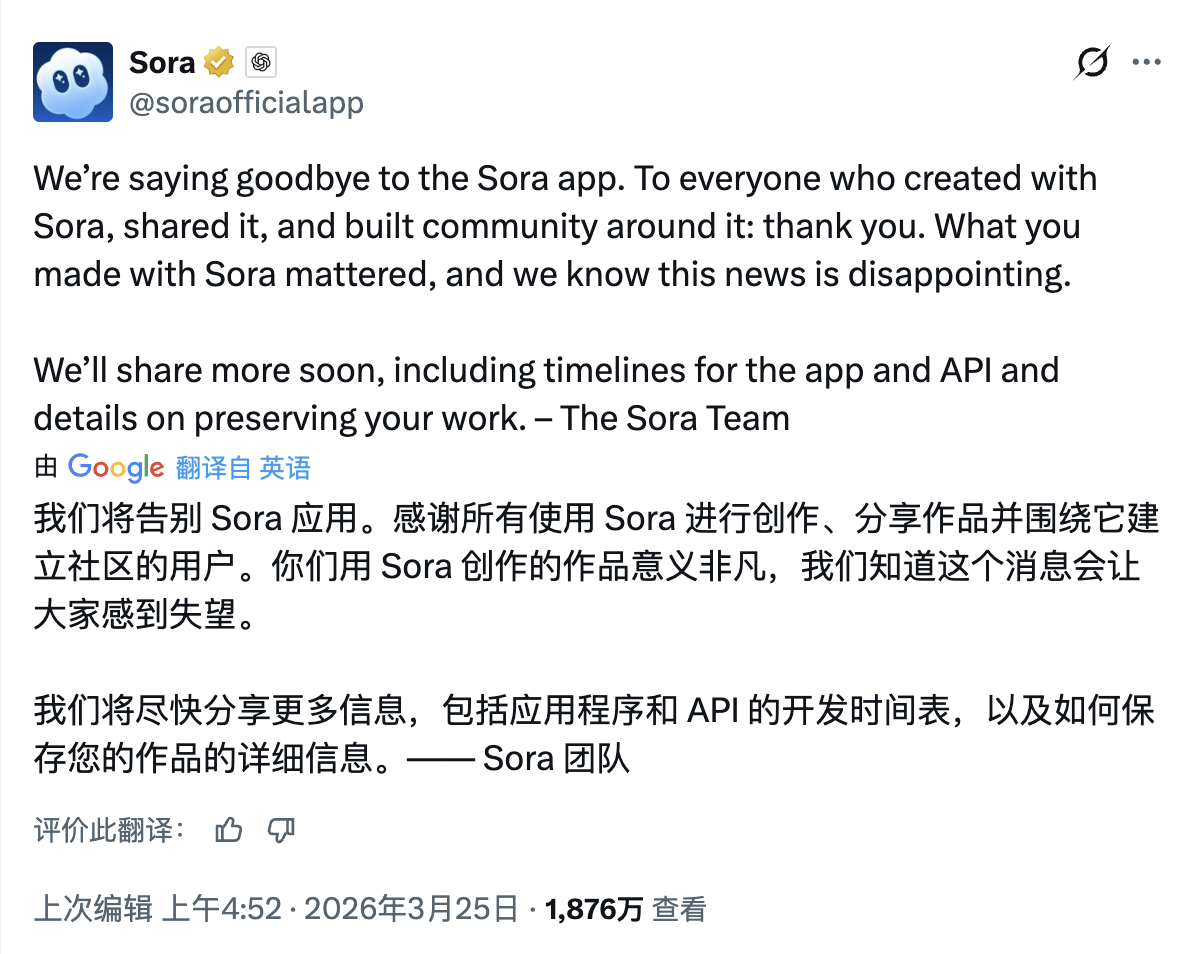
Image Source: X
Everything arrived too fast, and left just as quickly.
From its industry-shocking demo in early 2024, Sora was once hailed as one of OpenAI's most visionary products. Compared to text or image generation, video felt closer to reality and more easily understood as 'the next step toward AGI.' By 2025, with Sora 2's release, OpenAI even attempted to build it into a standalone app with content distribution capabilities, aiming to extend beyond generation into 'platform' territory.
Now we know the answer: few truly used Sora like TikTok. A product with disappointing user growth shutting down is hardly surprising.
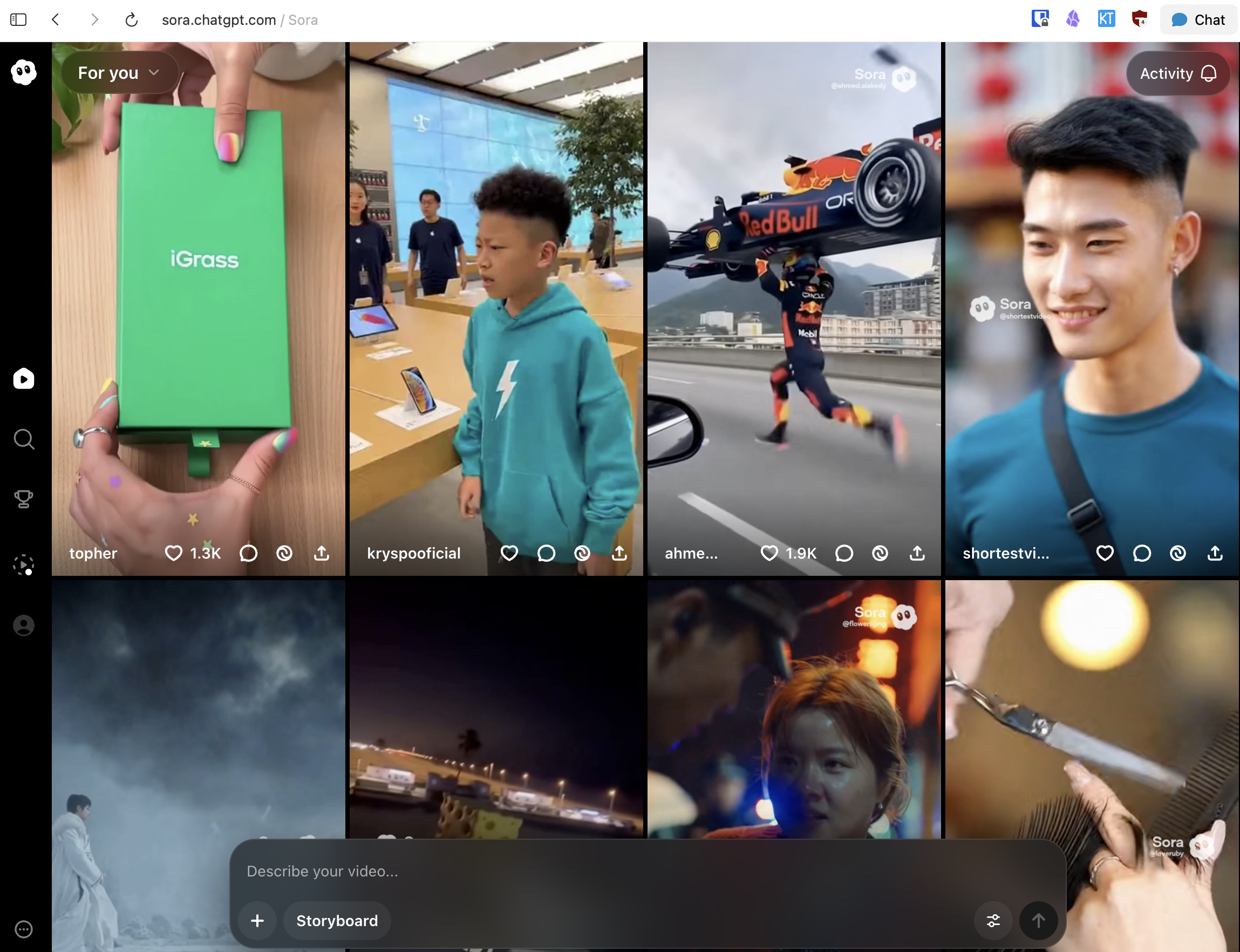
Sora homepage. Image Source: Leitech
The oddity lies in 'timing.' What did Sora do wrong to be abandoned so decisively? Or perhaps this was never about Sora, but about OpenAI shifting focus elsewhere.
What About ByteDance's Seedance?
OpenAI, Teetering on the Edge, Abandons Sora
Frankly, Sora was impressive but not 'user-friendly.'
As a video generation model, Sora 2.0's technical ceiling was undeniable: longer durations, more stable physical consistency, and near-real-world visual expression left it nearly unchallenged at launch—until ByteDance released Seedance 2.0 this year.
Yet Sora remained more a 'capability demo' than a 'high-frequency tool.' Video generation is inherently low-demand compared to text or images. Moreover, countless poorly made, boring AI videos failed to attract viewers, let alone convince creators to pay for sustained generation and refinement.
The result: Sora delivered surprise and a blockbuster debut but struggled to cement stable usage habits.
Though it topped the U.S. App Store charts for days post-launch (September), downloads plummeted 32% by December (per Appfigures), with a further 46% drop in January 2026. Revenue also faltered: $540,000 peak in December 2025, crashing to $367,000 by January 2026.
On one hand, user growth could be driven by 'novelty,' but retention proved difficult. Without sustained usage scenarios, the product struggled to become a daily entry point like ChatGPT. On the other hand, video generation costs far exceeded text/image—each call a tangible compute drain.
But if the issues stopped here, Sora might not have been abandoned so swiftly. What truly forced OpenAI's hand was external change.
Last November, Gemini 3's raw power triggered a 'Google maelstrom,' forcing NVIDIA to concede the TPU-Gemini combo's superiority. OpenAI sounded 'red alerts,' redirecting resources to ChatGPT to counter Gemini.
Meanwhile, Google accelerated Gemini's integration across YouTube, Google Search (AI Mode), Android, Chrome, and other platforms.
Beyond model and ecosystem pressure, Claude's developer and enterprise market surge 'pounded' OpenAI.
Claude Code (AI programming/code assistant) and Claude Cowork (AI office assistant) not only devastated U.S. software stocks but also drove enterprise users to 'abandon GPT for Claude,' pushing OpenAI to launch Codex.

Under this competitive onslaught, OpenAI's choice to ditch Sora becomes understandable.
Rather than persist in a high-cost, low-frequency, ecosystem-lacking direction, it's wiser to consolidate resources into surer paths—whether strengthening ChatGPT as a super-entry point or doubling down on Agents, developer tools, and enterprise markets.
Indeed, the WSJ revealed last week that OpenAI would merge ChatGPT, Codex, and Atlas Browser into a desktop 'super-app.' Simultaneously with Sora's shutdown announcement, OpenAI today overhauled ChatGPT's AI shopping features.
Beneath these overt moves, OpenAI's choice also highlights a contradiction:
As AI shifts from generating suggestions/content to fully delegating tasks, Agentic AI demands massive inference compute. Supply chains, bottlenecked by memory (HBM), cannot keep pace with soaring compute demand. AI video generation, equally compute-intensive, suddenly feels 'out of place.'
From West to East Coast, the 'Lobster' Craze Rocks AI
No one denies that OpenClaw (domestically dubbed 'Lobster') is why most people today encounter Agents. On GitHub, OpenClaw's stars (330K+) dwarf Linux's.
(Note: GitHub stars reflect 'heat' more than true open-source influence.)
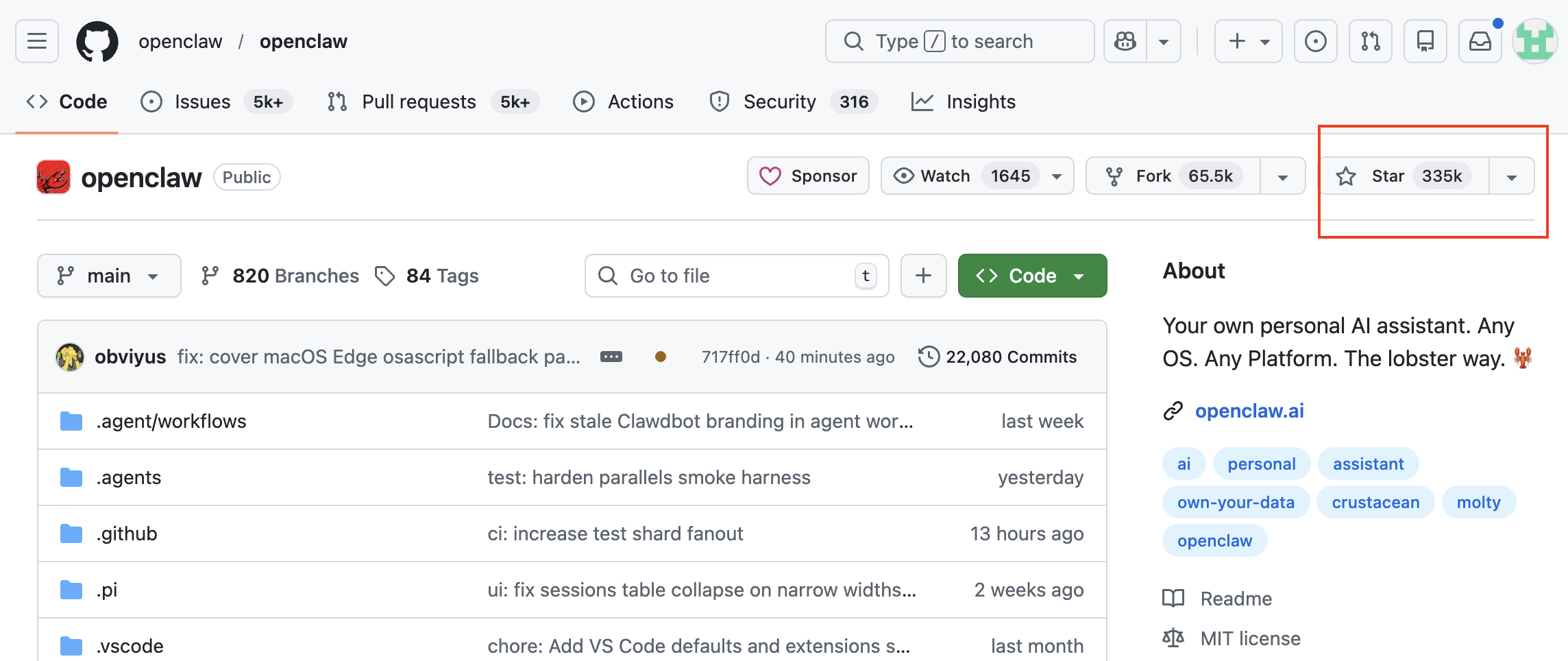
However, OpenClaw's true explosion happened in China. Especially post-2026 Spring Festival, it spread from AI developers/geeks to short videos, news, social media, and offline/online discourse. 'Raising Lobsters' became a national topic, akin to DeepSeek's 2025 post-Spring Festival craze.
From Tencent, ByteDance, Alibaba, NetEase, Baidu, and others to countless users, 'raising Lobsters' became a new consensus: delegate tasks to AI—let it run processes, write docs, operate software. Some used it for e-commerce ops, others for quant strategies, or simply as an 'inexhaustible assistant.'
This fundamentally differs from past generative AI.
Previously, AI provided answers but couldn't complete tasks in one go. Even generating reports required manual 'copy-paste' to finalize. Now, you set a goal and let AI handle the rest. It doesn't just 'output results'—it 'completes tasks,' like processing spreadsheets and attaching them to emails.
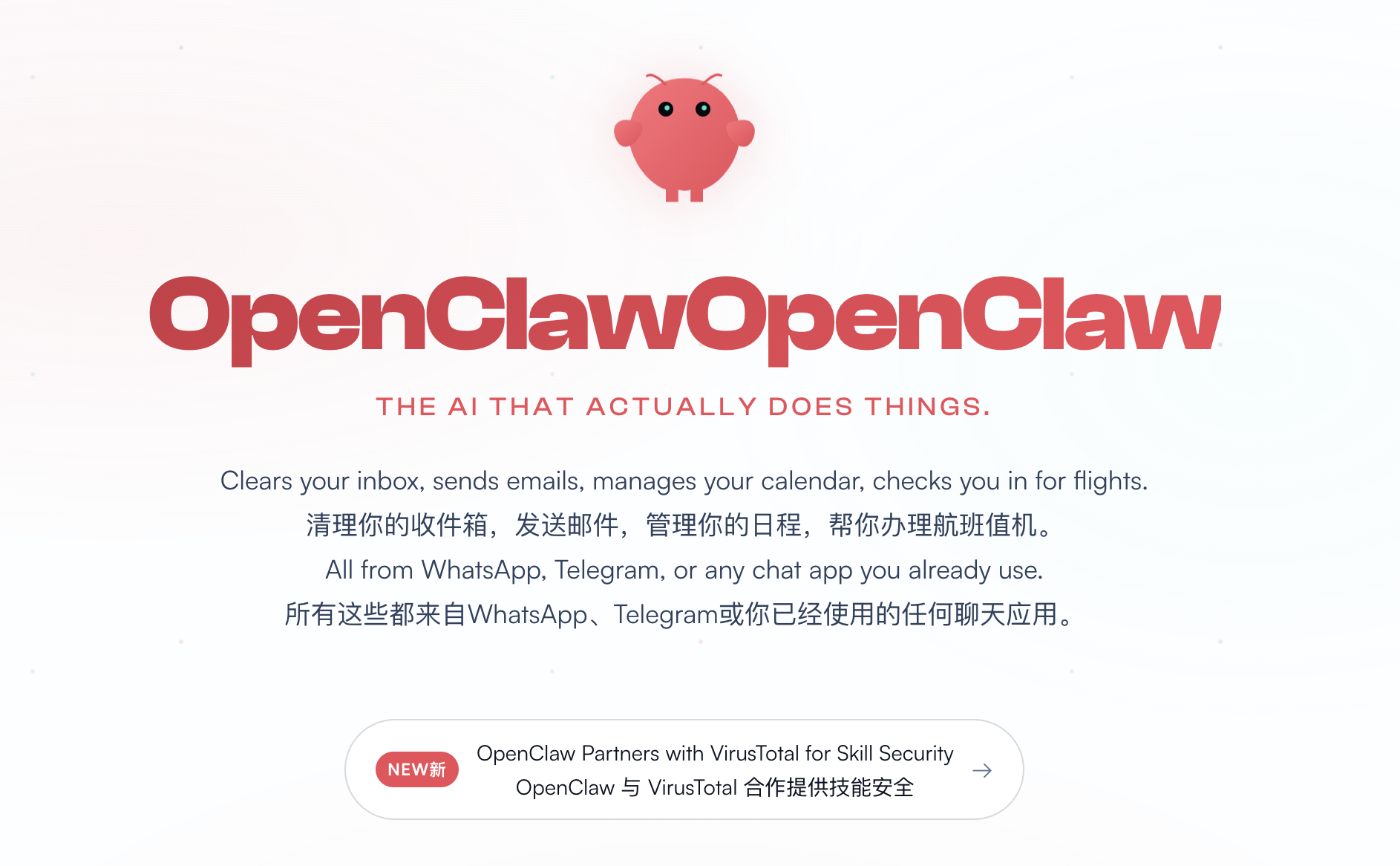
Image Source: OpenClaw
In this light, OpenClaw's viral success marks a turning point. It wasn't the first Agent, nor the most capable, but it first made ordinary users truly feel: 'AI can do things for you.' From 'using tools' to 'delegating tasks,' user habits shifted—a change hard to reverse.
More crucially, changes on the Pacific's west coast are driving Agent experience iterations and adoption on the east coast.
Last week, Claude Cowork launched 'Dispatch,' letting users remotely task Claude Cowork on PCs via mobile—resembling a 'schedulable digital worker.' This week, Claude unveiled a new Computer Use version—functionally a 'Claude-style Lobster,' even claiming:
It can do anything you'd do sitting at a computer.

Image Source: X
Though the early version is slow and limited to macOS Pro/Max subscribers, given Claude Code's prior experience and reputation, this sparked another AI circle frenzy.
Just now, Claude Code announced an auto-mode, delegating 'permission decisions' instead of requiring approval for every file write/bash command, without skipping permissions.
OpenAI, having directly hired OpenClaw founder Peter Steinberger as a project sponsor, is unlikely to miss this 'Lobster' wave. It's almost certain ChatGPT will deeply integrate OpenClaw in 2026.
Soaring Compute Costs: What Future for AI Video Generation?
Post-Sora, where does AI video generation head? Personally, not optimistically.
Beyond Sora, ByteDance's Seedance faces copyright challenges overseas and struggles to attract mass users domestically post-hype. It's not that no good AI-generated videos exist—the issue is that AI videos remain rife with low-quality, boring content.
More critically, compute is being reallocated. Memory (HBM) bottlenecks directly limit industry-wide compute supply, which cannot keep pace with AI model demand. Hence, model API price hikes and occasional 'model degradation' (performance drops).
As everyone knows, video generation consumes far more tokens (i.e., compute) than text/image. Agents also vary in token consumption based on task complexity. As more companies bet on Agents, video generation gets 'pushed aside.'
So, what next for AI video generation? Frankly, I don't know.
OpenAI, Sora, Lobster, Video Model, Agent
Source: Leitech
Images sourced from 123RF Royalty-Free Library
-
![]()
The Allure of 'Acquisition Spree': Li Shufu's Left Turn, Xu Jiayin's Right
-
![]()
Strategic Transformation Yields Results: Phoenix Optics Reports 10.9% YoY Rise in Core Net Profit for H1 2026
-
![]()
Three Key Growth Trajectories Synergize! Crystal-Optech Reports 3.478 Billion Yuan in Revenue for H1 2026
-
![]()
Semi-Annual Report Sparks XPENG Motors Buzz
-
![]()
1.6 Billion Big Order Secured! SeeYA Technology's Revenue Soars by 287.87% in the First Half of the Year
-
![]()
Baidu's Profits Plunge by 68%: Unraveling the Mystery Behind the Numbers
-
![]()
Baidu’s Profits Tumble by 68%! Where Has All the Money Gone?
-
![]()
Hynix’s Taobao Store Shuts Down Abruptly: What Should Customers Do About Warranty Services for Memory Modules?