What is a Token? Can It Serve as an Alternative to Salaries and Equity Incentives?
 03/26 2026
 585
585
Text by: Du Jie
Edited by: Hou Yu
Recently, the term "Token" has been generating significant buzz, making it nearly impossible to discuss the digital economy or artificial intelligence without mentioning it. However, due to its technical nature, coupled with concepts like "monetization" and "incentives," many people instinctively conflate it with virtual currencies or equity, leading to further confusion.
Let's begin with the most fundamental concept: Token was originally a basic unit of measurement in the digital realm, entirely distinct from what we commonly refer to as a "character." A character is the smallest unit of text, such as a letter, symbol, or punctuation mark, representing content itself.
In contrast, a Token is a unit used by AI systems to quantify workload, computing power consumption, and interaction costs. It functions as a granular measure in the digital world, quantifying the amount of information a model processes and the resources it consumes.
The concept of Token monetization involves assigning real value to this unit, which was initially used solely for counting purposes, thereby granting it pricing and circulation significance within the digital ecosystem.
Token: The "Standard of Measure" in the Digital World
There's no need to be daunted by complex definitions—think of a Token as the smallest unit of measurement in the digital world. Just as vegetables are sold by weight and fuel by volume, in AI computing, computing power allocation, and content generation processes, Tokens serve as the fundamental benchmark for measuring workload and resource consumption.
In simpler terms, it is the "standard of measure" in the digital realm.
Every time an AI writes a passage, performs an analysis, or generates an image, it consumes Tokens. Initially, Tokens were merely statistical symbols, akin to step counts on a phone or word counts when typing, with no inherent real value. However, in real-world usage scenarios, their value becomes immediately apparent.
For instance, nearly everyone now has an AI assistant, whether it's Doubao or Yuanbao for daily use. In reality, these all consume Tokens. Currently, basic personal functions are free, with computing costs borne by the platform, so users don't need to pay.
From an industry trend perspective, personal users are likely to retain a basic free quota for the long term, with fees charged only for advanced features as needed. However, for enterprise scenarios such as bulk API calls, API access, and private deployments, charging based on Token usage is standard—this is currently the most mainstream commercialization model in the industry.
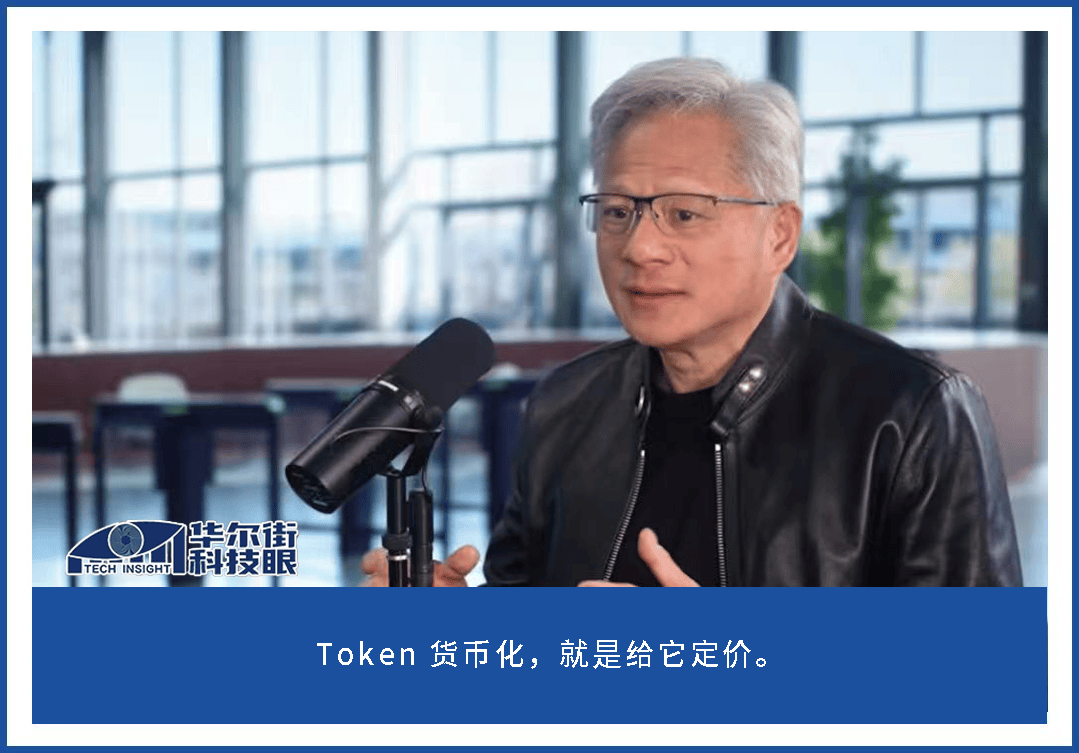
In the view of NVIDIA founder Jensen Huang, computing power and AI services in the digital world come with real costs, including investments in chips, servers, electricity, and maintenance. Token is the most suitable carrier and form of expression for bearing these costs.
Token monetization means no longer treating it as a mere counter but assigning it a price, allowing it to measure, pay for, and exchange digital services, thus becoming a voucher of value in the digital world.
Simply put, just as gas stations charge by the "liter," Tokens function as the "liter" in AI services—the more computing power used, the more Tokens consumed. Tokens can be purchased and exchanged, which is the essence of monetization.
Major Companies Have Already Implemented Token Monetization
The concept is not abstract—practical actions by Alibaba and Google have turned Token monetization from a trend into reality.
On March 16, 2026, Alibaba officially established the Alibaba Token Hub (ATH) business group, directly overseen by Group CEO Wu Yongming. With the core objectives of "creating Tokens, distributing Tokens, and applying Tokens," it integrates the Tongyi Lab, MaaS business line, Qianwen Business Unit, Wukong Business Unit, and AI Innovation Business Unit, covering the entire spectrum from foundational model R&D and model service platforms to AI applications for individuals and enterprises.
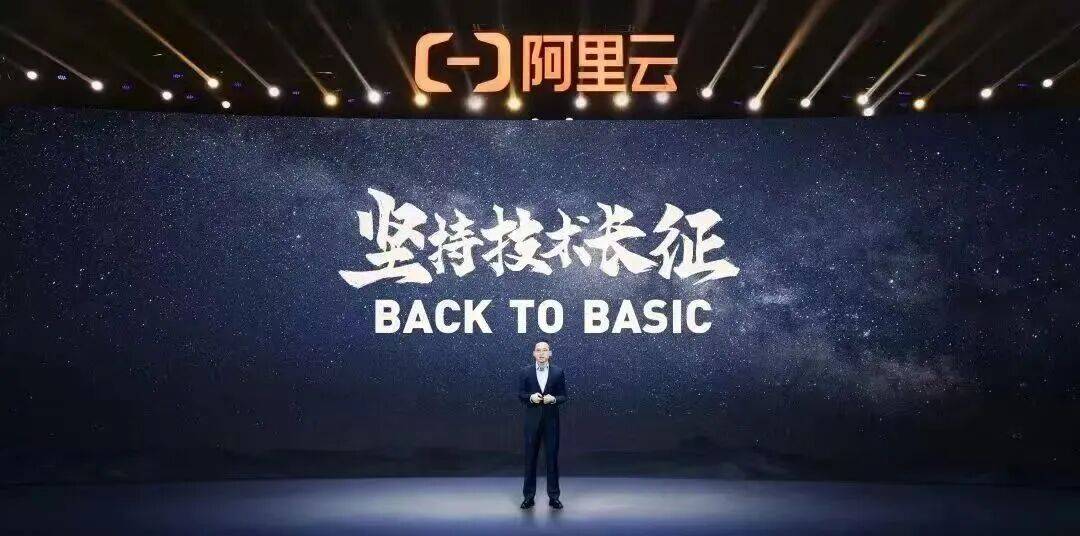
Externally, Alibaba uses Tokens as the unified pricing unit for AI services, with enterprises and users settling accounts based on actual Token consumption when accessing computing power or using the Tongyi large model. Internally, the company has also started allocating Token quotas to employees, allowing them to use various internal AI tools for free, with some AI tool expenses related to R&D even reimbursable—effectively turning computing power into a practical employee benefit.
Meanwhile, Google has highly commercialized Token monetization around its Gemini large model. By optimizing Token generation efficiency and reducing service costs through its self-developed TPU chips, Google has established a standardized billing system. Users consuming Tokens when using Gemini for writing, analysis, or code generation are billed based on usage; Google Cloud also offers AI services to enterprises billed by Token, adopting a unified measurement model regardless of company size, making Tokens the true pricing core in commercial scenarios.
Is Token a Virtual Currency?
Jensen Huang once suggested that in the future, computing power resources will be deeply integrated into compensation systems, with technical roles like engineers potentially receiving more computing power-related support to enhance R&D and work efficiency.
Many people easily confuse Tokens with virtual currencies or equity incentives, so let's clarify the essential differences.
AI Tokens used by tech companies are generated based on computing power consumption and model services, with clear business scenarios and practical value—they serve as measurement and pricing vouchers for digital services. In contrast, virtual currencies differ entirely in nature, regulatory status, and application scenarios; the two cannot be equated.
Similarly, Token incentives are not the same as traditional equity incentives. Equity represents ownership in a company, protected by law, with rights to dividends and decision-making. A Token is merely a voucher for the usage rights of computing power and AI services, currently lacking unified legal standards, without dividend or decision-making rights, and its value entirely depends on the company’s AI capabilities—fundamentally different from equity.
Can Token Become a New Form of Incentive?
Luo Zhengyu recently proposed a controversial view: in the future, Tokens will become a form of incentive similar to equity, with corporate compensation adopting a model of salaries plus Tokens. This is not baseless speculation but based on the realistic trend of AI’s comprehensive penetration into work.
His logic is straightforward: in the AI era, computing power has become a core production resource, just like cash and equity. In the past, companies retained talent through salaries and stock options; now, with employee efficiency heavily reliant on AI computing power, Tokens, as a voucher for computing power, can naturally serve as an incentive tool. Companies may not only offer salaries and equity but also allocate Token quotas, allowing employees to freely access computing power to boost efficiency—serving both as a welfare benefit and a talent retention strategy.
According to Luo, in the future, when companies compete for talent, they may no longer rely solely on salaries and equity; Tokens will also become a key competitive factor.
Token incentives do align with the direction of the AI era and more closely reflect the essence of work. They can be directly tied to employees’ efficiency and output in using AI and accessing computing power, offering stronger appeal to core talent in algorithms and R&D while helping companies reduce cash pressure and avoid excessive equity dilution.
However, in reality, widespread adoption of this model still has a long way to go. Token values are highly volatile, significantly influenced by a company’s AI business and computing costs; relevant legal regulations are still immature, leaving employee rights without stable protection; additionally, Tokens are mostly usable only internally, with limited liquidity and cashability, restricting their applicability.
Overall, while Token incentives are indeed a direction worth watching in the future, they remain in the early exploratory stage for the short term and are far from replacing existing salaries and equity incentives.
-
![]()
AI Giants Start Borrowing to Fuel Computing Power Race
-
ByteDance Initiates Largest B2B Structural Adjustment, This Time It's Truly Different
-
![]()
Let's Talk About Kingsoft Office's Mid-Year Outlook and the True Strength of Its AI-Powered Office Solutions
-
Despite 150 Million Users, Struggles Persist: AIShige Faces Tough Competition from Seedance and Kling in AI Video Monetization
-
![]()
Ensuring Safe Gear Shifting in the Automotive Industry: Transitioning from 'Product Oversight' to 'Full-Chain Governance'
-
![]()
Net Profit Soars to $133.7 Billion! Azure Revenue Tops $100 Billion, with AI Fueling Microsoft's Growth
-
![]()
Before 6G Hits the Market, the U.S. Forges a 'Rules Alliance': What Challenges Await Chinese IoT Enterprises?
-
![]()
Intelligent Driving's 'Little Blue Light' Faces Ban: Night Glare and Cut-in Risks Prompt Official Action