Pu Yanzi’s Second Strategic Shift: Moving Beyond GMV Fixation, Douyin Local Services Embrace “Strategic Separation”
 04/17 2026
 656
656
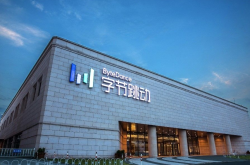
ByteDance adheres to a tried-and-tested product strategy: harnessing the vast traffic from Douyin’s main platform to foster new business ventures, and only considering independent market entry once these ventures have reached a substantial scale.
In February of this year, the group-buying app ‘Doushengsheng’ made its official debut. Users can seamlessly log in using their Douyin accounts, effortlessly syncing their group-buying orders and favorite stores from the main platform with a single click. Additionally, enticing subsidies such as Luckin Coffee and McDonald’s 0.01 RMB first-order deals were introduced. In March, the ‘On-Demand Group’ service underwent an upgrade to ‘Douyin Instant Delivery,’ with officials stating that this proactive enhancement was based on observed takeout demands over more than a year of operation.
From RMB 11 billion to RMB 850 billion, Douyin’s local services have achieved the fastest-ever scale expansion in just four years. Now that this scale has been attained, the focus has shifted towards enhancing quality.
The emergence of an independent app serves as a hallmark ByteDance-style signal. Douyin E-Commerce followed a similar trajectory—first establishing its logic within the main platform’s livestream rooms, then launching independently with ‘Douyin Mall’ to foster a distinct mindset among users planning their purchases. Local services are now replicating this underlying strategy.
Compared to content products like CapCut or Tomato Novels, independent apps also represent a litmus test for maturity. E-commerce and local services are transaction-oriented businesses, with core metrics encompassing GMV, conversion rates, and merchant resources. The true challenge lies in whether they can sustain themselves through user habits derived solely from transactions, independent of content-driven traffic.
Meanwhile, local services face an additional hurdle compared to e-commerce. While e-commerce fulfillment culminates with package delivery—a standardized, replicable process—local services fulfillment is only complete when the user actually enters the store or when the delivery rider rings the doorbell. Both scenarios require fulfillment, but the latter involves far more variables.
This challenge is encapsulated by a direct industry term: redemption rate.
According to Lei Feng Network, Douyin’s current overall redemption rate hovers around 50%, while Meituan’s remains consistently stable between 80% and 90%. This persistent gap can be traced back to Douyin’s initial entry into the local services market.
Meituan operates on a demand-driven model. Users seeking meals or massage appointments open the app, search, place orders, and complete transactions. The platform functions as an ‘electronic Yellow Pages + fulfillment tool,’ with consumption intent existing prior to app engagement—purchasing merely realizes that intent.
Douyin, on the other hand, operates on a content-driven model, consistent with its e-commerce approach. Users inspired by shop review (store exploration) videos or discounted set meals make purchases impulsively. The platform acts as a ‘content seeding + transaction conversion’ tool, where consumption intent is generated by content rather than brought by users.
The difference between these models can be succinctly summarized: Meituan users ‘buy when they need,’ while Douyin users ‘buy when they see.’ The merchant community’s adage—‘Douyin for customer acquisition, Meituan for repeat purchases’—plainly captures this logic. Yet the value of content-driven models is undeniable: they generate substantial ‘unplanned consumption,’ helping merchants reach potential customers who wouldn’t actively search, offering unique advantages for new brand launches and new category education. Douyin’s rapid growth in local services over the past few years largely stems from this capability.
However, it harbors an inherent structural flaw: a time lag and intent gap between purchase and consumption. The impulse triggered by short videos is immediate, but once it fades, practical barriers emerge—requiring another trip? The store seems distant? Maybe next week. This ‘purchased but unused’ state is harder to manage in local services than in e-commerce. While e-commerce refunds provide clearer loss mitigation, local services vouchers often expire unused rather than being actively refunded.
The financial impact of this divergence is direct. Local services’ primary monetization method—commissions—only materializes upon redemption. Redemption rates also serve as crucial signals for merchants. Evaluations of advertising ROI, repeat purchase intent, and user quality ultimately hinge on actual store visits.
This is hardly a new issue. During the 2010 ‘Thousand-Group War’ era, ‘unused vouchers’ and ‘non-refundable expirations’ plagued the entire industry. Unredeemed group-buying vouchers left funds lingering between merchants and platforms, sparking user complaints and accelerating the price war’s collapse. Meituan’s victory among group-buying platforms stemmed partly from its dual focus on refund mechanisms and in-store fulfillment management, rebuilding user trust. The subsequent rise of food delivery introduced high-frequency, immediate consumption, reinforcing the platform’s redemption culture.
Douyin’s current redemption rate challenge exists further upstream. While platforms now widely support refunds, the immediacy and certainty of consumption scenarios remain elusive. Douyin’s traffic distribution mechanism—essentially an entertainment algorithm—excels at triggering instant emotions rather than matching definite needs. Transitioning from a content platform to local services requires migrating not just functions but also reshaping user and merchant perceptions of the platform.
The launch of Doushengsheng, to some extent, addresses this old structural issue through a new entry point. The app’s homepage deliberately de-emphasizes content: no store livestreams, no algorithm-driven recommendation feeds. Instead, it adopts a single-column menu layout closer to Meituan’s experience, with direct, clear product information. This represents Douyin’s proactive shift in shaping user expectations for consumption scenarios.
This stands in stark contrast to the main platform’s content consumption logic, marking a deliberate separation of user mindset.
Simultaneously, the platform introduced a series of supportive measures: reducing entry deposits across multiple categories, offering specialized operational subsidies, and launching a co-management model to help digitally challenged small stores lower operational barriers. These actions converge on enabling merchants who can’t create videos or host livestreams to still be discoverable on the platform.
Ultimately, whether an independent app can thrive depends on merchant supply, user experience, and whether the platform can cultivate independent usage habits after weaning off main-platform traffic. None of these can be resolved by a single app launch. After all, Douyin Mall took two full years to reach its current state.
Doushengsheng and Douyin Instant Delivery represent market-facing moves, while the organizational restructuring announced in April 2025 signals internal realignment—both conveying the same message.
This marks Pu Yanzi’s second major reorganization since taking over Douyin Local Services over two years ago. The first, in early 2024, dissolved the previous industry-based parallel divisions for in-store dining, in-store services, and hospitality/tourism, restructuring them into northern, central, and southern regional systems while establishing a dedicated NKA department for national chain merchants.
That adjustment’s goal was clear: rapid store expansion to strengthen supply foundations. By late 2023, the platform had only 4.5 million partner stores—less than half of Meituan’s. Regional systems with ground teams represented the fastest way to close this gap. The strategy proved effective: within two years, the number of active stores surged from under 5 million to over 15 million, tripling in scale.
With scale achieved, new issues surfaced more prominently. Regional systems operate on a ‘total responsibility’ logic, where teams manage all merchants within their jurisdiction, with GMV scale as the core metric. This inevitably skewed resources toward large merchants capable of quickly boosting GMV, leaving small and medium-sized merchants as ‘zombie stores’ after entry. According to iResearch’s 2025 survey, over half of local SMEs lack professional short-video operation teams.
The core of this adjustment addresses that issue. The new structure uses a monthly GMV threshold of 50,000 RMB to split merchant management: merchants exceeding 50,000 RMB fall under the online department, categorized into KA (over 100,000 RMB monthly), self-service (50,000–100,000 RMB monthly), and hospitality/tourism for refined operations. Merchants below 50,000 RMB fall under the offline department, managed regionally across northern, southern, and eastern zones, with the original Shanghai and central regions dissolved to tighten management radii. Offline departments’ KPIs also shifted from GMV scale to merchant entry rates, retention rates, and redemption rates.
Small and medium-sized merchants form another focal point. Currently, their online penetration rate remains below 20%, far lower than the 60% for chain brands. While chain brands’ discounted bestsellers drive GMV, they fail to generate repeat purchases. Community-rooted small stores thrive on repeat business from regulars, naturally providing a foundation for redemption rates and user stickiness.
Additionally, hospitality/tourism was separated to stand alongside KA and self-service categories, rather than nested within any sub-sector. This acknowledges strategic differences in redemption rates, supply chain dependencies, and full-chain fulfillment complexity compared to dining and in-store services. Combining them would dilute resources and obscure issues; only independent management allows meaningful improvement.
Organization always follows objectives. When goals shift, organizations must adapt—stagnation becomes the problem. Pu Yanzi, a ByteDance veteran since 2013, rose from deputy general manager of Toutiao’s commercialization to VP of ByteDance’s commercial sales, making her one of the company’s core commercialization leaders. In November 2023, she succeeded Zhu Shiyu, who had a strategic background, to lead this business.
The leadership change was interpreted straightforwardly: the predecessor had established frameworks and strategies, and now it was time for battle-tested execution, hence promoting someone with a sales background. Over two years, she drove two major organizational restructures, growing GMV from 310 billion to 850 billion RMB. Yet this adjustment signals a ‘slowdown,’ demanding a longer-term vision—a tougher challenge for a company accustomed to trading speed for results.
As for the sector’s attractiveness, recent entrants’ moves provide clues. In April 2025, Baidu officially launched a local services zone within its app, embedding an AI service assistant and aggregating multi-category local services like dining, repairs, and education. This marked Baidu’s re-entry after shutting down its ‘Duolixiong’ group-buying platform in 2022.
Baidu opted for a lightweight approach, leveraging search entry points and LBS mapping advantages to focus on ‘decision guidance’ rather than building a full-chain transaction ecosystem. Strategically, it aims to defend the high-frequency ‘active service search’ scenario rather than directly competing with Meituan or Douyin. A company with prior failures and pressing core business challenges choosing to re-enter at this juncture speaks volumes about market signals.
Within this landscape, in-store services hold particular strategic importance. Food delivery extends restaurant capacity online, while in-store group-buying allows platforms to directly intervene in offline consumer behavior. Whoever controls in-store traffic allocation holds deeper influence over consumer intent—a more profound penetration than takeout wars, explaining why no platform dares cede ground in in-store services. Alibaba’s Flash Buy doubling down on in-store operations, Gaode Maps launching ‘Street Rankings,’ and JD.com simultaneously rolling out ‘JD Reviews’ alongside its independent food delivery app all underscore this sector’s unignorable value.
The core contradiction for Douyin’s local services ultimately stems from platform DNA. ByteDance’s history is one of ‘speed’: Toutiao defeated portals through algorithmic distribution, Douyin redefined content consumption via short videos, and e-commerce livestreaming overtook traditional shelves through impulse logic. Yet local services operate on a different logic, requiring acceptance of slower returns.
Douyin’s current shift signals that this fast-moving company is formally bowing to the inherently slow nature of this business.
*The featured image and illustrations in the text are sourced from the internet.
-
![]()
Wang Huiwen, Former Meituan Executive, Achieves 20-Fold ROI, Supports 24 AI Startups
-
![]()
Another AI Computing Power Unicorn Launches IPO! Founded by a Changjiang Scholar
-
![]()
OFILM Holdings Secures Zhongke Daojing, Marking a Significant Leap in the Optical Communication Industry!
-
What Will Be the Next Key Battleground for Large Models After AI Coding?
-
![]()
Leapmotor's Sales Soar, Yet Hidden Concerns Loom
-
![]()
China’s Action Camera Market Soars: 3.12 Million Units Sold in Six Months, DJI Secures 74% Dominance
-
![]()
Zhang Yiming: Strategic Retreat as a Path Forward
-
![]()
Exploring Charging for Some Features of QianWen App: Can It Follow the Path of Doubao?