Company Rebranding Unveils First New Model: He Xiaopeng Sets Sights on 400,000 Yuan Price Point
 04/17 2026
 437
437
Source | Yuan Auto
XPENG X9 Super Extended Range Edition: Pre-sale commences at 350,000 yuan, with launch pricing starting from 309,800 yuan;
XPENG G7: Pre-sale begins at 235,800 yuan, launch prices kick off at 195,800 yuan;
XPENG P7+: Pre-sale starts at 209,800 yuan, with launch prices from 186,800 yuan...
While the strategy of setting high pre-sale prices only to later surprise with lower launch prices is not exclusive to XPENG, this Guangzhou-based new energy vehicle (NEV) startup seems to have a particular affinity for it. Beyond the aforementioned models, the brand-new XPENG P7, as XPENG's flagship sedan, epitomizes this tactic.
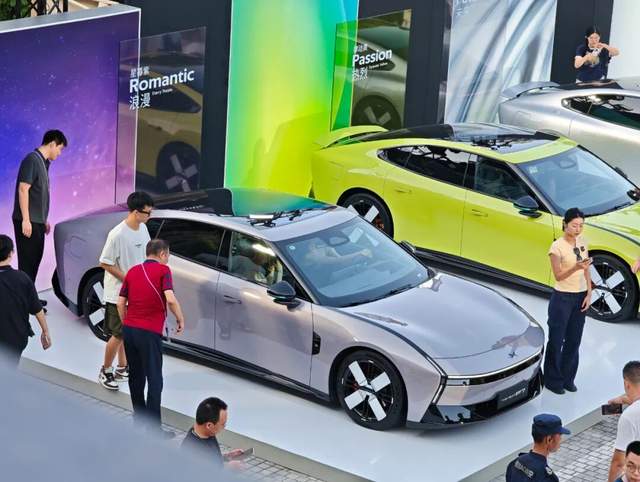
On August 6, 2025, the brand-new XPENG P7 opened for pre-sale. At that time, no pre-sale price was disclosed, but CEO He Xiaopeng made it clear in subsequent media interviews and earnings calls that the vehicle would be positioned within the 300,000 yuan price bracket. 'Objectively speaking, I hope it will become a high-volume bestseller, but it certainly won’t be the 'affordable' option that some XPENG enthusiasts anticipate,' He Xiaopeng posted on his personal Weibo account.
Ultimately, the brand-new XPENG P7 was priced starting at 219,800 yuan, with even the base model boasting all the key features highlighted during the promotional phase, such as Turing chips and air suspension. Of course, there's also a 301,800 yuan 'Peng Wing Edition' variant of the new P7, which, to some extent, lives up to the claim of a 300,000 yuan positioning.
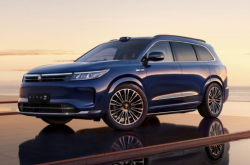
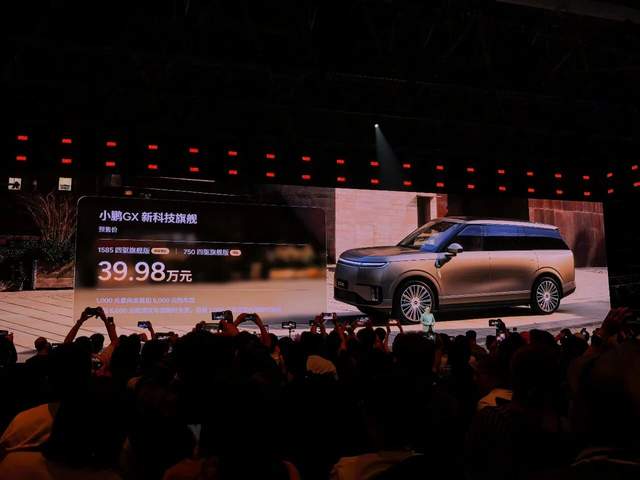
Given this series of examples, attention now shifts to XPENG's latest flagship SUV, the XPENG GX, announced by He Xiaopeng on April 15, with a pre-sale price of 399,800 yuan—a new benchmark for the brand. However, the question of whether the XPENG GX’s pricing will translate into robust sales is perhaps even more intriguing.
01
Still in Search of a Premium Identity
In China’s NEV market, where new models are launched at a breakneck pace, there are an increasing number of vehicles with competitive pricing and product strength that consistently fall short of sales expectations.
The brand-new XPENG P7 is a prime case in point.
According to third-party retail data from the China Association of Automobile Manufacturers (CAAM) and the China Passenger Car Association (CPCA), the brand-new XPENG P7 has sold a cumulative total of 23,041 units since its launch in August 2025 through March of this year. Achieving such sales figures would have taken only 3–4 months for the original XPENG P7 in 2021.
Notably, the average transaction price of the original XPENG P7 at that time was between 250,000 and 300,000 yuan.
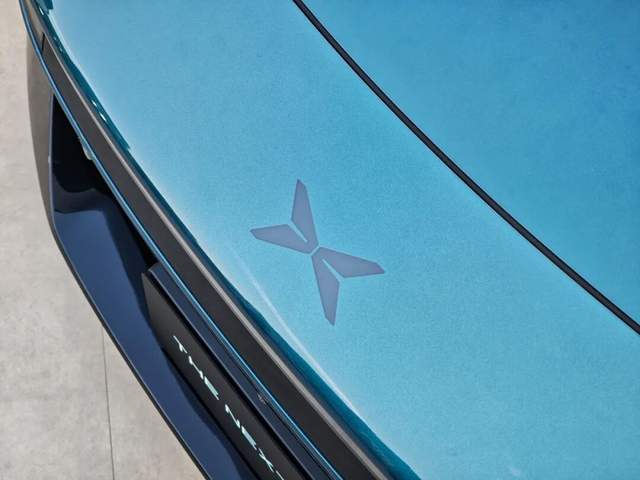
When viewed within a broader market context, the brand-new XPENG P7 also underperforms compared to its predecessor. Ranking models by sales using the keywords 'pure electric sedan' and '200,000–250,000 yuan,' the brand-new XPENG P7 lags behind the Tesla Model 3, Xiaomi SU7, and Zeekr 007 over the past six months (October 2025–March 2026).
Against this backdrop, XPENG may need to reassess what underpins its premium positioning, especially for new flagship models like the brand-new XPENG P7 and XPENG GX, which aim to penetrate the 200,000 yuan or even 300,000 yuan-plus market segments.
Currently, XPENG is widely regarded as a leader in AI intelligence and pioneering original design—a perception largely cultivated by the company’s official messaging. However, upon closer examination, these two labels may not provide a solid foundation for a premium positioning.
AI intelligence is undoubtedly a promising avenue for a company to broaden its appeal, but there is currently no trend of consumers willing to pay a premium for it. From advanced driver-assistance systems to smart cockpits, AI applications in vehicles with relatively strong perceived value are currently moving toward widespread adoption—a direction that contradicts the exclusivity and scarcity needed to justify premium pricing.
In this regard, XPENG has also diluted the premium appeal of high-end models like the brand-new XPENG P7 and XPENG GX by consistently rolling out cutting-edge AI capabilities across all its models. At its March event, XPENG announced that even its most affordable model, the MONA M03, could be equipped with two Turing chips for VLA 2.0 advanced driver-assistance capabilities.
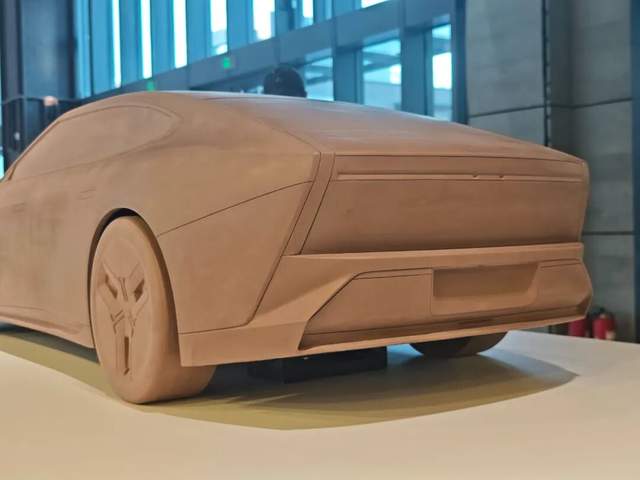
As for pioneering original design, this label is inherently subjective, and as a new energy vehicle startup, XPENG is unlikely to achieve the same premium pricing through design as established brands like Porsche or MINI.
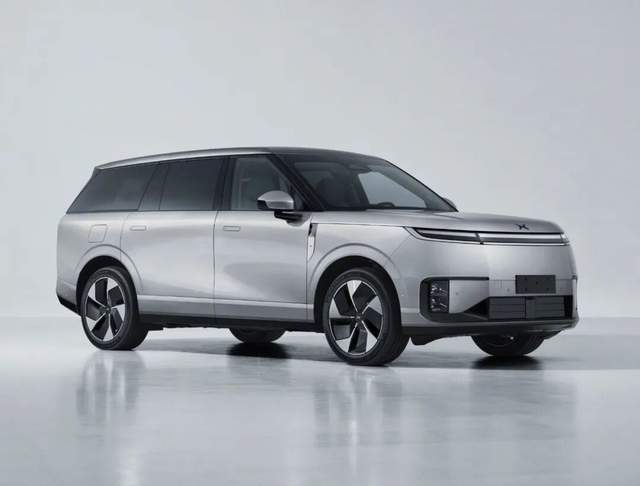
Turning to the XPENG GX, its selling points—such as AI-dimming privacy glass and a design widely compared to the Range Rover—indicate that AI intelligence and original design remain XPENG’s primary levers for justifying a higher price. However, whether the market will embrace this remains to be seen.
02
He Xiaopeng’s Multifaceted Efforts to Reclaim Premium Status
To cultivate a premium image for XPENG, He Xiaopeng has explored various strategies.
'Today, XPENG is moving upward. In a few months, we will witness XPENG vehicles going global. In the second half of this year, XPENG will unveil groundbreaking innovations in low-altitude mobility and robotics,' He Xiaopeng declared. True to his word, XPENG is evolving into a conglomerate spanning NEVs, low-altitude flight, and robotics. Notably, in March of this year, the company rebranded from 'XPENG Motors Co., Ltd.' to 'XPENG Group.'
Focusing on XPENG’s core automotive business, despite the sluggish start for the brand-new XPENG P7, the company continues to make every effort to reclaim its premium position. Launching a super extended-range version of its flagship MPV, the XPENG X9, is one strategy; expanding the product lineup with a large six-seat flagship SUV, the XPENG GX, is another.
Behind these moves lies the reality that XPENG, while firmly entrenched in the 100,000–200,000 yuan segment, has begun to encounter bottlenecks.
Take automotive gross margin as an example. According to XPENG’s financial reports, after a sales surge in 2025, its annual automotive gross margin reached 12.8%, up 4.5 percentage points year-on-year. Quarterly margins for 2025 were 10.5%, 14.3%, 13.1%, and 13%, with the second quarter’s 14.3% marking the historical peak.
For comparison, NIO and Li Auto—two other leading NEV startups—reported higher or more consistently improving margins. Li Auto’s 2025 full-year automotive gross margin was 17.9%, significantly higher than XPENG’s, while NIO’s margins showed a healthier upward trend, reaching 10.2%, 10.3%, 14.7%, and 18.1% across the four quarters of 2025.
Clearly, replicating the success of the original P7 in the 200,000 yuan or even 300,000 yuan-plus market segments and boosting profitability with higher-margin models has become crucial for XPENG’s next phase of growth.
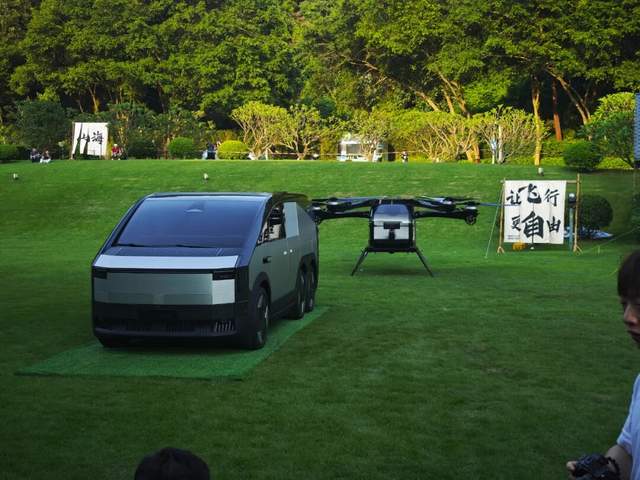
Looking ahead to 2026, the XPENG GX—priced at least in the 300,000 yuan range—will be pivotal to XPENG’s premium ambitions, but it is not the only card in play. The company also plans to launch another SUV, codenamed G02, positioned similarly to the XPENG GX. Additionally, XPENG’s independent Robotaxi business unit has been established, with three Robotaxi models set to begin trial operations this year.
Leveraging various cutting-edge tech businesses to embody XPENG’s premium positioning follows a path reminiscent of Elon Musk and Tesla.
Some images sourced from the internet. Please notify us for removal if any copyright infringement is found.
-
![]()
Jitian Xingzhou: A Pioneer in Optical Payloads Secures Hundreds of Millions in Series B Funding!
-
![]()
Orders Secured Through to the Second Half of the Year! The Rationale Behind the 'Surge' in Demand for This Company’s Optical-Grade Base Films
-
![]()
Beyond Patents: The Retail Rivalry of Insta360 and DJI Unfolds
-
![]()
180 Billion Market Cap Vanished! How Did Seres Fall So Far?
-
![]()
Blockbuster! Domestic storage takes the global double crown for the first time, from an AI company
-
![]()
China Spearheads Formulation! World's Pioneering Global Technical Regulation for Automated Driving Systems Greenlit and Unveiled
-
![]()
Farewell to Pulsed Support Policies: Three Major Auto Policy Directions from Multiple Departments Take Effect on the Same Day
-
![]()
Embercore AI’s Accelerated Funding: The Robot Industry’s Shift Toward ‘Learning Systems’