Yang Likun Criticizes Anthropic CEO: Don't Trust the AI Salesman
 04/20 2026
 443
443
LeCun has lashed out—this time not at Meta, not at Zuckerberg, but at Anthropic CEO Dario Amodei.
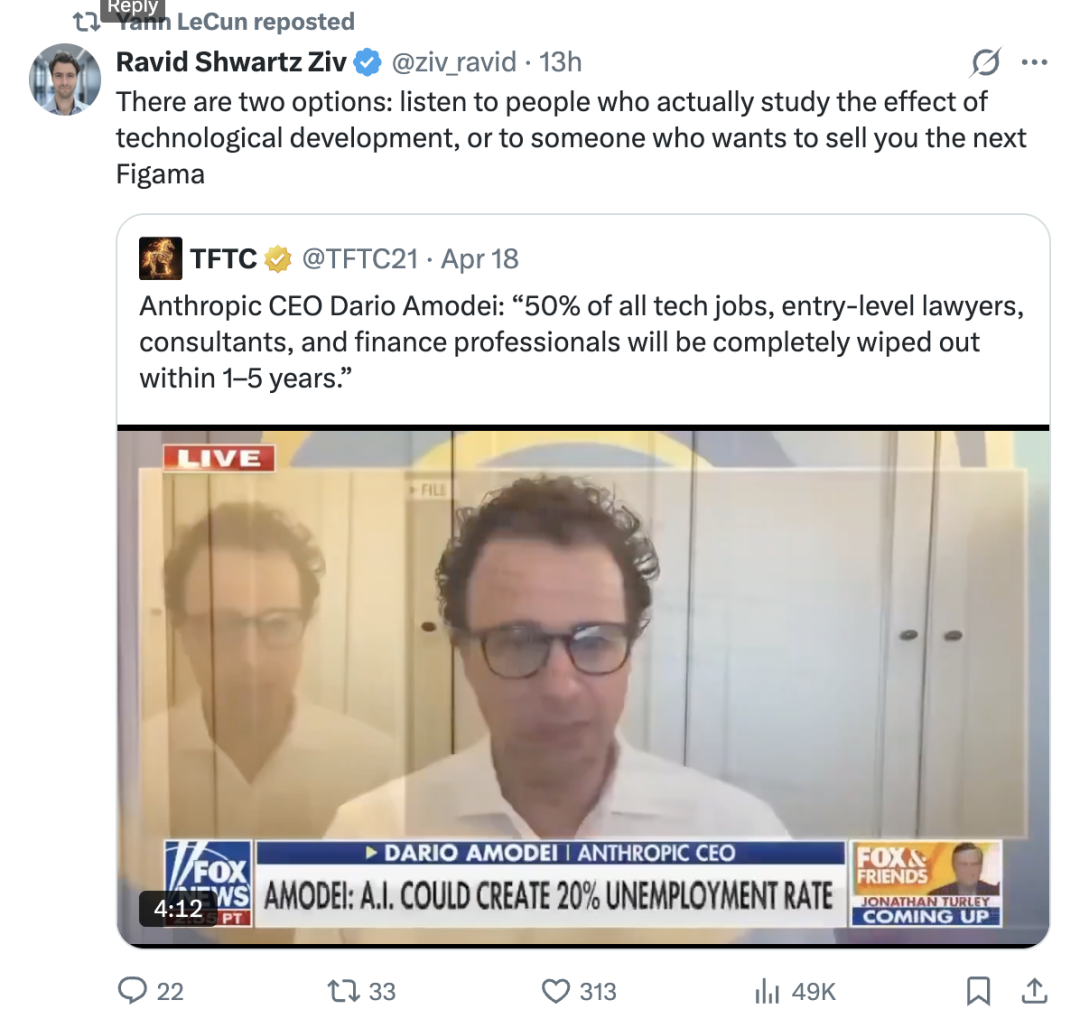
LeCun reposted an X clip from Fox & Friends featuring Dario's statement on AI-driven unemployment: 'AI will eliminate 50% of tech jobs, junior lawyers, consultants, and financial workers within 1-5 years. Unemployment could hit 20%. Fox News highlighted it with bold white text on black: 'CEO WARNS A.I. COULD WIPE OUT WHITE-COLLAR JOBS'.
LeCun's response after reposting was clear: Don't believe him—he just wants to sell AI.
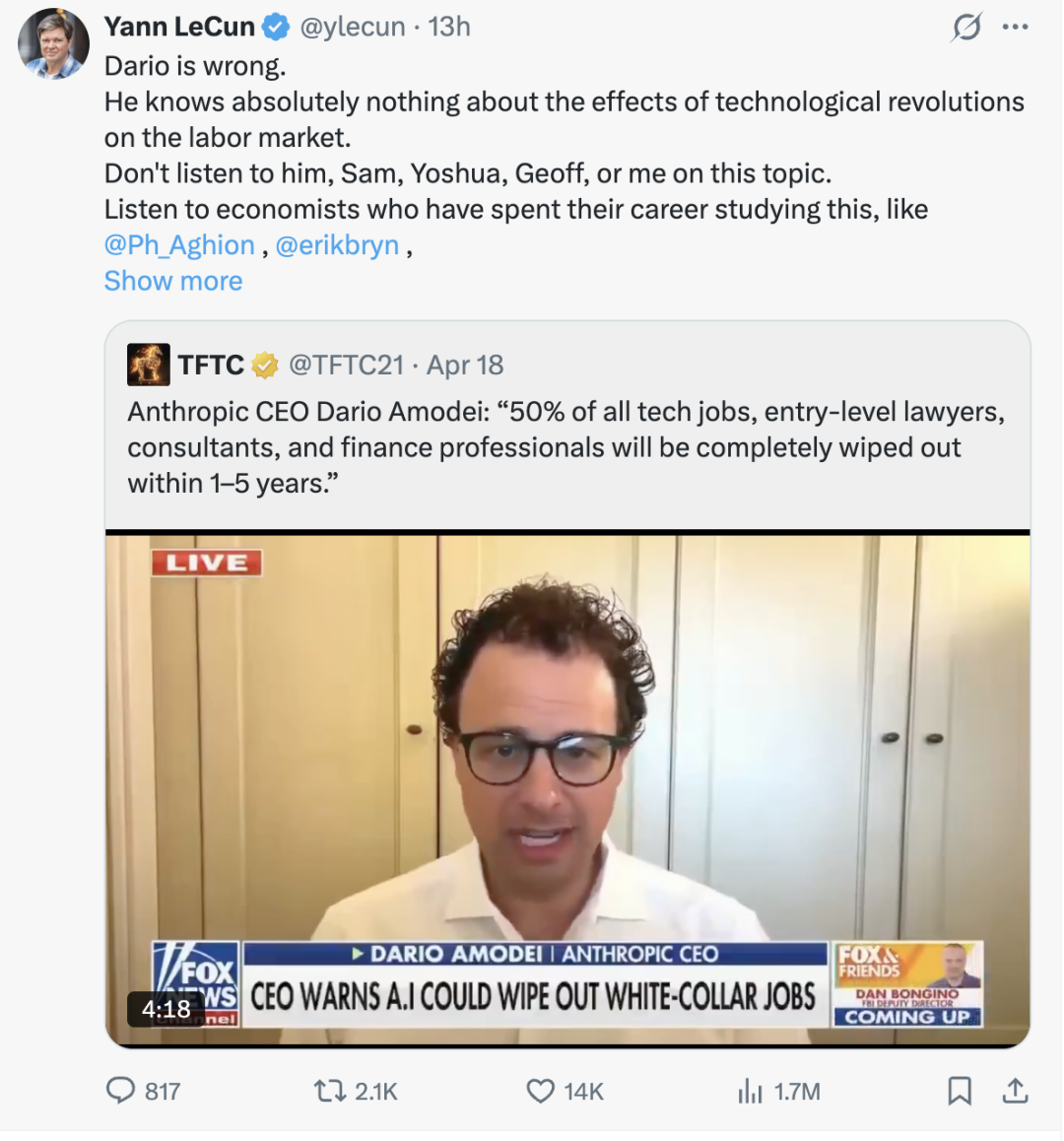
A researcher fresh from Meta and a unicorn CEO cashing in on AI panic just clashed head-on on X.
Yang Likun Takes Action
Late last year, Yang Likun left Meta after 12 years.
Before departing, he left a parting shot: 'You can't tell a researcher like me what to do.' At the time, Meta had just restructured its AI division, slashing the FAIR research team and bringing in new management. He dismissed the airdropped AI leader as 'young and inexperienced.' Instead of waiting, he left to found AMI Labs for 'world modeling.'
His impatience with Amodei's narrative is nothing new.
In 2023, he posted on X: 'AI won't take your job—it'll change it and create new ones.' He cited the same economists—Autor, Acemoglu, Brynjolfsson—as now. He also repeated a favorite stat: 60% of today's jobs didn't exist 80 years ago.
His logic isn't 'AI has no impact.' It's that technology always works this way—destroying some jobs while creating new ones no one imagined, with net employment expansion, not contraction. He describes the future AI-human relationship as: 'AI are employees; humans are bosses. We'll direct them, not be replaced by them.'
He's also mocked the logic behind doomsday predictions. AI threat theories, runaway scenarios, existential risks... He's called such narratives 'sci-fi clichés' in multiple forums, saying they 'defy everything we know about how things work.'
So when Amodei's video dropped, he reposted another researcher @ziv_ravid's post: 'You have two choices—listen to economists who've actually studied technology-employment links, or the guy trying to sell you the next AI product.'
Then he added his own take:
'Dario's wrong. He doesn't understand how tech revolutions affect labor markets. On this topic, don't listen to him, Sam, Yoshua, Geoff, or me. Listen to economists who've studied this their whole lives.'
He listed five names: Aghion, Brynjolfsson, Acemoglu, McAfee, Autor—all economics experts, including 2024 Nobel laureate Acemoglu.
The implication: 'This is an economics issue, not a tech one.'
LeCun is self-aware. His X post's most-shared line was 'don't listen to me.' Not out of humility, but to say AI insiders, including himself, aren't authorities on employment. If he just said 'don't listen to Dario,' the reply would be 'you're in AI too.'
Amodei's logic isn't hard to grasp. From day one, Anthropic wrote 'we take AI safety most seriously' into its brand story—Dario left OpenAI over safety concerns. The fear is real. But the more an AI CEO hypes AI's dangers and disruptiveness, the more crucial their product seems. Concern and marketing aren't mutually exclusive here.
Yang Likun has no product to sell.
History Repeats
In 1811, British textile workers smashed steam looms, believing machines would permanently unemploy them. That was the Luddite movement. The government sent troops, hanging dozens of leaders.
After the Industrial Revolution, Britain's total employment rose. Jobs changed—workers went from weaving to operating machines. Economists later labeled such misjudgments the 'Luddite fallacy.'
The 20th century saw repeats. Agricultural mechanization slashed U.S. farm labor from 40% to under 2% of the workforce, yet overall unemployment didn't collapse. After ATMs spread, bank teller numbers rose because branches multiplied. That's why LeCun cites the stat: 60% of today's jobs didn't exist in 1940. No one then predicted 'UX designers' or 'data analysts' as careers.
This doesn't mean no pain—or that this time won't differ.
The economist LeCun named, Acemoglu, isn't optimistic. His research labels tech paths that 'only replace, not create' as 'so-so automation'—machines displace workers without generating equivalent new demand. Whether AI falls into this trap, he calls an open question.
But that's worlds apart from '50% gone in 1-5 years.' One is 'complex, outcomes unknown'; the other is 'disaster has a set timeline.'
Anxiety is already warping reality.
On April 10, 2024, in San Francisco, a man threw Molotov cocktails at Sam Altman's home, then rushed to OpenAI's HQ threatening to 'burn it down and kill everyone inside.' Prosecutors cited his motive: hatred of AI and warning of 'impending human extinction.' He was charged with attempted murder. Two days later, gunshots rang out near Altman's home again, with two more arrests.
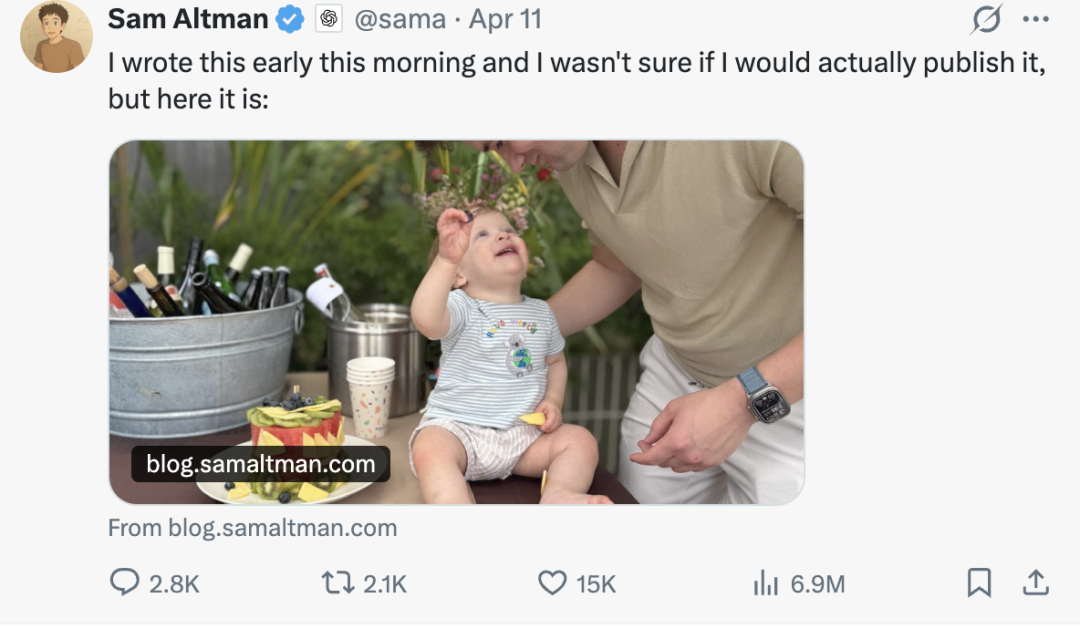
The attacker's mindset matched Amodei's Bloomberg narrative.
Dario hasn't responded to LeCun yet.
-
![]()
Wang Huiwen, Former Meituan Executive, Achieves 20-Fold ROI, Supports 24 AI Startups
-
![]()
Another AI Computing Power Unicorn Launches IPO! Founded by a Changjiang Scholar
-
![]()
OFILM Holdings Secures Zhongke Daojing, Marking a Significant Leap in the Optical Communication Industry!
-
What Will Be the Next Key Battleground for Large Models After AI Coding?
-
![]()
Leapmotor's Sales Soar, Yet Hidden Concerns Loom
-
![]()
China’s Action Camera Market Soars: 3.12 Million Units Sold in Six Months, DJI Secures 74% Dominance
-
![]()
Zhang Yiming: Strategic Retreat as a Path Forward
-
![]()
Exploring Charging for Some Features of QianWen App: Can It Follow the Path of Doubao?