The Digital Wave in the Global South: Why Zhongguancun's AI Is at the Forefront
 04/27 2026
 449
449
By Lingdu
Source: Jiedian Finance
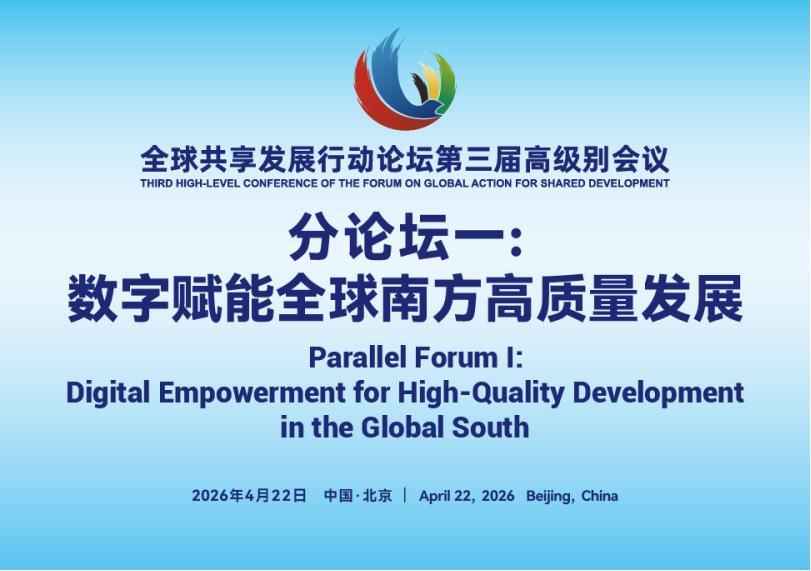
On April 22, at the first parallel sub-forum of the Third High-Level Meeting of the Global Shared Development Action Forum, titled "Digital Empowerment for High-Quality Development in the Global South," participants from diverse countries convened to explore digital technology solutions tailored to their specific national needs.
In the exhibition hall, robots provided real-time demonstrations for international officials. Below the stage, representatives from over 140 countries listened intently to presentations on Chinese technology. Above the stage, all six companies showcasing their innovations hailed from Haidian, Beijing.
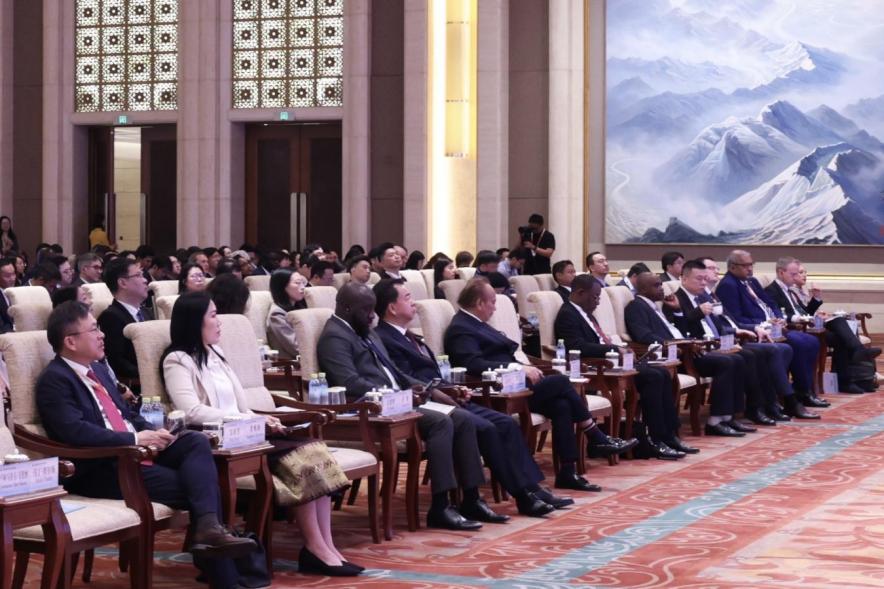
This scene highlights a crucial point: China is emerging as a significant exporter of technology. The global expansion of AI, centered in Beijing, has transitioned from a theoretical assessment to a tangible reality, complete with live demonstrations and on-the-spot agreements.
This raises an important question: Why here, of all places?
The Subtle Shift in the Logic of Global Expansion
In recent years, Chinese AI companies have typically expanded overseas by identifying needs, building systems, and deploying teams, tackling one market at a time. While this approach is viable, it is costly. The regulatory, linguistic, and infrastructural differences in each country resemble unique challenges, with limited replicability, making scalability largely an elusive goal.
However, the widespread availability of open-source large models is quietly transforming this logic from the ground up.
Jiedian Finance has learned that once technology is made public, target countries can directly deploy and locally adapt it without constant oversight from the original supplier. As cost barriers decrease, technological penetration deepens. This strategy mirrors that of Android: by embracing openness, its influence has grown stronger.
Nations in the Global South are rapidly advancing their digital infrastructure but face triple pressures: limited computing power, a shortage of AI engineering talent, and high costs for commercial closed-source models.
Open-source models offer a practical solution. Starting from a mature foundation, costs remain controllable, and local engineers can genuinely participate. At the forum, ministers from Timor-Leste to Senegal echoed a common sentiment: they seek not just demonstrative technical aid but digital capabilities that can operate locally and sustainably.
The window of opportunity is opening. The question is not whether to enter but who can do so competently.
Why Zhongguancun Leads the Charge in Global Expansion
The answer lies not in policy resources but in the density of industrial accumulation.
Data indicates that by 2025, Beijing's core AI industry will reach approximately RMB 450 billion in scale, with over 2,500 enterprises and 225 registered large models. Haidian District alone accounts for RMB 350 billion in core industry scale, over 2,000 enterprises, and 131 registered large models, making it one of the nation's most densely concentrated AI hubs.
However, scale alone does not tell the whole story. More critical is the formation of a complete technological stack—from foundational frameworks and base large models to industry-specific vertical applications, the linkages are interconnected.
Consider this example: A company entering a foreign market for agricultural data intelligence requires at least lightweight models adapted to local computing constraints, corpus support in local languages, system architectures capable of operating on unstable networks, and compliance experience with local governments. In Zhongguancun's ecosystem, these four elements are likely readily available; in other cities, they are probably incomplete.
Another structural advantage is the integration of basic research and industrial implementation within the same region.
AI labs at Peking University, Tsinghua University, and the Chinese Academy of Sciences have long undertaken foundational research and talent cultivation. The Zhiyuan Institute's open-source achievements are already well-regarded in international developer communities.
Many cities' AI industries feature enterprises without deep roots—companies can create products but cannot trace the origins of underlying technologies or cultivate original researchers. In contrast, most companies in Zhongguancun can trace their lineage to academic labs, a result of long-term density in industry-academia-research collaboration.
In Jiedian Finance's view, the pathway from labs to startups to mature enterprises runs smoothly here. The full spectrum of capabilities needed for global expansion is likely found here.
Three Companies, Three Distinct Paths to Global Expansion
Among the six roadshow companies, Minimax, Lingxin Qiaoshou, and DataCanvas serve as typical examples, representing different global expansion logics.
Minimax, spun off from Tsinghua's NLP team, features the MiniCPM series, characterized by small parameter sizes and high capability density, performing stably in computing-constrained environments.
In Jiedian Finance's view, Minimax's global expansion logic is clear: open-source itself is a form of penetration. Model downloads reflect adoption by local developers, signaling the formation of a localized ecosystem. Once this occurs, technological penetration transforms into infrastructure. For Global South markets, lightweight, open-source, and locally deployable solutions are not options but prerequisites. These nations are not unwilling to use the strongest models; they simply cannot afford or run them.
Lingxin Qiaoshou specializes in intelligent hardware and embodied AI, showcasing robotic bands and dances in the forum's experience space. While seemingly performative, this strategy is deliberate. Attendees are high-ranking government officials from various countries, already desensitized to technical data in slideshows. Having robots perform in person leaves a tangible technological impression in a short time, more effective than another speech.
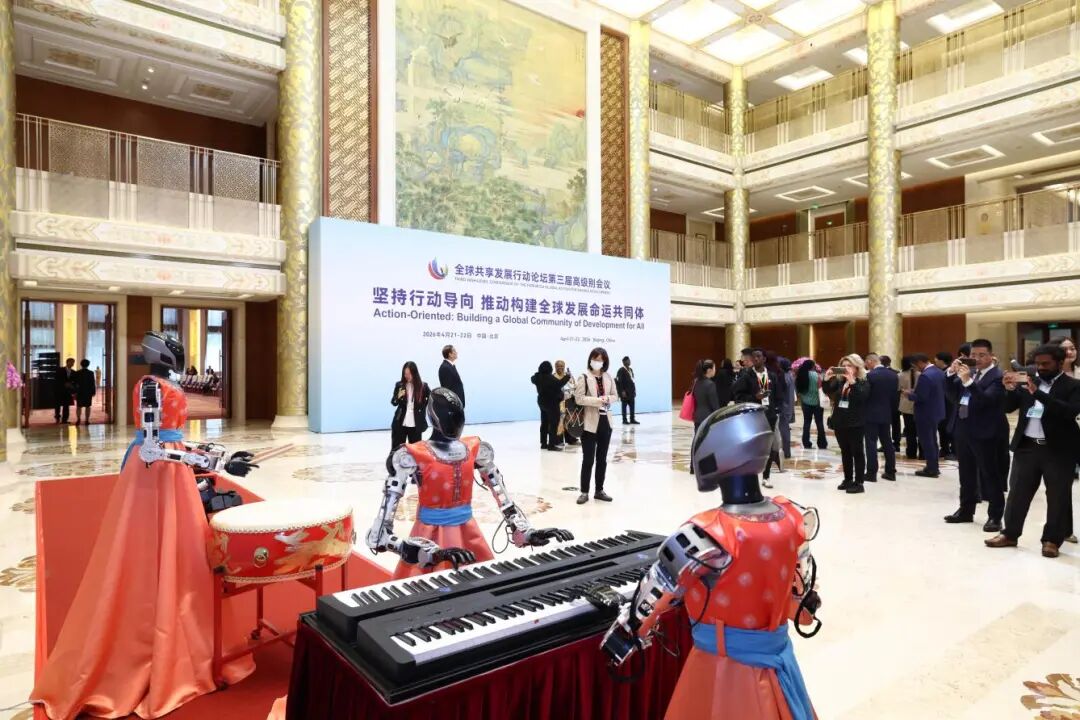
The underlying logic is that manufacturing and services in the Global South are rapidly expanding, creating genuine demand for intelligent terminals, but local engineering capabilities lag. This gap is where intelligent hardware companies can step in.
DataCanvas focuses on computing power orchestration, essentially serving as an "energy station" for computing power in the AI era.
Unlike traditional computing power leasing, DataCanvas's "One Degree of Computing Power" initiative transforms computing power from non-standard hardware into a measurable, tradable, and circulable standardized public service. It promotes computing power supply from bare-metal leasing to retail-style billing, significantly enhancing resource utilization efficiency in intelligent computing centers. This shift drives the industry from hardware sales to long-term, stable service-oriented models, providing a practical measurement foundation for a national integrated computing power network.
This standard enables computing power to be purchased on-demand, used instantly, and paid for by volume, akin to utilities like electricity and data traffic, truly democratizing and service-orienting computing power to support efficient operation of digital economy infrastructure.
DataCanvas's core competitiveness lies in its ability to convert local energy endowments into stable, green, and cost-effective computing power advantages, offering tailored, resilient computing bases. In local construction, it cultivates AI talent, enhances technical capabilities, and collaboratively builds operational systems. Notably, DataCanvas's integrated, simplified delivery reduces AI computing power readiness time from "years" to "months." These features empower Southern nations to achieve lightweight, localized solutions, truly transitioning from "Chinese products" to "Chinese solutions."
In Jiedian Finance's view, while the three companies pursue different directions, they share one commonality: their confidence stems not from price advantages but from technological density. This is cultivated through long-term, highly synergistic industry-academia-research environments, not hastily assembled.
What Zhiyuan Does Is Harder and Deeper Than Selling Products
One of the most overlooked achievements at the forum was the signing of a Memorandum of Understanding on AI Talent Cultivation Cooperation between the Zhiyuan Institute and the African Union–African Academy of Sciences.
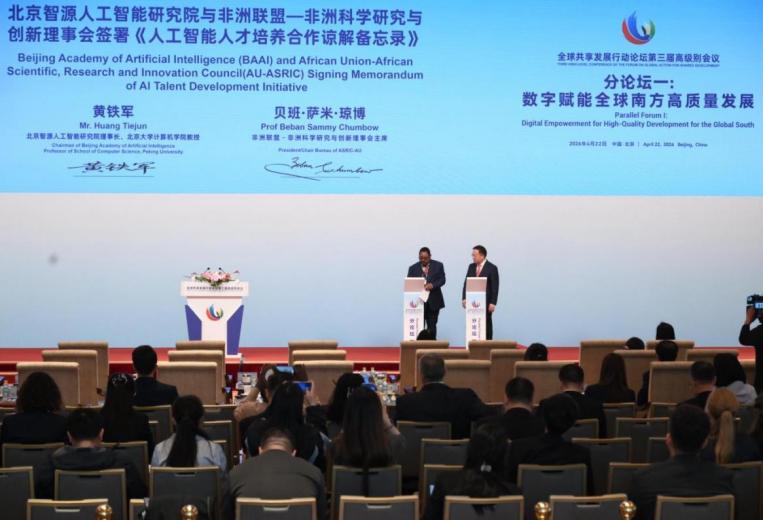
The entry point is not selling products but cultivating talent.
Why focus on talent?
In Jiedian Finance's view, the hardest part of technological implementation is not the tools themselves but whether local personnel can effectively use them. No matter how advanced the tools, without local engineers, they remain mere showpieces—projects end without maintenance, and systems gradually decay. This is a common issue in many international technical aid projects.
By cultivating local talent, the engineers produced become the deepest roots of this technological ecosystem locally. They are not just users but advocates, maintainers, and secondary developers.
According to reports, the two parties plan to train two cohorts annually. The inaugural cohort saw 131 applicants from 24 countries across Africa's five major geographical regions, involving 82 institutions, including top African universities like Cairo University and Addis Ababa University. The goal is to empower African university faculty, build a "seed teacher" corps for local AI education, and launch structured AI education courses and student practical training projects across Africa, laying a foundation for the next generation of AI talent and establishing a sustainable Sino-African AI education cooperation ecosystem.
This memorandum represents tangible achievements, reflecting not just AI capacity-building but also the positive implications of talent co-cultivation and international cooperation.
Zhiyuan can undertake this because, as a foundational research institution, it outputs not just technology but also methodologies for cultivating technical expertise—a capability difficult for purely commercial firms to replicate.
The Next Moves on the Horizon
Beyond the forum, several developments warrant closer attention.
Leveraging Zhongguancun's AI industry strengths, Beijing and Haidian District have established the "Beijing Zhihui AI Application Cooperation Center." This is not just about matching technology with scenarios; it is about co-building an open innovation ecosystem.
Its role is clear: assisting AI companies in going global by addressing "chokepoint" issues like data circulation, compliance adaptation, and capital repatriation. Why is this intermediary needed? Because many obstacles to global expansion are not technical but procedural and channel-related. Understanding local data regulatory frameworks, legal remittance channels, and compliance certification processes is costly for each company to navigate independently, and the experience gained is not reusable. The Zhihui Center's value lies in streamlining these repetitive efforts.
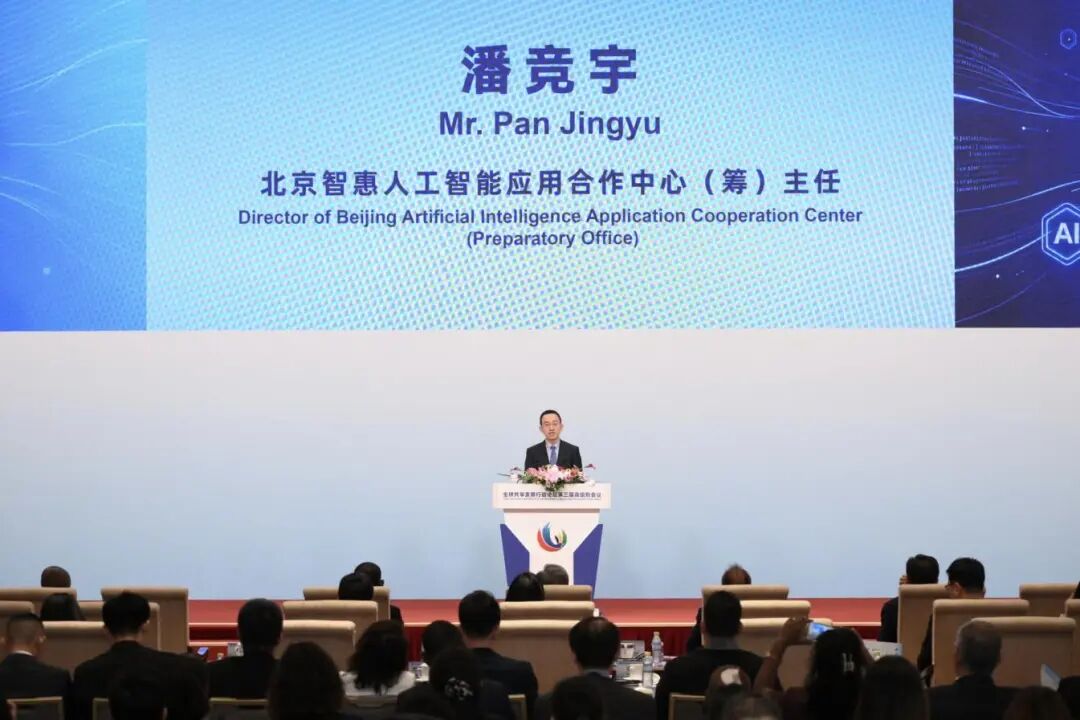
Its five service directions cover bidirectional matching of technologies and scenarios, joint research on standards and governance, co-cultivation of application talent, regular international dialogues, and co-building an open innovation ecosystem. This design extends beyond technical docking to rule synchronization, going deeper than typical matching platforms. The second direction merits special mention: forming consensus with target nations on data security, ethical norms, and regulatory frameworks. Success here does not just help companies comply; it involves participating in shaping the rules of the game.
Simply put, it builds a bridge to connect Global South nations, focusing on their AI needs and smoothing international cooperation.
A more concrete step: the Zhihui Center is planning to establish an AI Global Expansion Base, integrating incubation, compliance services, and international docking resources. This signal indicates that global expansion has moved from proposals to allocating physical space resources, marking a new level of seriousness.
Today, Zhongguancun's research forces are beginning to participate in international discussions as rule contributors—not just providing products but helping shape standards. This reflects a level of accumulation achieved only through long-term efforts.
Global Expansion Has Just Begun, but Those Who Think Clearly Will Gain Deep Advantages
The market's consensus on "where the next trillion-dollar opportunity lies" points to "global expansion." The current answer is high-quality AI global expansion.
In Jiedian Finance's view, digital transformation in Global South nations is genuine in scale and urgent in demand, and it is just beginning. The competitive landscape in these markets has not solidified; those who enter first and establish ecosystems will enjoy high switching costs as a moat. Early developer ecosystems, locally cultivated talent, and technology standards pushed through will, once formed, make it extremely costly for latecomers to compete.
However, the barriers to success are high: the technological foundation must be solid, not just a rebranded resale; compliance adaptation must be thorough, not reliant on relationships; and local ecosystems must be genuinely established, not just a roadshow in the capital before declaring global expansion. These three elements are interdependent—failure in one area undermines the others.
But one thing is clear now: those serious about AI global expansion can find the necessary components here—technological foundations, industry-academia-research synergy, engineering density, compliance support, and international docking channels—and they can be effectively combined. Few places currently offer this depth.
This journey has just begun. But those who build the foundation first will solidify their advantages early. Zhongguancun's opportunity lies in high-quality AI global expansion.
-
![]()
Tesla Restructures Its Balance Sheet
-
![]()
Accelerating the High-Speed Interconnection Upgrade of AI Computing Clusters! JONHON Releases ELSFP External Light Source Optical Connectors
-
![]()
Breaking the overseas blockade of volumetric holographic materials, this optical enterprise secures nearly 100 million yuan in financing!
-
![]()
Why Does Jensen Huang So Openly Praise China’s AI?
-
![]()
"Wudang" Unveiled: Arm China's Next-Gen AI VPU Redefines Video Encoding
-
![]()
From Energy Conservation and Carbon Reduction to AI Decision-Making: GECON East Intelligence and Chery Group Explore a New Green and Smart Paradigm for Automobile Manufacturing
-
![]()
WAIC 2026 Observation | AI Accelerates Towards the Core of Industries, Industrial AI Enters a Critical Phase
-
![]()
Volkswagen China Fires the First Shot in Foreign-Funded 'White Box Delivery'!