When DeepSeek V4 Made Waves, Doubao Quietly Surpassed Taobao
 04/27 2026
 507
507
The battle for AI-driven shopping has officially commenced.
This week, the AI community is abuzz, even more so than during the Spring Festival Gala.
Today marks the unveiling of DeepSeek-V4, which democratizes access to million-token context windows, robustly supports domestic GPU computing systems, and achieves unprecedentedly low-cost token usage—each facet warranting in-depth discussion. Just days prior, ChatGPT Images 2.0, Kimi K2.6, Tencent's Hunyuan Hy3-Preview, Xiaomi's MiMo-V2.5-Pro, Alibaba's Qwen3.6-Max-Preview, and GPT-5.5 all rushed to make their debuts... Before Roborock's "Silicon Valley Release Week" even began, the world witnessed an unprecedented AI release extravaganza come to a close.
Some speculate that the flurry of model releases aims to preempt DeepSeek-V4. However, this isn't entirely accurate. The primary driver behind this excitement is that the technology has reached a tipping point, yielding results that can no longer be contained—the so-called "singularity has arrived."
Amidst the clamor of tech giants vying for supremacy, another development has flown largely under the radar but could significantly impact the internet and AI industries, potentially rivaling the significance of DeepSeek-V4's release in terms of consumer-grade AI monetization.
Doubao Drops the Pretense: AI E-commerce is the Next Big Thing
On the same day DeepSeek V4 went live, Doubao App introduced a "Help You Choose" feature in its bottom navigation bar. The launch was understated, with minimal official press releases, yet the feature is now fully accessible to all users.
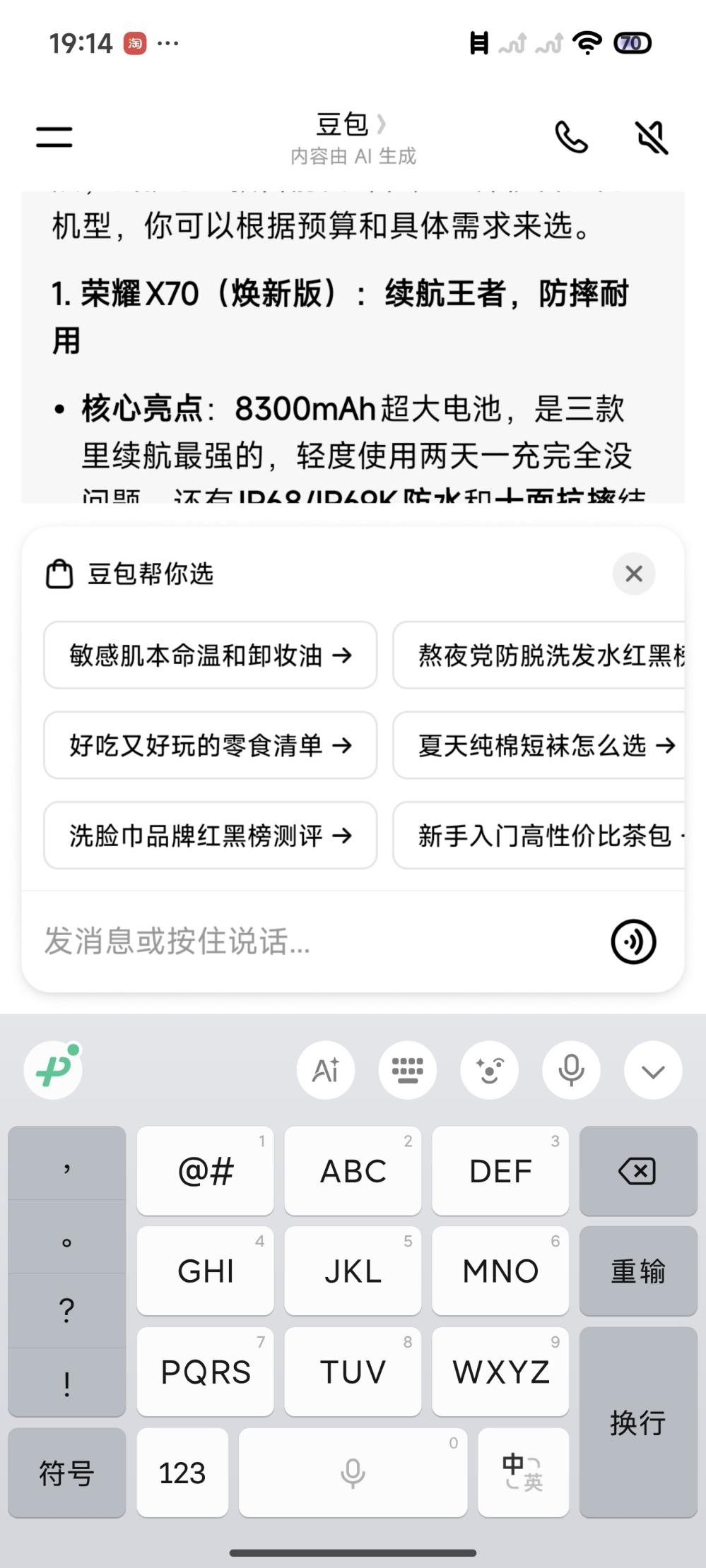
(Image source: Leikeji)
After testing it out, I found that "Help You Choose" is an AI-powered shopping guide centered around conversational interaction. For instance, if I tell Doubao, "Recommend a floor-cleaning machine as a gift for a friend. It should have a premium look and be from a reputable brand," the AI swiftly gathers information, analyzes the requirements, lists the pros and cons of different products along with price comparisons, and then provides personalized recommendations—a capability shared by many AIs. However, the key difference is that Doubao displays product cards in its results, allowing users to place orders with a single click.
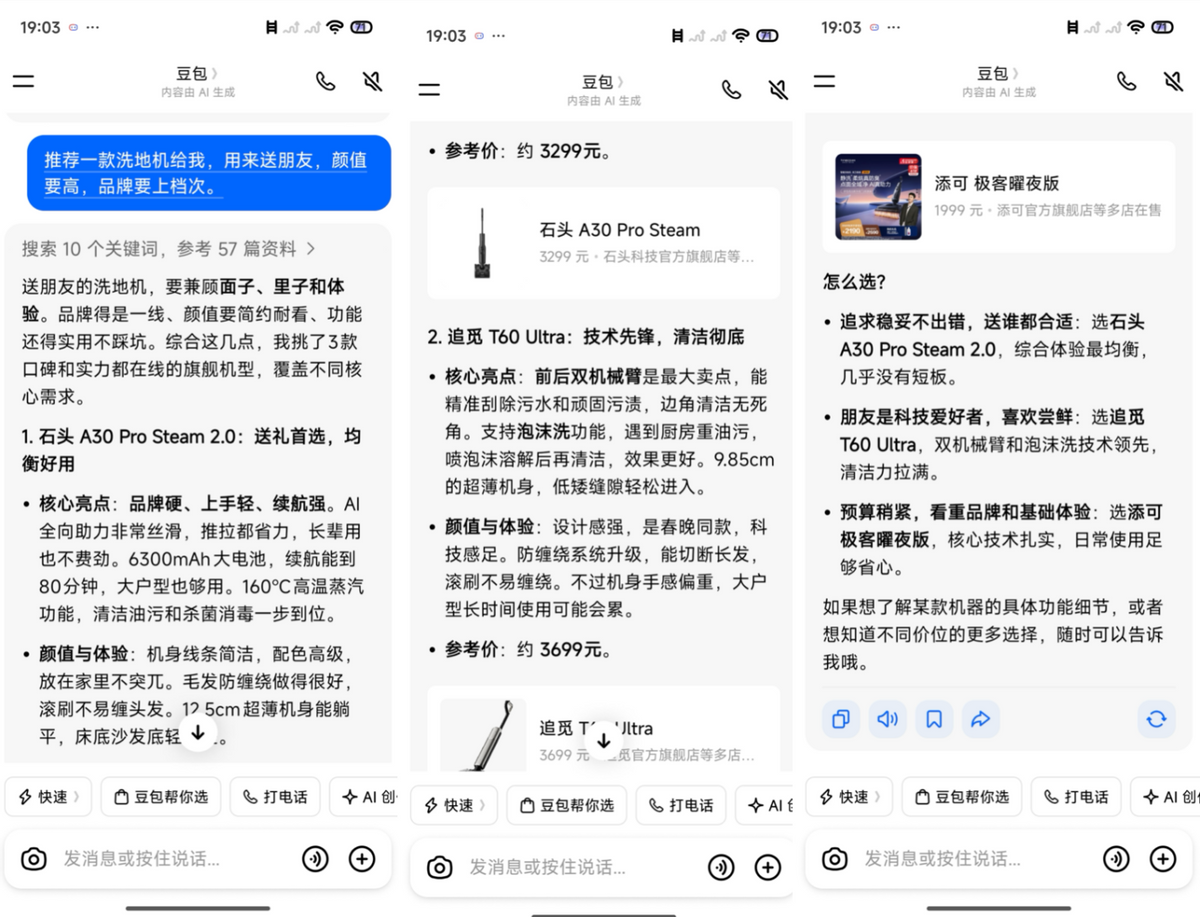
(Image source: Leikeji)
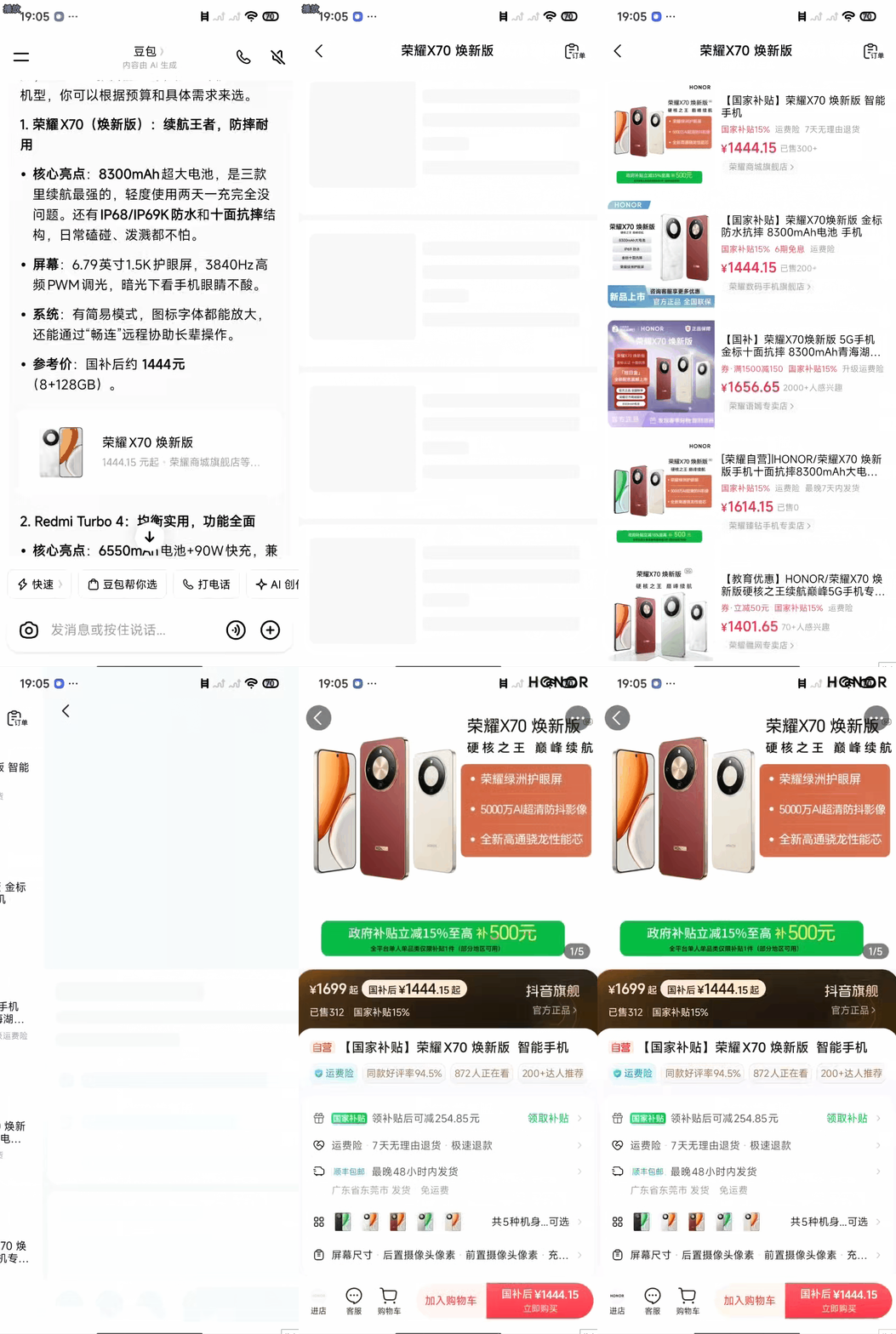
Of course, this isn't entirely novel. In late March this year, Doubao already supported a complete in-app shopping closed loop, enabling users to obtain product recommendations through AI conversations within the Doubao App and then place orders and make payments directly without being redirected to Douyin or other external apps.
Now, this feature has been prominently placed in Doubao's navigation bar—arguably the primary gateway for AI interactions. With a monthly active user base of 345 million, Doubao's move is akin to WeChat relocating "Shopping" from its grid of nine icons to the chat interface.
Thus, Doubao's intention is clear: to aggressively pursue AI-driven shopping, an endeavor on par with replacing traditional search engines. Previously, e-commerce search was the biggest advertising cash cow, even more lucrative than general-purpose search engines like Baidu. Theoretically, AI e-commerce should be even easier to monetize because it essentially functions as an "AI livestreaming sales host."
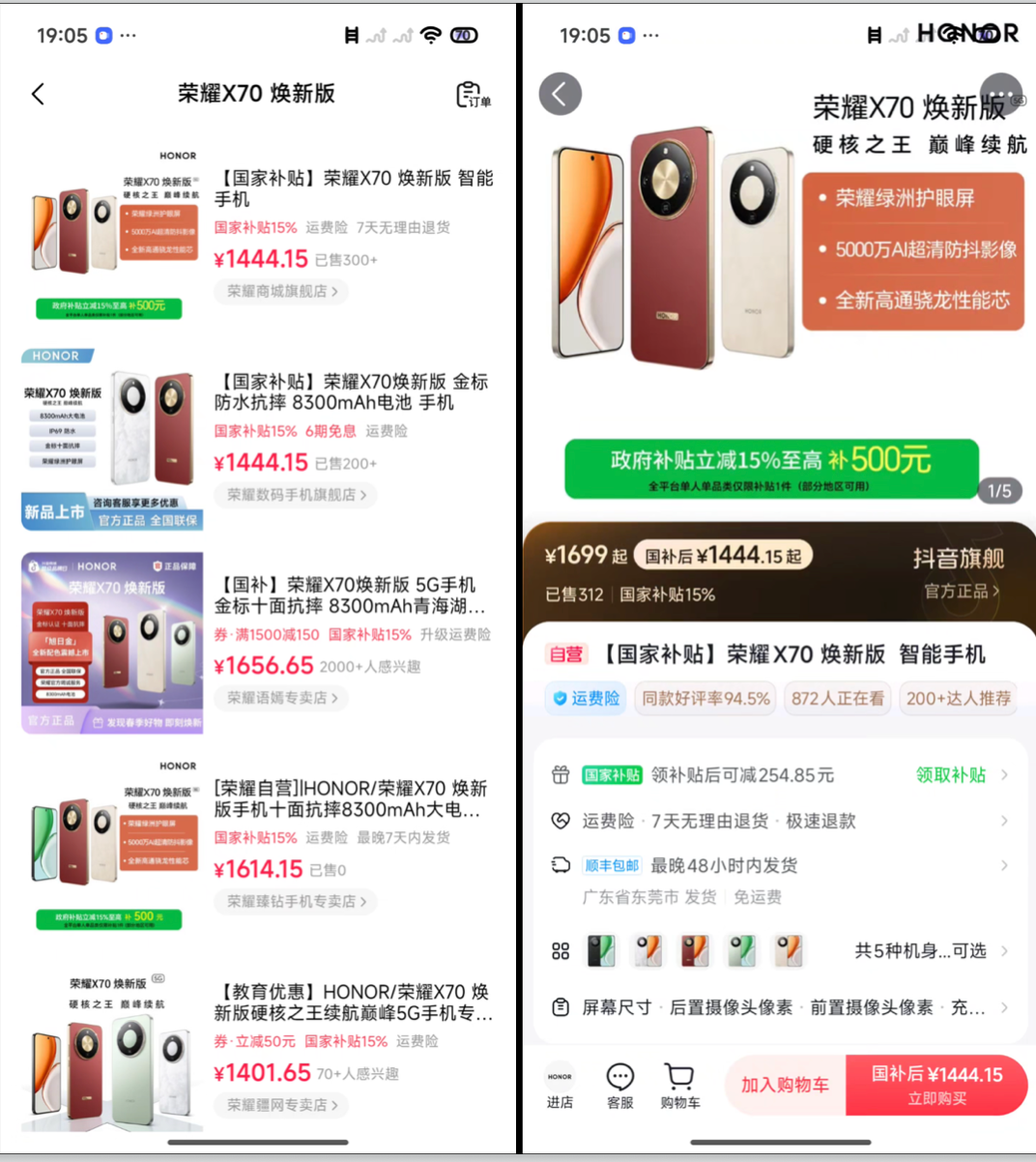
(Interface after redirecting from Doubao's chat dialogue, image source: Leikeji)
There are two primary user behavior patterns in e-commerce apps: first, users already know what they want to buy, so they search for it, compare options, and possibly check prices elsewhere; second, users browse aimlessly through home feeds, livestreams, or product recommendation articles. However, the logic of AI shopping is entirely different. Users may have clear needs, be undecided, or even be persuaded to make a purchase through conversation. To some extent, this is like providing everyone with a 24/7 online "AI version of Li Jiaqi," eliminating the need for platforms to pay commissions, merchants to offer fees, or users to bear "livestreamer taxes"—intermediaries are completely bypassed.
As Search Accelerates Its Migration to AI, What About E-commerce?
Over the years, observing the e-commerce industry, I've noticed a constant stream of new concepts, but the core logic remains centered around traffic and the relationships between people, goods, and shopping scenarios. Internet companies create spaces for merchants to conduct business. In terms of e-commerce models, the evolution has essentially been a shift from "people searching for goods" to "goods finding people," accompanied by a continuous shortening of intermediary chains.
The first transformation: The birth of online shopping moved offline retail online, with platforms like Amazon, Taobao, JD.com, and Paipai enabling users to "search and buy."
The second transformation: Mobile app shopping, exemplified by Taobao and JD apps, allowed users to "tap and buy" anytime, anywhere.
The third transformation: "Goods finding people" reached its peak with Pinduoduo's integration of social sharing and recommendation algorithms, ensuring that products users might want always appeared before them. This was interspersed with the emergence of instant retail and livestreaming sales—one emphasizing the certainty of 30-minute delivery, the other focusing on the emotional value of "people pushing products."
AI shopping doesn't merely patch up previous links but redefines the relationships between people, goods, and shopping scenarios. Once users fully adopt AI shopping habits, merchants will follow the traffic, and accompanying promotional methods will undergo drastic changes. This is no exaggeration. Traditional search engines are declining; Gartner predicts that search engine traffic will drop by 25% by 2026, and by 2028, AI search could surpass traditional search in market share. The migration of traditional e-commerce portals has officially begun today. At the 2026 Shoptalk summit, Goldman Sachs clearly pointed out that consumers' shopping starting points are undergoing structural shifts—from search bars and recommendation pages to chat dialogues.
Since Li Yanhong proposed "box computing," Baidu has been articulating a vision: "to enable users to get what they search for instantly, with search as a service." Now, AI has made this vision a reality, allowing users to shop directly within chat dialogues and shortening the path from person to product like never before. Over the years, e-commerce and retail giants have strived to accelerate product circulation: bringing products as close to consumers as possible while minimizing distribution costs from supply to demand. AI shopping will take this to the extreme.
Alibaba and JD.com's AI Strategies Are on the Horizon
Alibaba and JD.com saw this coming a long time ago.
Qianwen, since January 15 this year, has focused on "getting things done," integrating with Alibaba's ecosystem, including Taobao Flash Sales, Fliggy, Gaode Maps, and Taopiaopiao, launching over 400 AI-powered functionalities that allow users to order food delivery, book flights, purchase movie tickets, and hail taxis with a single AI command.
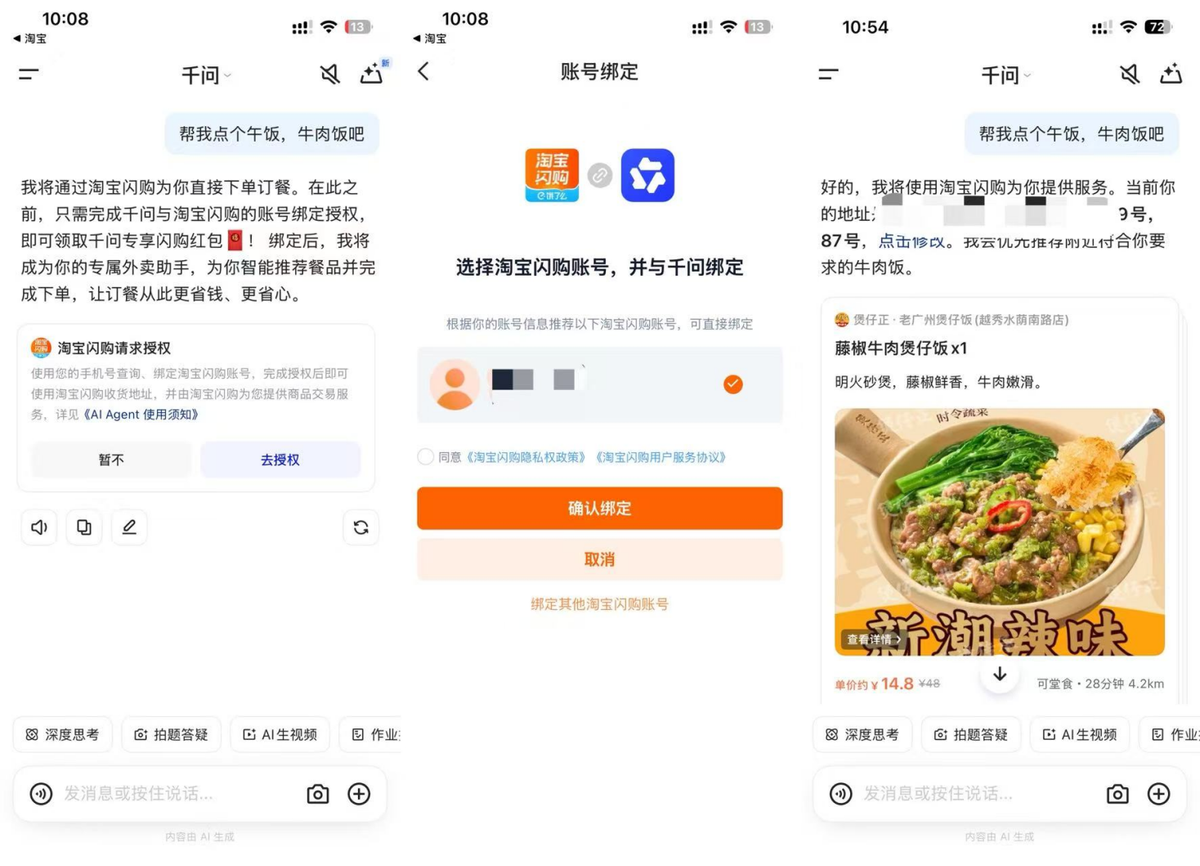
(Qianwen integrated with Taobao Flash Sales to support "ordering food delivery with one sentence," image source: Leikeji)
However, the issue remains—Qianwen has yet to fully connect with Taobao/Tmall's product purchasing link. It can effectively understand complex requests like "I want to buy a robot vacuum for my parents' home, with a budget of 2,000 to 4,000 yuan, and they have a dog," proactively inferring implicit requirements such as "easy to use" and "high-temperature sterilization" and even offering product suggestions. Yet, it cannot facilitate direct purchases.
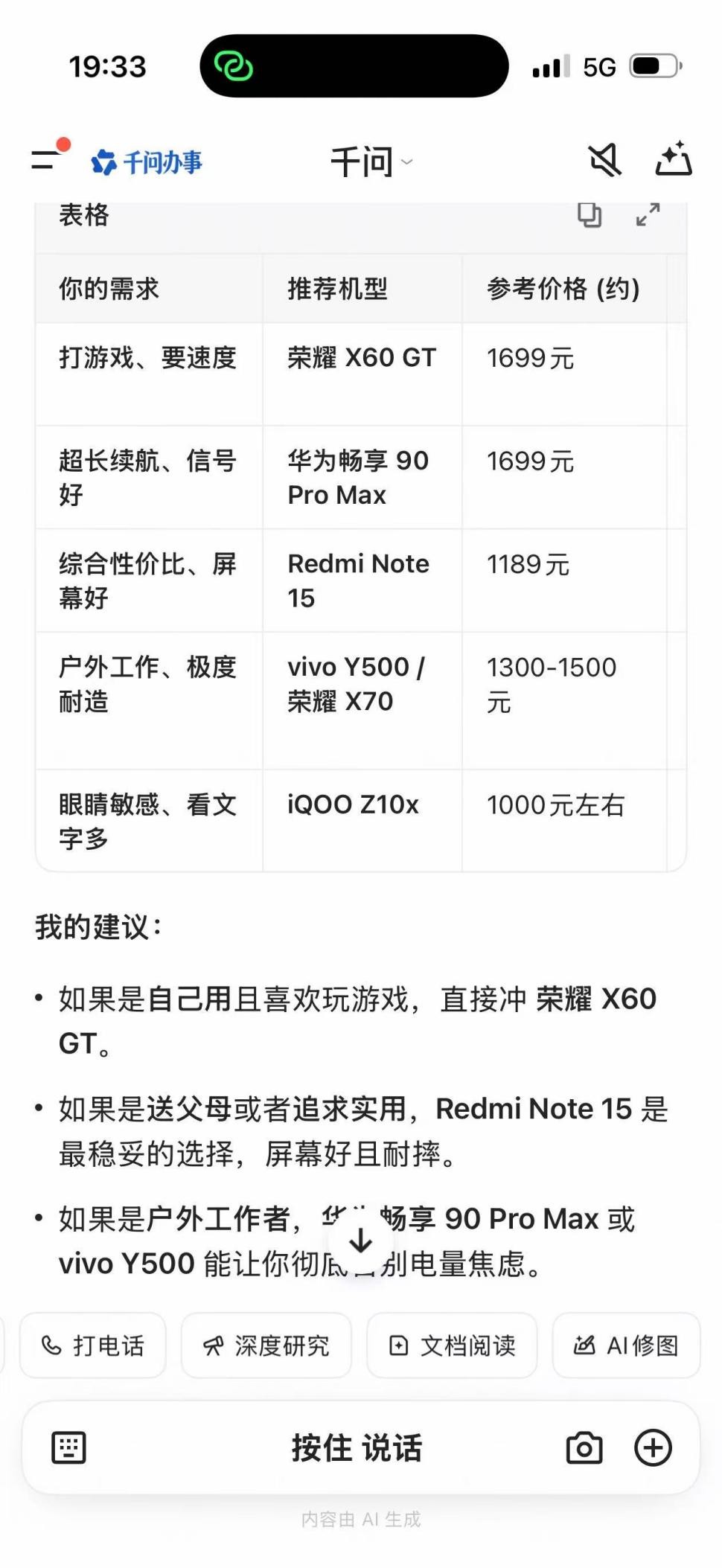
(Qianwen App does not currently support direct shopping, image source: Leikeji)
AI can act as a shopping guide but not a cashier—that missing link makes a significant difference. With Qianwen's monthly active users already exceeding 100 million, it theoretically should have launched AI direct purchasing or a "Help You Choose" feature sooner. Why prioritize scenarios like food delivery and taxi-hailing? Personally, I believe the answer lies in the fact that Taobao is too crucial. If they're going to do it, they must do it right. Non-groundbreaking moves are better off not made; the preceding scenarios merely served as exploration and foundation-laying.
In early 2026, JD.com launched "Dongdong," an independent app targeting "silver-haired youth" aged 55 to 64, featuring daily chatting, voice shopping, and quick medical consultations. They also introduced JoyAI for younger users, supporting voice-based food delivery, shopping, and AI content creation. However, market awareness remains low, and confining AI shopping to the narrow niche of "silver-haired groups" demonstrates a limited vision.
AI shopping caters to users of all ages, not just those "unskilled in typing or using smartphones." If you pay attention, you'll notice that today, everyone from toddlers to middle-aged and elderly individuals to silver-haired seniors uses AI assistants and often spontaneously recommends good AIs to friends.
Therefore, JD.com must swiftly unveil its own major strategy and cannot allow Doubao, Qianwen, and others to dominate AI shopping and erode its GMV.
It's also foreseeable that AI shopping will spark a new round of subsidy activities, likely becoming the main theme of this year's 618 and 11.11 shopping festivals—standard operating procedure for platforms.
E-commerce Giants Don't Want to Lose "Product Distribution Rights"
You might argue that JD.com has deep supply chain capabilities and the fulfillment advantages of JD Logistics, while Taobao, Tmall, and Xianyu boast unparalleled SKU breadth and depth, far surpassing Douyin E-commerce in terms of "variety, speed, quality, and affordability." Doubao AI can only operate within Douyin E-commerce, limiting its potential.
Defending against AI with product SKUs is indeed a strategy. Last year, Amazon blocked two crawler programs from ChatGPT to prevent them from scraping product data, essentially aiming to stop third-party AI shopping assistants from intercepting traffic. Domestic e-commerce giants will likely do the same. However, the question remains: What if "Doubao phones"—true AI-powered smartphones—become mainstream?
Last year, Doubao partnered with ZTE Nubia in a notable trial, and this year, they announced plans to continue exploring "Doubao phones" with Honor. AI phones can perform cross-app screenshot recognition, screen reading, and even mimic human browsing and clicking. At that point, AI could bypass app data interfaces, directly assisting users in agent-based shopping, price comparisons across the web, and automated purchasing.
Should platforms collaborate with third-party AIs or sever ties? This is a critical issue platforms must consider and address.
In January, Google, Shopify, Walmart, Target, Visa, and Stripe jointly launched the UCP (Universal Commerce Protocol), enabling AI agents to autonomously compare prices, claim coupons, and place orders across platforms. Amazon was notably absent. Its CEO made it clear: "Consumers truly value richness, low prices, delivery, and trustworthy services. Many customers will choose to use shopping agents provided by retailers." The underlying message: Even if users want AI shopping, they must use our proprietary AI.
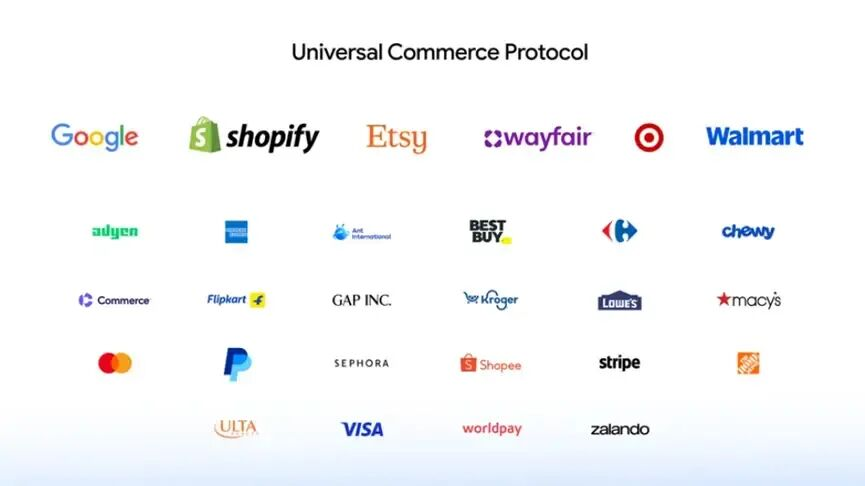
Once AI becomes the shopping portal, existing e-commerce platforms face the risk of traffic interception—similar to Jack Ma's past concerns about Baidu intercepting Taobao's traffic. JD.com still has supply chain and fulfillment advantages that AI cannot replicate and could potentially collaborate with AI. However, for Taobao, the issue is more pressing: For a long time, Taobao's most valuable asset has been traffic, including the habitual "opening Taobao for everything" mindset, its years-built third-party traffic ecosystem, and its in-app livestreaming and multi-dimensional traffic systems. Yet, Douyin represents a new traffic black hole, and AI could become the future's new traffic gateway.
This explains why Alibaba places such immense importance on AI. Behind the narrative of "Jack Ma personally endorsing it" lies not just market cap management for BABA or selling more tokens through Alibaba Cloud but the recognition that AI is Alibaba's new lifeblood.
Of course, the ultimate fate of e-commerce won't hinge on whether "the Taobao app still exists." Online shopping hasn't replaced offline retail; if anything, offline has become increasingly important, with giants venturing into food delivery and instant retail.
Traditional online shopping will always exist, and livestreaming sales will continue to thrive. AI simply adds a new dimension, irreversibly altering consumer behavior. One thing is certain: shopping portals will undergo an irreversible shift. AI chat-based shopping may not reach 100% adoption, but it will undoubtedly become the mainstream choice for users.
From search bars to chat dialogues, from "keyword searches" to "natural language expressions," users are ceding decision-making power to AI. In this new wave of user habit migration, Alibaba, JD.com, and even Pinduoduo must prepare accordingly.
E-commerce: Doubao, Alibaba, JD.com, Pinduoduo
Source: Leikeji
Images in this article are from 123RF's licensed image library.
-
![]()
Tesla Restructures Its Balance Sheet
-
![]()
Accelerating the High-Speed Interconnection Upgrade of AI Computing Clusters! JONHON Releases ELSFP External Light Source Optical Connectors
-
![]()
Breaking the overseas blockade of volumetric holographic materials, this optical enterprise secures nearly 100 million yuan in financing!
-
![]()
Why Does Jensen Huang So Openly Praise China’s AI?
-
![]()
"Wudang" Unveiled: Arm China's Next-Gen AI VPU Redefines Video Encoding
-
![]()
From Energy Conservation and Carbon Reduction to AI Decision-Making: GECON East Intelligence and Chery Group Explore a New Green and Smart Paradigm for Automobile Manufacturing
-
![]()
WAIC 2026 Observation | AI Accelerates Towards the Core of Industries, Industrial AI Enters a Critical Phase
-
![]()
Volkswagen China Fires the First Shot in Foreign-Funded 'White Box Delivery'!