AI Agents Have Arrived: Are Middle Managers in Tech Companies Still Relevant?
 04/29 2026
 450
450
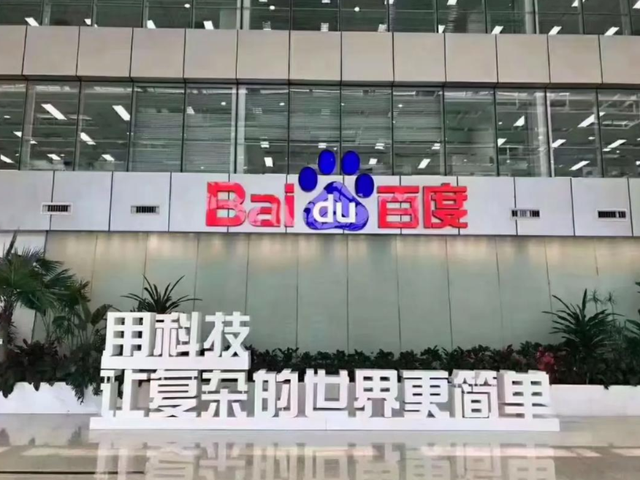
On April 28, 2026, a company-wide memo from Baidu signaled the definitive conclusion of an era characterized by alphabetical job titles.
Effective May 1, the longstanding five-tier job classification system—comprising T (Technology), P (Product), and M (Management)—was retired, making way for a unified digital job level framework spanning Level 5 to Level 12.
Is this merely a rebranding exercise by the HR department?
Absolutely not. It represents a comprehensive reassessment of the value of 'Big Tech Employees'—those who once relied on job titles for career progression can no longer do so.
In today's AI-driven productivity landscape, do designations like P10 or T8—once emblematic of being a 'Big Tech Backbone'—still carry significant weight?
As algorithms begin to streamline processes and AI agents start to assume management responsibilities, middle managers in tech giants are grappling with an unprecedented identity crisis.
Zhang Dongwei, a seasoned professional with thirty years in the tech industry, puts it bluntly: Frequent alterations to job level nomenclature are fundamentally about organizational dynamics—it's a 'life-and-death reshuffle' for middle management. Baidu's move is just the tip of the iceberg.
1. Baidu Disrupts the Status Quo
The underlying rationale behind Baidu's reform can be distilled into a single word: de-labeling.
Historically, Chinese internet behemoths employed a 'multi-track' job level system. Technology followed the T track, products the P track, and management the M track. Baidu even expanded this to five sequences, including E and Band.
While this system initially facilitated professional specialization, as organizations grew, it gradually transformed into invisible 'departmental barriers' and 'identity constraints'.
Alibaba had already discreetly concealed its P levels, ceasing to disclose them publicly.
Tencent has long maintained dual pathways for professional and management careers, sidestepping a 'single-track bottleneck'.
ByteDance upgraded to a unified ten-level system (L1-L10)—everyone is moving towards a flatter structure because the old system could no longer keep pace with the AI era.
The challenge in dismantling these barriers in Chinese tech giants lies in the fact that these barriers are not merely job level labels but also 'privilege fortresses' earned through years of diligent effort—no one is willing to relinquish their hard-won advantages voluntarily. Baidu is genuinely shouldering immense pressure by challenging these deeply entrenched interests.
Under the previous system, technical professionals often felt compelled to transition into management roles to secure higher salaries and status.
Zhang Dongwei has witnessed numerous talented engineers being coerced into management, only to lose their technical edge and fail to lead teams effectively, ultimately ending up 'empty-handed'—a classic illustration of the 'Peter Principle' trap in management.
Baidu's new system merges all sequences, meaning an AI algorithm expert no longer needs to lead a team of dozens. With cross-functional leadership and problem-solving abilities, they can still attain the high Level 12.
This shift reflects the insights Baidu gained from nearly 180 billion yuan in R&D investment over the past decade—the AI era demands 'special forces' capable of bridging technology and business, not just 'cogs' who write code.
Under the new system, Baidu's former T7, P7, and M3 employees are all placed into the same 'Level 9 pool' for competition.
This signifies a fundamental change in evaluation criteria—it no longer matters which sequence you belong to; only your ability to solve complex problems is considered. For Baidu's core businesses like Smart Cloud and Autonomous Driving, this is about mobilizing talent and empowering 'those closest to the action' to make decisions.
The advantages of this transformation are evident: organizations become more agile, and collaboration costs decrease.
However, for those accustomed to the old system—the 'Big Tech Retirees'—this is catastrophic.
Previously, T7 and P7 were on separate tracks, allowing mediocre performers to 'coast along' undisturbed. Now, purely technical 'lone wolves' or 'administrative managers' skilled only in office politics will see their survival space drastically reduced.
The biggest challenge for Baidu now is ensuring fair implementation of 'professional competence + leadership' assessments, preventing digital job levels from becoming new labels.
Baidu's 'barrier-breaking' initiative serves as a trial balloon for Chinese tech giants. Across the ocean, American tech giants have already charted a different course—the management philosophies of Chinese and American AI giants represent a clash of two distinct survival logics for middle management.
2. Clash of Management Philosophies Between Chinese and American AI Giants
As a practitioner who has long served leading tech companies, Zhang Dongwei profoundly senses that the HR management approaches of Chinese and American AI firms stem from fundamentally different management philosophies.
American giants like Google and Meta rarely employ complex alphabetical sequences to define identities. They favor broad-banded compensation and single-track systems, emphasizing 'job responsibilities' over 'identity labels'.
In Silicon Valley, engineer culture prevails, and managers act more as facilitators.
Google replaced traditional HR with 'People Science,' while Amazon even piloted the abolition of traditional job levels, defining contributions as 'Builders'. This 'de-bureaucratization' commenced much earlier and is more thorough than in China.
Moreover, American companies continue to evolve.
After Satya Nadella assumed the role of Microsoft's CEO, he abolished the controversial 'stack ranking' system, advocating instead for a 'growth mindset'.
This cultural shift fosters experimentation and encourages collaboration—crucial for AI R&D, which necessitates long-term investment and high risk.
Frankly speaking, this shares a similar underlying logic with Baidu's emphasis on 'professional competence + leadership,' albeit with different approaches and maturity levels.
The core difference between Chinese and American AI firms lies in 'control' versus 'empowerment'.
Chinese tech giants are transitioning from 'control' to 'empowerment,' attempting to break down barriers through institutional reforms. Meanwhile, American firms have already entered an 'ecosystem' phase, emphasizing individual influence (Impact) over administrative rank.
Chinese tech giants are still dismantling barriers, while American firms are already 'unleashing vitality'.
3. AI Reshapes Organizations
A saying circulates in headhunting circles: 'Today's middle managers are either hubs or excess baggage—there's no middle ground'.
Zhang Dongwei wholeheartedly concurs—his stance is unequivocal: Traditional 'message-relay' middle managers are obsolete, but those with 'translation capabilities' are now more valuable than ever.
Middle managers once thrived on 'information asymmetry,' acting as intermediaries who profited from the gap between leadership and grassroots.
Now, AI agents function like direct sales platforms, cutting through all informational hierarchies. Middle managers who fail to transition from 'distributors' to 'value-added service providers' will inevitably be marginalized.
AI agents can automatically break down tasks, track progress, and generate reports. If a middle manager's core value lies solely in 'summarizing subordinates' PPTs for the boss,' they are no longer a 'P' but 'excess baggage' replaced by algorithms.
Gartner predicts that by 2026, a significant number of organizations will leverage AI to flatten structures, eliminating half of their middle management roles. The once-coveted 'power dividends' are now being diluted by AI.
However, AI cannot replace 'defining complex problems' and 'cross-domain integration'.
Future middle managers must become 'AI translators'—capable of understanding algorithmic limitations, identifying business pain points, and building trust between humans and machines. Baidu's new job level system is essentially screening for such talent: you need both professional depth (mastering AI) and leadership breadth (managing people).
Purely professional middle managers, lacking cross-boundary capabilities, will eventually be marginalized.
Meanwhile, 'AI translators' will become the core hubs of organizations.
In 2026, the barrier to entry for AI large model application-layer startups is extremely low. This has led to high turnover among AI talent.
In the past two years, Zhang Dongwei has witnessed numerous middle managers from big firms leaving with their technical expertise to start ventures. Previously, entrepreneurship relied on company resources; now, a small team can start up by leveraging API computing power—OpenAI's founding team has an over 80% turnover rate, while AI job turnover at Chinese tech giants nears 30%. Behind this lies an industry structural contradiction: big firms prioritize short-term monetization, while top talent seeks technological breakthroughs.
This 'decentralization' trend compels big firms to reform—without change, they risk becoming mere 'training grounds' for startups, losing their core middle managers to competitors.
In the traditional tech era, the payoff period for core talent was four years.
Today, in the AI era, it's just six months.
Conclusion
Baidu's transformation is essentially a move toward a leaner, more agile organization—a declaration of war against the 'bureaucratic culture' prevalent in Chinese tech firms.
This change is no accident but an inevitability of the AI era—as technology reshapes productivity, organizational and talent value must adapt accordingly.
For those of us in this landscape, the 'P era'—where promotions and raises came from simply putting in time and claiming positions—is truly over. The future workplace will no longer care about the letters on your badge but whether you can solve critical problems within complex systems amid the AI wave.
So, is middle management still a 'P'?
The answer: If you only know how to make PPTs, then no, you're not a 'P.' But if you can harness the power of AI, you're the irreplaceable 'π'.
In the face of AI's infinite computing power, there are no fixed job levels—only irreplaceable value. Those 'πs' who defy definition and master AI will carve out their own niches in the digital wilderness.
That is the true survival edge for middle managers in tech firms.
-
![]()
Tesla Restructures Its Balance Sheet
-
![]()
Accelerating the High-Speed Interconnection Upgrade of AI Computing Clusters! JONHON Releases ELSFP External Light Source Optical Connectors
-
![]()
Breaking the overseas blockade of volumetric holographic materials, this optical enterprise secures nearly 100 million yuan in financing!
-
![]()
Why Does Jensen Huang So Openly Praise China’s AI?
-
![]()
"Wudang" Unveiled: Arm China's Next-Gen AI VPU Redefines Video Encoding
-
![]()
From Energy Conservation and Carbon Reduction to AI Decision-Making: GECON East Intelligence and Chery Group Explore a New Green and Smart Paradigm for Automobile Manufacturing
-
![]()
WAIC 2026 Observation | AI Accelerates Towards the Core of Industries, Industrial AI Enters a Critical Phase
-
![]()
Volkswagen China Fires the First Shot in Foreign-Funded 'White Box Delivery'!