Ten Years of Momenta: Everything is Just at the Starting Line
 04/29 2026
 553
553
The 'Secondary Definition' of an Intelligent Driving Company.
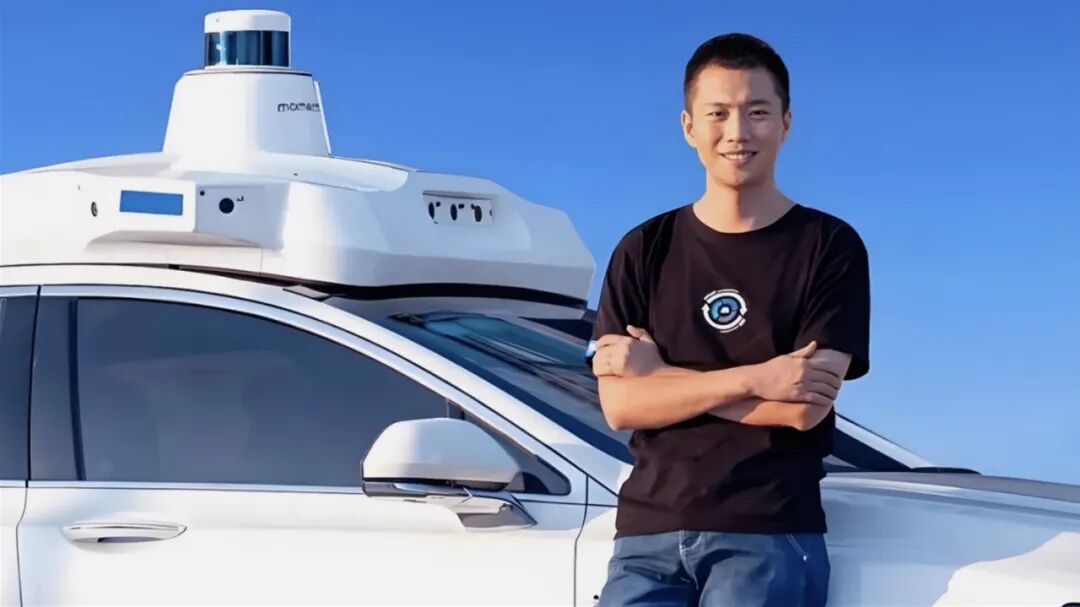
On April 25, 2026, at the China International Exhibition Center in Beijing, Momenta hosted a themed sharing session titled 'Momenta R7: Prologue of Physical AI.'
This was not Momenta's first appearance at the Beijing Auto Show, but its approach this time was quite different. All four partners took the stage—a rare occurrence—with CEO Cao Xudong discussing the underlying logic, R&D SVP Xia Yan dissecting the technical architecture, and another R&D SVP, Sun Gang, responsible for showcasing the sense of safety in long-tail scenarios.
In the past, Momenta often presented itself as a technical specialist at many public events, focusing on flywheels, mass production, and delivery. This time, their discussions were clearly elevated: world models, reinforcement learning, and physical AI. The back of the employees' T-shirts bore a unified message: 'Saving a Million Lives in Ten Years.'
From Momenta's founding by Cao Xudong in a Suzhou Street office in 2016 to its upcoming tenth anniversary this year, the company has made a series of intensive moves in the past year: secretly filing with the Hong Kong Stock Exchange, completing over $1 billion in Pre-IPO financing, launching the R7 reinforcement learning world model, and announcing that its designated models have surpassed 200. From capital to products to technical narratives, nearly every aspect is advancing simultaneously.
When a company reaches a tipping point, it often exhibits such a sense of rhythm.
01
The Underestimated Delivery Anvil of Data and Clients
When the data is laid out, what Momenta holds is indeed solid.
As of April 2026, Momenta has successfully delivered over 70 mass-produced models, with a cumulative total of over 200 designated models. Its mass production footprint spans more than ten countries and regions, and the scale of mass-produced vehicles equipped with its systems has exceeded 800,000 units.
Interestingly, the metric 'completing delivery for 100,000 units in as little as under 40 days' better illustrates the maturity of its engineering capabilities than mere cumulative installed volume.
In terms of market share, the '2025 Urban NOA Automotive Assisted Driving Research Report' released by the China Association of Automobile Manufacturers earlier this year showed that last year, the cumulative sales of passenger vehicles equipped with urban NOA functions in China exceeded 3.1 million units. Among them, Momenta's urban NOA was installed in over 400,000 units, accounting for approximately 60% of third-party suppliers. Meanwhile, Huawei's HI mode had installations of around 100,000 units, accounting for about 20%, with the two combining to occupy over 80% of the third-party supplier market.
The 'two superpowers and multiple strong players' pattern has largely taken shape at the data level.
But numbers are just the tip of the iceberg. The real game Momenta is playing is reflected in the names on its partnership list: Mercedes-Benz, BMW, Audi, Toyota, Honda, General Motors, Ford... It has almost collected the logos of all major global automotive groups. At this year's Beijing Auto Show, over 20 brands and more than 60 models were equipped with Momenta's solutions.
Last year, BMW and Momenta jointly announced that their newly developed intelligent driving assistance solution would be first installed in the domestically produced next-generation BMW iX3, with plans for production at the Brilliance BMW Shenyang production base and global launch in 2026.
Securing an order from BMW itself is a landmark event, given the validation cycles and standards that German luxury brands impose on their supply chains—something industry insiders are well aware of.
In terms of international expansion, Momenta's Robotaxi business is also advancing on multiple fronts.
Last May, it established a strategic partnership with Uber, launching operational services in Munich, Germany. In December, it announced a collaboration with Grab to explore the Southeast Asian L4 market. Cao Xudong later revealed in an interview that next year, they will also advance their Robo truck business, using a single autonomous driving model to support multiple vertical applications, with data and experience from different scenarios mutually reinforcing each other.
The logic behind this approach is clear: use L2 mass production projects to generate revenue and feed the data flywheel, continuously iterate L4 capabilities with the flywheel, and then use L4 capabilities to enhance the L2 experience, forming a closed loop. Cao Xudong calls this 'one flywheel, two legs,' a narrative he has been sharing since the company's early days, now for ten years.
But now, Momenta is starting to tell a new story.
02
The Narrative Leap of Physical AI
At its latest release event not long ago, the star was the Momenta R7 reinforcement learning world model, the first of its kind to achieve mass production globally. Cao Xudong's explanation of this concept reveals his intention to lift Momenta out of the 'intelligent driving solution provider' box.
His core argument is that prediction is the cornerstone of intelligent evolution. Large language models compress common sense from the digital world through Next Word Prediction, enabling AI to understand text and natural language. In contrast, world models predict the future states and interaction logic of the physical world through World Model Prediction, acquiring the ability to understand the physical properties of objects, causal relationships in motion, and potential interaction possibilities.
The intersection of these two capabilities is physical AI. 'World models and reinforcement learning together form the two core pillars of physical AI,' Cao said.
R&D SVP Xia Yan broke down the technical route into three layers: the first layer is world model pre-training, using vast amounts of real driving data to 'compress' physical laws, common sense, and causal relationships into the model, forming a foundational understanding of the physical world. The second layer is world model simulation, applying the world model to closed-loop autonomous driving simulations to deduce how the world will evolve when behaviors change, evaluating performance in long-tail scenarios. The third layer is reinforcement learning within the world model, constructing a highly realistic virtual training ground where the system can repeatedly explore and learn from mistakes in an environment close to reality.
The imagination behind this technical path lies in the 'world model simulation' layer. Traditional end-to-end solutions rely on imitation learning, whose core logic is to 'copy and paste' human driving behavior, often leaving them at a loss when faced with extreme long-tail scenarios. Momenta aims to do something different:
Enable the system to move from 'imitation learning' to 'imagination and exploration,' undergoing millions of deductions in a virtual world to autonomously acquire optimal decision-making capabilities in complex scenarios. 'Extreme scenarios that occur once in ten thousand instances in the real world have been repeatedly experienced and fully digested in the virtual training ground.'
Sun Gang provided a concrete example: if a vehicle ahead unexpectedly drops a box of apples, Momenta's physical AI can autonomously predict the trajectory and spread of the rolling apples, decelerate smoothly in advance, and plan a detour route. They rely not on preset rule matching but on 'understanding' the motion laws of the physical world.
Bringing abstract technical concepts down to scenarios that media and consumers can perceive is a sign of Momenta's matured storytelling ability.
Regarding why they are pursuing physical AI instead of continuing to optimize at the digital AI level, Cao Xudong has a more pragmatic judgment. In an interview, he straightforward , 'Autonomous driving is the prologue of physical AI.' 'Compared to general-purpose robots, autonomous driving achieves scaled data and commercial closed loops earlier, making it likely to become the pioneering scenario for physical AI.'
But one of his judgments deserves attention: achieving scaled L4 autonomous driving requires cumulative investments of at least $10 billion. 'In the long run, relying solely on financing cannot sustain general-purpose physical AI R&D; it must be supported by cash-generating businesses that continuously feed R&D.'
This is a pragmatic long-termist's message to the capital markets: We have a commercial closed loop to sustain ourselves, and we also need an IPO to replenish our resources, with our sights set on the broader horizon of physical AI.
03
Capital Race and Pattern Reshaping
While technology and narratives are upgrading, capital-level moves are also advancing in sync.
In March, Momenta was reported to have secretly submitted its prospectus to the Hong Kong Stock Exchange, with an expected IPO valuation exceeding RMB 100 billion and plans to list within the year.
This financing pace and scale send a conspicuous signal in today's not-so-hot capital market.
Meanwhile, the industry landscape is undergoing dramatic changes. According to reports, this month, Qcraft and Rising Auto have also secretly submitted their listing materials to the Hong Kong Stock Exchange, with all three leading intelligent driving solution providers targeting a listing in 2026.
Based on the typical 6-9 month cycle from prospectus submission to listing for Hong Kong IPOs, Momenta, Qcraft, and Rising Auto are likely to concentrate land on the Hong Kong Stock Exchange in the second half of 2026, forming a new wave of concentrated listings in China's intelligent driving sector.
The urgency of this IPO race stems not only from within the industry. Tesla's FSD is accelerating its entry into China.
In January, Elon Musk revealed at Davos that FSD is expected to receive approval in China, with industry-wide consensus that FSD will likely achieve full commercialization in the Chinese market by 2026. With a strong external competitor looming and financing channels tightening—according to institutional statistics, the intelligent driving industry has secured over RMB 22.8 billion in investments since 2025, only 30% of the total for all of 2024—capital differentiation is evident.
As raising funds from the primary market becomes more challenging, the window for secondary markets becomes especially precious. According to industry analysts, 'the second half of the year could very well be the last window for intelligent driving companies to go public on the Hong Kong Stock Exchange.'
But going public does not mean reaching safety. Recall that Pony.ai and WeRide both listed on the Hong Kong Stock Exchange on the same day, only to see their share prices fall below the offering price on their debuts. The market's attitude is clear: pure technological stories are losing their persuasive power; commercialization capabilities and business model sustainability are now the core pricing factors.
Against this backdrop, Cao Xudong has publicly expressed his ultimate judgment: 'The competition for automotive assisted driving will become clear by 2030, with only three or four domestic players emerging victorious in the end.'
This is less a prediction than a declaration of posture.
Looking deeper, what Momenta is doing is redefining the valuation framework in the autonomous driving track . Previously, investors had doubts: Should an autonomous driving company be valued as an automotive parts supplier or as an AI company?
Momenta's new story is physical AI, but the challenge lies not in how well the story is told. The goal of a technological leap from 'seeing the world' to 'understanding the world' is not a new concept; Momenta is not the only company globally exploring the integration of world models and autonomous driving. A vast chasm lies between the proposal of a technological concept and its true scaled engineering implementation.
Moreover, while Huawei's HI mode currently lags behind Momenta in market share within the pure third-party supplier track , Huawei's entire intelligent ecosystem covers the complete chain from chips to operating systems to cloud services, making its comprehensive strength not to be underestimated. Meanwhile, Horizon HSD, frequently cited as a 'dark horse' in the industry, is also accelerating its pursuit.
Momenta's response leans toward pragmatism. Cao Xudong explicitly stated that the gap between companies 'lies not in a single algorithm but in data closure, commercial closure, and the underlying systems and organizational capabilities.' He compared raw data to 'iron ore with low mineral content'—vast amounts of data are merely the source of value; the key lies in screening long-tail scenarios from it and transforming them into system capabilities through training, simulation, and validation.
In other words, Momenta's message is: We don't just have data and clients; we have a complete system to refine 'iron ore' into 'steel.' The barriers of this system are far higher than those of a single algorithm model.
At the commercial narrative level, another interesting phenomenon emerged. During interviews at the Beijing Auto Show, Cao Xudong emphasized the topic of 'reverse joint ventures.' He said that Chinese technology is accelerating its global expansion, with more and more overseas automakers beginning to value China's intelligent technology capabilities. Chinese supply chain companies are no longer just parts providers but are participating in the global automotive industry's restructuring with software, algorithms, and system capabilities.
His logic is: 'When entering markets like Europe, there may be impacts on local companies, employment, and taxation. The value of 'reverse joint ventures' lies in empowering local companies with Chinese technology, creating a more sustainable win-win model.' This approach clarifies the commercial logic while addressing geopolitical sensitivities—a concern only global companies need to consider.
Momenta, which started a decade ago in a Suzhou Street office, now stands in the spotlight at the Beijing Auto Show, boasting a client list of global mainstream automakers, holding over 60% of the third-party market share for urban NOA, and telling a technological narrative of physical AI and world models.
The company is shedding its 'intelligent driving solution provider' label and rebranding itself as a promoter of 'physical AI.'
Of course, both 'world models' and 'physical AI' are still just starting points at this stage. The R7 world model has just achieved mass production and debut; its transition from the lab to the road requires extensive refinement in real-world scenarios. Whether Momenta can sustain a valuation exceeding RMB 100 billion on the Hong Kong Stock Exchange depends on its ability to consistently deliver growing delivery volumes and financial data.
But at least from the change in a company's narrative rhythm, we can see a signal: After a decade of noise, expansion, retreat, and restructuring in China's intelligent driving industry, some truly successful players are entering a more mature phase. They are no longer merely benchmarking against competitors; they are defining new The track's and preparing to tell a story bigger than the automotive industry itself.
By naming its release event 'Prologue of Physical AI,' Momenta may have already hinted clearly enough: it believes its main act is still far from beginning.
This article is original to Xinmou.
— END —
-
![]()
Expert Interpretation of New Policy Combination: Activating the Trillion-Dollar Automotive Aftermarket
-
![]()
Doubao Goes 'Professional', Volcano Rolls the Snowball
-
AI: No Sign of a Bubble!
-
![]()
NVIDIA-Backed AI Unicorn Secures $1.5 Billion Funding: Revenue Soars 2000%
-
![]()
Doubao Pro is Here: How Can Seed 2.1 Be Integrated into Real Processes?
-
"PCB Juice" Sees Four Consecutive Declines: Even Computing Power Material Suppliers Can't Lift This "Old Stock"
-
![]()
Potential 'Seismic Shift' in the U.S. TV Industry: Competition Shifts from Hardware Sales to Traffic Entry Points
-
![]()
Audi A6L's Defense in the Luxury C-Class Market: Following Huawei's Smart Driving Integration, Is Large-Battery HEV the Next Move?