iFLYTEK: Navigating the Steep Path and Narrow Gate of AI in Education
 05/06 2026
 488
488

Author: Wen Yehao
Editor: Wu Xianzhi
On April 28, 2026, iFLYTEK unveiled its annual financial report for 2025.
The report reveals that in 2025, iFLYTEK achieved a revenue of 27.105 billion yuan, marking a year-on-year increase of 16.12%. Its net profit, excluding non-recurring gains and losses, reached 264 million yuan, up by 40.47% from the previous year.
iFLYTEK has long been associated with multiple identities, including AI, education, and its roots as a hardware company.
These diverse identities have fueled its continuous investment in upstream technologies such as large-scale models and domestic computing power infrastructure. Simultaneously, there are rising expectations from the external world for its consumer-facing (C-end) business to drive growth.
Investment in upstream technologies determines the technological depth of iFLYTEK's AI narrative and its long-term competitiveness. The C-end business, on the other hand, is crucial for translating technology into revenue and enhancing user perception, which is vital for immediate commercial success.
Caught between these two forces, AI education has naturally emerged as a key lens through which to view iFLYTEK.
Zhang Zhao (a pseudonym), an expert in educational technology, told Photon Planet: "AI education has moved beyond the 'tool stage' but hasn't yet reached full maturity as a product. More accurately, it's transitioning from 'efficiency tools' to 'systematic learning products.'"
Therefore, it's not just the revenue and proportion of AI education that matter, but also whether iFLYTEK can integrate its technological advancements into the slow-moving education sector as its dynamics evolve.
The Education Revolution Marches On
Over the past two years, the narrative surrounding AI education has been rich and varied.
Some proponents envision it as a "super teacher," suggesting that the implementation of large-scale models will completely revolutionize Q&A sessions, coaching, and score improvement. Others emphasize "education equity," implying that embedding AI into screens will naturally lead to personalized learning.
However, when dissected, the value delivered by AI education still largely revolves around "efficiency."
For instance, photo search for questions, essay grading, and oral evaluation are all faster with AI integration. AI is seamlessly woven into the existing learning process, making time-consuming and tedious tasks more efficient.
This approach aligns with commercial logic and user intuition. For parents, "fast" means fewer detours; for students, "fast" means less suffering; for vendors, "fast" means being able to directly sell AI capabilities.
The financial report indicates that in 2025, iFLYTEK's smart education business generated revenue of 8.967 billion yuan, a year-on-year increase of 24.04%. It accounted for 33.08% of the total revenue, making it the company's largest revenue stream.
However, education is not a sector that can be transformed solely through technological acceleration.
Past experiences with question-searching apps and question bank platforms have shown that improving efficiency in a single aspect is insufficient to change learning outcomes. Even if one component operates faster, if it fails to drive the overall chain, it may end up being ineffective.

According to Zhang Zhao, past AI education products focused on partial efficiency improvements. Now, the industry is attempting to integrate AI into a more comprehensive learning loop, including diagnosing problems, providing solutions, arranging pacing, tracking progress, offering personalized feedback, and even providing companionship and motivation.
The former approach is tool-based, while the latter is education-based, with a complete set of learning and feedback mechanisms that still require refinement over time.
On the other hand, AI education still faces numerous unresolved challenges as it develops.
Wang Xia (a pseudonym), who works in AI education, told Photon Planet that the error tolerance rate in educational scenarios is much lower than in many general scenarios.
"Parents and teachers are highly sensitive to AI errors. But at this stage, no one can guarantee that AI Q&A and problem-solving are 100% accurate, especially in complex, ambiguous, or boundary cases, as well as in tasks like explaining steps in math or science. An 80-point model capability is simply not enough."
In addition to the limitations of model capabilities, learning outcomes are also difficult to verify over the long term. AI can enhance interaction rates, usage duration, and Q&A efficiency, but whether students truly learn and can apply that knowledge to exams and real-world problems often requires longer-term verification.
Furthermore, Wang Xia revealed that due to the varying circumstances of each student, truly high-quality personalization is difficult to achieve at a low cost. "Many products offer 'what looks like personalization,' but they fall short of truly understanding students."
For many years, iFLYTEK has been proving that it is an AI company capable of entering multiple industry scenarios, such as office, healthcare, and automotive.
As AI education delves deeper and confronts these unavoidable issues, it may need to prove another thing: whether it understands education well enough.
AI Education Must Pass the Test of Score Improvement
"Education is a highly constrained industry. Parents are result-oriented, schools demand high reliability, and students' real problems are not just 'not knowing' but also 'not wanting to learn, unable to learn, or unable to sustain learning,'" Zhang Zhao admitted.
The reason is that learning often goes against intuition, requiring delayed gratification and sustained effort without immediate rewards. Adults often struggle to maintain consistency in fitness, reading, or learning a foreign language, let alone children.
Therefore, the ceiling of educational products is determined not just by the tools or applications themselves but also by the continuous feedback and companionship throughout the learning process.
This is also a major reason why the concept of a "study companion" has gained popularity over the past year.
It is reported that iFLYTEK's AI study companion covers scenarios such as pre-class preview, in-class learning, post-class review, and targeted exam preparation, providing heuristic explanations to stimulate internal motivation.
In Wang Xia's view, the shift from tools to study companions reflects a deeper understanding of education among players.
"In the past, everyone focused more on whether a specific action could improve efficiency, such as searching for questions faster or answering faster. But now, AI is transforming from a one-time tool into a role that continuously participates in the learning process."
However, in Zhang Zhao's eyes, so-called study companions cannot replace real teachers in traditional educational scenarios.
"Companionship" in education is not just a few words of encouragement or programmed emotional reassurance. The influence of teachers on students often stems from long-term trust and genuine interpersonal interaction. Only by being present can one understand that poor exam performance may not stem from a knowledge gap but from family pressure, peer relationships, adolescent self-esteem, or even just a lack of sleep the previous night.
These nuances are precisely the most challenging aspects of education to be fully replicated by technology.
Therefore, the true value of AI study companions may not lie in replacement but in providing immediate feedback, emotional reassurance, encouragement, and companionship when teachers are not present, reducing the likelihood of students disengaging during solo study.
However, the popularity of "study companions" is not just because education requires companionship but also because purely tool-based products face diminishing competitive barriers.
Compared to new AI education players that directly integrate mature models, leading education players like iFLYTEK and TAL Education have long insisted on self-developing educational large-scale models.
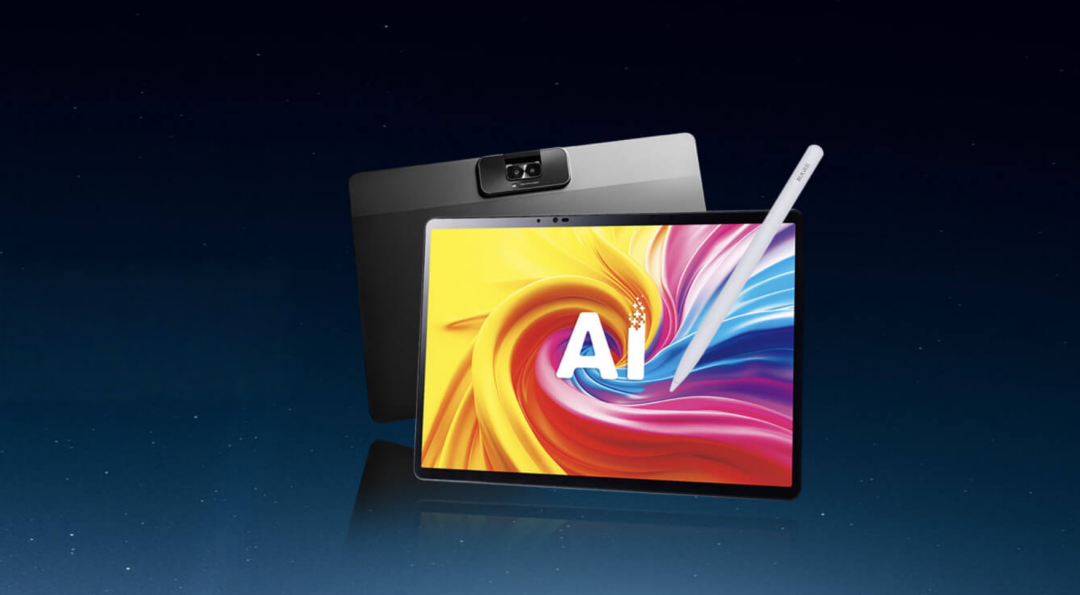
In the past, this heavier approach meant higher R&D investment and indeed constituted a barrier that set them apart from other players. But at this stage, as general-purpose large-scale models become increasingly powerful, vertical functions such as Q&A, problem-solving, grading, and generating explanations are gradually shifting from selling points to standard features.
This means that AI education cannot just cling to the technological label of self-developed models but must embed itself deeper and transform AI capabilities into productization capabilities within the learning loop.
However, the feedback from the end market regarding this product upgrade seems relatively muted.
A staff member at an iFLYTEK store told Photon Planet that few parents specifically inquire about the study companion function. Instead, most parents are more concerned with core functions like AI precision learning and interactive courses, as well as discounts on the products themselves.
According to the staff member, April is a slow season for learning machine sales, and stores are generally under pressure. "Everyone is worried about meeting sales targets; if we don't, we won't get our performance bonuses." As a result, the iFLYTEK T90 Lite, priced at 7,899 yuan on the e-commerce flagship store, can be discounted by several hundred yuan offline.
This highlights the disconnect in AI education—technology has advanced to the stage of "companionship," but the consumer context remains stuck, and may long remain stuck, in the era of "score improvement."
Technological narratives can move forward without hesitation, but user mindset can only be cultivated gradually over time.
B-End Accumulation, C-End Realization
Within iFLYTEK's smart education business, there have always been two distinct business lines: B/G-end business targeting schools and governments, and C-end business targeting families and students.
Although the C-end business is relatively more mature and profitable, the B-end business remains a strategic stronghold that iFLYTEK cannot abandon. It is reported that in 2025, the Xinghuo intelligent grading machine served over 3,000 schools, with a market share of over 75%.
For iFLYTEK, the value of the B-end business lies not just in revenue but also in data and branding.
By serving schools, iFLYTEK can obtain the most authentic teaching data, understanding textbook versions, teaching progress, and question styles across different regions. This data, in turn, can enhance the experience of C-end products. At the same time, school endorsements can significantly boost parents' trust in the iFLYTEK brand.
According to an iFLYTEK staff member, the company leads its peers in localized question reserves. For example, in April of this year, it added 16,593 sets of "high-quality test papers" nationwide.
On the other hand, the B-end advancement of AI education products is not without challenges. Wang Xia told Photon Planet that real-world implementation faces three main types of difficulties.
One is teachers' usage habits—whether new tools will truly be integrated into daily teaching processes takes time. Another is effectiveness verification—schools, in addition to caring about whether functions appear advanced, often focus more on whether the product actually brings tangible improvements.
Furthermore, in terms of payment models, schools typically cover the costs, with no additional fees for individual students. However, in the current environment, even with top-down guidance, school procurement remains cautious, and decision-making chains are longer.
This means that B-end business cannot scale quickly like C-end business through hit products, channels, and promotions. It is more like a slow-burning project—fraught with challenges, full of hard and tedious work, and lacking the "sexiness" of AI large-scale models or study companions—but it accumulates resource barriers that are difficult for competitors to replicate.
However, in the long run, the crux of AI education still lies in the broader consumer market. Therefore, for iFLYTEK, while B-end resources are important, the key to shaping the competitive landscape may lie in how it activates these long-accumulated assets, implementing them internally in products and externally in strategic positioning.
Ultimately, all technological innovations must return to the most fundamental proposition of education: whether they truly support children's growth and amplify the value of education. This is the eternal question for the AI education industry, and iFLYTEK, aware of this, is steadily making its way toward finding the answer.
-
![]()
Tesla Restructures Its Balance Sheet
-
![]()
Accelerating the High-Speed Interconnection Upgrade of AI Computing Clusters! JONHON Releases ELSFP External Light Source Optical Connectors
-
![]()
Breaking the overseas blockade of volumetric holographic materials, this optical enterprise secures nearly 100 million yuan in financing!
-
![]()
Why Does Jensen Huang So Openly Praise China’s AI?
-
![]()
"Wudang" Unveiled: Arm China's Next-Gen AI VPU Redefines Video Encoding
-
![]()
From Energy Conservation and Carbon Reduction to AI Decision-Making: GECON East Intelligence and Chery Group Explore a New Green and Smart Paradigm for Automobile Manufacturing
-
![]()
WAIC 2026 Observation | AI Accelerates Towards the Core of Industries, Industrial AI Enters a Critical Phase
-
![]()
Volkswagen China Fires the First Shot in Foreign-Funded 'White Box Delivery'!