This Beijing Auto Show, Surrounded by Foreigners | Auto Circle
 05/06 2026
 569
569
With rapid advancements in new energy, autonomous driving, artificial intelligence, and chip technology, the automotive industry is undergoing unprecedented transformation. To keep pace with the latest developments in the automotive sector and delve into market trends, LingTai LT has launched the "Auto Circle" column. From a professional perspective, this column focuses on the latest global automotive industry trends, new product launches by major automakers, technological innovations, and market performance. Through in-depth analysis of the automotive industry, it uncovers the underlying business logic and market patterns, as well as how these factors are reshaping the industry landscape and influencing human mobility. This article, the 28th installment of the column, centers on the Beijing Auto Show and explores how Chinese automobiles are becoming the world's focal point.
Author | Zhang Qian
Editor | Hu Zhanjia
Operations | Chen Jiahui
Produced by | LingTai LT (ID: LingTai_LT)
Header Image | Taken by LingTai LT
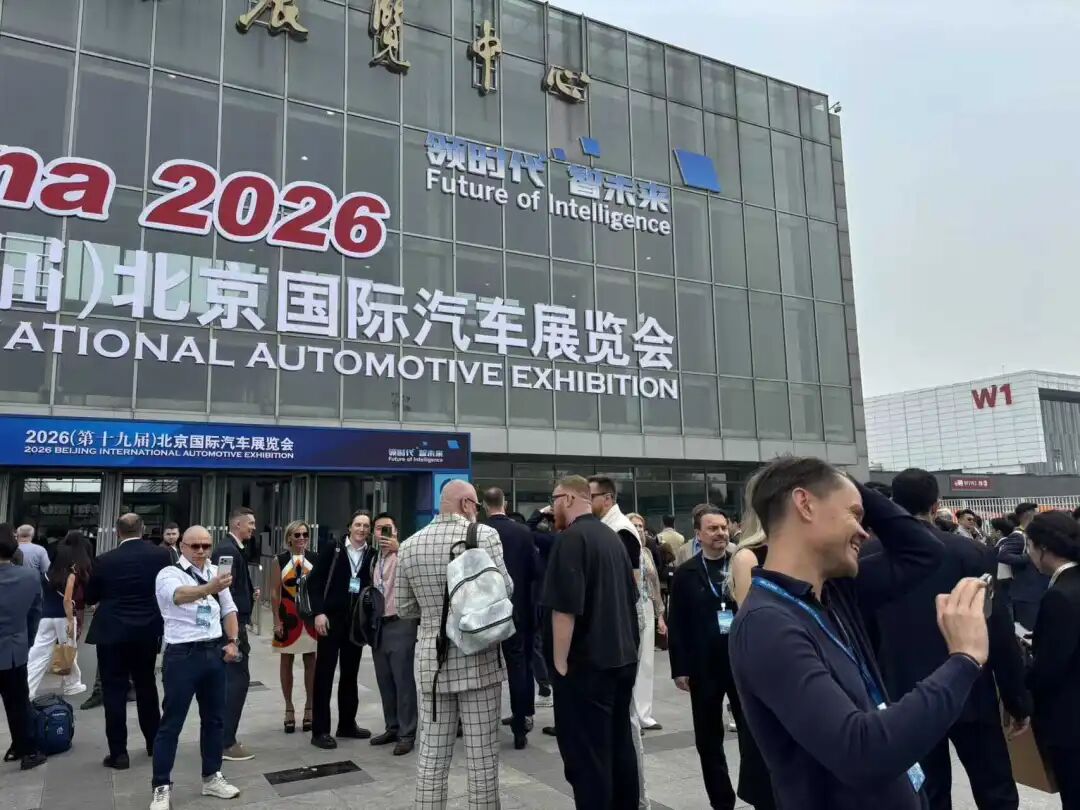
In April 2026, the 19th Beijing International Automotive Exhibition opened its doors.
This was no ordinary auto show—over the 10-day event, more than 900,000 visitors flocked to the venue, setting a new record for the Beijing Auto Show.
What was even more remarkable was the unprecedented density of foreign faces at a Chinese auto show. Around 30,000 international visitors and over 1,200 foreign media representatives from 140 countries turned the venue into what resembled a "United Nations Automotive Summit."
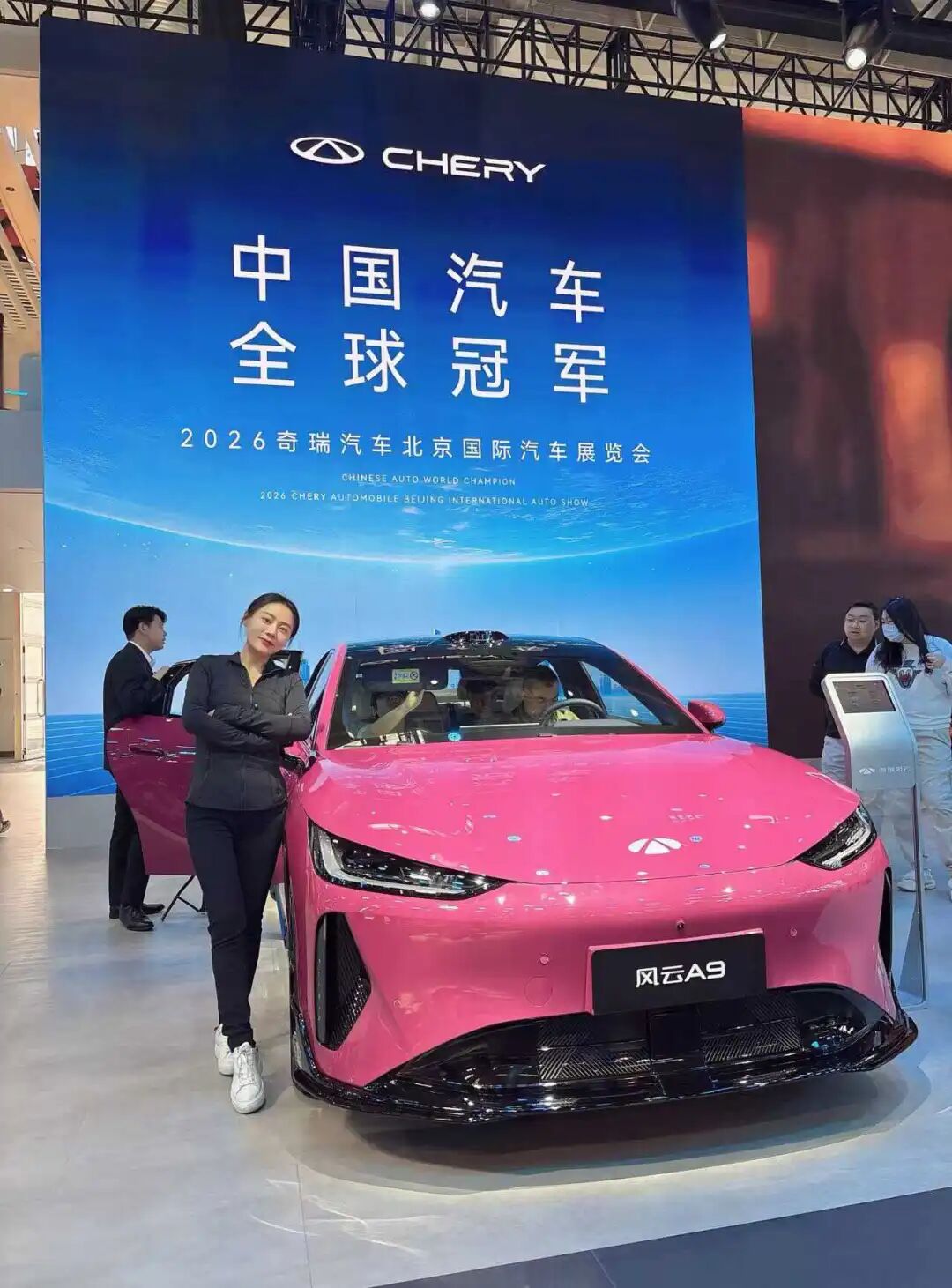
At Chery's booth alone, over 3,000 foreign guests gathered, including ambassadors from 10 countries.
Staff from Japanese automakers used tape measures to gauge BYD's vehicle dimensions and flashlights to inspect seat stitching in detail.
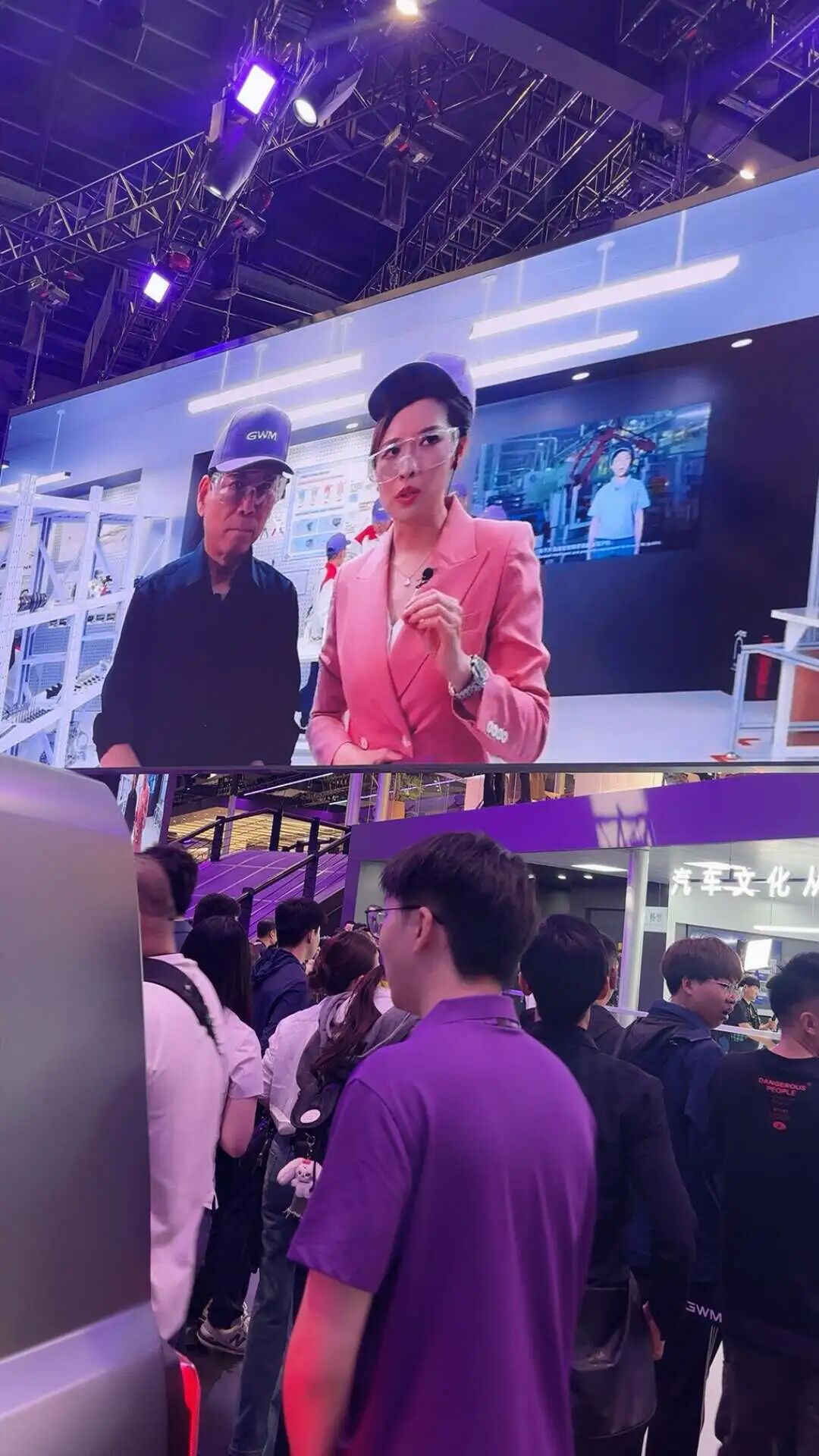
Nissan's CEO, Makoto Uchida, brought nearly his entire executive committee, stating bluntly, "Nissan is now in a survival game." BMW's Chairman, Oliver Zipse, personally visited Great Wall Motor's booth for in-depth discussions with Chairman Wei Jianjun.
Such scenes would have been almost unimaginable at a Chinese auto show a decade ago.
Back then, Chinese automakers were still sending engineers with tape measures to measure joint-venture models; now, the tables have completely turned.

The Astonishment of 3,000 Foreign Guests
If one were to selection (select) the "most international" booth at the 2026 Beijing Auto Show, Chery would undoubtedly be a top contender.
On the first media day in April, when Yin Tongyue, Secretary of the Party Committee and Chairman of Chery Holdings Group, stepped onto the stage, the audience below was almost entirely composed of foreign faces.
Over 3,000 guests from more than 80 countries and regions crowded around the booth, including ambassadors from 10 nations.
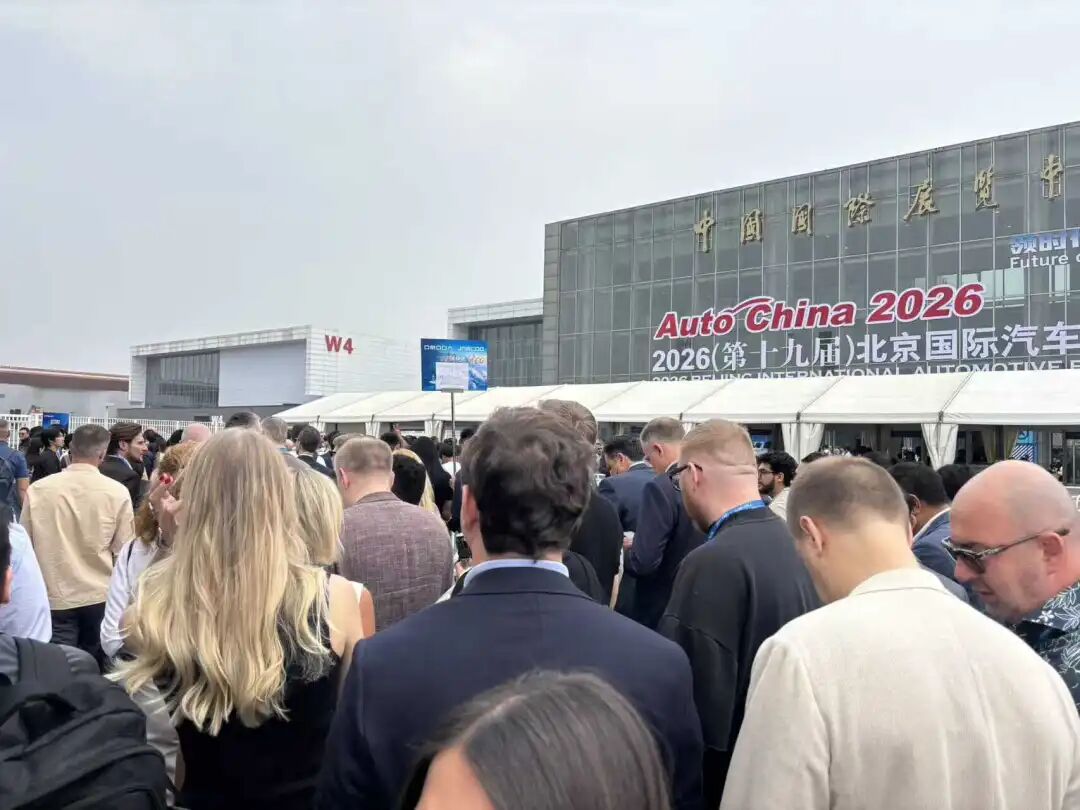
This was no coincidence.
Chery is a pioneer and typical representative of Chinese automakers "going global."
Since venturing abroad in 2001, Chery's products have been sold in over 80 countries and regions, amassing more than 15 million global users, including over 5 million overseas customers. By 2025, Chery Group's cumulative automotive exports exceeded 1.1 million units, ranking first among Chinese passenger vehicle exports for 23 consecutive years. In the first quarter of 2026, Chery exported over 300,000 vehicles, continuing to account for half of the group's total sales.
"I stayed at Chery's booth all day and couldn't even squeeze in to get a clear shot of the cars—it was too crowded," lamented a on-site media reporter. Even more touching was the sight of Yin Tongyue, his hair gray, communicating with foreign guests entirely in English without needing a translator.
That day, the topic "Yin Tongyue's hair has turned white" trended again on Weibo. Netizens remarked: Which automaker hasn't traded its professionals' youth for the industry's vitality?
The popularity of Chery's booth reflected the strength of China's automotive exports.
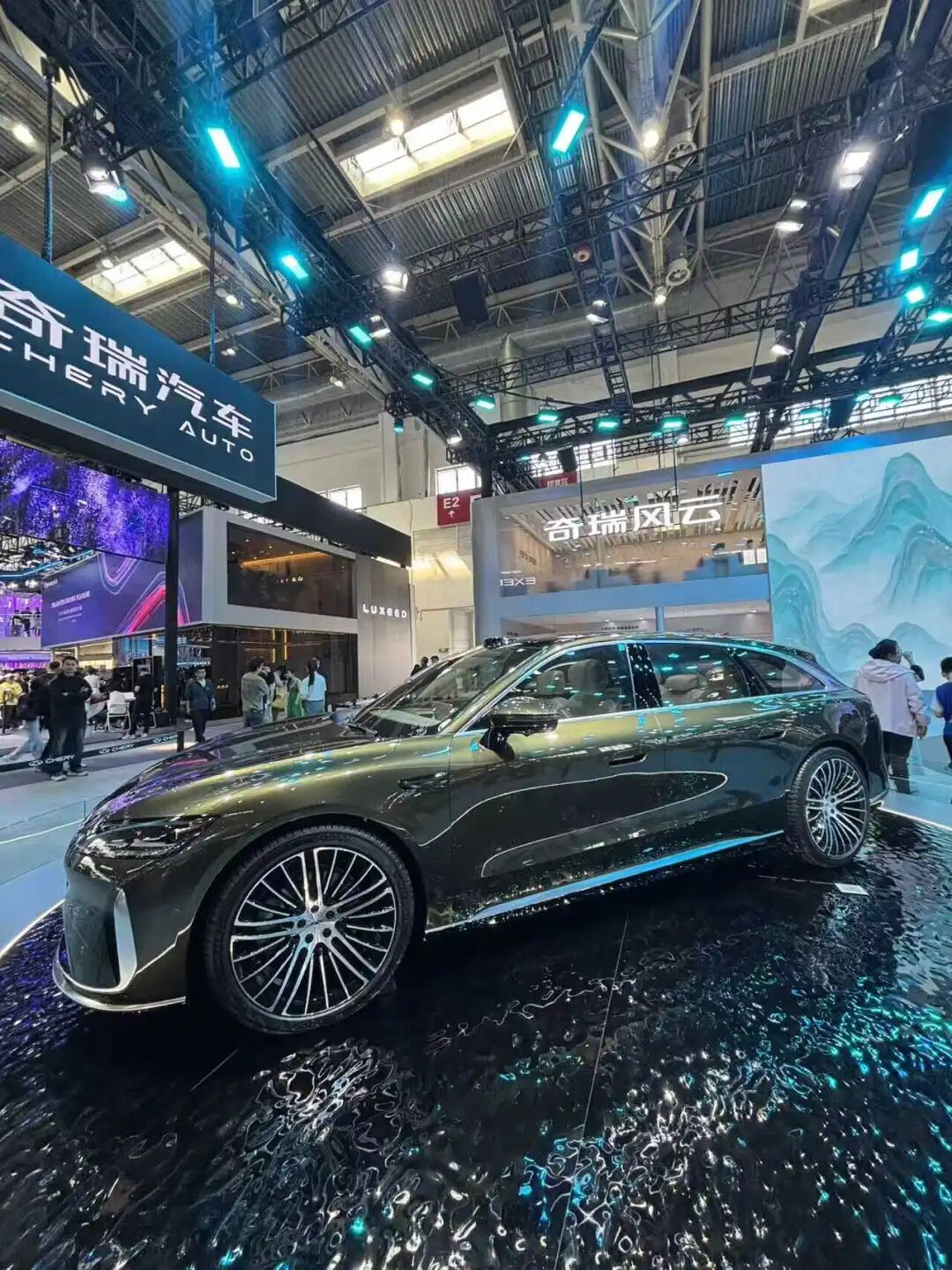
According to comprehensive data from Tianyancha Media and the China Association of Automobile Manufacturers, China's automotive exports surpassed 6.8 million units in 2025, securing its position as the world's largest automotive exporter for the third consecutive year. Chery alone accounted for nearly one-sixth of that total.
"For every three passenger vehicles exported from China, one is a Chery," Yin Tongyue proudly stated on stage.
Chery's booth design was also meticulously crafted.
In addition to showcasing domestically popular models like the Tiggo and Arrizo series, dedicated areas displayed right-hand-drive models developed for overseas markets, special editions adapted to the Middle East's high-temperature environments, and European-spec models compliant with EU regulations. These details demonstrated to foreign dealers and media the depth and sincerity of Chery's globalization efforts.
A dealer from South Africa remarked, "We're not here out of curiosity—we're here for business opportunities. Chery sells faster than Volkswagen where we are."

A Hardcore Display of Technological Prowess
If Chery's booth relied on its "global experience" and popularity, BYD's booth impressed with its "technological hard power."
At the 2026 Beijing Auto Show, BYD secured the most prominent position in the W1 hall, showcasing its full lineup of models under the Wangchao, Ocean, Yangwang, and Fangcheng Bao series, as well as core technological exhibits like the Blade Battery, e-Platform 3.0 Evo, Yunchan Intelligent Body Control System, and Easy-Four-Wheel technologies.
The most eye-catching feature on the booth was not a specific model but a "technology wall" composed of hundreds of Blade Battery cells.
Each cell was labeled with parameters such as capacity, energy density, and cycle life, accompanied by real-time demonstrations of puncture tests—where a steel needle pierced a ternary lithium battery, causing it to ignite instantly, while the Blade Battery remained unaffected. This spectacle drew frequent nods from overseas engineers in the crowd, with some even taking out notebooks to jot down the parameters.
The "in-place turn" demonstration of the Yangwang U8 also became a focal point.
This million-dollar off-roader showcased its in-place turning, lateral movement, and water escape capabilities based on Easy-Four-Wheel technology in front of hundreds of foreign visitors. A German automotive journalist remarked after the demo, "This isn't a concept car—it's a mass-produced technology. What Volkswagen and BMW are still presenting in PowerPoint slides as 'future technologies,' BYD has been selling for over a year."
The composition of foreign visitors at BYD's booth was also noteworthy.
In addition to journalists and dealers, a significant number were technicians from rival companies. Some photographed the chassis structure of the Yangwang U8 with their phones, others scrutinized the layout of the e-Platform 3.0 Evo's electric drivetrain, and some crouched at the edge of the booth, using their phone flashlights to examine the CTB (Cell-to-Body) battery-body integration structure of the Seal.
When asked why he was there, an engineer wearing a uniform from a Japanese brand smiled awkwardly and replied, "To learn. Our president insisted we come see BYD."
BYD's global sales figures made these foreign visitors' "eagerness to learn" understandable.
In 2025, BYD sold over 4.5 million new energy vehicles globally, retaining its title as the world's top seller in the segment. Its footprint now spans over 70 countries and regions. In Europe, BYD's pure electric vehicle sales have already surpassed those of many traditional European brands.
At the Beijing Auto Show, BYD announced a global sales target of 5.5 million units for 2026, with overseas sales accounting for 25%.

A Carnival of Tech Giants
If the 2026 Beijing Auto Show were ranked by "traffic," Xiaomi and Huawei's booths would undoubtedly rank among the top three.
The participation of these two tech giants itself signifies a shift: the core battleground of the automotive industry has moved from "mechanics" to "intelligence."
The Xiaomi SU7 Ultra was the undisputed star of Xiaomi's booth.
As a high-performance version of the SU7, the Ultra captivated audiences with its extreme acceleration and track performance.
Lei Jun personally explained the features on stage, surprising journalists with the high proportion of foreign visitors in the audience. A Silicon Valley tech blogger posted on social media, "Lei Jun's presentation style resembles a Tesla-era automotive leader more than any CEO from Detroit."
Another highlight at Xiaomi's booth was the demonstration of its "Human-Vehicle-Home Ecosystem."
Visitors witnessed seamless connectivity between phones, tablets, smart home devices, and vehicles. One foreign visitor held a Xiaomi 14 phone near the exhibit car, triggering automatic door unlocking, preset seat adjustments, air conditioning activation, and navigation destination syncing.
While Apple CarPlay still relies on screen mirroring, Xiaomi has already achieved native-level ecosystem integration. "This doesn't feel like an auto show—it feels like CES," remarked a U.S. journalist.
Huawei's Harmony Intelligent Driving booth offered a different kind of shocking (astonishment).
At the 2026 Beijing Auto Show, Harmony Intelligent Driving's "Four Realms"—Aito, Luxeed, Enjoyment, and Prestige—gathered for the first time. The Aito M5, M7, and M9 continued to sell well, the Luxeed S7 remained a leader in its segment, the Enjoyment S9 successfully delivered its first batch of users as a luxury flagship sedan, and the Prestige represented Huawei's new exploration in the ultra-luxury segment.
Huawei's Executive Director, Richard Yu, personally showcased the ADS 3.0 high-level intelligent driving system—which operates without relying on high-precision maps, covers all urban, suburban, and township roads in China, and achieves a 99.5% success rate in navigating complex urban expressway merges and exits.
What astonished foreign visitors most was the system's "seamless intervention."
Inside a moving exhibit vehicle, the driver took his hands off the wheel as the car automatically followed traffic, changed lanes, and overtook other vehicles in congested flows with almost no abrupt accelerations or decelerations. A Japanese autonomous driving engineer whispered to his colleague after watching, "Our Level 3 is still limited to highways—their system has been navigating cities for over a year."
The entry of tech giants is redefining the narrative logic of auto shows.
In the past, auto shows were about "whose car looks prettier"—now, they're about "whose car is smarter."
A foreign media editor-in-chief lamented, "While the Detroit Auto Show still flaunts V8 engine roars, the Beijing Auto Show is already competing on chip computing power and algorithm iteration speed. This is a dialogue between two eras."

The Return of the "Tape Measure Department"
The "Tape Measure Department" is an old meme in Chinese automotive circles, initially used to mock Zotye Auto for imitating designs from brands like Porsche.
But at the 2026 Beijing Auto Show, the "Tape Measure Department" saw a stunning reversal—this time, the ones wielding tape measures were foreigners.
Netizens captured images of engineers wearing foreign automakers' badges, armed with rulers and notebooks, meticulously measuring new vehicles at booths of Chinese brands like BYD, Hongqi, and Lynk & Co.
A Japanese engineer measured parameters of the Hongqi HQ9, while others used flashlights to study the seat stitching and interior craftsmanship of the BYD Han. Even more surprisingly, staff from a South Korean automaker were spotted using 3D scanners to capture every angle of the Li Auto MEGA.
The scene felt like a twist of fate.
Just eight years earlier, the Beijing Auto Show was flooded with knockoff models mimicking Mercedes, Land Rover, and Golf designs. Back then, Chinese automakers were still in the "reverse engineering" phase. Now, foreign automakers were "reverse researching" Chinese cars. An engineer who once used a tape measure to measure joint-venture models at the 2018 Beijing Auto Show had since become a product director at a new energy vehicle startup.
He shared his feelings on social media: "We used tape measures on others because they had good designs; now they're using tape measures on us because our designs have surpassed theirs. This feels strange yet gratifying."
The deeper transformation lies in the fact that Chinese automakers are no longer just "imitators" but have become "the imitated."
From body design to interior materials, from three-electric systems to intelligent cockpits, Chinese new energy vehicles now lead globally in multiple dimensions. A French designer attending the auto show admitted, "When designing new cars in Europe now, the first question isn't 'How does it compare to BBA?' but 'Can it beat Chinese cars?'"
The reversal of the "Tape Measure Department" essentially mirrors China's automotive industry emerging as a global leader.
When foreign engineers began meticulously recording every detail of Chinese cars, they were documenting not just dimensions but the historical coordinates of an industry's rise.

Japanese and Korean Automakers' 'Survival-Driven' Learning Journey
At the 2026 Beijing Auto Show, the presence of personnel from Japanese and Korean automakers was particularly eye-catching. It was not because of the size of their booths, but because of how long they lingered in front of the Chinese brand exhibits.
The 'tape measure engineers' from Japanese automakers are just the tip of the iceberg. According to on-site observations, technical teams from Toyota, Honda, and Nissan appeared almost as a 'group' at the booths of BYD, Li Auto, and Huawei.
While Toyota Chairman Akio Toyoda himself did not attend, the company sent a record 120-member technical observation delegation, divided into three groups: battery, intelligent driving, and cockpit. Each group had a clear technical benchmarking mission.
After observing BYD's e-Platform 3.0 Evo, a Toyota engineer simply said three words to his colleague: 'Too fast.'
The visit by Nissan President and CEO Makoto Uchida was filled with a sense of 'survival.'
During the 2026 Beijing Auto Show, Uchida brought almost the entire executive committee and spent considerable time at the booths of BYD, Li Auto, and NIO. He stated, 'We want to experience and feel the Chinese speed.' Facing the increasingly dominant Chinese automakers, Uchida bluntly admitted, 'Nissan is already trapped in a survival game.'
Data confirms Uchida's anxieties.
According to the China Passenger Car Association, Japanese brands, represented by Nissan, have seen their market share in China drop from a peak of around 24% to just 12% by March 2026. Nissan's sales in China have declined for several consecutive years, and the once 'Big Three of Japanese automakers' are no longer as dominant. In 2025, Nissan's sales in China fell by more than 20% year-on-year, marking the fifth consecutive year of decline.
The situation for Korean automakers is equally concerning.
While Hyundai-Kia still holds some competitiveness in overseas markets, its market share in China has shrunk to less than 3%.
At the 2026 Beijing Auto Show, Hyundai Motor sent a high-level delegation led by its vice president, spending the most time at the booths of Li Auto and Huawei. South Korean media used the term 'shocking' to describe the generational gap between Chinese new energy vehicles and Korean cars.
A South Korean automotive industry analyst on-site made a thought-provoking remark: 'Thirty years ago, we learned from Japan; twenty years ago, we learned from Germany; ten years ago, we learned from the United States. Now, the whole world is learning from China.'

Anxiety and Learning Among European and American Giants
If the anxiety of Japanese and Korean automakers is one of 'survival,' then the anxiety of European and American giants is one of 'transformation.'
At the 2026 Beijing Auto Show, the faces of executives from BMW, Mercedes-Benz, Volkswagen, and General Motors reflected complex emotions toward China's speed in the new energy era.
BMW Group Chairman Oliver Zipse's itinerary drew particular attention.
During the auto show, Zipse personally visited Great Wall Motor's booth and engaged in in-depth discussions with Chairman Wei Jianjun. The dialogue between these two 'long-term thinkers' was dubbed by the industry as 'finding a kindred spirit in high mountains and flowing waters.'
Subsequently, BMW's technical team made multiple visits to Great Wall, and their cooperation had evolved from strategic consensus to technical resonance.
After observing Great Wall's Hi4-T hybrid technology, a BMW engineer said to his Chinese counterparts, 'Your hybrid logic is simpler than ours, but the results are better.'
Volkswagen Group's cooperation with XPENG Motors has transitioned from press releases to real vehicles on display.
The Volkswagen-branded electric vehicle based on XPENG's platform made its debut at the Beijing Auto Show. Although it was not displayed on Volkswagen's own booth but in a joint exhibition area next to XPENG's booth, the vehicle attracted more foreign visitors than some models on Volkswagen's main booth.
A German journalist commented, 'Volkswagen's new car needs to stand next to XPENG to gain attention—that would have been unimaginable five years ago.'
Audi's cooperation with SAIC Motor has also entered deep waters.
The new Audi model equipped with SAIC's IM Platform made its Asian debut at the 2026 Beijing Auto Show. Nearly all of the vehicle's intelligent driving system, cockpit interaction, and electric drive platform came from Chinese suppliers. An Audi executive privately admitted, 'If we were to develop this system from scratch, it would take at least five years and €5 billion. SAIC has already done it, and at a cost only one-third of ours.'
Mercedes-Benz's stance is even more intriguing.
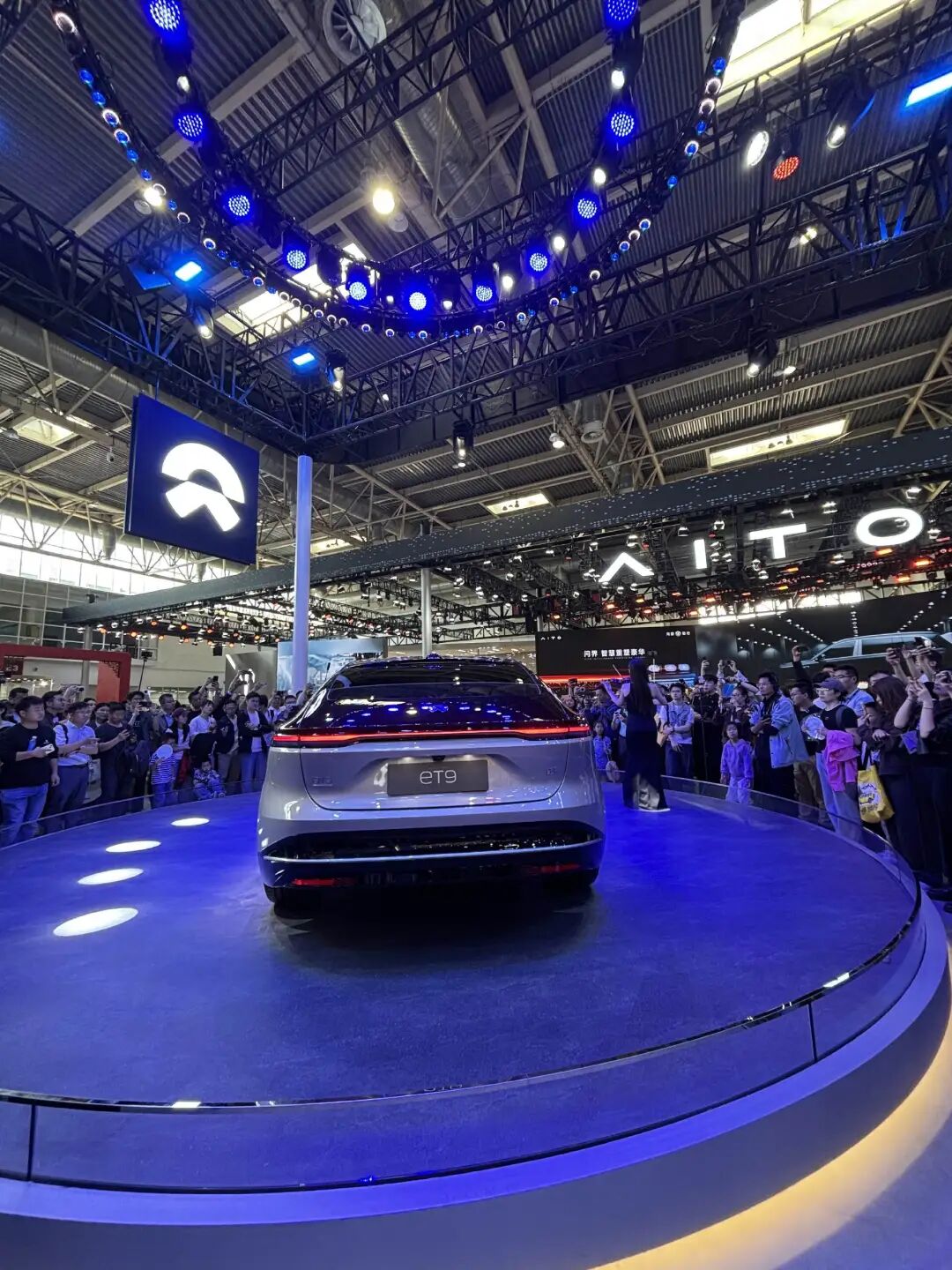
As a representative of traditional luxury brands, Mercedes-Benz showcased its new all-electric flagship model on its booth, but the buzz was clearly overshadowed by Chinese brands. What made the Mercedes team even more uneasy was that the popularity of Huawei's XINGJIE S9 and BYD's YANGWANG U8 booths had surpassed that of the Mercedes S-Class and EQS.
After observing the XINGJIE S9's cockpit demonstration, a Mercedes-Benz China marketing manager remained silent for a long time before finally saying, 'Their intelligent cockpit is at least two generations ahead of ours.'
General Motors' situation in China is even more awkward.
At the 2026 Beijing Auto Show, the foot traffic at General Motors' booth was noticeably lower than in previous years. A long-time GM China employee lamented, 'Ten years ago, we were the stars here; five years ago, we could still compete with Chinese brands on equal footing; now, many young people just walk past our booth without even looking.'

Why Beijing?
The dense presence of foreign automakers, media, and dealers at the 2026 Beijing Auto Show may appear to be just a lively event, but behind it lies a fundamental reversal of the industrial landscape.
Why has this situation of being 'surrounded by foreigners' emerged? The answer lies in three keywords: industrial chain, speed, and ecosystem.
The first keyword is 'industrial chain.'
China boasts the world's most complete new energy vehicle industrial chain. From upstream lithium mining and rare earths to midstream batteries, motors, and electronic controls, and then to downstream vehicle manufacturing and charging infrastructure, China has formed a closed-loop industrial ecosystem.
According to comprehensive data from Tianyancha Media, CATL and BYD alone account for more than 50% of the global power battery market share. The depth and breadth of this industrial chain are unmatched by any other country. For foreigners, coming to the Beijing Auto Show is essentially visiting the 'Silicon Valley of global new energy vehicles.'
The second keyword is 'speed.'
The iteration speed of China's automotive industry has shocked global peers.
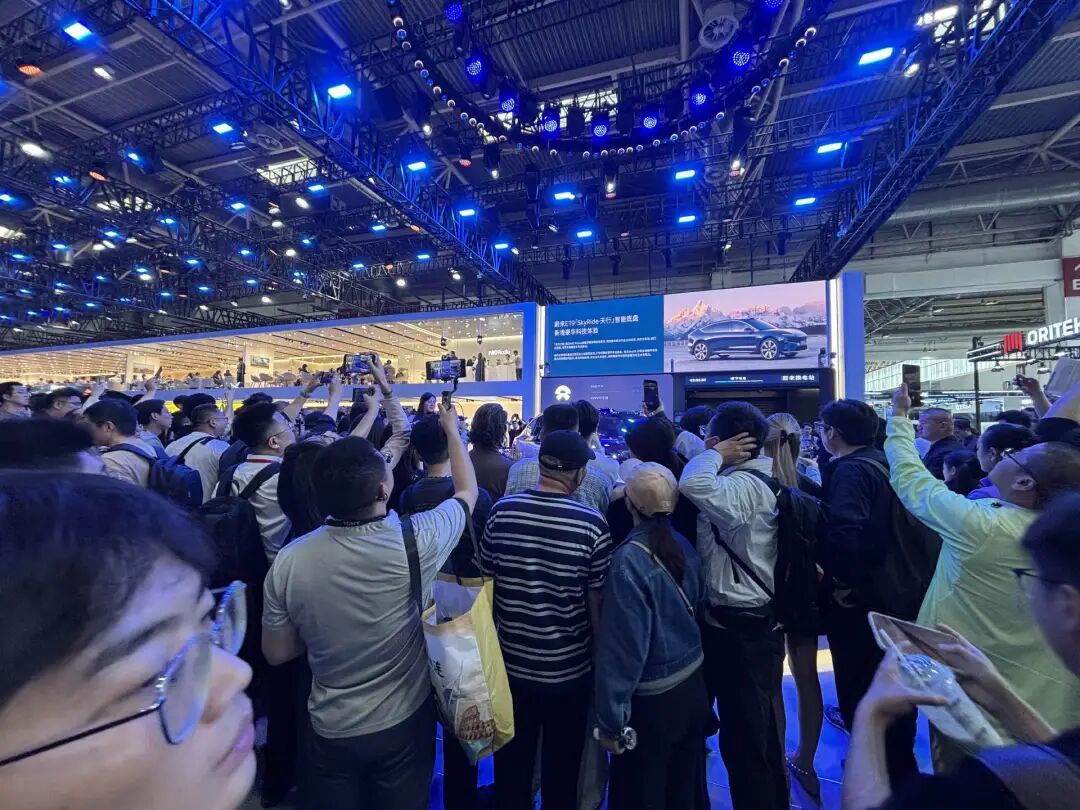
For a new vehicle model to go from concept to mass production, foreign automakers typically take 48 months, while Chinese automakers average just 24 months, with some new entrants even compressing it to 18 months. The iteration cycle for intelligent driving algorithms is calculated quarterly overseas but monthly in China. A German engineer remarked after visiting NIO's battery swap station, 'You can build three swap stations in a week; it takes us three months just to get approval for one.'
The third keyword is 'ecosystem.'
Competition in China's automotive industry has evolved from 'single product' competition to 'ecosystem' competition.
Huawei's all-ecosystem integration of humans, vehicles, and homes; Xiaomi's smart hardware matrix; BYD's vertical integration model; and NIO's user-co-created community culture—these are not just technological advantages but systemic ecological advantages. A McKinsey consultant at the auto show analyzed, 'European automakers are still selling 'cars,' while Chinese automakers are already selling 'mobility lifestyle solutions'—this is a dimensionality reduction strike.'
An even deeper factor is that the 'brutal competition' in the Chinese market has forced out the world's strongest product capabilities.
With hundreds of automotive brands competing in the same arena in China, price wars, configuration wars, and technology wars are constant. Companies that can survive in this 'meat grinder' market are almost guaranteed to dominate globally.
An Indian dealer at the booth told reporters, 'This car would be unbeatable in our market. It costs half as much as a Toyota but has higher specs than a Mercedes.' It is the combination of these factors that has transformed the Beijing Auto Show from a regional industry event into a global automotive industry wind vane .
During the 2026 Beijing Auto Show, an American media personality posted a tweet on social media that received tens of thousands of likes: 'If you want to know what cars will look like in five years, don't look at Detroit, don't look at Geneva—come to Beijing.'
Final Thoughts
The 2026 Beijing Auto Show marks a historical milestone worthy of being recorded. When over 3,000 foreign guests flocked to Chery's booth, when Japanese engineers measured Chinese cars with tape measures, and when foreign CEOs all expressed their desire to 'experience the Chinese speed,' these scenes collectively signal the alternate of an era.
The Chinese automotive industry has completed the journey to leadership in just three decades. The path has not been smooth: from Chinese brands struggling to survive in the cracks to achieving a 'track change and overtaking' in the new energy sector, every step has been infused with the sweat and wisdom of countless automotive professionals. The sight of foreigners 'surrounding' the Beijing Auto Show is both the fruit of decades of effort by the Chinese automotive industry and a new starting point for future development. As the center of gravity of the global automotive industry accelerates its shift eastward, China not only has the responsibility but also the capability to lead this unprecedented transformation in a century.
What role will the Chinese automotive industry play on the global stage in the next decade?
The answer is already written in the exhibition halls of the 2026 Beijing Auto Show, on every Chinese car being measured by foreign engineers with tape measures, and in the confident smile of Yin Tongyue as he communicates with foreign guests in fluent English.
The era of Chinese automobiles is arriving.
-
![]()
Is Zhipu's Trillion-Yuan Market Cap, Despite No Profit, Truly 'Outrageous'?
-
![]()
XiaoPai Unveils Home AI Brain, Paving the Way for Smart Homes to First Grasp 'Home Understanding'
-
![]()
Is the Future of Extended-Range EVs Pure Electric or Li Auto’s 5C Extended-Range? A Li Auto Executive Shares Insights
-
Ant Group’s New Board of Directors: Signaling a New Era?
-
![]()
Google Initiates TPU Sales, as Industry Leaders Eye AI Chips for 'Cost-Effective Tokens'
-
![]()
Input Methods: The Rising Star in AI! WeChat, Doubao, and Qianwen Lead the Charge into the Voice Input Era
-
![]()
Struggling to Sell? Cut It Out! Toyota, Volkswagen, and Changan Lead the Charge in Streamlining, Eliminating Non-Core Products in the Blockbuster Model Era
-
![]()
Arm China and Volcano Engine Join Forces to Expedite Cloud Computing and AI Infrastructure Rollout