Quarterly Report | China's Learning Tablet Market Slows from Deceleration to Stagnation in Q1 2026; Zuoyebang, Xueersi, iFLYTEK, and Xiaoyuan Rank Top Four in Sales
 05/06 2026
 512
512

Data Release
According to Runto data, in the first quarter of 2026, the total sales volume of China's learning tablet market across all channels was 1.252 million units, down 1.0% year-on-year, with a sales revenue of RMB 4.00 billion, down 0.5% year-on-year.
The combined sales share of the six leading brands—Zuoyebang, Xueersi, iFLYTEK, Xiaoyuan, BBK, and Seewo—reached 87.5%, up 12.3 percentage points from the same period in 2025.
In the online channel, the mid-range price segment of RMB 2,000-2,999 accounted for 52.2% of sales volume, a significant increase of 21.2 percentage points year-on-year.
According to Runto's latest report, China Learning Tablet Retail Market Monthly Tracker, in the first quarter of 2026, the total sales volume of China's learning tablet market across all channels was 1.252 million units, down 1.0% year-on-year, with a sales revenue of RMB 4.00 billion, down 0.5% year-on-year.
Quarterly Sales Volume of China's Learning Tablet Market from Q1 2025 to Q1 2026
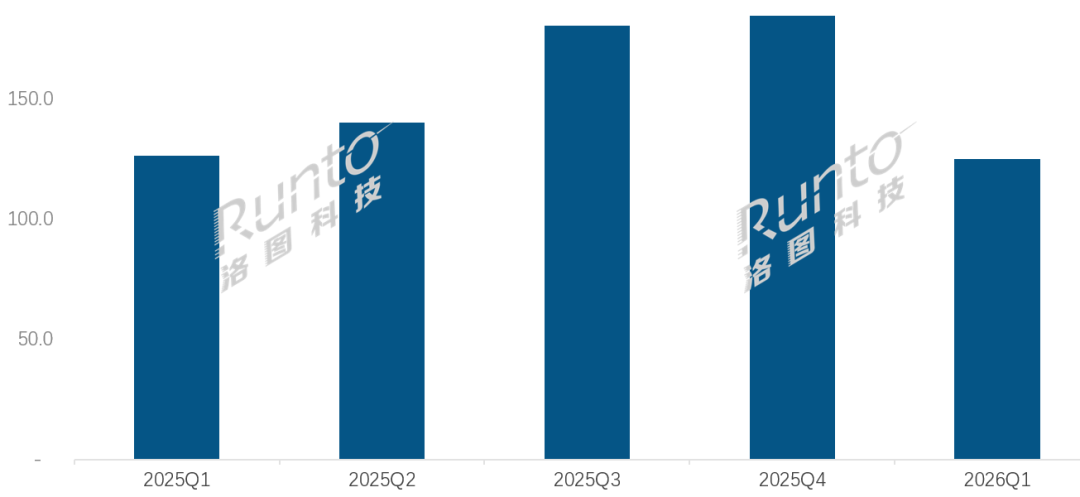
Data Source: Runto total channel sales data, unit: 10,000 units
In the past few years, the scale of the learning tablet market in China has grown rapidly, driven primarily by the rigid demand from Chinese parents and students for high-quality educational resources, which is the underlying logic for the sustained growth of China's electronic education market.
Sales Volume of China's Learning Tablet Market Across All Channels from 2021 to 2025
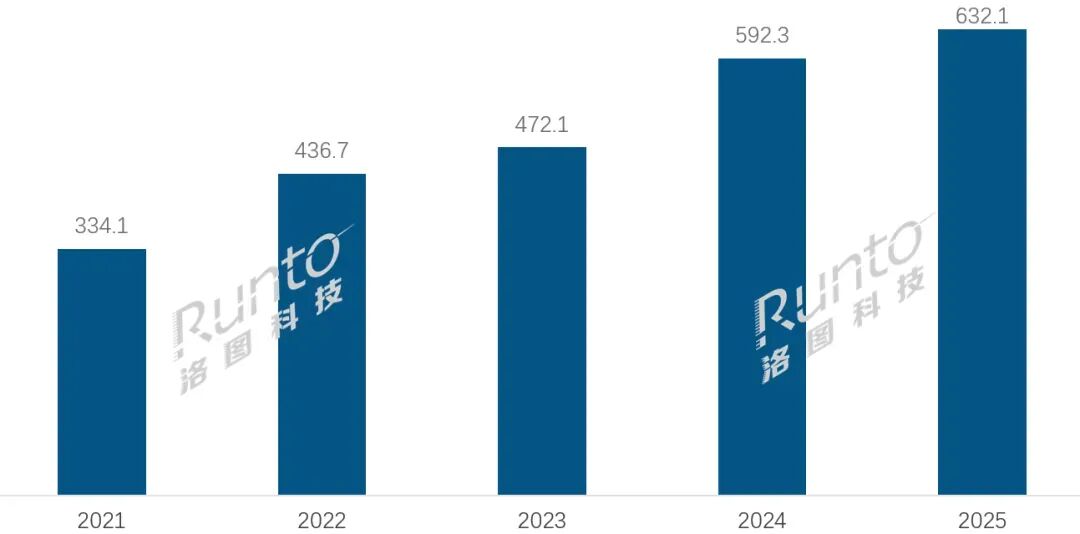
Data Source: Runto total channel sales data, unit: 10,000 units
In 2025, despite year-round government subsidy policies, the growth of the market scale significantly slowed down, reaching only 6.7% in the end. The primary reason is that in first- and second-tier cities, eligible K12 families with rigid demand have already completed their device purchases in a concentrated manner, leading to a temporary oversupply of demand.
As we entered the first quarter of 2026, the impact of government subsidies significantly diminished, and the market lost external support. Additionally, with the empowerment of AI, general-purpose smart tablets have gradually incorporated rich learning resources, diverting the target customer base. As a result, the market scale shifted from deceleration to stagnation.
The slight pressure on the learning tablet market, to some extent, indicates that the industry is transitioning from being driven by external stimuli to being dominated by endogenous demand, evolving along the main lines of channel experience enhancement, comprehensive brand competition, price affordability, and AI value realization.
I. Channel Transformation: Online Bottlenecks and the Return of Offline Experience Value
Against the backdrop of a declining overall market, sales channels have shown a divergence, with online channels under pressure and offline channels recovering. According to Runto data, in the first quarter of 2026, online sales volume of learning tablets declined by 4.4%, while offline sales volume increased by 6.3% against the trend.
Channel Sales Structure and Changes in China's Learning Tablet Market in Q1 2026
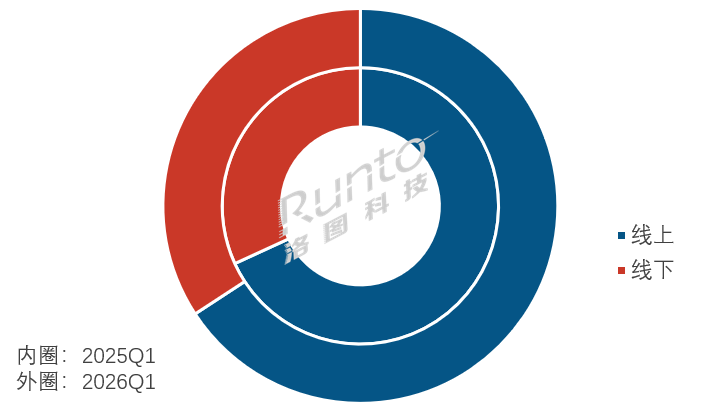
Data Source: Runto total channel sales data, unit: %
However, online platforms remain the dominant sales channel, accounting for 65.8% of sales volume. Nevertheless, with traffic reaching its peak and customer acquisition costs on platforms rising, the growth model relying on low prices and traffic-driven strategies is experiencing diminishing marginal returns, and the development of the online market is encountering bottlenecks.
Meanwhile, leading educational brands such as Zuoyebang, Xueersi, and Xiaoyuan are accelerating their offline channel layout (layout) and network expansion. On the one hand, they are filling the gap left by the decline of traditional electronic education brands' offline businesses. On the other hand, by expanding into third- and fourth-tier cities, counties, and townships, they are effectively reaching potential users in lower-tier markets. In today's era of information overload, offline stores provide one-stop services such as real device experiences, one-on-one function explanations, and immediate after-sales support, effectively reducing the risk of parents' purchasing decisions. In lower-tier markets, the habit of shopping in physical stores is more prevalent.
II. Brand Landscape: Increased Market Concentration and Strengthened Matthew Effect
In fact, the adjustment and effectiveness of the channel landscape also confirm the comprehensive competitiveness of leading enterprises. As a result, the concentration of industry brands continues to rise. Small and medium-sized brands, constrained by multiple factors such as traffic costs, channel deployment, and technological research and development, face continuously shrinking living space (living space).
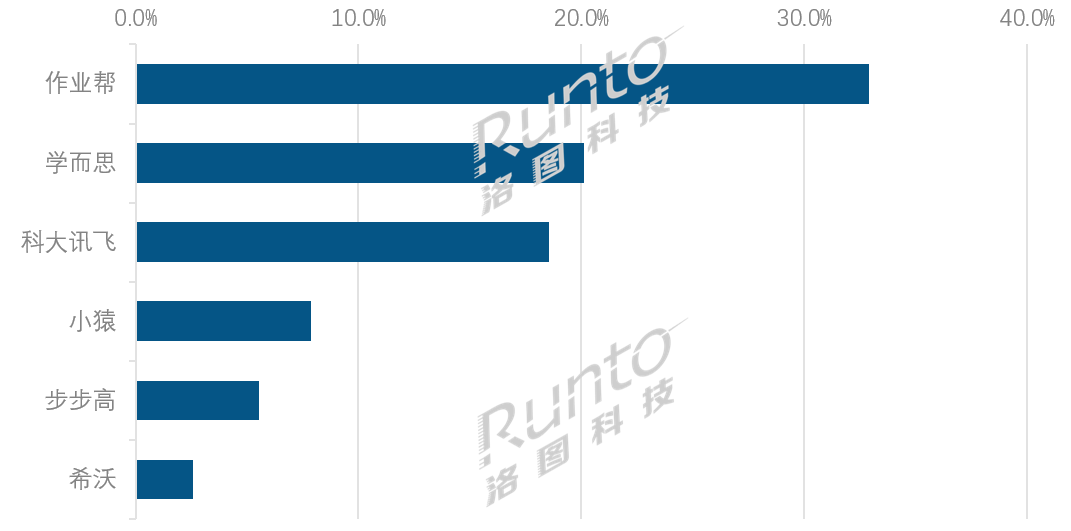
According to Runto data, in the first quarter of 2026, in the overall performance across online and offline channels in the Chinese market, the combined sales share of the six leading brands—Zuoyebang, Xueersi, iFLYTEK, Xiaoyuan, BBK, and Seewo—reached 87.5%, up 12.3 percentage points from the same period in 2025.
Sales Share of TOP Brands in China's Learning Tablet Market in Q1 2026
Data Source: Runto total channel sales data, unit: %
Zuoyebang ranked first in China's learning tablet market with a 32.9% sales share, up 4.6 percentage points year-on-year, continuing to widen its lead. In the first quarter, Zuoyebang launched several flagship new products, including the P60 and T60 series, upgraded its AI Super Teacher, and introduced the core function of AI Companion Learning Island, building technological barriers with exclusive teaching and research resources and self-developed educational large models. Additionally, Zuoyebang continued to focus on omnichannel expansion, consolidating its online presence and accelerating its offline channel expansion.
Xueersi ranked second in the industry with a 20.1% sales share. Its mature and comprehensive self-developed full-subject teaching and research content system is the core support for the brand's steady growth. In this quarter, Xueersi launched the X5 series of new products, focusing on one-stop learning across all academic levels, further strengthening its advantages in hardware-software collaboration.
iFLYTEK secured an 18.5% sales share, ranking third. Relying on its accumulated native AI technology, the brand has long focused on the high-end flagship segment, firmly controlling the market for products priced above RMB 6,000. The new T90 series features an AI 1-on-1 Precision Learning System, and the T90 Pro introduces an AI Teacher, reinforcing its high-end product strength and technological identity.
Xiaoyuan accounted for 7.9% of sales volume, ranking fourth. In recent years, Xiaoyuan has gradually shifted away from a single best-selling product mindset and fully transitioned to the AI learning machine segment. The T6 learning machine released in March incorporates Super Learning and Practice Intelligence technology, improve (perfecting) the full-process learning loop of "diagnosis, learning, practice, and assessment."
III. Product Structure: The Integration and Popularization of AI Technology Support the Value Upgrade of Mid-Range Products
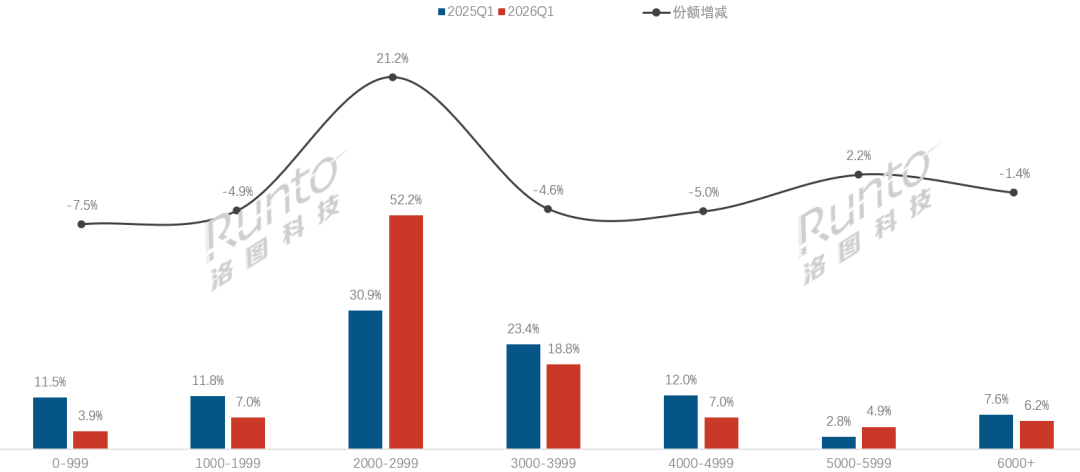
Led by leading brands, mid-range and affordable pricing have become the core price strategies in China's current learning tablet market. According to Runto data, in the first quarter of 2026, in the online channel, the mid-range price segment of RMB 2,000-2,999 accounted for 52.2% of sales volume, a significant increase of 21.2 percentage points year-on-year.
The rapid rise of the mid-range market is primarily supported by the integration and popularization of AI technology. Currently, educational large models, AI companion learning, intelligent academic performance diagnosis, and full-link learning and practice loops have been fully integrated into mainstream mid-range models. Leading brands, centered on AI capabilities and combined with self-developed teaching and research content, have created differentiated functions such as personalized tutoring, precise error analysis, and customized learning plans, achieving an experience upgrade within a reasonable pricing range. This approach aligns well with the value choices of the current era of rational consumption.
Correspondingly, the sales share of low-end models continues to shrink, with the market share of products priced below RMB 2,000 significantly decreasing by 12.4 percentage points to 10.9%.
Additionally, the mid-to-high-end market is experiencing internal differentiation, with a slight decline in the RMB 4,000-4,999 segment, while high-value demand above RMB 5,000 remains stable.
Price Segment Sales Structure in China's Online Learning Tablet Market in Q1 2026
Data Source: Runto online total channel data, unit: %
IV. Market Forecast: Market Recovery in the Second Quarter, with First-Half Scale Reaching 2.75 Million Units
In the short term, the high base effect, tight supply of memory chips, and supply chain fluctuations continue to exert pressure on the market. However, Runto believes that with the early arrival of e-commerce promotions in the second quarter, the recovery of offline channels, the continuation of smart device replacement policies, and the acceleration of product AI integration, the market gap in the first quarter is expected to be filled. It is projected that the total sales volume of China's learning tablet market across all channels will reach 2.746 million units in the first half of 2026, up 3.0% year-on-year.
In the long term, the positioning of learning tablets as the core tool for digital family education (home education) will remain unchanged. After consumers return to rationality, users are more concerned about the compliance and rationality of product content, actual learning effects, and long-term value. Authentic and sustainable endogenous demand from households will become the fundamental support for the industry, driving the market to shift from pulsed growth to stable and sustainable development.
Thank you for reading. If you find this insightful, please like, share, and follow.
-
![]()
This Beijing Auto Show, Surrounded by Foreigners | Auto Circle
-
![]()
What's Next After Million-Level Contexts?
-
![]()
Next Time You Eat Poisonous Mushrooms, Don’t Blame Doubao for Its ‘Lack of Smarts’
-
![]()
Why Has Television, Once a Household Essential, Lost Its Appeal?
-
![]()
Quarterly Report | China's Learning Tablet Market Slows from Deceleration to Stagnation in Q1 2026; Zuoyebang, Xueersi, iFLYTEK, and Xiaoyuan Rank Top Four in Sales
-
![]()
iFLYTEK: Navigating the Steep Path and Narrow Gate of AI in Education
-
![]()
What Did Musk Do When Space X Built Reusable Rockets Back Then?
-
Which Enterprise Dominates the Optical Module Testing Equipment Market with the Fastest Growth?