What Did Musk Do When Space X Built Reusable Rockets Back Then?
 05/06 2026
 637
637
China is currently advancing the construction of commercial spaceflight and satellite internet in an orderly manner. Past satellite and ground network construction focused on hotspots and key industries. However, in major emergencies such as emergency rescue, earthquakes, tsunamis, and wars, existing communication networks still face issues of poor connectivity, leading to information vacuums in understanding the situation on-site and its development.
For professionals in the wireless communication field, this situation brings a great sense of responsibility, requiring more courage and wisdom to open up new industry patterns and create new business forms.
We see that currently, domestic commercial spaceflight and satellite internet are moving from the experimental stage to the networking and trial commercial operation stage. Limited by the shortage of rocket carrying capacity, the networking pace of various mega-constellations is significantly slower than expected. Many factors influence this, and forming a situation of efficient and collaborative development among different industries in the industrial chain (supply chain) requires taking it one step at a time.
Currently, LandSpace's ZQ-3, Space Pioneer's Tianlong-3, and CASC's Long March 12A have completed their maiden flights, though their recovery missions failed. Actual flight data was obtained for attribution analysis and subsequent iterations. In addition to the reusable rocket models that have completed their maiden flights, several high-capacity reusable rockets are still under development and testing.
There is still a long way to go before achieving stable, reliable, and regular flight-like launches.
Nowadays, Space X is undoubtedly leading by a wide margin, with Blue Origin close behind. Looking back, what did Musk do for his Mars dream back then?
In 2001, Dreaming of Colonizing Mars
In 2001, Musk bought a single-engine turboprop airplane to learn flying, satisfying his desire for adventure and better understanding aerodynamics.
During Labor Day weekend, while driving back to Manhattan with his friend Racy from the University of Pennsylvania, Musk mentioned wanting to do something in space, but he couldn't think of anything that could be accomplished by an individual.
Musk believed that the basic physical conditions for building rockets were just metal and fuel, which were not expensive, making rocket construction possible.
When Musk inquired about NASA's plans for landing on Mars, he was shocked to find that there were none.
Thus, a new mission was born for Musk—to build rockets and colonize Mars, enabling humanity to establish an interplanetary civilization.
Why would Musk, at 30 years old and having been laid off twice from tech startups, think this way? Musk gave three reasons:
(1) Technological progress is not inevitable; it may stagnate or even regress. Many now question why returning to the Moon is so difficult today when the U.S. achieved it 50 years ago. Technology does not advance automatically; it only improves through persistent efforts.
(2) Colonizing other planets helps ensure the preservation and continuation of human civilization and consciousness in case of a disaster on Earth—being destroyed by an asteroid impact, nuclear war, or climate change.
(3) The adventurous spirit of the Musk family drives him to seek solutions for human planetary migration.
From grand storytelling to implementing plans, Musk decided to build rockets. He initially planned to buy rockets modified from retired missiles in Russia for fun. However, after negotiations, the Russians' price exceeded his budget, leading to an unsuccessful outcome. Thus, he decided to establish a private rocket company to launch satellites and send humans to space, then to Mars and other planets.
As everyone knows, building rockets is extremely costly and was previously limited to national teams with unlimited budgets. Musk believed there was a high 'idiot' index, meaning the cost of a finished product was much higher than the cost of its basic materials.
To advance space technology, existing rocket manufacturing technologies must be completely transformed.
In 2002, Establishing Space X to Build Rockets
In 1995, during the early days of the internet, Musk was preparing to attend Stanford University for a graduate degree in materials science, focusing on solid-state supercapacitors. At the time, Musk envisioned things that could truly impact human society: the internet, renewable energy, and space travel.
During his senior year, Musk entered the internet industry, creating a yellow pages service that combined business listings with map data for virtual city navigation. When deciding between graduate school and continuing in the internet industry after graduation, he heeded the advice of Nichelson from HSBC to ride the wave of the internet revolution, believing there would always be opportunities for further education later.
Subsequently, Musk created Zip2, X.com, and PayPal, earning significant wealth and becoming a young millionaire.
With initial capital and connections, Musk's desire to start his own rocket company grew stronger. However, this was a high-risk venture, and his friends opposed the idea, showing him numerous videos of rocket explosions to dissuade him.
Musk prepared for the worst: failure would mean losing everything.
From an initial non-profit space adventure plan to a practical and profitable approach, Musk planned to launch commercial or government satellites via rockets.
Musk decided to start with a small rocket, creating a low-cost rocket solution for small satellites, with a key metric being the cost per pound of payload delivered to orbit.
Maximizing unit cost thrust, increasing engine thrust, reducing rocket mass, and making rockets reusable were essential.
In May 2002, Musk founded SpaceX in Los Angeles, planning to launch the first rocket by September 2003 and send an unmanned mission to Mars by 2010. Musk's style at the time was characterized by aggressive and unrealistic goals. However, this rapid iteration mechanism later proved effective. Although delayed, the results were clearly years ahead of competitors.
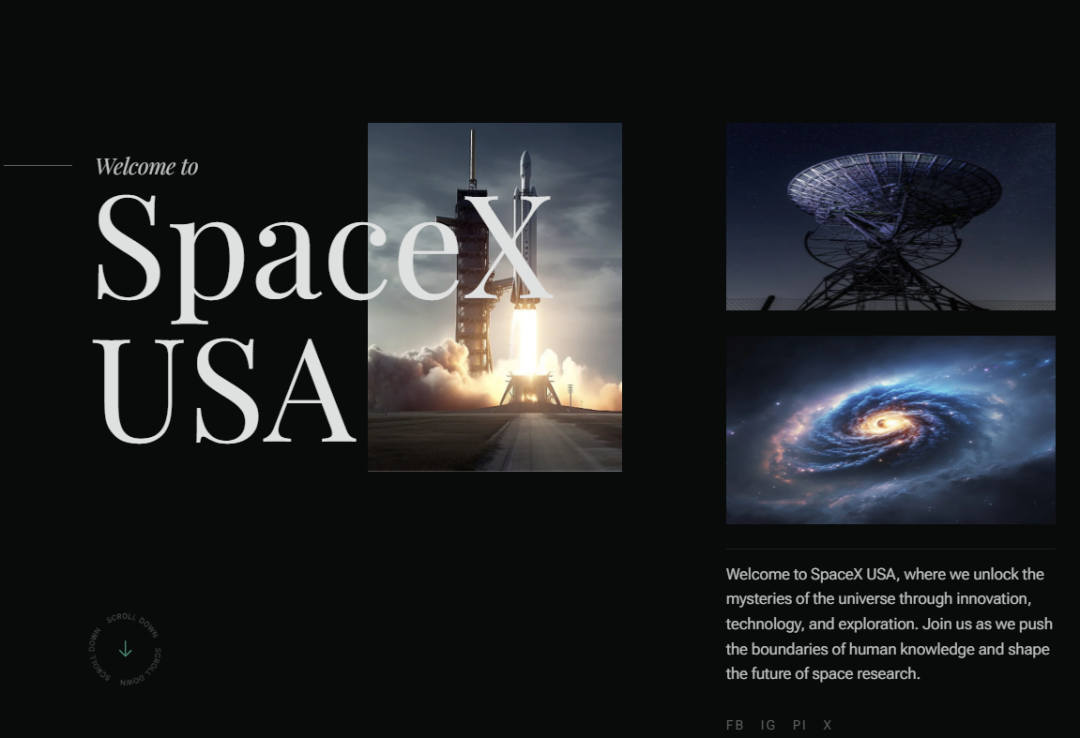
Building rockets requires engines, so Musk first sought someone capable of building them—Tom Mueller.
Mueller worked at TRW Corporation, whose engines had sent U.S. astronaut Armstrong to the Moon. Dissatisfied with TRW's cautious and risk-averse approach, Musk recruited Mueller to be the head of SpaceX's propulsion department and design rocket engines.
Mueller was not wealthy, working as an engineer in the aerospace system to make a living. He wanted Musk to place two years' salary in escrow to ensure payment in case SpaceX failed. Although Musk agreed, he believed this made Mueller just an employee, not a co-founder. "To be a co-founder, one must take risks while contributing intelligence and hard work."
When setting up the rocket factory, Musk brought together design, engineering, and manufacturing teams to improve communication efficiency.
They decided to name the rocket "Falcon 1," using liquid oxygen and kerosene for its first and second stages.
Controlling costs, or in today's terms, improving efficiency and reducing costs, Musk preferred to manufacture components in-house rather than purchase them from suppliers.
In the aerospace field, component design and manufacturing must meet GJB standards. Musk questioned this and insisted on eliminating rules not constrained by the laws of physics, treating them as suggestions rather than requirements.
To quickly build rockets, Musk adopted an iterative design method: rapidly creating rocket and engine prototypes, testing them, destroying them, modifying them, and trying again until a usable product was made. Quick progress, destroying prototypes, and repeating the process were key.
"You don't need to perfectly avoid problems; the key is how quickly you can identify and solve them," Mueller summarized.
To iterate quickly and find test sites, they began repeated testing: constantly trying new ideas and being ready to destroy what they built.
In 2003, Musk and SpaceX's seventh employee, Shotwell, traveled to Washington and secured a $3.5 million contract to launch a tactical satellite for the U.S. Department of Defense.
In 2004, SpaceX won NASA's Commercial Orbital Transportation Services contract through bidding, initiating a new model of space services.
Private companies bid to perform launch services, bearing financial and technical risks, and were paid through key acceptance milestones and launch results. By mastering rocket technology and manufacturing processes, their parameter ranges were not strictly limited but more flexible and broader. If rockets were more cost-effective and successful, this would transform the entire rocket industry.
Twenty years later, we face a similar scenario with commercial spaceflight.
From 2006 to 2008, after three failed launches that exploded, the fourth launch on September 28, 2008, was successful. Falcon 1 became the first rocket designed and manufactured by a private company to successfully reach orbit, eliminating the possibility of SpaceX's collapse. In December, SpaceX secured a $1.6 billion contract from NASA to provide round-trip transportation between the space station and Earth.
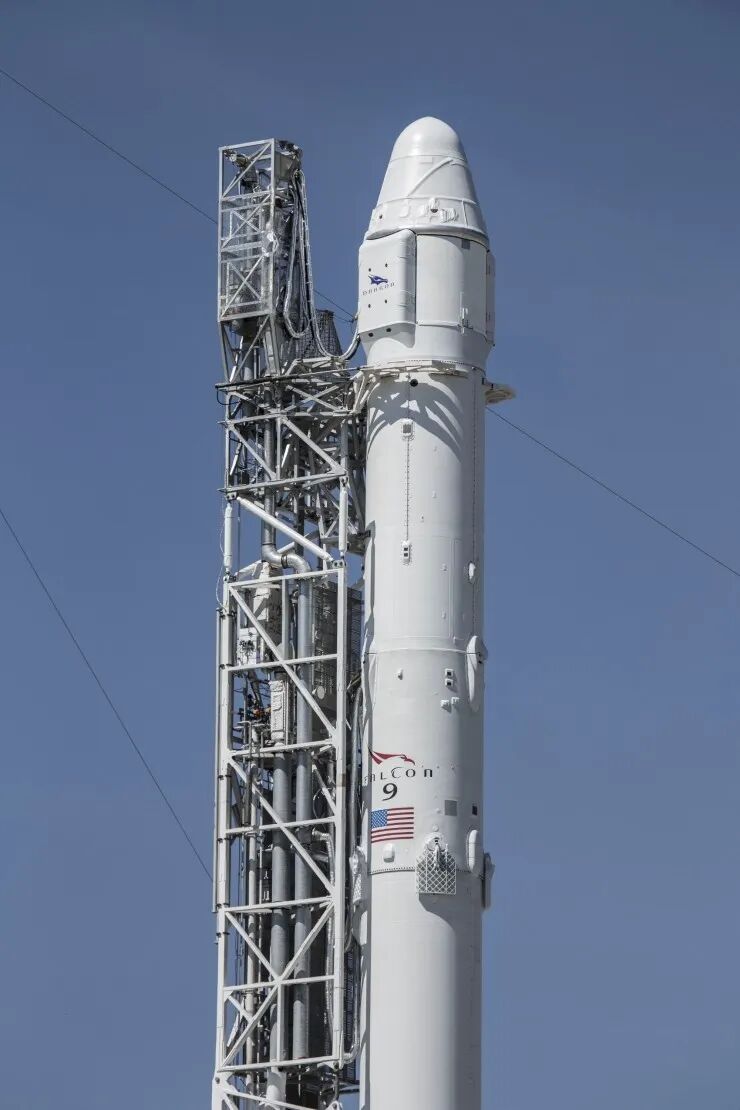
With launch contracts and external investments, SpaceX got on track and began developing Falcon 9 and Dragon spacecraft. Falcon 9 used nine engines for powerful thrust, successfully conducting its first experimental orbital flight in June 2010. Today, Falcon 9 reliably launches Starlink satellites regularly.
In 2015, Reusable Rockets
In 2000, billionaire and Amazon founder Bezos quietly founded Blue Origin, aiming to build reusable rockets for space travel, just like Musk.
Bezos focused on designing and manufacturing sensors and software for guiding rockets back to Earth for soft landings. All functions and fuel were integrated into the rocket, which also needed to be lightweight so the engines could generate enough thrust to send payloads into orbit.
At the time, Blue Origin applied for a patent on sea-based landing and recovery, a concept discussed in the U.S. for over half a century. Musk dismissed it, believing such an old technical solution should not be patented, and Blue Origin eventually withdrew the patent.
In August 2014, Falcon 9, equipped with landing legs and grid fins, conducted a landing test. Soon after liftoff, one of the three engines failed, and the rocket exploded.
On June 28, 2015, Falcon 9 carried out a cargo mission. Two minutes after liftoff, a strut supporting a helium tank in the second stage collapsed, causing the rocket to explode.
Dark clouds hung over the launch and recovery of reusable rockets.
Bezos was also actively advancing reusable rocket tests. In November 2015, Blue Origin launched a used rocket, which spent 11 minutes reaching the Karman line, the boundary of outer space. Guided by GPS and grid fins, the rocket returned to Earth, with the booster engine firing to slow its descent. As the landing legs slowly deployed, the rocket hovered above the ground, adjusting its position before gently landing. Bezos announced the mission's success the next day, stating, "Controlled landings are not easy, but once you master the method, everything seems effortless."
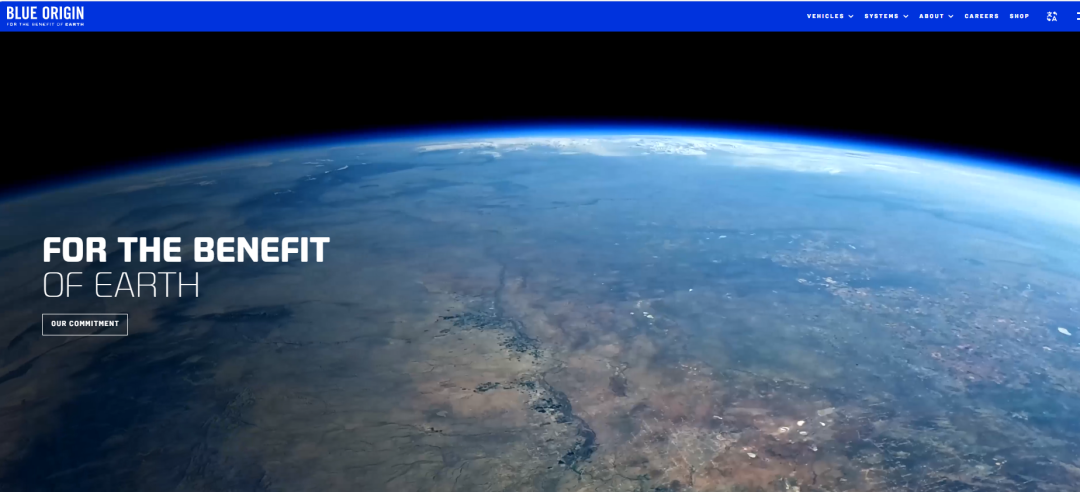
Competing fiercely, Musk disagreed that significant progress had been made. Blue Origin's test merely reached the gateway to outer space, far from the goal of sending payloads into predetermined orbits and recovering rockets. Achieving important tasks like launching satellites and reaching the International Space Station required rockets like Falcon 9, which, if they could return and land again, would surpass Blue Origin's achievement.
On December 21, 2015, Musk's opportunity came.
To escape Earth's gravity, SpaceX continued to redesign Falcon 9, adding more liquid oxygen fuel and lowering its temperature to increase density and improve rocket energy efficiency.
On the eve of the rocket launch, liquid droplets appeared between the first and second stages, but it was uncertain whether they were liquid oxygen or a leak from the liquid oxygen tank. A minute before launch, the control room was extremely tense, with everyone sweating, waiting for Musk's decision to proceed with the launch.
Relying on his physical intuition, Musk decided to proceed with the launch.
Musk won the gamble. The liftoff was flawless, and everyone quietly waited and observed whether the lander would safely return and achieve a stable landing.
After the second stage separated, the booster's thrusters ignited, and the booster turned around, bottom down, slowly descending toward the landing zone. Guided by GPS and sensors, with the help of grid fins, it gently landed at the landing site.
"Falcon has landed," the announcer's voice echoed throughout the control room hall, while Musk had already rushed out of the control room, staring at the sky by the roadside to watch the rocket land.
Bezos congratulated SpaceX on its successful recovery and landing, but Musk believed SpaceX's achievements were clearly superior to Blue Origin's.
On November 14, 2025, Bezos made another push, and Blue Origin's New Glenn rocket successfully achieved sea-based recovery of its first-stage booster, becoming the second company globally after SpaceX to master orbital-class rocket recovery technology.
Today, SpaceX, with core assets like Falcon 9, Starship, and Starlink, is driving toward an IPO with an astonishing valuation of $1.75 trillion.
Progress of Reusable Rockets in China
On December 3, 2025, China's private rocket company LandSpace also reached a significant milestone. That day, ZQ-3 successfully completed an orbital launch, with the second stage entering predetermined low Earth orbit. However, the first stage experienced abnormal combustion during the recovery phase and failed to achieve a soft landing. Despite the first-stage recovery failure, this maiden flight verified the rocket's basic reliability and several key technologies, including the liquid oxygen-methane engine, multiple ignition capabilities, stainless steel rocket body structure, and high-precision guidance and control systems.
ZQ-3's chief commander, Dai Zheng, explained that after the first and second stages separated, there was a high-altitude, large-angle attitude adjustment. After the adjustment, the ignition phase at 80 kilometers above the ground was actually perfect. The glide phase, controlled aerodynamically from 40 kilometers down to 3 kilometers above the ground, also went smoothly.
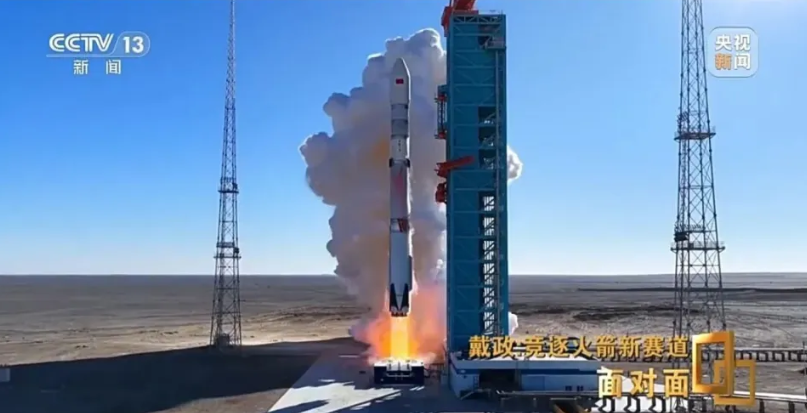
“At the 3-kilometer mark, a landing ignition must be performed. This is akin to slamming on the brakes—when the altitude drops to zero, the speed should essentially be reduced to zero as well. Only then can the landing legs deploy to absorb the impact of the collision, allowing the rocket to stand upright on the ground undamaged. For rocket vehicle control, this presents an enormous challenge. If the final brake is not applied correctly, the braking function will not be achieved, and the rocket will crash at the edge of the landing site.”
The crash site was approximately 40 meters away from the center of the landing zone. Dai Zheng explained that this means if the final landing ignition had worked properly, the goal could have been achieved, and the rocket could have landed at the center of the site.
Dai Zheng stated that SpaceX's continuous trial and error 'allows them to explore the boundaries of their products and achieve rapid iteration.' He believes that to some extent, China has also recognized this.
Following the ZQ-3, the Long March 12A rocket will begin its maiden flight and recovery technology verification. Both the ZQ-3 and the Long March 12A are aimed at meeting the national demand for constellation networking.
On December 23, China conducted the Long March 12A launch mission at the Dongfeng Commercial Space Innovation Test Area. The rocket's second stage entered its intended orbit, but the first stage failed to be recovered successfully. The specific reasons are currently undergoing further analysis and investigation.
On April 3, 2026, the Tianlong-3 Yao-1 carrier rocket from Space Pioneer ignited and lifted off from the Jiuquan Satellite Launch Center. The rocket experienced abnormal flight, and the maiden flight test mission ended in failure. The specific reasons are currently undergoing further analysis and investigation.
According to reports, the Tianlong-3 is China's first commercial space large-capacity liquid rocket expected to achieve a low Earth orbit capacity exceeding 20 tons. Its performance is on par with the internationally mainstream SpaceX Falcon 9, capable of launching a constellation of 36 satellites with a single rocket.
It is anticipated that in 2026, China will conduct multiple test flights for reusable rocket recovery, forming a parallel development pattern between national and private teams. There is anticipation for achieving reliable and stable recovery at an early date.
In the article 'Overview of Reusable Launch Vehicle Technology Development,' Academician Bao Weimin summarizes the key technologies involved in the development of reusable launch vehicles into the following five aspects:
① In terms of overall optimization design, the focus is on breakthroughs in multi-disciplinary overall parameter joint optimization, aerodynamic shape optimization design, and high-precision aerodynamic force prediction, as well as high-precision prediction of aerodynamic heating and load environments;
② In terms of propulsion, the focus is on breakthroughs in engine thrust deep modulation, propellant management, and reusable technologies;
③ In terms of structure and thermal protection, the focus is on breakthroughs in landing buffer mechanism design and efficient thermal protection and thermal management technologies;
④ In terms of navigation, guidance, and control, the focus is on breakthroughs in full-mission adaptive trajectory planning, high-precision disturbance-resistant landing control, and intelligent integrated collaborative design technologies;
⑤ In terms of full-vehicle health management, the focus is on breakthroughs in fault monitoring, fault diagnosis, maintenance, reusability, and lifespan assessment technologies.
Vast is the universe, boundless and swift in communication. Humanity will ultimately achieve connectivity for all things and satellite-ground communication, ushering in a new era of space exploration.
--
-
![]()
Proposed to Raise 955 Million Yuan through Private Placement! Huicheng Vacuum Boosts Localization of Ultra-Precision Optical Coating Equipment
-
![]()
Cash Flow Soars 13-Fold! What Major Strategic Move is Wuhan Five Square Optoelectronics Planning?
-
![]()
Leaked Design of vivo X500: Reverts to Circular Camera Module in Top-Left Corner, Pays Homage to Classic X90 Aesthetic
-
![]()
DeepSeek Shows Signs of Foraying into Code Agents, Launches WeChat Official Account Focused on Harness
-
![]()
Auto Companies Deny Claims That ‘Cooperation with Huawei Is Non-Essential’, as Huawei Transforms into a ‘Public Platform’
-
![]()
Starship to Independently 'Return to the Launch Tower': SpaceX's Ambitions Extend Beyond Rocket Building to Dominating Space Transportation
-
![]()
Starship Set to Independently 'Return to the Launch Tower': SpaceX is Revolutionizing Space Transportation, Not Just Building Rockets
-
![]()
Anthropic and OpenAI Face Off Against Deepseek