Doubao Starts Charging, and I Actually Think It's a Good Thing
 05/07 2026
 590
590
How much is large model service really worth? How much should it be worth?
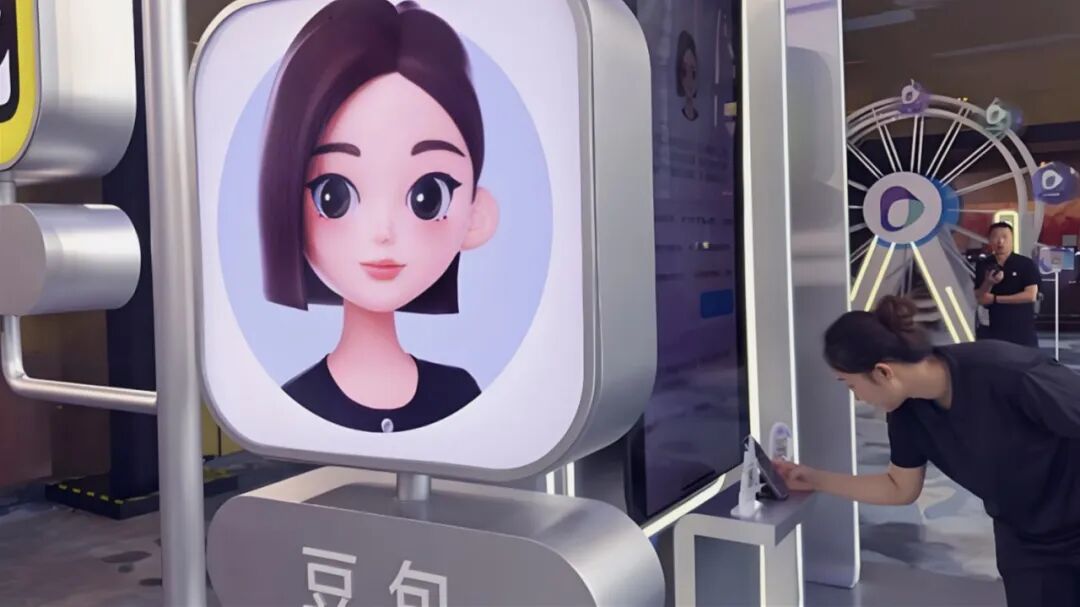
Doubao Starts Charging.
What many didn’t expect was the late timing and surprisingly high prices: 68 RMB/month for the standard version, 500 RMB/month for the professional version, with annual fees exceeding 5,000 RMB. Keep in mind, just late last year, domestic players were still competing on free offerings and token subsidies, fearful of losing even a single user.
But this article isn’t just about reporting a simple pricing update. Placed in a broader context, when a national-level AI app with 227 million monthly active users decides to start charging—and not cheaply—the implications run far deeper than a mere price list.
At least three questions arise: Why is ByteDance doing this now? What exactly is being sold for 500 RMB/month, and to whom? And what does this pricing experiment mean for the entire domestic AI industry?
01
The Free Ride is Over—Time to Talk Costs
Let’s start with a basic fact: Doubao didn’t rush into charging.
In terms of user base alone, it’s more qualified to monetize than any domestic competitor. QuestMobile data shows that in Q4 2025, Doubao’s monthly active users surged to 227 million, securing its position as the industry leader and the first AI-native app in China to exceed 100 million daily active users. ByteDance’s three AI apps—Doubao, Jimeng AI, and Doubao Aixue—collectively reached approximately 250 million monthly active users, ranking among the top ten in both MAU and downloads.
What do these numbers mean? Few internet products in China can claim “national-level” status, and Doubao achieved this scale without spending nearly as much as outsiders assume.
Data from mobile ad monitoring agency AppGrowing shows Doubao’s advertising spend declined overall in 2025: 161 million RMB in Q1, 117 million RMB in Q2, halving to 65 million RMB in Q3, and slightly rebounding to 92 million RMB in Q4.
Now consider retention. From January to November 2025, Doubao’s 30-day retention rate averaged 44%, significantly outpacing second-place Kimi. Even more granular data reveals Doubao’s 180-day retention rate exceeded its 90-day rate—a rare “smile curve” for AI chat products.
At the very least, this proves one thing: as we’ve discussed before, Doubao didn’t just buy its way to prominence through massive spending. It’s a product users genuinely engage with and stick to. In an industry and era where customer acquisition costs are exorbitant and user loyalty is paper-thin, these numbers are luxurious.
But here’s the problem: the larger the scale, the uglier the balance sheet. The cost of free models includes linearly expanding GPU cluster and inference costs, not to mention endless future computing investments.
Latest data from Volcano Engine reveals: Doubao’s large model token usage surged from 120 billion in May 2024 to over 30 trillion by September 2025—a 200-fold increase. Every additional daily active user, every conversation, every “generate a PPT for me” command burns computing power.
When you reach 100 million DAU, continuing to offer increasingly complex model capabilities for free is like turning your vault into a public square where anyone can grab a handful.
Now consider ByteDance’s overall computing layout (layout). The economic urgency behind this pricing experiment becomes clear. According to Zheshang Securities research, ByteDance’s 2025 capital expenditures are expected to reach 160 billion RMB, with roughly 90 billion RMB allocated to AI computing procurement and 70 billion RMB for IDC infrastructure, optical modules, switches, and other network equipment.
And this isn’t the endpoint. Doubao’s daily token consumption continues to grow exponentially, with ByteDance estimating “relatively high” future token usage and planning to further increase computing investments. Oriental Securities (Orient Securities) calculates that if Doubao reaches 50 million DAU and 50 trillion daily token usage by 2027, under a 2.5x peak multiplier assumption, over 5.65 million GPUs would be required—a massive shortage.
On one side: 227 million MAU, over 100 million DAU. On the other: 160 billion RMB in capital expenditures. Every computing cost is real money, and someone must eventually foot the bill.
02
Who’s Paying 500 RMB/Month?
The price list is out, and undoubtedly, the domestic market’s first reaction will be “expensive.” Standard version: 68 RMB/month. Enhanced version: 200 RMB/month. Professional version: 500 RMB/month. The professional annual fee hits 5,088 RMB—more than double ChatGPT Plus’s annual subscription (~240 USD/year).
After years of “winner-takes-all, free-for-all” narratives in China’s internet sector, this pricing creates a striking contrast.
But that’s precisely the point worth examining. Doubao doesn’t intend for everyone to pay. The official response is clear: “Doubao will always offer free services. On top of that, we’re exploring additional premium services, with details still in testing.”
Sources close to Doubao further reveal that paid features will focus on complex tasks and productivity scenarios, such as PPT generation, data analysis, and film production. As model capabilities continue to upgrade, the product can handle increasingly sophisticated, high-value tasks—but these require more computing power and inference time, hence the planned paid services. The free version will continue serving daily use cases.
In other words, Doubao is drawing a line: lightweight uses like casual chatting, copywriting, and research remain free. Only those using AI for work—treating large models as productivity tools—will need to pay.
This follows a “tiered pricing by computing cost” logic: light usage remains free under Doubao’s coverage; heavy usage requires users to pay for their computing consumption. This approach has proven successful overseas. Claude Code, for example, officially launched in 2025 and reached 1 billion USD in annualized revenue within six months, surging to 2.5 billion USD by February this year—driven by high-performance models + subscription pricing.
So why set Doubao’s professional version at 500 RMB/month? Frankly, this may not reflect Doubao’s belief that its product is worth 500 RMB, but rather its intention to establish a domestic price anchor for “AI productivity tools.”
For C-end AI subscriptions, China lacks comparable benchmarks or industry standards. Doubao’s bold pricing makes one thing clear: this isn’t a cheap tool, nor a new gadget that needs to curry favor with low prices. It’s a genuine replacement for certain professional productivity tasks.
Whether the market will pay remains to be seen. But by claiming this position and setting the price anchor, Doubao leaves ample room for future promotions, discounts, or feature-based bundling.
Zooming out, Doubao isn’t alone.
Commercialization of domestic C-end AI assistants entered an intensive exploration phase from late 2025 to early 2026. Kimi launched paid memberships last year with three tiers: free version with limited access to deep research and OK Computer functions; 49 RMB/month with equivalent API credits; and 99 RMB/month with increased quotas and concurrency support.
Kimi’s internal letter revealed that since November 2025, overseas API revenue grew 4x, with paid users increasing over 170% month-over-month domestically and internationally. Kimi’s “OK Computer” single-dialogue cost reaches 4-5 RMB—unsustainable at scale without paid models.
Earlier, Baidu’s Wenxin Yiyan introduced a professional version in 2023 priced at 59.9 RMB/month (49.9 RMB/month with continuous subscription). This marked the first paid large model product for C-end users among domestic tech giants. However, by April 2025, Wenxin Yiyan announced full free access, reflecting both competitive pressure from DeepSeek’s free model and Baidu’s struggles in C-end AI adoption.
Tencent Yuanbao, meanwhile, maintains a full-feature free strategy, opening all core functions to users without a standalone subscription system.
A clear pattern emerges: the entire industry is transitioning from “free trials” to “tiered pricing,” differing only in pace and approach.
Doubao sets the highest prices and takes the boldest steps, likely due to its strongest user base and highest cost pressures. Kimi takes a mid-range route, differentiating through coding tools and agent models. Baidu attempted paid models first but retreated to full free access. Tencent Yuanbao waits on the sidelines, using free access to retain users while testing future paid possibilities.
03
The Real Stakes of the Paid Experiment
When we focus solely on a single company’s pricing move, discussions often devolve into whether it’s “too expensive” or if users will churn.
From an industry perspective, Doubao’s pricing matters because it forces China’s AI sector to confront a question it can no longer avoid: when free dividends dry up, financing windows tighten, and IPO exits remain distant, can domestic AI companies sustain themselves through products alone—rather than relying on B2B custom projects, computing power sales, or government contracts?
The difficulty lies in the data. Take MiniMax: its 2025 revenue reached 79.03 million USD, with overseas revenue accounting for 73% and overall gross margin at 25.4%. This makes it the best-performing domestic C-end AI product, yet its core revenue comes from overseas markets. Domestic willingness and ability to pay for AI products remain the industry’s greatest uncertainties.
Overseas, the story differs entirely. OpenAI generated 4.3 billion USD in H1 2025 revenue, with full-year projections reaching 13 billion USD. Over 80% of this comes from ChatGPT’s paid subscribers, including Plus individual plans, enterprise editions, and team plans. OpenAI has surpassed 3 million paying enterprise users, with ChatGPT weekly active users exceeding 800 million.
Gartner predicts 2025 global GenAI model end-user spending will reach 14.2 billion USD, though actual ARR already exceeds 20 billion USD, with AI application commercialization driving rapid revenue growth for model vendors. Overseas, individual subscriptions alone can support the revenue expectations of a company valued in the hundreds of billions.
In China, the situation is far more complex. The core difference lies in payment culture: overseas, from GitHub Copilot to JetBrains, developers routinely pay hundreds of USD annually for IDEs—a tool-payment culture decades in the making.
In China, C-end users have never truly developed software tool payment habits. Worse, domestic large model products suffer from extreme homogenization—competitors quickly replicate features, making true differentiation rare. Once a service charges, users face nearly zero cost to switch to a free alternative.
In this environment, the first mover to charge risks being undercut by competitors using free strategies.
This explains why Doubao waited until surpassing 100 million DAU and 227 million MAU to introduce pricing—its scale provides sufficient user filtering and error tolerance. Even with a 1-2% conversion rate, the revenue scale becomes significant. In contrast, Kimi’s paid volume and user base remain much smaller. Tencent Yuanbao’s continued free access suggests it’s waiting for a more opportune moment.
From a longer-term perspective, Doubao’s pricing move exposes a logic the industry has long considered but never openly discussed: large models aren’t public services or charities—they’re businesses that need to recover costs.
When China’s largest C-end AI app starts charging users, the industry can no longer evade commercialization questions with excuses like “still in the technology dividend (bonus) phase” or “still expanding market share.”
For DeepSeek—an open-source, free model—the pressure will transmit rapidly. DeepSeek has long emphasized its free route, but in early 2026, it lost core team members across four critical technology lines (base models, inference, OCR, multimodal) to competitors offering tens of millions or even nearly 100 million RMB in annual salaries.
“Huansquare’s profits are enough to burn” no longer suffices amid intense talent competition. Doubao’s pricing move signals that industry survival now hinges on self-sufficiency—only by earning money through products can companies retain top talent, create better products, and sustain a virtuous cycle.
Looking back at the AI boom over the past year, an awkward truth persists: domestic large model companies rapidly catch up technologically, even surpassing rivals in some metrics, but collectively fail to close the commercialization loop.
Technological leadership’s temporary premiums quickly erode under copycat competition, while price wars and free strategies trap the industry in a prisoner’s dilemma. Doubao’s move, regardless of success, at least provides a reference point—how much large model services should cost, and what AI capabilities users are willing to pay for.
Given Doubao’s current scale and ByteDance’s strategic patience, this pricing experiment will likely persist for a considerable time. It will weather user churn, public controversy, product iterations, and pricing adjustments before finding a dynamic equilibrium through ongoing negotiation.
For the industry, if Doubao maintains its user base and market position while charging, it proves that AI in China can survive on user payments rather than external funding. Conversely, if paid users churn en masse and competitors seize the opportunity, the industry may remain stuck in the free-for-all mud for much longer.
“The free options often cost the most.” Nowhere is this truer than in AI—not because users pay dearly for “free” services, but because companies themselves must foot the bill for “free.”
Original article by Xinmou
— END —
-
![]()
Tesla Restructures Its Balance Sheet
-
![]()
Accelerating the High-Speed Interconnection Upgrade of AI Computing Clusters! JONHON Releases ELSFP External Light Source Optical Connectors
-
![]()
Breaking the overseas blockade of volumetric holographic materials, this optical enterprise secures nearly 100 million yuan in financing!
-
![]()
Why Does Jensen Huang So Openly Praise China’s AI?
-
![]()
"Wudang" Unveiled: Arm China's Next-Gen AI VPU Redefines Video Encoding
-
![]()
From Energy Conservation and Carbon Reduction to AI Decision-Making: GECON East Intelligence and Chery Group Explore a New Green and Smart Paradigm for Automobile Manufacturing
-
![]()
WAIC 2026 Observation | AI Accelerates Towards the Core of Industries, Industrial AI Enters a Critical Phase
-
![]()
Volkswagen China Fires the First Shot in Foreign-Funded 'White Box Delivery'!