AI Talent War: ByteDance’s Seed Emerges as the ‘Whampoa Military Academy’ of AI Amidst Rapid Talent Turnover Outpacing Model Updates?
 05/07 2026
 638
638
The AI talent market is experiencing a significant wave of mobility.
In the technical report for DeepSeek V4 released by Deeply Explore, a roster of nearly 300 contributors listed under 'Research and Engineering' drew considerable external attention, with 10 individuals identified as 'former employees'.
Specifically, within the core development team of DeepSeek V4, ten key contributors and AI experts—Bingxuan Wang, Chong Ruan, Daya Guo, Haoran Wei, Haowei Zhang, Jun Ran, Junlong Li, Kezhao Huang, Y.Q. Wang, and Zipeng Zhang—have departed from Deeply Explore.
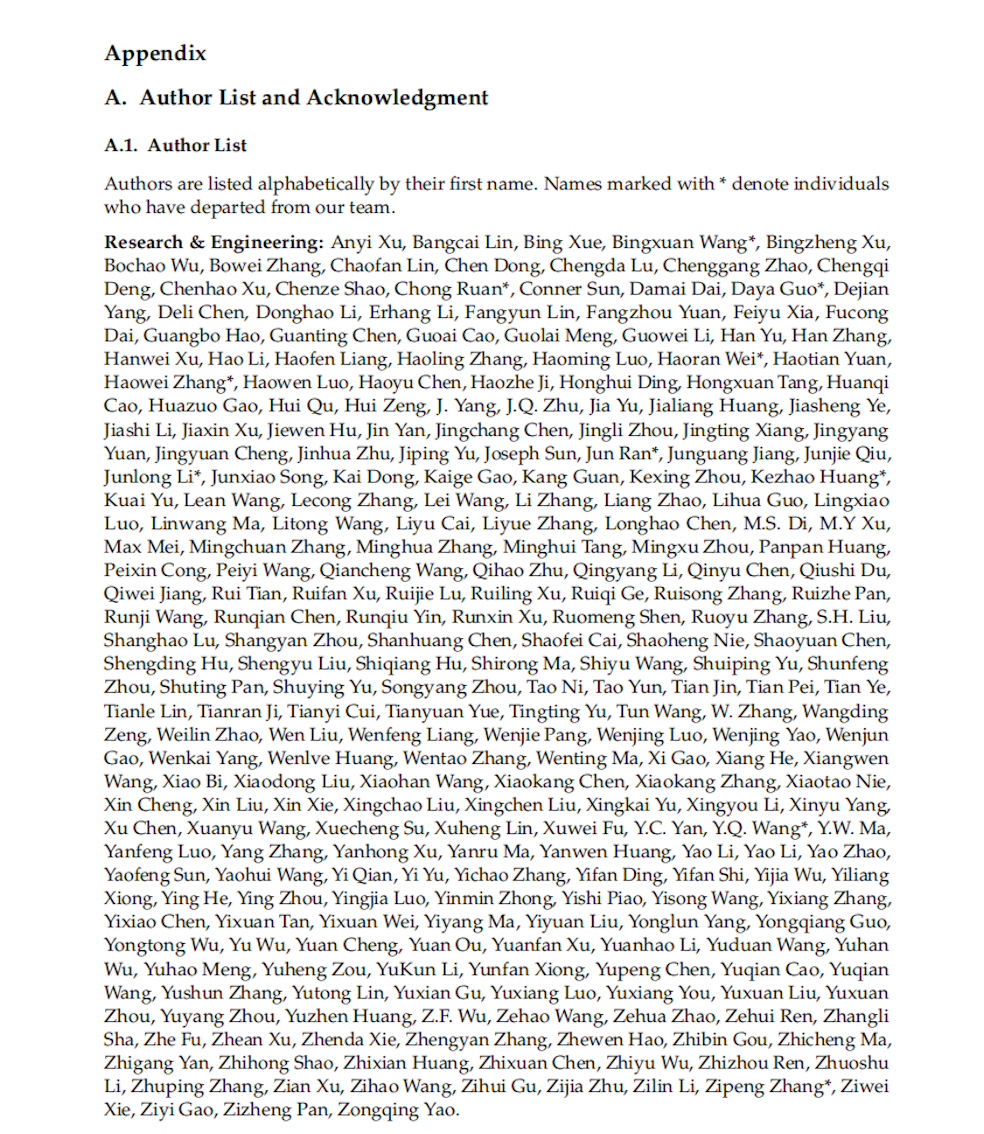
Image Source: Deeply Explore
Among them, Daya Guo, a key researcher, has transitioned to ByteDance’s Seed team as a leader in Agent development, holding a job level of L8. Chong Ruan, a core researcher in multimodal technology, has joined Argo.AI as Chief Scientist. Bingxuan Wang, the lead author of DeepSeek’s first-generation large language model, has moved to Tencent’s Hunyuan team. Haoran Wei, the lead author of the DeepSeek-OCR series models, has not yet announced his next career move.
The departures of these core contributors and AI experts from Deeply Explore, as highlighted in the DeepSeek-V4 technical report, are merely a snapshot of the intensifying competition for AI talent in China.
It is worth noting that Luo Fuli, a key R&D member of DeepSeek V2, left Deeply Explore earlier and joined Xiaomi last year to head the MiMo large model project.
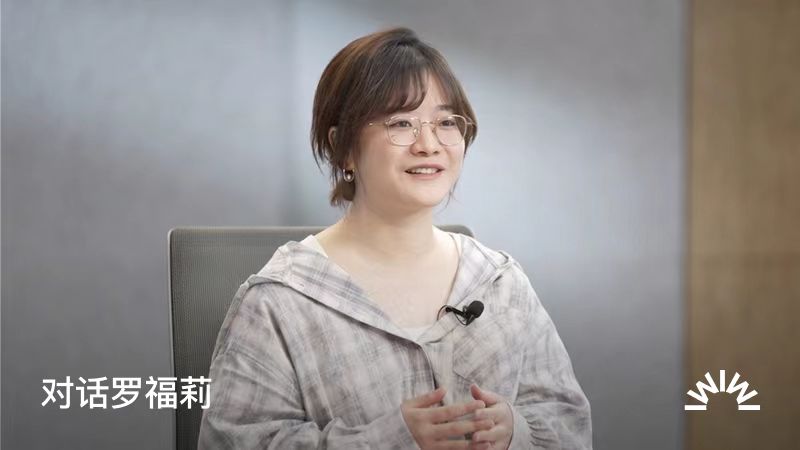
Image Source: @Language as the World Studio
Tech Giants Poaching Talent from AI Startups: A Longstanding Trend
Lei Technology (ID: leitech) has discovered through research that, in addition to Deeply Explore, senior technical talent from AI startups such as Moonshot AI (Kimi), Zhipu AI (GLM), StepFun, and Baichuan Intelligence have long been targets of tech giants and major platforms.
In 2025, Tan Xu, the head of Moonshot AI’s end-to-end speech model, joined Tencent’s Hunyuan team to lead the speech integration domain.
Notably, prior to joining Moonshot AI, Tan Xu served as the Chief Research Manager at Microsoft Research Asia. Before Yao Shunyu took charge of Tencent’s Hunyuan team, the team had already recruited numerous researchers from Microsoft China, including Sun Qingfeng, a core member of Microsoft’s open-source model WizardLM team; Hu Han, the former lead researcher of Microsoft Research Asia’s Visual Computing Group; and Xu Can, the project creator of Microsoft’s WizardLM team.
Following Yao Shunyu’s new policies, sources close to Tencent’s recruitment efforts revealed to Yicai that, 'Tencent is now exclusively considering candidates from the base model teams of DeepSeek, Moonshot AI, ByteDance, and Alibaba. Candidates from other companies are not being considered.'
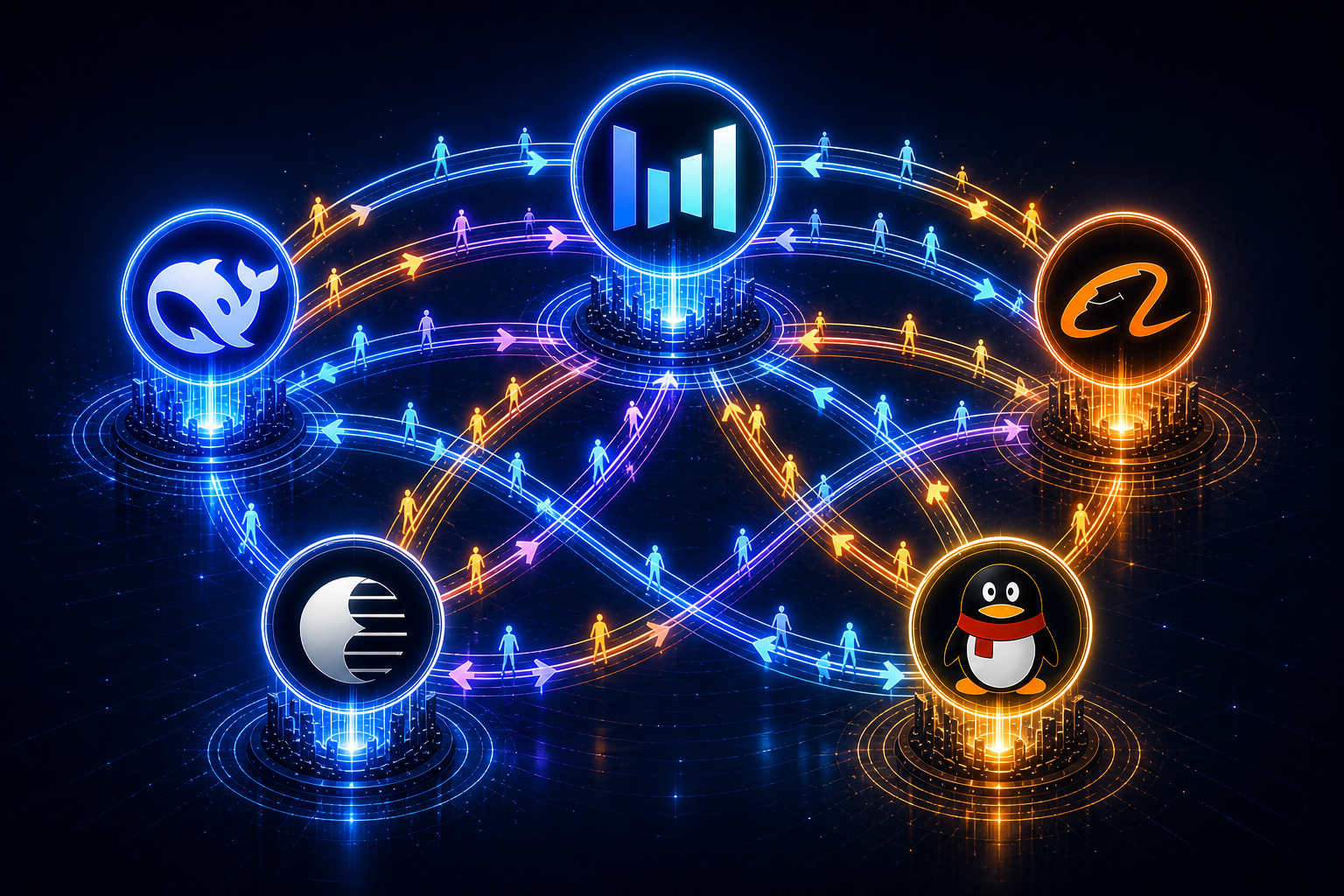
Image Source: GPT Image 2
In 2025, more AI startups witnessed a wave of senior talent departures, including some well-known tech experts. Among them, Feng Guanyu, the head of Zhipu AI’s Infra division, joined ByteDance to lead infrastructure development. Deng Shihong, the head of reinforcement learning at StepFun, joined ByteDance to enhance technical capabilities. Xie Jian, the co-founder of Baichuan Intelligence’s technology division, returned to Baidu as a core researcher.
Why are domestic AI startup tech experts increasingly opting to join tech giants? The primary reasons include:
Firstly, the research domains and project directions at AI platform giants are more diverse, offering better-matched development opportunities for tech experts with various specializations, such as LLM, Agent, OCR, multimodal AI, and hardware.
Secondly, over the past two years, domestic tech giants have ignited a comprehensive AI arms race, with technology iterations occurring in months, weeks, or even days, and business expenditures reaching tens or hundreds of billions. The R&D outcomes and growth prospects of AI startups are being significantly impacted, leading some tech experts to seek new opportunities as the landscape changes.
Thirdly, AI startups are unable to offer industry-leading salaries and comprehensive compensation packages to tech experts. To maximize earnings, they must join tech giants already engaged in an arms race with rapidly increasing AI business expenditures.
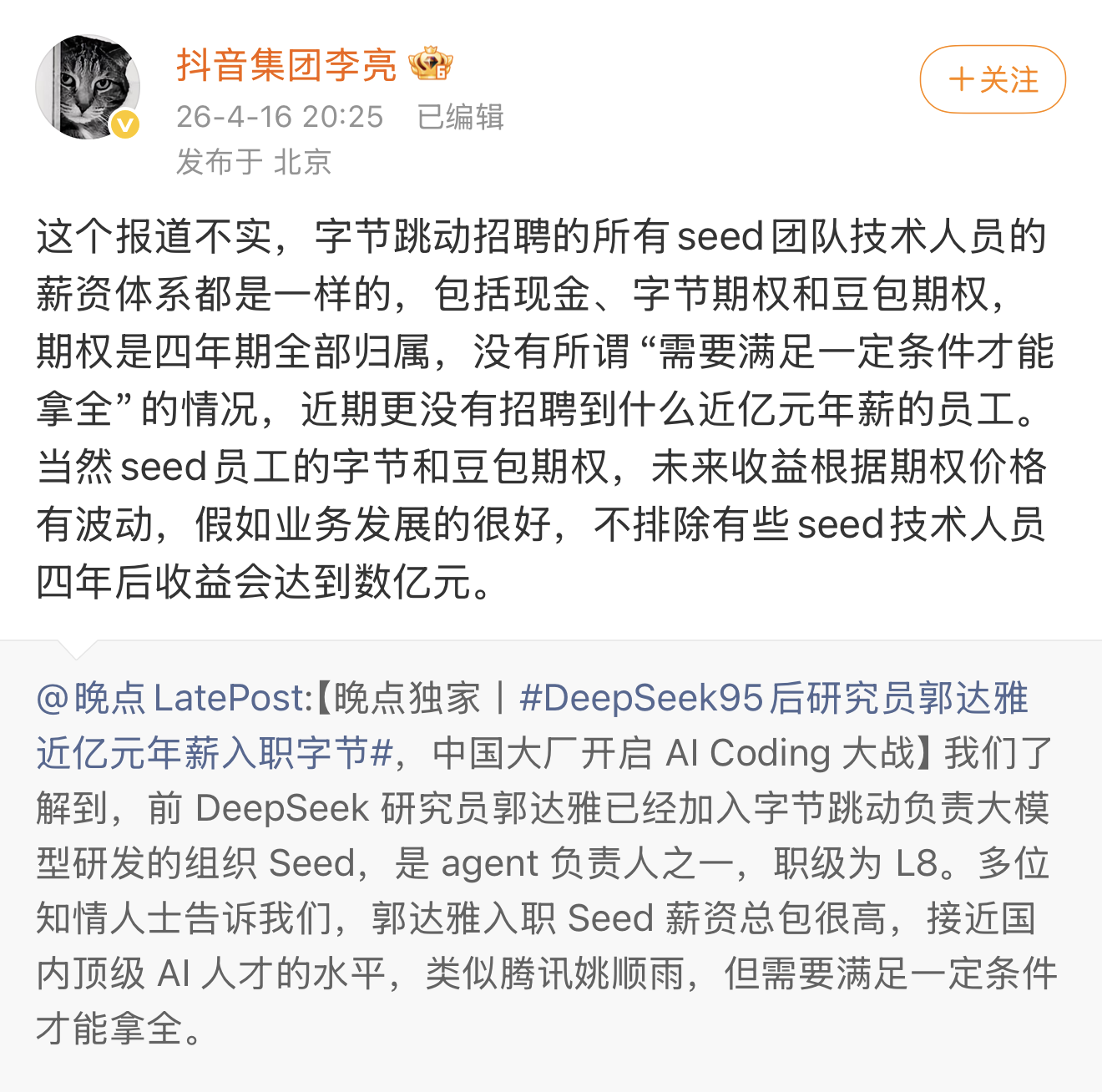
Image Source: Weibo
Finally, for startups like Deeply Explore, which have never secured external investment, stock options lack market valuation and are essentially just numbers, rendering them unfulfillable and naturally diminishing their appeal to team members. This is also seen as a key reason why Liang Wenfeng has begun to shift his mindset and actively seek external investment.
ByteDance’s Seed Emerges as the ‘Whampoa Military Academy’ Among AI Giants, Surpassing Alibaba’s QianWen
In March, Lin Junyang, the technical lead for Alibaba’s Tongyi QianWen large model, announced his resignation, which was subsequently approved by Alibaba.
This year, several key R&D personnel have left the QianWen team, including Yu Bowen, the post-training lead who departed alongside Lin Junyang; core member Li Kaixin; and Hui Binyuan, the former head of QianWen Code, who left earlier this year.
Among them, Yu Bowen has joined ByteDance as the post-training lead for visual models and multimodal interactions at the Seed team. ByteDance’s Seed has become the next destination for many core technical personnel from Alibaba’s QianWen, including Zhou Chang, the former technical lead of Tongyi QianWen.
However, Alibaba’s QianWen team currently comprises just over 100 members, in contrast to ByteDance’s Seed team, which boasts over 1,500 members (as of March data). In terms of employee departures, ByteDance has emerged as the ‘Whampoa Military Academy’ among China’s AI giants.
As the most dominant AI platform in the Chinese market today, many employees and team leaders who have left ByteDance are choosing to start their own businesses.
Statistics indicate that, as of February, employees from ByteDance alone have founded over 30 AI startups, spanning domains such as AI hardware, AIGC, Vibe Coding, and embodied AI.
Of course, significant talent mobility also occurs among AI giants, with three main routes: from Silicon Valley giants to domestic giants, from domestic giants to Silicon Valley giants, and between domestic giants.
Silicon Valley Giants to Domestic Giants: This route is common for top AI talent, such as Wu Yonghui, the former Vice President of Research at Google DeepMind (Google Fellow), who joined ByteDance as the head of foundational research for the Seed team. Yao Shunyu, the former OpenAI researcher, joined Tencent’s Hunyuan team as its lead. Zhou Hao, the former Senior Staff Researcher at Google DeepMind, joined Alibaba’s QianWen team as the post-training lead.
Domestic Giants to Silicon Valley Giants: This route is common for core AI technical talent, such as Qiao Siyuan, a former core member of ByteDance’s Seed large language model team, who joined Meta. Jiang Lu, a former core member of ByteDance’s Seed visual model research team, joined Apple. Hui Binyuan, the former head of Alibaba’s QianWen Code, joined Meta.
Domestic Giants to Domestic Giants: This includes individuals like Zhou Chang and Yu Bowen, mentioned earlier, as well as the more prominent phenomenon of ByteDance’s Seed team being ‘poached’ by Tencent and Alibaba. Reports indicate that nearly 30 members of ByteDance’s Seed team have joined Tencent in the past year, leading AI Infra and data infrastructure efforts.
It should be noted that the movements from Silicon Valley giants to domestic giants, from domestic giants to Silicon Valley giants, and between domestic giants may overlap in the career histories of individual AI tech experts, reflecting the current ‘high mobility’ characteristic of talent in the AI industry.

Image Source: GPT Image 2
Strategies for AI Companies to Retain Tech Experts
What specific measures can different types of AI companies take to retain tech experts?
For all AI platform giants, they can attempt to emulate ByteDance’s ‘high-density’ talent recruitment strategy for its AI business, which involves absorbing a large number of qualified young people willing to engage in AI R&D or research through campus and social recruitment channels. This approach can cultivate more highly skilled professionals for society and ‘native AI companies,’ playing a more significant role as a ‘Whampoa Military Academy.’
Similarly, for AI startups, which are inherently ‘high-volatility’ or even ‘high-risk’ enterprises, not all tech experts are willing to stay long-term. Continuously attracting young technical talent, including highly educated graduates, for relevant positions remains crucial.
Of course, no corporate organizational structure is perfect. The ‘Lin Junyang resignation’ controversy in March fundamentally stemmed from Lin’s dissatisfaction with the company’s internal organizational system (including role adjustments and system rules), as well as new issues and challenges encountered during the system’s operation.
Such situations exist at Alibaba, ByteDance, Tencent, and other giants, as well as at startups like Deeply Explore and Moonshot AI, though they may manifest in different forms. Identifying these issues is important, but more critical is how to better resolve and prevent them.
Image Source: Lei Technology MWC26 On-Site Production
For example, after experiencing technical management talent loss (including associated team member attrition), Alibaba’s CEO Wu Yongming immediately took action on two fronts:
At an internal communication meeting for QianWen employees, senior executives engaged in ‘candid retrospectives,’ ‘qualitative reassurances,’ and ‘stabilizing morale.’ At the group level, Alibaba established a foundational model support team, led by the CEO himself, emphasizing the group’s continued commitment to its existing AI strategy, including expanding R&D investment in AI and further intensifying efforts to attract industry talent.
For AI startups like Deeply Explore, after experiencing significant tech talent outflow, founder Liang Wenfeng decisively abandoned his long-held ‘no external funding’ strategy, allowing employee stock options to be valued and redeemable. Simultaneously, he made a high-profile declaration: ‘Not swayed by praise, not fearful of criticism, following the path, and maintaining integrity.’
Fundamentally, startups, upon reaching a certain stage of development, must also promptly adjust and optimize their established development strategies and even strategic directions based on new industry trends and their own growth stages.
Small ships are easier to maneuver. For AI startups, organizational structures and corporate strategies can be more flexible, while offering tech talent ‘unique’ work and business autonomy, including providing more specialized and ‘sustainable’ research domain positions.
AI Large Model DeepSeek Alibaba
Source: Lei Technology
Images in this article are from: 123RF Licensed Image Library
-
![]()
Tesla Restructures Its Balance Sheet
-
![]()
Accelerating the High-Speed Interconnection Upgrade of AI Computing Clusters! JONHON Releases ELSFP External Light Source Optical Connectors
-
![]()
Breaking the overseas blockade of volumetric holographic materials, this optical enterprise secures nearly 100 million yuan in financing!
-
![]()
Why Does Jensen Huang So Openly Praise China’s AI?
-
![]()
"Wudang" Unveiled: Arm China's Next-Gen AI VPU Redefines Video Encoding
-
![]()
From Energy Conservation and Carbon Reduction to AI Decision-Making: GECON East Intelligence and Chery Group Explore a New Green and Smart Paradigm for Automobile Manufacturing
-
![]()
WAIC 2026 Observation | AI Accelerates Towards the Core of Industries, Industrial AI Enters a Critical Phase
-
![]()
Volkswagen China Fires the First Shot in Foreign-Funded 'White Box Delivery'!