Samsung's Exit from China: Will It Bounce Back Stronger Elsewhere?
 05/07 2026
 465
465
On the very first workday following the holiday, the consumer electronics sector was rocked by major news! Samsung Electronics, once a titan in the Chinese market, officially declared its complete withdrawal from the mainland Chinese home appliance business, encompassing all home appliance products such as TVs and monitors.
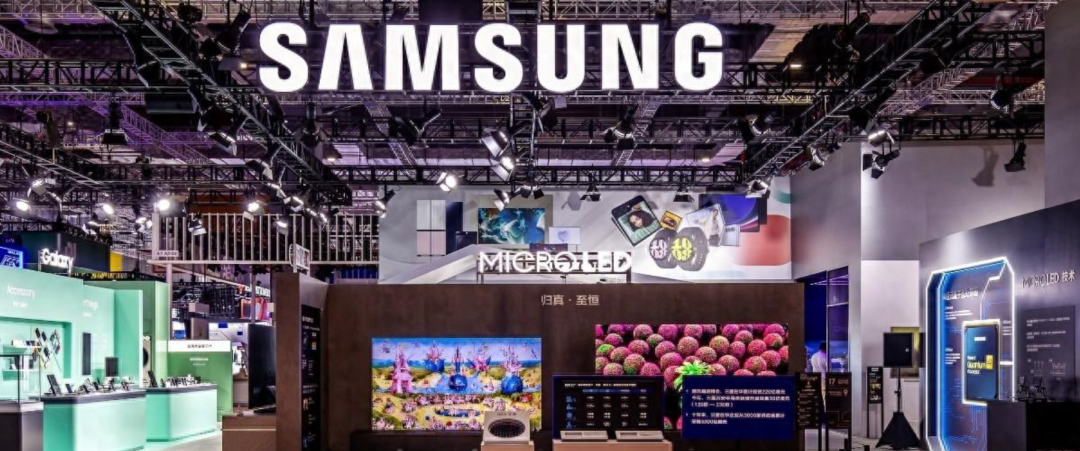
In fact, whispers of this move had surfaced as early as April 28th, prior to the holiday, but without official confirmation, they were largely dismissed. Now, this South Korean behemoth, once a dominant force in China, is quietly making its exit, sparking a mix of emotions among netizens—some rejoice, while others lament.
I'm merely presenting an objective account, free from any emotional slant. Let's refrain from baseless speculation; this is primarily a broad overview.
From Dominance to Retreat: Samsung's Chinese Odyssey
Samsung's heyday in China was primarily during the 2012-2013 period, a time when it reigned supreme.
From 2012 to 2013, Samsung held an absolute commanding position in the Chinese mobile phone market, boasting a market share of nearly 20%, firmly entrenched at the top. Some data even suggests its peak market share once soared past 30%.
The Galaxy S4, a technological marvel, topped the best-selling mobile phone charts in China for two consecutive quarters. The Note 3, meanwhile, sold over 3 million units in China within just 100 days of its launch, earning it the moniker "Phone King."
Beyond mobile phones, Samsung's white goods and black goods also enjoyed robust performance. In 2014, Samsung's annual color TV sales in China alone reached a staggering $3 billion. It dominated the large-screen TV market for sizes 55 inches and above, with an 18.5% market share.
That same year, home appliance sales also hit $1 billion. The market share of large-capacity high-end refrigerators and mid-to-high-end front-loading washing machines continued to climb. Samsung's refrigerator sales in China grew by 21% year-on-year, while washing machine sales surged by 19%, outpacing traditional powerhouses like Siemens.
Samsung's downfall in the Chinese market was triggered by the Note 7 explosion incident in 2016. While battery fires are not unheard of and can often be attributed to technical glitches, Samsung's discriminatory policy of a "global recall, except China" infuriated Chinese consumers.
This arrogance directly led to the collapse of Samsung's credibility in the Chinese market, from which it has yet to recover.
Since 2018, Samsung has progressively shuttered its mobile phone factories in Shenzhen, Tianjin, and Huizhou, its computer factory in Suzhou, and its TV factory in Tianjin, closing down more than six major facilities.
Samsung's retreat from China marked the end of an era, seemingly predestined.
Samsung's Ascent: From Dried Fish to Global Tech Behemoth
Samsung's journey is nothing short of remarkable, often described as an omnipresent force in the lives of Koreans, from cradle to grave.
Out of curiosity, I delved into the company's storied past. You'd never guess that this global tech giant began by selling dried fish and vegetable noodles.
In 1938, 28-year-old Lee Byung-chul rented a modest 15-square-meter storefront in Daegu's Ximen Market and hung up the sign "Samsung Chamber of Commerce."
This venture, launched with 30,000 won, initially focused on exporting dried fish, vegetables, and noodles. At that time, Samsung was merely a small-time vendor of dried fish, vegetables, and fruits, far removed from the realm of technology.
But Lee Byung-chul possessed a unique vision and bold courage.
After World War II, Lee Byung-chul ventured into manufacturing, founding Cheil Sugar and Cheil Industries, which laid the foundation for Samsung's primitive capital accumulation.
During this period of grassroots entrepreneurship, Lee Byung-chul showcased remarkable business acumen: he amassed primitive capital through "essential" industries like sugar and textiles in the post-war ruins, then constructed an industrial framework with heavy industries, and finally ignited the technological spark in the electronics sector.
Entering the 1970s, Samsung Electronics was officially established, initially as an OEM manufacturer for Sanyo, producing black-and-white TVs.
However, it wasn't long before Lee Byung-chul defied consensus and decided to bet big on semiconductors. At that time, the global semiconductor market was monopolized by American and Japanese giants, making it seem absurd for an unknown Korean company to compete. Outsiders thought Lee Byung-chul had lost his mind.
But Samsung's tenacity shocked everyone. By the late 1990s, Samsung Electronics' revenue surpassed $20 billion, making it the world's largest memory producer.
From there, it soared to greater heights!
In 2002, Samsung Electronics' revenue eclipsed Sony's, becoming the global leader in consumer electronics.
In 2012, Samsung's global mobile phone sales surpassed Nokia's, claiming the top spot worldwide.
In 2017, Samsung's semiconductor business defeated Intel's, becoming the world's largest semiconductor company.
Today, Samsung Group stands as South Korea's largest chaebol, ranking 31st on the Fortune Global 500 list in 2024.
Throughout its history, Samsung has seemingly always embodied a "do-or-die" spirit.
-
![]()
Lending My Face to an AI Short Film: A One-Way Journey
-
![]()
The "Midlife Crisis" of Long-Form Videos: Can AI Win Back Users?
-
![]()
The AI Industry Outlook Post-DeepSeek-V4 Launch
-
![]()
Why Manus Became the First AI Foreign Investment Acquisition to Be Suspended
-
![]()
The LABUBU Fridge Goes Viral with a 14x Premium, Yet Fails to Lift POP MART's Stock Price
-
![]()
AI Talent War: ByteDance’s Seed Emerges as the ‘Whampoa Military Academy’ of AI Amidst Rapid Talent Turnover Outpacing Model Updates?
-
![]()
Samsung's Exit from China: Will It Bounce Back Stronger Elsewhere?
-
![]()
Doubao Starts Charging, and I Actually Think It's a Good Thing